On This Page
Description
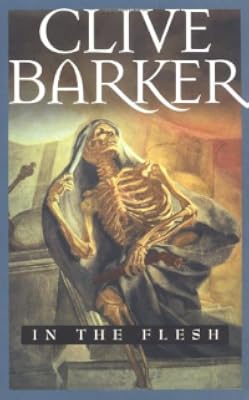
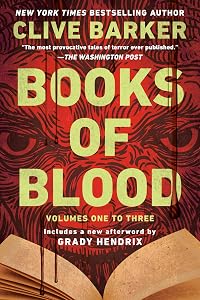
Few authors can claim to have marked a genre so thoroughly and personally that their words have leaked into every aspect of modern pop culture. Clive Barker is such an author, and the Books of Blood marked his debut - his coming out to the world - in brilliant, unforgettable fashion. Crossroad Press is proud to present Clive Barker's "Books of Blood" in digital for the first time.The Books of Blood combine the ordinary with the extraordinary while radiating the eroticism that has become show more Barker's signature. Weaving tales of the everyday world transformed into an unrecognizable place, where reason no longer exists and logic ceases to explain the workings of the universe, Clive Barker provides the stuff of nightmares in packages too tantalizing to resist.Never one to shy away from the unimaginable or the unspeakable, Clive Barker breathes life into our deepest, darkest nightmares, creating visions that are at once terrifying, tender, and witty. The Books of Blood confirm what horror fans everywhere have known for a long time: We will be hearing from Clive Barker for many years to come.This fifth volume contains the short stories : "In the Flesh," "The Forbidden," "The Madonna," "Babel's Children," as well as a new introduction by author Joe R. Lansdale. show lessTags
Recommendations













Member Reviews
I've wanted to nab this baby forever, since watching the movie Candyman, adapted to the screen by Bernard Rose with Clive's backing. I have owned several of his books of blood anthologies for awhile, yet this one has remained an illusive completion of the cycle. Finally I now own all of them, and read this one within the week of receiving it.
The book, a brief 255 pages, envelops four short stories. The first, 'In The Flesh', is a strange tale following the mind of a convict, Cleve, who is forced by an overeager warden to be the caretaker of his new cellmate, Billy. Strange and reclusive, Billy isn't an easy man to keep safe from the other inmates, but it's even more tiresome trying to get his new companion to sit still on bizarre show more questions he's filled with. Soon Cleve is forced to witness some pretty strange stuff, and from there the story skyrockets. Baffling and strange, as Barker's works typically are, the short tale is blessed with bizarre imagery, unusual characters and an intriguing outcome. The endings a strange little thing, one I never saw coming, but a dark wrap-up that strangely fits.
Following the unsettling piece is the short story of the legendary Candyman, in written form titled The Forbidden. There are outstanding differences in the short version versus the celluloid portrayal; Helen herself is much different, although not in a bad way, and her goal is instead on the history of graffiti rather than urban legend and myth. Candyman is also quite different, although I noticed much of his dialogue was copied through to the film. That's the only similarity really. Bernadette, Helen's best pal in the film, is only a mere aquaintance shown once here. No one sits to tell the young woman about Candyman's dazzling past, but instead insist she's a naive child being lied to. The situation with Anne-Marie and her son differ so strongly it was hard to compare the story and movie at all. Standing by itself the short story is an intriguing one, even if I felt the ending fell a bit short.
It was hard for me not feel slightly cheated with The Madonna, as no character was likable, the ending seemed strangely depressing, and the story itself devoid of much enjoyment. The idea just seemed too silly and over-the-top, and no explanations for characters given (some of their actions just didn't make sense). It was a brief read, thankfully, but not something that kept my attention like the previous two.
Finally, the shortest story, Babel's Children, may indeed by the strangest. The idea is very outlandish and it's clear Barker's bizarre humor gets to play with this one. The protagonist was a fun woman to follow, her actions making sense, her personality strong and fiesty but using common sense as well. There was a lovely sense of confusion that followed me toward the end, where I then wasn't sure whether to be disgusted or amused. On one hand the story is so far-fetched and silly it's almost a turn-off and cheesy, but on the other hand it makes a morbid sense and purposely pokes fun at a failing system. While I can't make my mind up on which side of the fence to stand firmly on, I'm settling for using both reactions and rating this one an intriguing story with a daring, mediocre death.
If you happy to find this one, pick it up for sure. Short stories aren't my cup of tea, but Barker's writing style in his other Books of Blood anthologies and this one are sure to please. His writing style is intelligent, filled with an advanced, dry style that's poetically beautiful. Some of his phrasing is simply breathtaking, forcing me to repeat the sentences in my mind. All his stories are filled with inventive, unusual worlds not seen elsewhere. The level of horror in his tales is different as well, dark without even seeming to try, cleverly mixed with morbid fantasy. This is one book that thankfully lived up to my expectations in many ways, diving a bit short in others, but I've come to expect the latter fault in anthologies. show less
The book, a brief 255 pages, envelops four short stories. The first, 'In The Flesh', is a strange tale following the mind of a convict, Cleve, who is forced by an overeager warden to be the caretaker of his new cellmate, Billy. Strange and reclusive, Billy isn't an easy man to keep safe from the other inmates, but it's even more tiresome trying to get his new companion to sit still on bizarre show more questions he's filled with. Soon Cleve is forced to witness some pretty strange stuff, and from there the story skyrockets. Baffling and strange, as Barker's works typically are, the short tale is blessed with bizarre imagery, unusual characters and an intriguing outcome. The endings a strange little thing, one I never saw coming, but a dark wrap-up that strangely fits.
Following the unsettling piece is the short story of the legendary Candyman, in written form titled The Forbidden. There are outstanding differences in the short version versus the celluloid portrayal; Helen herself is much different, although not in a bad way, and her goal is instead on the history of graffiti rather than urban legend and myth. Candyman is also quite different, although I noticed much of his dialogue was copied through to the film. That's the only similarity really. Bernadette, Helen's best pal in the film, is only a mere aquaintance shown once here. No one sits to tell the young woman about Candyman's dazzling past, but instead insist she's a naive child being lied to. The situation with Anne-Marie and her son differ so strongly it was hard to compare the story and movie at all. Standing by itself the short story is an intriguing one, even if I felt the ending fell a bit short.
It was hard for me not feel slightly cheated with The Madonna, as no character was likable, the ending seemed strangely depressing, and the story itself devoid of much enjoyment. The idea just seemed too silly and over-the-top, and no explanations for characters given (some of their actions just didn't make sense). It was a brief read, thankfully, but not something that kept my attention like the previous two.
Finally, the shortest story, Babel's Children, may indeed by the strangest. The idea is very outlandish and it's clear Barker's bizarre humor gets to play with this one. The protagonist was a fun woman to follow, her actions making sense, her personality strong and fiesty but using common sense as well. There was a lovely sense of confusion that followed me toward the end, where I then wasn't sure whether to be disgusted or amused. On one hand the story is so far-fetched and silly it's almost a turn-off and cheesy, but on the other hand it makes a morbid sense and purposely pokes fun at a failing system. While I can't make my mind up on which side of the fence to stand firmly on, I'm settling for using both reactions and rating this one an intriguing story with a daring, mediocre death.
If you happy to find this one, pick it up for sure. Short stories aren't my cup of tea, but Barker's writing style in his other Books of Blood anthologies and this one are sure to please. His writing style is intelligent, filled with an advanced, dry style that's poetically beautiful. Some of his phrasing is simply breathtaking, forcing me to repeat the sentences in my mind. All his stories are filled with inventive, unusual worlds not seen elsewhere. The level of horror in his tales is different as well, dark without even seeming to try, cleverly mixed with morbid fantasy. This is one book that thankfully lived up to my expectations in many ways, diving a bit short in others, but I've come to expect the latter fault in anthologies. show less
Now Barker knows how to write horror! And man, was it fun seeing the beginnings of the Candyman, I wasn’t expecting that when I picked up the book, but it was a very welcome surprise.
This book is a collection of 4 novelettes from "The New Master of Horror." (not so new anymore!)
The title piece, "In the Flesh" deals with a petty criminal trapped in a jail cell with a first-time offender who's messing with more than he bargained for in the spirit of his executed murderer grandfather....
"The Forbidden" is the story the movie Candyman was based on. I'm sure you've seen it. The story is shorter, snappier, and more powerful. (And set in England! Huh!)
"The Madonna" reminded me of a modern Lovecraft story.... a business deal with a mobster turns into something far more when chthonic horrors lurk in a closed public pool complex...
"Babel's Children" - not so much a horror story as a paranoid conspiracy theory. Who do you show more think is *really* controlling the world governments???
Good fun, all of them.. show less
The title piece, "In the Flesh" deals with a petty criminal trapped in a jail cell with a first-time offender who's messing with more than he bargained for in the spirit of his executed murderer grandfather....
"The Forbidden" is the story the movie Candyman was based on. I'm sure you've seen it. The story is shorter, snappier, and more powerful. (And set in England! Huh!)
"The Madonna" reminded me of a modern Lovecraft story.... a business deal with a mobster turns into something far more when chthonic horrors lurk in a closed public pool complex...
"Babel's Children" - not so much a horror story as a paranoid conspiracy theory. Who do you show more think is *really* controlling the world governments???
Good fun, all of them.. show less
This is actually a collection of 4 short stories. "In the Flesh", "The Madonna", and "The Forbidden" were great! "Babel's Children" was so-so. The stories are gripping and it's hard to put the silly things down!
It has been at least 10 years since I read any Clive Barker and I found it quite enjoyable to revisit the genre. This is a collection of 4 stories, each of which blends the world as we know it with a monstrous and supernatural world of our nightmares. Some of the nightmares are familiar from popular media, such as the Candyman figure of the second story - The Forbidden. Some of the nightmares are reminiscent of our childhood fears, as occurs in the first (and for me, scariest) story - In the Flesh. Barker's talent is in expressing those horrors in such a way that it makes the skin crawl and the hairs stand up while you are reading.
I'm still finding the quality increases as I work through the volumes. But I have to say, though it doesn't say much, there was one quote that I found quite chilling, from the story The Forbidden:
"Don't kill me," she breathed.
"Do you believe in me?" he said.
She nodded minutely. "How can I not?" she said.
"Then why do you want to live?"
Brilliant stuff, that.
"Don't kill me," she breathed.
"Do you believe in me?" he said.
She nodded minutely. "How can I not?" she said.
"Then why do you want to live?"
Brilliant stuff, that.
Stavolta il buon Clive si salva in corner con l'ultimo racconto che merita decisamente la lettura di tutto il libro.
Members
- Recently Added By
Author Information

381+ Works 57,041 Members
Critics of the horror story have frequently called Clive Barker the "British Stephen King". Born in Liverpool in 1952, Barker attended the University of Liverpool but moved to London in 1977, where he worked as a commercial artist and became involved with the avant-garde theatrical community. Primarily a playwright during this period, he also show more produced short fiction that he would eventually publish as part of his six-volume collection titled Books of Blood (1984-85). More than any other author of contemporary horror fiction, Barker has had a major impact on the direction of the genre. He has introduced strong elements of sex and graphic violence into his fiction, but these elements are employed with an artistic objective. Barker underscores his work with complex subtextual metaphors and artistic allusions. Preoccupied with the craft of writing and with its effect on the reader, Barker is an innovator of formula and genre, often parodying the former in order to change the philosophical contour of the latter. Barker has achieved commercial success not only with his short fiction but also with his novels, which tend to be epic in scope and to blend elements of horror with those of high fantasy. Barker is one of the more influential voices in horror cinema, having written and directed a number of films. His printed works include The Candle in the Cloud, Absolute Midnight, The Scarlet Gospels, and Black is the Devil's Rainbow: Tales of a Journeyman. His films include Dread, Tortured Souls: Animae Damanatae, and Hellraiser. (Bowker Author Biography) Clive Barker was born in October, 1952, in Liverpool, England, and graduated from Liverpool University. While a student, the resourceful Barker formed a theater company as an outlet for his career as a budding playwright. After minor success with several plays such as "Frankenstein in Love," Barker vaulted onto the horror fiction scene with the publication of his short stories, "The Books of Blood." Later books such as "The Damnation Game," "Imajica," and "Everville" have further established his reputation as a Master of Horror. Barker gained further popularity with several motion picture projects. Unhappy with previous film versions of his works, he chose to direct the successful movie "Hellraiser," which generated a string of sequels. In addition to writing and directing, Barker has produced several of the movies in both the "Hellraiser" and "Candyman" series. Besides his writing and film activities, the multitalented Barker is an actor and illustrator, with several published volumes of his artwork. Barker is a recipient of British Fantasy awards and a World Fantasy award, and resides in Los Angeles. (Bowker Author Biography) show less
Some Editions
Series

Work Relationships
Is contained in
Common Knowledge
- Canonical title
- Books of Blood, Vol. 5: In the Flesh
- Original title
- Books of Blood, Volume V
- Alternate titles
- In the Flesh
- Original publication date
- 1985
- People/Characters
- The Candyman / Daniel Robitaille
- Related movies
- Candyman (1992 | IMDb); Candyman: Farewell to the Flesh (1995 | IMDb); Candyman: Day of the Dead (1999 | IMDb); Candyman (2021 | IMDb)
- Dedication
- To Julie
- First words
- Like a flawless tragedy, the elegance of which structure is lost upon those suffering in it, the perfect geometry of the Spector Street Estate was only visible from the air.
- Last words
- (Click to show. Warning: May contain spoilers.)He went away content, knowing at last how sin (and he) had come into the world.
- Original language
- English
- Disambiguation notice
- Contents: In the Flesh -- The Forbidden -- The Madonna -- Babel's Children
Classifications
Statistics
- Members
- 1,335
- Popularity
- 18,086
- Reviews
- 13
- Rating
- (3.78)
- Languages
- 9 — Danish, English, Finnish, French, German, Greek, Italian, Polish, Swedish
- Media
- Paper, Audiobook, Ebook
- ISBNs
- 24
- ASINs
- 17