On This Page
Description
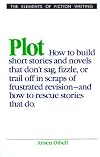
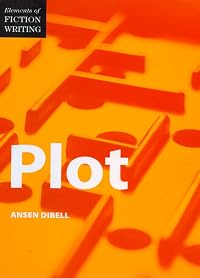
"There are ways to create, fix, steer and discover plots--ways which, over a writing life, you'd eventually puzzle out for yourself," writes Ansen Dibell. "They aren't laws. They're an array of choices, things to try, once you've put a name to the particular problem you're facing now." That's what this book is about: identifying those choices (whose viewpoint? stop and explain now, or wait? how can this lead to that?), then learning what narrative problems they are apt to create and how to show more choose an effective strategy for solving them. The result? Strong, solid stories and novels that move. Inside you'll discover how to: test a story idea (using four simple questions) to see if it works convince your reader that not only is something happening, but that something's going to happen and it all matters intensely handle viewpoint shifts, flashbacks, and other radical jumps in your storyline weave plots with subplots get ready for and write your Big Scenes balance scene and summary narration to produce good pacing handle the extremes of melodrama by "faking out" your readers--making them watch your right hand while your left hand is doing something sneaky form subtle patterns with mirror characters and echoing incidents choose the best type of ending--linear or circular, happy or downbeat, or (with caution!) a trick ending Whether your fiction is short or long, subtle or direct, you'll learn to build strong plots that drive compelling, unforgettable stories your readers will love. show lessTags
Recommendations
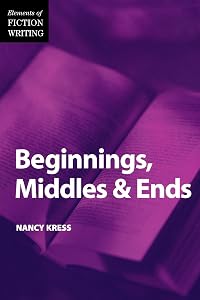
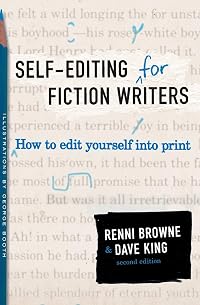
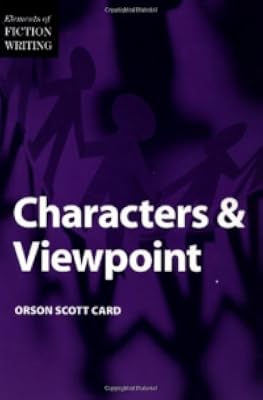
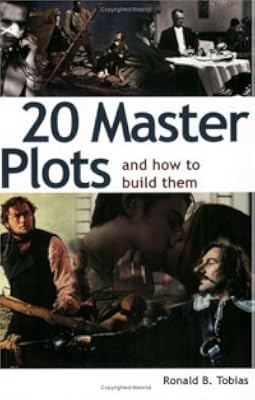




Member Reviews
When I first dabbled in this book, years ago, I remember placing it in lineage with so many others, an endless parade of books which all say more or less the same thing when it comes to that most workaday aspect of storytelling, the plot. Campbell is invoked, the hero’s journey extolled, and careful and precise subdivisions of what makes a plot are enumerated. If you watched Robin Williams in Dead Poets Society this would be the point to rip up the book in question and proclaim it “Excrement!” I wonder sometimes if the reason for so many bad movies and books now isn’t due to the readers of these books growing into their own and writing the way they’ve been taught; badly, I mean, using shortcut and formula instead of craft and show more artistry. I’m a different, older writer now, and whereas before I missed them, the nuance and wisdom of Dibell’s book and how it stands out from these other books became apparent with this latest reading.
Myself, I think focusing on plot is putting the cart before the horse and something like Dibbel’s book would better serve a book’s second draft, but better writers than I — which is to say writers who have actually finished a book — would disagree. There’s more than enough pantsing/plotting debate going around, though. I’m of the mind that we don’t go to story to find out what what happens, but rather seek to find out what happens in order to have an excuse to immerse ourselves in story.
At one point Dibell says
At another point she says that “plot is a verb.” I think this is very much true and Dibell’s use of this axiom to spine the book is what makes it worth reading. show less
Myself, I think focusing on plot is putting the cart before the horse and something like Dibbel’s book would better serve a book’s second draft, but better writers than I — which is to say writers who have actually finished a book — would disagree. There’s more than enough pantsing/plotting debate going around, though. I’m of the mind that we don’t go to story to find out what what happens, but rather seek to find out what happens in order to have an excuse to immerse ourselves in story.
At one point Dibell says
As I've said before, stories—especially live, convincing stories—will change under your hands. That's the reason I've never been persuaded of the usefulness of outlines. By other writers' experience and my own, I judge that you generally won't know how a story's going to go until you get close to the place where something is just about to happen. It will take its own shape and tell you how it wants to go, if you listen and watch attentively for the ways it's telling you.
At another point she says that “plot is a verb.” I think this is very much true and Dibell’s use of this axiom to spine the book is what makes it worth reading. show less
The author, for some unknown reason, uses a pseudonym. She claims to have written the “internationally published” five-book science fiction series The Rule of One. But that fiction series doesn’t exist, at least not on a public or international scale, so kudos to Dibell for thus keeping the forensic loop closed on her pseudonym. But wait -- let’s check the internet. Turns out Dibell is in fact Nancy Ann Dibble, American Sci-fi-wri-(ter). She’s dead now, but must have been something of a Star Wars nut back in the day: Plot is shot through w/ The Empire Strikes Back references. So there you go. But the point, here, is that the title of Dibell’s supposed sci-fi series The Rule of One is actually a clever tipping of the hat to show more Star Wars fans, a discreet index finger placed on the side of the nose, as it were, a pointed glance, if you will, to those in the “know.” The phrase, “Rule of One,” apparently refers the Sith (q.v., Dark Lords of the) principle of absolute obedience to an autonomous overlord. And it is exactly this notion of dark, deep, secret connection -- of plot -- that Plot so effectively limns. Dibell is good company; she’s not a bore. Her book’s parting words are good-humored and direct: “Now, quit reading. Go write.” show less
I have read better books on how to create good fiction, but none were as exacting about plot maintenance, and of course, this is a good thing for a book on plots. That being said, I think I should have been writing, rather than reading a book on plots. Sure, I felt the conflict and the build-up while reading it, but the lack of my action, or no-action, was a glaring defect that I desperately wanted to rectify. So, as a book on plots, I desperately wanted to make one by putting the book down.
It's not a bad instructional book; it's just one that I, like most people, are overjoyed to ignore. You know: like grammar.
It's not a bad instructional book; it's just one that I, like most people, are overjoyed to ignore. You know: like grammar.
An editor once told me that if you're going to take advice on writing, take it either from name-bestselling writers or gatekeepers such as acquiring editors or agents--not necessarily anyone who writes for Writer's Digest or has taught a writing class. Dibell doesn't quality as a "name" writer, but I do like the Elements of Fiction Writing series Writer's Digest puts out--and plotting is one of my weaknesses. This is more about fixing plots then generating them. Dibell obviously agrees with Stephen King that plots are "found things" and that can be messy as your muse takes you in directions you didn't plan. Dibell writes:
You can make outlines and try to lock out that change. But you know, and I know, that writing is as much a process of show more discovery as it is one of invention, and the more serious you are about your writing and the more complex the story you're trying to tell, the more likely it is to start creating itself in unexpected ways.
I'd say that's not only true in my experience, but I that often the parts that are most alive, the most fun, are what comes to shape spontaneously--but at times it does mean you can write yourself into a corner, and I appreciate Dibell's suggestions about how to control the process a bit and avoid some blind alleys. show less
You can make outlines and try to lock out that change. But you know, and I know, that writing is as much a process of show more discovery as it is one of invention, and the more serious you are about your writing and the more complex the story you're trying to tell, the more likely it is to start creating itself in unexpected ways.
I'd say that's not only true in my experience, but I that often the parts that are most alive, the most fun, are what comes to shape spontaneously--but at times it does mean you can write yourself into a corner, and I appreciate Dibell's suggestions about how to control the process a bit and avoid some blind alleys. show less
A very practical guide to plot development for fiction, especially useful is the list of pitfalls to avoid. The author does not believe that creating detailed outlines from the start is as effective as just jumping in and planning as you go (except for major elements like beginning and end, theme, etc.). I disagree with that as a matter of taste, but still see the great value of this book and intend to use it often.
A useful book. I did find it a little waffly in places but a good general run down of what plot is and how it works. It gives instruction on what to do and what not to do with examples from literature. A decent reference.
Even if you don't follow every rule in this book, if you're a writer you have to read it.
Members
- Recently Added By
Author Information
13 Works 2,983 Members
Series

Common Knowledge
- Canonical title
- Plot
Classifications
Statistics
- Members
- 661
- Popularity
- 43,889
- Reviews
- 7
- Rating
- (3.58)
- Languages
- English
- Media
- Paper, Ebook
- ISBNs
- 4
- UPCs
- 1
- ASINs
- 4