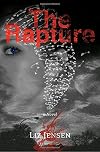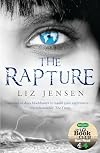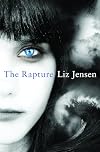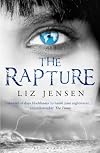
The Rapture
by Liz Jensen
On This Page
Description
In a merciless summer of biblical heat and destructive winds, Gabrielle Fox's main concern is to rebuild her career as a psychologist after a shattering car accident. But when she is assigned Bethany Krall, one of the most dangerous teenagers in the country she begins to fear she has made a terrible mistake...Tags
Recommendations






























Member Reviews
"The Rapture" by Liz Jensen -distinctly English take on the "End of Days"
This "End of Days" tale is more fiction with science in it than classic science fiction. The focus is on the characters and the different ways in which they are broken and on the nature and impact of belief on how we see ourselves and others.
Nevertheless, there is still a good end-of-the-world-as-we-know-it thriller to keep you turning the pages and solid science to keep everything credible.
"The Rapture" felt more real to me than other "End of Days" apocalyptic nightmare novels and movies, not just because it is set in the UK but because I feel a strong affinity for Gabrielle Fox, a paralysed therapist (now there's a metaphor to conjure with), from whose point of show more view the story is told.
She and I share certain values and assumptions that are common amongst the Brit graduate population but which rarely surface in American fiction.She embraces atheism with a bone-deep belief that perhaps only someone raised as a Catholic can achieve. She despises Christian fundamentalism at an almost instinctive level because she views that kind of faith as pathological. She is apolitical but fundamentally distrusts politicians and authority figures, especially as she is one. She pursues a professional career because it is something she is good at but not passionate about. She is a therapist who is insightful without being empathic, who distrusts the tools and language of her trade and understands that psychiatric hospitals are funded more for their value as surrogate prisons than as places of healing.
All of this means that Gabrielle views the concept of "The Rapture" not only with disbelief but with contempt, so she makes the perfect foil for all those around her who believe the End of Days has arrived.
Gabrielle is more than a plot device. As she mourns for all that the accident that paralysed her has taken away and struggles to imagine what her life could be, she becomes the measuring stick for human hopes and fears which brings scale to the idea of what it would mean if the world didn't end but we did.
The second remarkable character in "The Rapture" is Bethany Krall, Gabrielle's teenage patient, confined to the hospital because she murdered her mother. Bethany is a wonderful creation: convincing, frightening, violent, crude, repulsive, vulnerable, damaged and fundamentally honest behind all the lies.
"The Rapture" includes both credible science and credible scientists, even if rogue scientists with access to very large helicopters are little hard to imagine
My only reservation about "The Rapture" was that Gabrielle's perspective came a little too much from her head rather than the heart but that could be because I also live in my head and I use fiction to try and find the way to my heart.
This is a book that has "MAKE ME INTO A MOVIE" written all over it. I hope, if that happens, that they'll keep it in the UK and hire a director with an atheist's heart to make it. show less
This "End of Days" tale is more fiction with science in it than classic science fiction. The focus is on the characters and the different ways in which they are broken and on the nature and impact of belief on how we see ourselves and others.
Nevertheless, there is still a good end-of-the-world-as-we-know-it thriller to keep you turning the pages and solid science to keep everything credible.
"The Rapture" felt more real to me than other "End of Days" apocalyptic nightmare novels and movies, not just because it is set in the UK but because I feel a strong affinity for Gabrielle Fox, a paralysed therapist (now there's a metaphor to conjure with), from whose point of show more view the story is told.
She and I share certain values and assumptions that are common amongst the Brit graduate population but which rarely surface in American fiction.She embraces atheism with a bone-deep belief that perhaps only someone raised as a Catholic can achieve. She despises Christian fundamentalism at an almost instinctive level because she views that kind of faith as pathological. She is apolitical but fundamentally distrusts politicians and authority figures, especially as she is one. She pursues a professional career because it is something she is good at but not passionate about. She is a therapist who is insightful without being empathic, who distrusts the tools and language of her trade and understands that psychiatric hospitals are funded more for their value as surrogate prisons than as places of healing.
All of this means that Gabrielle views the concept of "The Rapture" not only with disbelief but with contempt, so she makes the perfect foil for all those around her who believe the End of Days has arrived.
Gabrielle is more than a plot device. As she mourns for all that the accident that paralysed her has taken away and struggles to imagine what her life could be, she becomes the measuring stick for human hopes and fears which brings scale to the idea of what it would mean if the world didn't end but we did.
The second remarkable character in "The Rapture" is Bethany Krall, Gabrielle's teenage patient, confined to the hospital because she murdered her mother. Bethany is a wonderful creation: convincing, frightening, violent, crude, repulsive, vulnerable, damaged and fundamentally honest behind all the lies.
"The Rapture" includes both credible science and credible scientists, even if rogue scientists with access to very large helicopters are little hard to imagine
My only reservation about "The Rapture" was that Gabrielle's perspective came a little too much from her head rather than the heart but that could be because I also live in my head and I use fiction to try and find the way to my heart.
This is a book that has "MAKE ME INTO A MOVIE" written all over it. I hope, if that happens, that they'll keep it in the UK and hire a director with an atheist's heart to make it. show less
Science and religion clash in a thought-provoking thriller
Apocalypse and dystopia. Everywhere I look apocalypse—at least on my bookshelf, that is. Everyone seems to be writing about the end of the world, and the scariest part is that none of it seems the least bit implausible.
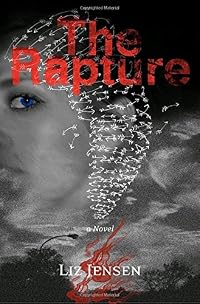
The latest addition to my apocalyptic reading is Liz Jensen’s The Rapture. Once you get past the notably unattractive cover, the first thing you’ll notice about this novel is the superiority of Jensen’s prose. Right from the first paragraph, it is abundantly clear that you’re not reading the average thriller with serviceable language. What’s even more extraordinary is that the beauty of Jensen’s prose doesn’t slow down this thriller one bit.
At its show more heart, this is the story of three very damaged people and one very damaged planet. The first-person narrator is Gabrielle Fox. She’s the new art therapist at Oxsmith Adolescent Secure Psychiatric Hospital. Gabrielle left the bustle of London for this facility in remote Hadport in the wake of her own personal tragedy. It takes some time for all the details to be teased out, but the result, two years on, is that she will spend the rest of her life in a wheelchair. Doctor, heal thyself. Gabrielle is well aware that she has a lot of issues of her own to work through before she’s fully prepared to help others.
Nonetheless, she is charged with helping some severely disturbed young people. Perhaps the most disquieting of them all is Bethany Krall. Now 16, Bethany has been locked up for two years since she killed her mother with a screwdriver. She is not cute, and she is not misunderstood. She is a tough, tough character to empathize with, but you can’t look away from her.
Bethany has been having visions in the wake of her electro-convulsive therapy treatments. She sees cyclones, earthquakes, and other things she can’t possibly know, with very specific details. While at first Gabrielle ignores Bethany’s insane babbling, when enough predictions prove correct, she seeks outside opinions. Here enters physicist and expert on natural phenomenon, Frazer Melville (inexplicably referred to by his full name or the appellation “the physicist” at all times). He brings the science—and the romance.
It’s fairly formulaic for a thriller to have a romantic sub-plot, but this is a rare example of the romance feeling truly integral to the story being told. The relationship felt organic, and I felt emotionally invested in the characters. Yes, there were times I wanted to slap Gabrielle and yell, “Get over it!” But she behaved consistently as the damaged individual that she was.
There’s no need to discuss the details of the plot further, but I was pleased by the insertion of some science into the religious “end times” story. This isn’t a Michael-Crichton-style hard science thriller, but it should definitely leave you with some food for thought. show less
Apocalypse and dystopia. Everywhere I look apocalypse—at least on my bookshelf, that is. Everyone seems to be writing about the end of the world, and the scariest part is that none of it seems the least bit implausible.
The latest addition to my apocalyptic reading is Liz Jensen’s The Rapture. Once you get past the notably unattractive cover, the first thing you’ll notice about this novel is the superiority of Jensen’s prose. Right from the first paragraph, it is abundantly clear that you’re not reading the average thriller with serviceable language. What’s even more extraordinary is that the beauty of Jensen’s prose doesn’t slow down this thriller one bit.
At its show more heart, this is the story of three very damaged people and one very damaged planet. The first-person narrator is Gabrielle Fox. She’s the new art therapist at Oxsmith Adolescent Secure Psychiatric Hospital. Gabrielle left the bustle of London for this facility in remote Hadport in the wake of her own personal tragedy. It takes some time for all the details to be teased out, but the result, two years on, is that she will spend the rest of her life in a wheelchair. Doctor, heal thyself. Gabrielle is well aware that she has a lot of issues of her own to work through before she’s fully prepared to help others.
Nonetheless, she is charged with helping some severely disturbed young people. Perhaps the most disquieting of them all is Bethany Krall. Now 16, Bethany has been locked up for two years since she killed her mother with a screwdriver. She is not cute, and she is not misunderstood. She is a tough, tough character to empathize with, but you can’t look away from her.
Bethany has been having visions in the wake of her electro-convulsive therapy treatments. She sees cyclones, earthquakes, and other things she can’t possibly know, with very specific details. While at first Gabrielle ignores Bethany’s insane babbling, when enough predictions prove correct, she seeks outside opinions. Here enters physicist and expert on natural phenomenon, Frazer Melville (inexplicably referred to by his full name or the appellation “the physicist” at all times). He brings the science—and the romance.
It’s fairly formulaic for a thriller to have a romantic sub-plot, but this is a rare example of the romance feeling truly integral to the story being told. The relationship felt organic, and I felt emotionally invested in the characters. Yes, there were times I wanted to slap Gabrielle and yell, “Get over it!” But she behaved consistently as the damaged individual that she was.
There’s no need to discuss the details of the plot further, but I was pleased by the insertion of some science into the religious “end times” story. This isn’t a Michael-Crichton-style hard science thriller, but it should definitely leave you with some food for thought. show less
I can’t explain why I wrote away for the ARC of The Rapture by Liz Jensen except for the hint of paranormal. I’m very glad I did because it grabbed my attention from the first paragraph and held it as though I was mesmerized until the last sentence.
Gabrielle Fox, a psychologist, has just returned to work almost two years after the accident that made her a paraplegic. She has accepted a job at Oxsmith Adolescent Security Psychiatric Hospital. She is given the case of Bethany Krall, a sixteen-year old who stabbed her mother to death with a screwdriver. Bethany is an only child from a family of Evangelical Christians.
As she starts working with Bethany, she realizes that her disaster fantasies are really visions of weather events that show more actually occur on the exact dates she says they will. Bethany has predicted a world-changing cataclysm and her drawings, made after electroshock therapy, provide clues. Gabrielle meets a physicist, Frazer Melville, who starts taking Bethany’s predictions and drawings seriously.
On this premise the author tells a fantastic tale, ratcheting up the tension and adding obstacles so that you’re wondering how it can possibly end without total disaster. The back cover describes this book as having “gothic intensity.” I’d have to agree. There’s a heaviness and inevitability about the coming tragedy, the forces working against each other. Yet, almost amazingly, there is hope at the end.
I rarely enjoy books written in the first person. I was halfway through this book before I realized that I was reading one, it’s that smooth and almost minimalist. It’s told from Gabrielle’s point of view and blends her personal tragedy with Bethany’s story. Gabrielle’s voice is authentic, humorous, and candid in her dealing with her “crippling”. She herself doesn’t like the word disabled, so I won’t use it either. I think I learned more about the practical aspects of being a paraplegic from this book than from anything else I’ve ever read.
The imagery is powerful. “It was heat to die in, to go nuts or to spawn in. Old folk collapsed, dogs were cooked alive in cars, lovers couldn’t keep their hands off each other. The sky pressed down like a furnace lid, shrinking the subsoil, cracking concrete, killing shrubs from the roots up. In the parched suburbs, ice cream trucks plinked their baby tunes into streets that sweated tar. Down at the harbor, the sea reflected the sun in tiny, barbaric mirrors. Asphyxiated, you longed for rain. It didn’t come.” This is part of the first paragraph. I was hooked.
I cared about Gabrielle, Frazer, Bethany. They were very real to me, in a dangerous and surreal environment of the immediate future. The story doesn’t drag, doesn’t lose its focus. Each scene and revelation is necessary for the whole to emerge.
One final comment – Bethany’s coming from an Evangelical household is critical to the advancement of the plot. The End Days of Christianity are intertwined with the disasters, and the motives of several of the characters are driven by their religion. I’m not Christian and normally don’t want to read about Revelations, but this book was so good and the discussions of Christianity and Biblical quotes blended in seamlessly with the action and were necessary for it. Even the title is “Christian”, a fact I didn’t even really think about as I was reading it. This book is definitely one of my top reads for 2009. show less
Gabrielle Fox, a psychologist, has just returned to work almost two years after the accident that made her a paraplegic. She has accepted a job at Oxsmith Adolescent Security Psychiatric Hospital. She is given the case of Bethany Krall, a sixteen-year old who stabbed her mother to death with a screwdriver. Bethany is an only child from a family of Evangelical Christians.
As she starts working with Bethany, she realizes that her disaster fantasies are really visions of weather events that show more actually occur on the exact dates she says they will. Bethany has predicted a world-changing cataclysm and her drawings, made after electroshock therapy, provide clues. Gabrielle meets a physicist, Frazer Melville, who starts taking Bethany’s predictions and drawings seriously.
On this premise the author tells a fantastic tale, ratcheting up the tension and adding obstacles so that you’re wondering how it can possibly end without total disaster. The back cover describes this book as having “gothic intensity.” I’d have to agree. There’s a heaviness and inevitability about the coming tragedy, the forces working against each other. Yet, almost amazingly, there is hope at the end.
I rarely enjoy books written in the first person. I was halfway through this book before I realized that I was reading one, it’s that smooth and almost minimalist. It’s told from Gabrielle’s point of view and blends her personal tragedy with Bethany’s story. Gabrielle’s voice is authentic, humorous, and candid in her dealing with her “crippling”. She herself doesn’t like the word disabled, so I won’t use it either. I think I learned more about the practical aspects of being a paraplegic from this book than from anything else I’ve ever read.
The imagery is powerful. “It was heat to die in, to go nuts or to spawn in. Old folk collapsed, dogs were cooked alive in cars, lovers couldn’t keep their hands off each other. The sky pressed down like a furnace lid, shrinking the subsoil, cracking concrete, killing shrubs from the roots up. In the parched suburbs, ice cream trucks plinked their baby tunes into streets that sweated tar. Down at the harbor, the sea reflected the sun in tiny, barbaric mirrors. Asphyxiated, you longed for rain. It didn’t come.” This is part of the first paragraph. I was hooked.
I cared about Gabrielle, Frazer, Bethany. They were very real to me, in a dangerous and surreal environment of the immediate future. The story doesn’t drag, doesn’t lose its focus. Each scene and revelation is necessary for the whole to emerge.
One final comment – Bethany’s coming from an Evangelical household is critical to the advancement of the plot. The End Days of Christianity are intertwined with the disasters, and the motives of several of the characters are driven by their religion. I’m not Christian and normally don’t want to read about Revelations, but this book was so good and the discussions of Christianity and Biblical quotes blended in seamlessly with the action and were necessary for it. Even the title is “Christian”, a fact I didn’t even really think about as I was reading it. This book is definitely one of my top reads for 2009. show less
From the opening paragraph, I was instantaneously sucked into Liz Jenson's not-so-future world. The entire book is both fascinating and terrifying. Gabrielle's personal tragedy is horrific, and the reader struggles through her emotional swings along with her. Having literally lost almost everything and having had to start her life anew, Gabrielle is so emotionally and physically fragile that a reader feels compelled to protect her. Bethany, even though wild, crass, rude, and insane, also evokes a need to protect as Gabrielle learns more and more about her story and her reasons for murdering her mother.
But Gabrielle's and Bethany's relationship is the mere backdrop of this story. For Bethany, thanks to her shock therapy, sees visions - show more disturbing visions of meterological and geological disasters. These visions also have a disturbing habit of occurring exactly when she says that they will occur. This book becomes more than the story of a patient and her counselor but becomes the ultimate showdown between earth and mankind.
I'll admit that I wasn't prepared for the environmental warnings that this book evokes. Ms. Jensen admits in her acknowledgements that the final global warming story probably will not happen, but that it does remain a possibility. The fact that she wrote the book to take place at least ten years into the future, and she mentions enough situations and global occurances, both environmental and political, that are happening as I type this immediately increases the plausibility of the story.
Ms. Jensen's writing is so picturesque and realistic that I personally had to catch my breath every now and then. I was compelled to read further to find out how the story ends, how Bethany is connected to the natural disasters and so forth, but the pain, trauma, and emotional fragility of both Bethany and Gabrielle are so strong that it hurts. Add to that a very bleak picture of the not-so-distant future, and it's no wonder I had to take a break every now and then.
Through it all, I remained completely captivated by Bethany and Gabrielle and haunted by the story in general. This is a great read with which to consider the consequences of our current actions in regards to the environment, global warming, and political upheaval. I will definitely be recommending The Rapture to others!
Thanks to Random House for this ARC! show less
But Gabrielle's and Bethany's relationship is the mere backdrop of this story. For Bethany, thanks to her shock therapy, sees visions - show more disturbing visions of meterological and geological disasters. These visions also have a disturbing habit of occurring exactly when she says that they will occur. This book becomes more than the story of a patient and her counselor but becomes the ultimate showdown between earth and mankind.
I'll admit that I wasn't prepared for the environmental warnings that this book evokes. Ms. Jensen admits in her acknowledgements that the final global warming story probably will not happen, but that it does remain a possibility. The fact that she wrote the book to take place at least ten years into the future, and she mentions enough situations and global occurances, both environmental and political, that are happening as I type this immediately increases the plausibility of the story.
Ms. Jensen's writing is so picturesque and realistic that I personally had to catch my breath every now and then. I was compelled to read further to find out how the story ends, how Bethany is connected to the natural disasters and so forth, but the pain, trauma, and emotional fragility of both Bethany and Gabrielle are so strong that it hurts. Add to that a very bleak picture of the not-so-distant future, and it's no wonder I had to take a break every now and then.
Through it all, I remained completely captivated by Bethany and Gabrielle and haunted by the story in general. This is a great read with which to consider the consequences of our current actions in regards to the environment, global warming, and political upheaval. I will definitely be recommending The Rapture to others!
Thanks to Random House for this ARC! show less
This book is another of the eco-disaster/thriller ilk, but with a twist; in fact, two twists.
Gabrielle Fox is a 36-year-old art therapist at the Oxsmith Adolescent Secure Psychiatric Hospital in Hadport, England, an unpleasant place for both inmates and workers:
“The building manufactures its own air, air that has not quite caught up with the scented-candle culture of modern times. Forest Glade room freshener predominates, struggling to mask deeper strata of Toilet Duck, dry rot, and the sad-sweet chemical smell of psychic suffering.”
Two years earlier, Gabrielle was in a bad car accident, which rendered her paraplegic, dependent on a wheelchair. Her lover Alex, a married man, was killed. Her unborn child was lost. Gabrielle is trying show more to get back a life through work. She vacillates between wanting to die, and loving life too much to leave it.
Bethany Krall, one of Gabrielle’s patients, is a teenager who has killed her mother in a brutal murder. At Oxsmith she is a high maintenance; she has made four suicide attempts, attacked other patients, and scares and disorients treatment professionals with her uncanny ability to read their lives. She has been labeled as “well informed, manipulative, and prone to dramatic mood swings, psychotic fantasies, biblical outpourings, and sudden extreme violence.” Lately, she has been getting weekly shock therapy. She has also been accurately predicting ecological disasters to the very day.
Bethany’s father is a well-known preacher who is part of the Faith Wave movement, which has arisen in response to increasing worldwide environmental extremes, violence in the Middle East, economic turmoil, disease, spiraling energy costs, and fear. In Britain alone there are some 50,000 Faith Wave churches.
The night of her 36th birthday, Gabrielle goes out to a charity function, and there meets a Scottish physicist, and decides to question him about Bethany’s case. Dr. Frazer Melville is “big and a little overweight, with a soft-featured, pleasant, if unassuming face and an interesting oddity in his left eye – a splotch of green in the hazel brown of the iris.” She prays he “is not going to be a weirdo.” To her surprise and delight however, they fall into a relationship; he calls her “my little sex goddess on wheels” and she is actually able to feel like a woman again.
Frazer tries to reach other scientists to warn of Bethany’s most dire prediction: a disruption of the entire earth brought about by careless mining of the fields of frozen methane [natural gas trapped in frozen hydrates or water compounds] under the ocean floor. Methane is many times more powerful as a greenhouse gas than CO2. But properly harvested, methane could provide endless free energy. [According to the U.S. Geological Survey, “there’s more energy potential locked up in methane hydrate formations across the world than in all other fossil energy resources combined.”] On the other hand, carelessness could trigger destabilization of sediment, an underground avalanche, a release of more methane that will explode into flame when it contacts oxygen on the surface, huge tsunamis, and runaway global warming from the dislodged and burning methane. Greed and related cost-cutting could easily lead to such carelessness.
Gabrielle and Frazer must work against time to prevent the disaster that Bethany is sure will occur. But Bethany is a matricidal mental patient; who will take them seriously?
Evaluation: Eco-disaster novels are hard to write. Authors don’t want to bog you down with scientific details, and so the disaster scenarios can seem downright hokey. In this book, we get a little more detail than usual, but not oppressively so, and it doesn’t sound too outrageously unrealistic.
Instead, it is the plot strand featuring Bethany that strains credulity. Bethany’s personality disorders become understandable, but her mind-reading and future-forecasting strain even the “scientific” justifications given.
The most interesting aspect of the book, however, and the one that in my opinion makes it worth reading, is the story of the protagonist, Gabrielle, and how she copes with a world that she must now inhabit as a paraplegic. The author shows a great understanding of her condition, without making it tedious. The rollercoaster of her brittle emotions and defensiveness of her reactions seem entirely apt and make very affecting reading. There are so few books in which the main character is disabled, and although her disability is not central to the plot, it is so central to Gabrielle’s life that it becomes a major plot element as well. She is not a pitiful woman either; she is strong, vital, and loving, and becomes the real centerpiece of the book. show less
Gabrielle Fox is a 36-year-old art therapist at the Oxsmith Adolescent Secure Psychiatric Hospital in Hadport, England, an unpleasant place for both inmates and workers:
“The building manufactures its own air, air that has not quite caught up with the scented-candle culture of modern times. Forest Glade room freshener predominates, struggling to mask deeper strata of Toilet Duck, dry rot, and the sad-sweet chemical smell of psychic suffering.”
Two years earlier, Gabrielle was in a bad car accident, which rendered her paraplegic, dependent on a wheelchair. Her lover Alex, a married man, was killed. Her unborn child was lost. Gabrielle is trying show more to get back a life through work. She vacillates between wanting to die, and loving life too much to leave it.
Bethany Krall, one of Gabrielle’s patients, is a teenager who has killed her mother in a brutal murder. At Oxsmith she is a high maintenance; she has made four suicide attempts, attacked other patients, and scares and disorients treatment professionals with her uncanny ability to read their lives. She has been labeled as “well informed, manipulative, and prone to dramatic mood swings, psychotic fantasies, biblical outpourings, and sudden extreme violence.” Lately, she has been getting weekly shock therapy. She has also been accurately predicting ecological disasters to the very day.
Bethany’s father is a well-known preacher who is part of the Faith Wave movement, which has arisen in response to increasing worldwide environmental extremes, violence in the Middle East, economic turmoil, disease, spiraling energy costs, and fear. In Britain alone there are some 50,000 Faith Wave churches.
The night of her 36th birthday, Gabrielle goes out to a charity function, and there meets a Scottish physicist, and decides to question him about Bethany’s case. Dr. Frazer Melville is “big and a little overweight, with a soft-featured, pleasant, if unassuming face and an interesting oddity in his left eye – a splotch of green in the hazel brown of the iris.” She prays he “is not going to be a weirdo.” To her surprise and delight however, they fall into a relationship; he calls her “my little sex goddess on wheels” and she is actually able to feel like a woman again.
Frazer tries to reach other scientists to warn of Bethany’s most dire prediction: a disruption of the entire earth brought about by careless mining of the fields of frozen methane [natural gas trapped in frozen hydrates or water compounds] under the ocean floor. Methane is many times more powerful as a greenhouse gas than CO2. But properly harvested, methane could provide endless free energy. [According to the U.S. Geological Survey, “there’s more energy potential locked up in methane hydrate formations across the world than in all other fossil energy resources combined.”] On the other hand, carelessness could trigger destabilization of sediment, an underground avalanche, a release of more methane that will explode into flame when it contacts oxygen on the surface, huge tsunamis, and runaway global warming from the dislodged and burning methane. Greed and related cost-cutting could easily lead to such carelessness.
Gabrielle and Frazer must work against time to prevent the disaster that Bethany is sure will occur. But Bethany is a matricidal mental patient; who will take them seriously?
Evaluation: Eco-disaster novels are hard to write. Authors don’t want to bog you down with scientific details, and so the disaster scenarios can seem downright hokey. In this book, we get a little more detail than usual, but not oppressively so, and it doesn’t sound too outrageously unrealistic.
Instead, it is the plot strand featuring Bethany that strains credulity. Bethany’s personality disorders become understandable, but her mind-reading and future-forecasting strain even the “scientific” justifications given.
The most interesting aspect of the book, however, and the one that in my opinion makes it worth reading, is the story of the protagonist, Gabrielle, and how she copes with a world that she must now inhabit as a paraplegic. The author shows a great understanding of her condition, without making it tedious. The rollercoaster of her brittle emotions and defensiveness of her reactions seem entirely apt and make very affecting reading. There are so few books in which the main character is disabled, and although her disability is not central to the plot, it is so central to Gabrielle’s life that it becomes a major plot element as well. She is not a pitiful woman either; she is strong, vital, and loving, and becomes the real centerpiece of the book. show less
If I had to write a one-line review, I'd say You must buy and read this book.
I don't believe in the Christian concept of the Rapture, and I do believe in the reality of global warming. Liz Jensen has written an incredibly well plotted story about both featuring a physo-therapist, Gabrielle Fox, and her patient Bethany Krall. Bethany, 16 yrs old, has been confined to a mental institution because she brutally murdered her mother. Her father, a preacher who believes in the Rapture, refuses to have anything to do with his daughter, saying she is possessed by the devil.
Gabrielle, who is still suffering physically and psychologically from a terrible car accident in which she was left a paraplegic and her lover was killed, takes on Bethany as show more a patient against the advise of her previous boss, and her own medical team who do not think she is ready to return to work.
Bethany's 'visions' of terror to come have a surrealistic habit of proving true. She predicts earthquakes, hurricanes, storms, etc, with incredible and scary accuracy.
Enter Frazer Melville, a Scottish physicist who is not only interested in Gabrielle, but in Bethany's 'talents.' As Bethany's predictions increase, and the horror what she is suggesting sinks in, Frazer and Gabrielle must decide if they believe her, if they have any obligation to warn the world, and how to handle the increasingly violent and disruptive teenager.
Enough plot. I won't spoil the fast paced story or the ending. I won't discuss whether the Rapture happens or total disaster strikes the earth. The story keeps you on the edge of your seat. The characters are quite believable and often poignant. But it is THE PROSE, THE WRITING, that will have you breathless.
I am reluctant to quote because I only have a galley, and final changes may have occurred. I hope the editors don't change one word--Liz Jensen has written some of the most incredible imagery, dialogue and story lines I've read this year (and I've read over 100 so far). Her ability to paint pictures with words is incredible. There were times I was left gasping. Here is one small example describing the aftermath of a giant earthquake:
Morning glory, cyclamen, and all shades of bougainvillea will writhe their way through the remains of tower blocks and climb up the rusted steel reinforcements of hospitals to bloom in bright carpets; poppies and bindweed and rosemary and lemongrass will deck splintered wood and smashed concrete with verdure; acacia trees and chinaberries will colonize the cracks, splitting tarmac to conjure the worst kind of beauty: the kind that celebrates human collapse.
Every word is that precisely written. Whether you believe any of the horror, or sympathize with the characters, you will not be able to forget this one. show less
I don't believe in the Christian concept of the Rapture, and I do believe in the reality of global warming. Liz Jensen has written an incredibly well plotted story about both featuring a physo-therapist, Gabrielle Fox, and her patient Bethany Krall. Bethany, 16 yrs old, has been confined to a mental institution because she brutally murdered her mother. Her father, a preacher who believes in the Rapture, refuses to have anything to do with his daughter, saying she is possessed by the devil.
Gabrielle, who is still suffering physically and psychologically from a terrible car accident in which she was left a paraplegic and her lover was killed, takes on Bethany as show more a patient against the advise of her previous boss, and her own medical team who do not think she is ready to return to work.
Bethany's 'visions' of terror to come have a surrealistic habit of proving true. She predicts earthquakes, hurricanes, storms, etc, with incredible and scary accuracy.
Enter Frazer Melville, a Scottish physicist who is not only interested in Gabrielle, but in Bethany's 'talents.' As Bethany's predictions increase, and the horror what she is suggesting sinks in, Frazer and Gabrielle must decide if they believe her, if they have any obligation to warn the world, and how to handle the increasingly violent and disruptive teenager.
Enough plot. I won't spoil the fast paced story or the ending. I won't discuss whether the Rapture happens or total disaster strikes the earth. The story keeps you on the edge of your seat. The characters are quite believable and often poignant. But it is THE PROSE, THE WRITING, that will have you breathless.
I am reluctant to quote because I only have a galley, and final changes may have occurred. I hope the editors don't change one word--Liz Jensen has written some of the most incredible imagery, dialogue and story lines I've read this year (and I've read over 100 so far). Her ability to paint pictures with words is incredible. There were times I was left gasping. Here is one small example describing the aftermath of a giant earthquake:
Morning glory, cyclamen, and all shades of bougainvillea will writhe their way through the remains of tower blocks and climb up the rusted steel reinforcements of hospitals to bloom in bright carpets; poppies and bindweed and rosemary and lemongrass will deck splintered wood and smashed concrete with verdure; acacia trees and chinaberries will colonize the cracks, splitting tarmac to conjure the worst kind of beauty: the kind that celebrates human collapse.
Every word is that precisely written. Whether you believe any of the horror, or sympathize with the characters, you will not be able to forget this one. show less
I have gleaned this much from my fraught fellow workers: I've been assigned Bethany Krall as one of my main cases because no one else wants to deal with her. As the newcomer, I have no choice in the matter. Bethany has been labeled intractable by everyone who has dealt with her so far, with the exception of Joy McConey, whose notes are not in the file - very possibly because she never wrote any. While I'm not exactly nervous about having Bethany Krall on my list, I am not enthusiastic either. My perspective on physical violence has shifted since my accident. I now want to avoid it at all costs, and have taken every possible measure to do so, with the exception of having my strangulation-length hair cut short, because I'm vain about it. show more But perhaps with Bethany Krall on my list I'll be visiting the hairdresser after all: according to the case notes, my new charge is something of an extremist in the aggression department.
What I like about Liz Jensen is that her books are all unique - she's not one of those authors who keeps on writing the same book over and over again. In this one, a psychotic teenage girl, who has been incarcerated in a secure psychiatric hospital after murdering her mother, starts predicting catastrophes such as eruptions and earthquakes after her ECT sessions. Her previous therapist has been suspended for getting sucked into Bethany's 'fantasies', and now her new therapist, wheelchair-bound Gabrielle Fox, is also starting to believe her.
Gabrielle starts a relationship with a local physicist, Frazer Melville, who becomes convinced that one of Bethany's visions shows an event that could exacerbate global warming and cause devastation on a global scale. Their fight to prevent the accident that will tip the planet into chaos, takes place over an unbearably hot summer and autumn, against a background of rising religious fundamentalism, and establishment disbelief.
It's a pity that Gabrielle is not a more sympathetic character and that her actions and relationship with Fraser Melville do not really ring true. She is still severely traumatised by the accident that left her paralysed, and I think that her previous employers were right in saying that she was not ready to return to work. She blows minor events out of all proportion and does not believe that Fraser Melville really loves her (maybe that accounts for the strange way she always refers to him by both his names). show less
What I like about Liz Jensen is that her books are all unique - she's not one of those authors who keeps on writing the same book over and over again. In this one, a psychotic teenage girl, who has been incarcerated in a secure psychiatric hospital after murdering her mother, starts predicting catastrophes such as eruptions and earthquakes after her ECT sessions. Her previous therapist has been suspended for getting sucked into Bethany's 'fantasies', and now her new therapist, wheelchair-bound Gabrielle Fox, is also starting to believe her.
Gabrielle starts a relationship with a local physicist, Frazer Melville, who becomes convinced that one of Bethany's visions shows an event that could exacerbate global warming and cause devastation on a global scale. Their fight to prevent the accident that will tip the planet into chaos, takes place over an unbearably hot summer and autumn, against a background of rising religious fundamentalism, and establishment disbelief.
It's a pity that Gabrielle is not a more sympathetic character and that her actions and relationship with Fraser Melville do not really ring true. She is still severely traumatised by the accident that left her paralysed, and I think that her previous employers were right in saying that she was not ready to return to work. She blows minor events out of all proportion and does not believe that Fraser Melville really loves her (maybe that accounts for the strange way she always refers to him by both his names). show less
Members
- Recently Added By
Lists

Dystopian and Apocalyptic Literature
350 works; 74 members

Religious Science Fiction
70 works; 20 members

Recommended Speculative Fiction by Women and People of Color
298 works; 45 members
Author Information

14+ Works 2,204 Members
Some Editions
Common Knowledge
- Canonical title
- The Rapture
- Original title
- The Raptur
- Original publication date
- 2009-08-11
- People/Characters
- Bethany Krall; Gabrielle Fox; Frazer Melville; Joy McConey; Leonard Krall; Ned Rappaport (show all 10); Kristin Jonsdottir; Dr. Sheldon-Gray; Dr. Hassan Ehmet; Harish Modak
- Important places
- Hadport, England, UK
- Dedication
- For Raphael
- First words
- That summer, the summer all the rules began to change, June seemed to last for a thousand years.
- Last words
- (Click to show. Warning: May contain spoilers.)A world not ours.
- Blurbers
- Mosse, Kate; Donohue, Keith; Quick, Matthew
Classifications
Statistics
- Members
- 459
- Popularity
- 66,208
- Reviews
- 47
- Rating
- (3.37)
- Languages
- 5 — Chinese, Danish, Dutch, English, German
- Media
- Paper, Audiobook, Ebook
- ISBNs
- 27
- ASINs
- 12