On This Page
Description
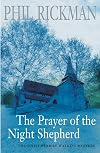
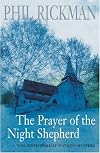
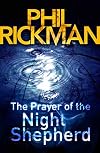
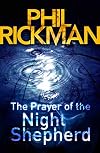
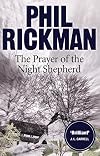
There were certain phrases you could feel, like fingers up your spine. Hattie Chancery's room. The possessive. Present tense. Oh God... A crumbling hotel on the border of England and Wales. A suggestion of inherited evil, a strange love affair... and the long-disputed origins of Sir Arthur Conan Doyle's The Hound of the Baskervilles. Fascinating for young Jane Watkins, flushed by the freedom of her first weekend job. But the sinister side becomes increasingly apparent to her mother, show more Merrily, diocesan exorcist for Hereford. Then come memories of a child-killer, blood in the fresh snow... show lessTags
Recommendations











Member Reviews
While Phil Rickman’s Merrily Watkins novels never were exactly light-hearted, they seem to become increasingly darker as the series. In a strange reversal, the happier the main characters become in their private lives (Merrily and Lol now pretty much officially a couple and even contemplating living together, Lol about to re-start his career, Jane still happily together with Eirion) the bleaker and more violent the world outside of their immediate circle seems to grow.
The Prayer of the Night Shepherd offers the mixture of mystery and the occult readers have come to expect from the series, this time involving the original of Arthur Conan Doyle’s Hound of the Baskervilles - one of the possible originals, that is, and will have turned show more to be a bit of red herring (on several levels) by the end of the novel. We get points of view from several regulars – Merrily of course, but Jane gets a lot of space to herself this time, and Lol is around again, too – as well as new character Danny who, as he is Gomer’s new partner, I assume we will likely be encountering again in future volumes. There are several narrative strands runing besides each other, some of which turn out to be connected, while others are only thematically linked, but unlike some earlier novels in the series (the fourth one in particular) it holds together quite nicely without things coming apart (maybe with a bit of fraying on the edges, but nothing substantial).
And like all installments in the series, the true appeal of The Prayer of the Night Shepherd comes neither from the mystery nor the horror elements but from its depicion of English and Welsh village life. As before, Rickman does a great job both with the atmosphere (including, among other things, a run-down hotel, a lonely farm and the Welsh-English border in general) and the characters, natives as well as city people that have drifted into the area for one reason or another. The novel isn’t something for people looking for a quick, action-packed read (it’s over 600 pages long, according to what my Kindle says) but for anyone who enjoys slowly sinking into the atmosphere of a place and getting immersed in a believable description of British country life this is strongly recommended. show less
The Prayer of the Night Shepherd offers the mixture of mystery and the occult readers have come to expect from the series, this time involving the original of Arthur Conan Doyle’s Hound of the Baskervilles - one of the possible originals, that is, and will have turned show more to be a bit of red herring (on several levels) by the end of the novel. We get points of view from several regulars – Merrily of course, but Jane gets a lot of space to herself this time, and Lol is around again, too – as well as new character Danny who, as he is Gomer’s new partner, I assume we will likely be encountering again in future volumes. There are several narrative strands runing besides each other, some of which turn out to be connected, while others are only thematically linked, but unlike some earlier novels in the series (the fourth one in particular) it holds together quite nicely without things coming apart (maybe with a bit of fraying on the edges, but nothing substantial).
And like all installments in the series, the true appeal of The Prayer of the Night Shepherd comes neither from the mystery nor the horror elements but from its depicion of English and Welsh village life. As before, Rickman does a great job both with the atmosphere (including, among other things, a run-down hotel, a lonely farm and the Welsh-English border in general) and the characters, natives as well as city people that have drifted into the area for one reason or another. The novel isn’t something for people looking for a quick, action-packed read (it’s over 600 pages long, according to what my Kindle says) but for anyone who enjoys slowly sinking into the atmosphere of a place and getting immersed in a believable description of British country life this is strongly recommended. show less
Wow. Really, WOW. I liked the previous books in this series, but came to accept that I would always care for the characters more than the events (plots) that happened around them. Until this story. Phil Rickman finally found the perfect balance of blending a pre-existing idea (Sherlock Holmes, The Hound of the Baskervilles in particular) into this adventure, giving this mystery a greater depth. As always, the cast of characters continues to be literary platinum.
I love Phil Rickman and his Reverend Merrily Watkins series, and this is probably one of the best "caught in a snowstorm" stories that I've ever read. The action takes place very close to Christmas in Merrily's village (Ledwardine) and in a gothic castle located right on the English and Welsh border. The area itself is full of mystery, and the old house has many of its own secrets that it keeps while it sits brooding in amongst the hills. Jane, Merrily's daughter, is working weekends up at this old house since it is now a hotel, and she stumbles on a real hornet's nest of intrigue and bad karma. Ancient secrets are about to be ripped open and this unleashes an evil that seems to come from the soil itself. Merrily is called in to do an show more excorcism to help free the house from its brooding and malignant prescence, and while she and Jane are there a murder occurs. No one can do this sort of story like Phil Rickman. His characters are simply wonderful. I simply can't put these books down once I've begun one. I absolutely love them! show less
Hereford vicar and deliverance minister Merrily Watkins offers spiritual assistance to a relative of a parishioner who is suffering from asthma. Her teenage daughter Jane is enjoying her first job as a maid in a hotel built under the famous Stanner Rocks. The wholesome inclinations lead them to become involved with Border country feuds, reality television producers, a literary controversy, a family curse, spiritualists, hired thugs, a woman with a past, a hell hound, a blizzard to snow in suspects, and, of course for this series, ghosts and murders. Rickman as usual uses convoluted plots and local folklore, but he excels here at creating a strange, harsh setting and showing how it effects the well-developed characters. A good read, the show more best in the series since Midwinter of the Spirit. show less
Could the Welsh border be the source of Sir Arthur Conan Doyle’s famous hound? Redundant TV producer Ben Foley thinks so, and is on a mission to prove it. Having purchased a collapsing Victorian manor and failed to transform it into a profitable hotel, the eager owner delves into the murky worlds of spiritualism and the manor’s hideous past. Enter local vicar, Merrily Watkins, who is rather concerned by Foley’s methods and his habit of involving her teenage daughter, Jane. Can a family be cursed? Is evil inherited? Can evensong cure cancer or asthma? And what will happen when the cameras start rolling?
My thoughts
This is Rickman’s sixth mystery novel featuring his rather modern vicar, Merrily. Not having read any of the previous show more stories, I did find myself feeling slightly confused in the early stages of the novel when details were referred to that clearly linked to previous plots. However, this became less of a problem as the novel continued and settled fully into this story.
There is a prologue which covers a rural incident that initially seems unimportant. It does serve to introduce two characters that will be significant in the storyline, but I really couldn’t see the point in it until I had read most of the novel, so would advise readers to be patient!
The prologue also sets the scene for a novel which is very specifically located on the Welsh border. People say “her” instead of “she” and the landscape if briefly but clearly evoked. I liked this aspect of the novel as there was a real sense of place created and sustained through the dialogue.
The vicar is introduced in the first chapter and I was surprised by her informality. She sounded rather young and irreverent for a vicar. However, as the story continued I liked the way in which she was thoughtful and genuinely wanted to help her parishioners. She was a more realistic character for having flaws.
Being ‘behind the scenes’ at the vicarage was also quite interesting and I found the discussions about church doctrine and attitudes mildly stimulating. I thought that, far from detracting from my enjoyment of the story (as I had expected) these elements of the plot made the story richer and more interesting.
Conversely, I had expected the origins of the Hound to be an interesting thread, but found this to be rather dull. This was perhaps because the of the narrative style. The blurb had made this book sound like a thriller, but in fact it was very slow paced and ran to 532 pages. Everything of any importance was revealed through dialogue, and usually second hand. Perhaps this is more realistic, but I felt that it resulted in a rather ‘flat’ novel: the narrative method nearly eliminated immediacy and drama. Because of this, I found this book easy to put down, although the developments in themselves were interesting.
There is no crime (in the present day storyline) until nearly 400 pages in, which I do feel is a little late for any novel billed as a crime/thriller. The quiet moments of humour in the narrative allowed for mild enjoyment, which is fine, but I had been expecting more tension. The storyline allows for a lot of detail about characters which helped me to anticipate some of the plot developments. I didn’t feel that this spoiled my enjoyment as the pace was deliberately slow: it felt like a meander through a quiet village.
Village life is central to the novel. Essentially, the whole novel turns on people’s back history and the revelations brought about through gossip. Key concerns are who is sleeping with whom and what your ancestors did. I found this quite distancing as I have limited experience of this kind of village intimacy and therefore it did not resonate with me. The various storylines gradually coalesce and move towards a resolution.
There is a postscript, although it isn’t called that. This allows all the ends to be neatly wrapped up, although it was clear what direction they were heading in anyway. I always like this at the end of a book as I enjoy a greater sense of closure. There is also a brief afterword, which is useful if you’re interested in knowing how facts inspired this fiction. I found this slightly surprising and therefore quite interesting to read as I had assumed that it was all fiction (although I knew that Conan Doyle had been interested in spiritualism).
Overall, I found this a mildly diverting read. I felt that it was more a story of village life (with a sprinkling of ghostlore) than a crime novel or thriller. It was fine to read but didn’t inspire me to rush to find another book in the series or by the same author. I think it would appeal to readers who like stories which contain an element of the supernatural. show less
My thoughts
This is Rickman’s sixth mystery novel featuring his rather modern vicar, Merrily. Not having read any of the previous show more stories, I did find myself feeling slightly confused in the early stages of the novel when details were referred to that clearly linked to previous plots. However, this became less of a problem as the novel continued and settled fully into this story.
There is a prologue which covers a rural incident that initially seems unimportant. It does serve to introduce two characters that will be significant in the storyline, but I really couldn’t see the point in it until I had read most of the novel, so would advise readers to be patient!
The prologue also sets the scene for a novel which is very specifically located on the Welsh border. People say “her” instead of “she” and the landscape if briefly but clearly evoked. I liked this aspect of the novel as there was a real sense of place created and sustained through the dialogue.
The vicar is introduced in the first chapter and I was surprised by her informality. She sounded rather young and irreverent for a vicar. However, as the story continued I liked the way in which she was thoughtful and genuinely wanted to help her parishioners. She was a more realistic character for having flaws.
Being ‘behind the scenes’ at the vicarage was also quite interesting and I found the discussions about church doctrine and attitudes mildly stimulating. I thought that, far from detracting from my enjoyment of the story (as I had expected) these elements of the plot made the story richer and more interesting.
Conversely, I had expected the origins of the Hound to be an interesting thread, but found this to be rather dull. This was perhaps because the of the narrative style. The blurb had made this book sound like a thriller, but in fact it was very slow paced and ran to 532 pages. Everything of any importance was revealed through dialogue, and usually second hand. Perhaps this is more realistic, but I felt that it resulted in a rather ‘flat’ novel: the narrative method nearly eliminated immediacy and drama. Because of this, I found this book easy to put down, although the developments in themselves were interesting.
There is no crime (in the present day storyline) until nearly 400 pages in, which I do feel is a little late for any novel billed as a crime/thriller. The quiet moments of humour in the narrative allowed for mild enjoyment, which is fine, but I had been expecting more tension. The storyline allows for a lot of detail about characters which helped me to anticipate some of the plot developments. I didn’t feel that this spoiled my enjoyment as the pace was deliberately slow: it felt like a meander through a quiet village.
Village life is central to the novel. Essentially, the whole novel turns on people’s back history and the revelations brought about through gossip. Key concerns are who is sleeping with whom and what your ancestors did. I found this quite distancing as I have limited experience of this kind of village intimacy and therefore it did not resonate with me. The various storylines gradually coalesce and move towards a resolution.
There is a postscript, although it isn’t called that. This allows all the ends to be neatly wrapped up, although it was clear what direction they were heading in anyway. I always like this at the end of a book as I enjoy a greater sense of closure. There is also a brief afterword, which is useful if you’re interested in knowing how facts inspired this fiction. I found this slightly surprising and therefore quite interesting to read as I had assumed that it was all fiction (although I knew that Conan Doyle had been interested in spiritualism).
Overall, I found this a mildly diverting read. I felt that it was more a story of village life (with a sprinkling of ghostlore) than a crime novel or thriller. It was fine to read but didn’t inspire me to rush to find another book in the series or by the same author. I think it would appeal to readers who like stories which contain an element of the supernatural. show less
Not the best in the series so far, but once again a story inspired by life which hooks into various controversial topics. I love how he exposes the dark underbelly of life on the borders and how family history can repeat, I also got the identity of the victim and the murderer wrong, so this book merits a reread.
Following the recent publication of the eleventh book in the series I've decided to reread the series. The review above shows that this was not one of my favourite instalments in the series, but I have to say that after my reread I think this may be one of the strongest books in the series.
Merrily is gaining a reputation as a healer following her transformation of the evening service. As a result she’s asked to help the nephew show more of one of her parishioners. In the meantime, in a step forward in their relationship, Lol is considering moving back to Ledwardine and discovers that Lucy’s old house is on the market.
Jane has a weekend job working at a local hotel, in the shadow of Stanner Rocks, which is teetering on the edge of closing. In an attempt to attract more visitors the owners try to exploit the possible connection between the house and a local legend possibly inspiring Sir Arthur Conan Doyle to write The Hound of the Baskervilles – it seems that Conan Doyle may have attended a séance at the house with sinister repercussions. In the same area, Danny Thomas, who’s now working with Gomer, becomes concerned about a neighbouring farmer, who seems to be being threatened by the local JP, Sebbie ‘Three Farms’ Dacre.
On the night of the biggest storm the area has seen in years there’s a murder and suddenly Merrily, Jane and Lol, ably assisted by Gomer and Danny, are confronted by evil.
Superb. show less
Following the recent publication of the eleventh book in the series I've decided to reread the series. The review above shows that this was not one of my favourite instalments in the series, but I have to say that after my reread I think this may be one of the strongest books in the series.
Merrily is gaining a reputation as a healer following her transformation of the evening service. As a result she’s asked to help the nephew show more of one of her parishioners. In the meantime, in a step forward in their relationship, Lol is considering moving back to Ledwardine and discovers that Lucy’s old house is on the market.
Jane has a weekend job working at a local hotel, in the shadow of Stanner Rocks, which is teetering on the edge of closing. In an attempt to attract more visitors the owners try to exploit the possible connection between the house and a local legend possibly inspiring Sir Arthur Conan Doyle to write The Hound of the Baskervilles – it seems that Conan Doyle may have attended a séance at the house with sinister repercussions. In the same area, Danny Thomas, who’s now working with Gomer, becomes concerned about a neighbouring farmer, who seems to be being threatened by the local JP, Sebbie ‘Three Farms’ Dacre.
On the night of the biggest storm the area has seen in years there’s a murder and suddenly Merrily, Jane and Lol, ably assisted by Gomer and Danny, are confronted by evil.
Superb. show less
Merrily Watkins sixth outing, and the focus shifts to Jane, who has a weekend job at Stanner Hall (purported inspiration for Hound of the Baskervilles). Whilst Jane uncovers some strange happenings at the Hall Merrily is being hailed as a healer. Not the best in the series, but still readable.
Members
- Recently Added By
Lists

Crime-Solving Clerics
57 works; 3 members
Author Information

43+ Works 6,938 Members
Series

Work Relationships
Is contained in
Common Knowledge
- Canonical title
- The Prayer of the Night Shepherd
- Original publication date
- 2004-04-02
- People/Characters
- Merrily Watkins; Jane Watkins; Lol Robinson; Eirion "Irene" Lewis; Gomer Parry; Sophie Hill (show all 10); Danny Thomas; Frannie Bliss; Annie Howe; Andy Mumford
- Important places
- Ledwardine, Herefordshire, England, UK; Herefordshire, England, UK; Stanner Rocks
- Epigraph
- They had gone a mile or two when they passed one of the night shepherds upon the moorlands, and they cried to him to know if he had seen the hunt. And the man, as the story goes, was so crazed with fear that he could sc... (show all)arce speak....
Sir Arthur Conan Doyle, The Hound of the Baskervilles
No record in cold print can give the reader sn idea of the pleasure experienced in collecting the elusive material we call folk-lore from the living brains of men and women of whose lives it has formed an integral part. In ... (show all)some cases, with regard to superstitious beliefs, there is a deep reserve to. Be overcome; the more real the belief, the greater the difficulty... The folk of the Welsh districts are more superstitious, as a rule ...
Ella Mary Leather, The Folk-lore of Herefordshire - First words
- Should have known, he really should.
- Last words
- (Click to show. Warning: May contain spoilers.)'Well, I hope you have a good Christmas,' she said.
Classifications
Statistics
- Members
- 314
- Popularity
- 100,936
- Reviews
- 9
- Rating
- (3.95)
- Languages
- English, German
- Media
- Paper, Audiobook, Ebook
- ISBNs
- 11
- ASINs
- 7