On This Page
Description
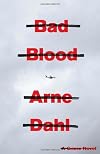
In Arne Dahl’s riveting follow-up to Misterioso, the Intercrime team is assigned the task of tracking down an American serial killer on the loose in Sweden—quietly, and as quickly as possible.When a Swedish literary critic is found tortured to death in a janitor’s closet at Newark International Airport, the police realize that the murderer made off with the victim’s ticket and boarded a flight to Stockholm. Swedish authorities are placed on high alert, but the killer manages to show more slip through the customs dragnet and vanishes into the night.
With no clear motive in sight, Detectives Paul Hjelm and Kerstin Holm of Intercrime’s A-Unit take over the investigation. They learn that the method of torture used was not only a highly specialized means of extracting information secretly developed during the Vietnam War—allowing the victim to whisper, but not to scream—but also that it was the modus operandi of an allegedly deceased homicidal maniac known only as the Kentucky Killer.
As additional victims are discovered on the outskirts of Stockholm and the terror grows, the team finds itself coming up empty-handed. Hjelm and Holm fly to New York, hoping to discover both the killer’s identity and the source of his interest in Sweden. What they quickly learn, searching through the past, is that bad blood always comes back around.
. show less
Tags
Recommendations























Member Reviews
Book Info: Genre: Suspense/Thriller/Noir Crime
Reading Level: Adult
Recommended for: those who like darker crime thrillers, those who like Scandinavian crime novels
Book Available: August 13, 2013 in Hardcover and Kindle formats
Trigger Warnings: torture, murder, infidelity (flashback to first book), child abuse
My Thoughts: This is an absolutely brilliant book, like the first one. Again I am not surprised to find that Arne Dahl is a bestseller and very well-known elsewhere in the world. While it is very dark, it's also very well-written, and a highly enjoyable read.
This book mentions that the majority of serial killers—the vast majority—live in and operate in the USA. I did a little looking into it and saw that this is true, and it made show more me wonder: why? What in our society is feeding this sort of sick psyche? What is causing our children to grow up to want to murder people over and over again? This is nothing new, either; as long as records have been kept, the US has led the world. It is just that we keep better records? Consider that countries like India and China vastly outnumber us in population, yet we hold this record. It's very obviously not about being crowded, as this is one of the less-crowded countries in the world. It's very strange and, I think, a good subject for discussion. If anyone knows of any studies done to try to explain this, please comment with links.
Speaking of serial killers, one thing about them is you can never tell who they are.
“Perhaps one could trivially conclude that he simply didn't stand out. An everyman, like so many serial killers. One might suppose that a man who, hardly an hour earlier, had carried out a bestial, tortuous murder would stand out in some day, perhaps not with large, wild eyes, bloody clothes, and a dripping ice pick, but at least something.”
But of course, they usually don't.
However, ironically, as Kersten Holm says, “Serial killing is about being seen.” Not literally, of course, but about being noticed, confirming one's own reality through the actions of others. Power is gained through the public's reactions, through the attempts of the police to catch the killer, and through the distress caused to everyone around the situation.
There is a description of a literary critic in this book that really made me sit up and take notice. A colleague describes him thus:
“Hassel had power. He was allowed to write about whatever books he wanted, and he always chose things he didn't understand, just so he could cut those authors off at the knees. He wrote... a few... novels in the seventies, but since then all his work has been based on raking people over the coals. It's almost impossible to count the promising authors he's single-handedly sunk.”
Is that what is meant when being a literature critic is mentioned? Is that why so many people who write reviews seem to revel in cruel and ranting “reviews” designed only to taunt and demean the author rather than explain why they didn't like the book in a way that actually refers to... the book? Well, that explains a lot of things...
Obviously this is not a humorous book. It's about a nasty serial killer. But there are some really funny moments. One of my favorites ran a couple pages, where the habits of each of the detectives in the morning, and during transit to work, are described. It made me snort repeatedly. The humor is a bit dry, but I think folks who like their humor dry—like they like their champagne or wine—will be similarly amused.
I think fans of noir, darker crimer thrillers, and fans of other Scandinavian writers will find this to be a book they won't want to miss. There are almost a dozen novels in this series, but this is only the second to be translaterd into English. I very much hope the remainder of the series will follow in due time, as I definitely want to read them all. This book doesn't have a happy ending, but it does have a hopeful one; I am very happy the last two chapters were included to shine a light in the darkness as it were. Highly recommended.
Series Information: Intercrime/Unit-A series
Book 1: Misterioso, read and reviewed May, 2011, review linked here where formatting allowed.
Book 2: Bad Blood, available August 13, 2013
Books 3 – 11: Published in Sweden and elsewhere in Europe, but not translated into English at this time. Hopefully they will be translated into English and released here soon!
Disclosure: I received an ARC from the Amazon Vine program in exchange for an honest review. All opinions are my own.
Synopsis: In Arne Dahl’s riveting follow-up to Misterioso, the Intercrime team is assigned the task of tracking down an American serial killer on the loose in Sweden—quietly, and as quickly as possible.
When a Swedish literary critic is found tortured to death in a janitor’s closet at Newark International Airport, the police realize that the murderer made off with the victim’s ticket and boarded a flight to Stockholm. Swedish authorities are placed on high alert, but the killer manages to slip through the customs dragnet and vanishes into the night.
With no clear motive in sight, Detectives Paul Hjelm and Kerstin Holm of Intercrime’s A-Unit take over the investigation. They learn that the method of torture used was not only a highly specialized means of extracting information secretly developed during the Vietnam War—allowing the victim to whisper, but not to scream—but also that it was the modus operandi of an allegedly deceased homicidal maniac known only as the Kentucky Killer.
As additional victims are discovered on the outskirts of Stockholm and the terror grows, the team finds itself coming up empty-handed. Hjelm and Holm fly to New York, hoping to discover both the killer’s identity and the source of his interest in Sweden. What they quickly learn, searching through the past, is that bad blood always comes back around. show less
Reading Level: Adult
Recommended for: those who like darker crime thrillers, those who like Scandinavian crime novels
Book Available: August 13, 2013 in Hardcover and Kindle formats
Trigger Warnings: torture, murder, infidelity (flashback to first book), child abuse
My Thoughts: This is an absolutely brilliant book, like the first one. Again I am not surprised to find that Arne Dahl is a bestseller and very well-known elsewhere in the world. While it is very dark, it's also very well-written, and a highly enjoyable read.
This book mentions that the majority of serial killers—the vast majority—live in and operate in the USA. I did a little looking into it and saw that this is true, and it made show more me wonder: why? What in our society is feeding this sort of sick psyche? What is causing our children to grow up to want to murder people over and over again? This is nothing new, either; as long as records have been kept, the US has led the world. It is just that we keep better records? Consider that countries like India and China vastly outnumber us in population, yet we hold this record. It's very obviously not about being crowded, as this is one of the less-crowded countries in the world. It's very strange and, I think, a good subject for discussion. If anyone knows of any studies done to try to explain this, please comment with links.
Speaking of serial killers, one thing about them is you can never tell who they are.
“Perhaps one could trivially conclude that he simply didn't stand out. An everyman, like so many serial killers. One might suppose that a man who, hardly an hour earlier, had carried out a bestial, tortuous murder would stand out in some day, perhaps not with large, wild eyes, bloody clothes, and a dripping ice pick, but at least something.”
But of course, they usually don't.
However, ironically, as Kersten Holm says, “Serial killing is about being seen.” Not literally, of course, but about being noticed, confirming one's own reality through the actions of others. Power is gained through the public's reactions, through the attempts of the police to catch the killer, and through the distress caused to everyone around the situation.
There is a description of a literary critic in this book that really made me sit up and take notice. A colleague describes him thus:
“Hassel had power. He was allowed to write about whatever books he wanted, and he always chose things he didn't understand, just so he could cut those authors off at the knees. He wrote... a few... novels in the seventies, but since then all his work has been based on raking people over the coals. It's almost impossible to count the promising authors he's single-handedly sunk.”
Is that what is meant when being a literature critic is mentioned? Is that why so many people who write reviews seem to revel in cruel and ranting “reviews” designed only to taunt and demean the author rather than explain why they didn't like the book in a way that actually refers to... the book? Well, that explains a lot of things...
Obviously this is not a humorous book. It's about a nasty serial killer. But there are some really funny moments. One of my favorites ran a couple pages, where the habits of each of the detectives in the morning, and during transit to work, are described. It made me snort repeatedly. The humor is a bit dry, but I think folks who like their humor dry—like they like their champagne or wine—will be similarly amused.
I think fans of noir, darker crimer thrillers, and fans of other Scandinavian writers will find this to be a book they won't want to miss. There are almost a dozen novels in this series, but this is only the second to be translaterd into English. I very much hope the remainder of the series will follow in due time, as I definitely want to read them all. This book doesn't have a happy ending, but it does have a hopeful one; I am very happy the last two chapters were included to shine a light in the darkness as it were. Highly recommended.
Series Information: Intercrime/Unit-A series
Book 1: Misterioso, read and reviewed May, 2011, review linked here where formatting allowed.
Book 2: Bad Blood, available August 13, 2013
Books 3 – 11: Published in Sweden and elsewhere in Europe, but not translated into English at this time. Hopefully they will be translated into English and released here soon!
Disclosure: I received an ARC from the Amazon Vine program in exchange for an honest review. All opinions are my own.
Synopsis: In Arne Dahl’s riveting follow-up to Misterioso, the Intercrime team is assigned the task of tracking down an American serial killer on the loose in Sweden—quietly, and as quickly as possible.
When a Swedish literary critic is found tortured to death in a janitor’s closet at Newark International Airport, the police realize that the murderer made off with the victim’s ticket and boarded a flight to Stockholm. Swedish authorities are placed on high alert, but the killer manages to slip through the customs dragnet and vanishes into the night.
With no clear motive in sight, Detectives Paul Hjelm and Kerstin Holm of Intercrime’s A-Unit take over the investigation. They learn that the method of torture used was not only a highly specialized means of extracting information secretly developed during the Vietnam War—allowing the victim to whisper, but not to scream—but also that it was the modus operandi of an allegedly deceased homicidal maniac known only as the Kentucky Killer.
As additional victims are discovered on the outskirts of Stockholm and the terror grows, the team finds itself coming up empty-handed. Hjelm and Holm fly to New York, hoping to discover both the killer’s identity and the source of his interest in Sweden. What they quickly learn, searching through the past, is that bad blood always comes back around. show less
The second available in translation from what is now a ten book series in the original Swedish, BAD BLOOD sees Sweden’s team of elite police investigators (Team A) on the trail of a vicious killer. The first victim is a Swedish literary critic whose hellishly tortured body is discovered at an American airport and it becomes apparent that after carrying out the murder the killer hopped on a plane to Sweden. Despite the advance warning they receive, police miss catching him on arrival, in the first of what becomes a long list of increasingly implausible plot devices, thereby leaving him free to go on a killing spree in Sweden. They soon learn they are on the lookout for a particularly nasty American serial murderer known as the Kentucky show more Killer, thought to have been dormant since his 18-body killing spree a couple of decades earlier.
BAD BLOOD was originally published in 1998 and I tried hard to remember that perhaps crazed serial killers weren’t quite as overdone then as I feel they are now. Though I’m not convinced I’d ever have bought into the premise of this particular story with its torture-crazy, cross-continent, multi-generational killer(s). Even though there is ultimately some kind of rationalisation here I still found the level of clichés and preposterous plot devices just too high for me.
There is some social commentary in the form of the now ubiquitous nods to the changes in Swedish social makeup and behaviour but more dominant themes included the unwanted the incursion of American culture into Swedish society and the book’s eponymous subject. I had been keeping a count of how many times variations of the phrase “bad blood wins out in the end” were repeated but I lost my post-it note with the tally. I’m pretty sure we’d made it to double figures and the book wasn’t yet finished. My take away messages were that America is bad and you can’t fight genetics.
I’m afraid the characters didn’t do much for me either. The first victim is so thoroughly unlikable that it was hard to care who’d killed him or why, even his own family didn’t give a toss so readers can hardly be blamed for not caring about him. Dahl uses a team of investigators to propel the investigative component of the story rather than focusing on one or two leads and while I know some writers can make this work I don’t really feel that Dahl has done so here. To me they are basically a collection of fairly indistinguishable angst-ridden, middle-aged men. Plus a token female.
So for me BAD BLOOD was the write-by-numbers thriller of the kind that people who don’t read crime fiction think makes up the entire genre. An unspeakably evil person does unspeakably horrid things while basically good people try to stop him but they fail for a while because otherwise there wouldn’t be a story. There’s not really much of substance and the only genuinely original angle was the particularly gruesome torture method used by Dahl’s killer which didn’t really add anything to my enjoyment level. It’s basically a ‘meh’ on my personal scale. show less
BAD BLOOD was originally published in 1998 and I tried hard to remember that perhaps crazed serial killers weren’t quite as overdone then as I feel they are now. Though I’m not convinced I’d ever have bought into the premise of this particular story with its torture-crazy, cross-continent, multi-generational killer(s). Even though there is ultimately some kind of rationalisation here I still found the level of clichés and preposterous plot devices just too high for me.
There is some social commentary in the form of the now ubiquitous nods to the changes in Swedish social makeup and behaviour but more dominant themes included the unwanted the incursion of American culture into Swedish society and the book’s eponymous subject. I had been keeping a count of how many times variations of the phrase “bad blood wins out in the end” were repeated but I lost my post-it note with the tally. I’m pretty sure we’d made it to double figures and the book wasn’t yet finished. My take away messages were that America is bad and you can’t fight genetics.
I’m afraid the characters didn’t do much for me either. The first victim is so thoroughly unlikable that it was hard to care who’d killed him or why, even his own family didn’t give a toss so readers can hardly be blamed for not caring about him. Dahl uses a team of investigators to propel the investigative component of the story rather than focusing on one or two leads and while I know some writers can make this work I don’t really feel that Dahl has done so here. To me they are basically a collection of fairly indistinguishable angst-ridden, middle-aged men. Plus a token female.
So for me BAD BLOOD was the write-by-numbers thriller of the kind that people who don’t read crime fiction think makes up the entire genre. An unspeakably evil person does unspeakably horrid things while basically good people try to stop him but they fail for a while because otherwise there wouldn’t be a story. There’s not really much of substance and the only genuinely original angle was the particularly gruesome torture method used by Dahl’s killer which didn’t really add anything to my enjoyment level. It’s basically a ‘meh’ on my personal scale. show less
Reviewed at Reviewing the Evidence. Though most veteran readers of crime fiction are heartily sick of serial killer stories, this one (first published in 1999) is worth a read. In the tradition of Sjowal and Wahloo, Dahl sees crime at both the personal level, particularly in how victims and their communities are affected, but also in a broader social context. Here, he sees parallels between aberrant thrill killing and state violence. A thought-provoking, well written (though perhaps less well-translated) police procedural with a winning cast of characters.
I came to both this book and the first in the series via a brief but favourable review in a British culture magazine from a few years back. I had seen some episodes of the the Arne Dahl TV series but they didn't quite provoke enough interest to send me to the books they were adapted from.
Both books have an offbeat and witty style to counter the darker subject matter, and had enough momentum in the story to propel me towards the end with interest very much intact.
It reinforces my personal prejudice against plot summaries and genre classifications in reviews. Those could have sent me headed in the opposite direction fast, and I wouldn't have read either book.
Both books have an offbeat and witty style to counter the darker subject matter, and had enough momentum in the story to propel me towards the end with interest very much intact.
It reinforces my personal prejudice against plot summaries and genre classifications in reviews. Those could have sent me headed in the opposite direction fast, and I wouldn't have read either book.
It's no secret to faithful readers that I'm a crime fiction fan. I always enjoy discovering new authors in this genre.
Arne Dahl's latest North American release is Bad Blood. This is the second book featuring his recurring characters, the members of the A-Unit of the Swedish Intercrime Team.
The team is notified by the FBI that an American serial killer has eluded authorities and is on a flight to Sweden. Once the plane lands, the killer manages to again escape and the inevitable wait begins.....for him to kill again.
I felt a little behind as I got up to speed with who was who in the team. There are many players, each with their own strengths, foibles and backgrounds. There's a rich cast with enough personalities that every reader show more will come away with a favourite. (I'm partial to the old man of the team - Viggo) Dahl makes references to the first crime this team solved - in the book Misterioso. The allusions to the crime made it sound like a book I would also enjoy, but Bad Blood can definitely be read as a stand alone.
American crime novels are often direct and to the point. I find that foreign crime novels often take a different approach, with more conversation between the characters, more speculation and more discussion. This was the case with the first half of Bad Blood. But, the second half of the book really picks up the pace once the bodies (yes, plural) start piling up.
Dahl has created a serial killer with a really nasty way of doing away with his victims. (Fair warning to gentle readers) The plotting took off in directions I would not have imagined. A little bit of a stretch in places, but definitely original. Dahl manages to sneak in social commentary along side of his crime.
Rachel Willson-Broyles was the translator. There were a few wooden bits with some of the humour, but overall it was a smooth read. The book was originally published in 1998, so some of the references are dated. But, I would definitely read the next North American release from Dahl, as I really enjoyed the characters. show less
Arne Dahl's latest North American release is Bad Blood. This is the second book featuring his recurring characters, the members of the A-Unit of the Swedish Intercrime Team.
The team is notified by the FBI that an American serial killer has eluded authorities and is on a flight to Sweden. Once the plane lands, the killer manages to again escape and the inevitable wait begins.....for him to kill again.
I felt a little behind as I got up to speed with who was who in the team. There are many players, each with their own strengths, foibles and backgrounds. There's a rich cast with enough personalities that every reader show more will come away with a favourite. (I'm partial to the old man of the team - Viggo) Dahl makes references to the first crime this team solved - in the book Misterioso. The allusions to the crime made it sound like a book I would also enjoy, but Bad Blood can definitely be read as a stand alone.
American crime novels are often direct and to the point. I find that foreign crime novels often take a different approach, with more conversation between the characters, more speculation and more discussion. This was the case with the first half of Bad Blood. But, the second half of the book really picks up the pace once the bodies (yes, plural) start piling up.
Dahl has created a serial killer with a really nasty way of doing away with his victims. (Fair warning to gentle readers) The plotting took off in directions I would not have imagined. A little bit of a stretch in places, but definitely original. Dahl manages to sneak in social commentary along side of his crime.
Rachel Willson-Broyles was the translator. There were a few wooden bits with some of the humour, but overall it was a smooth read. The book was originally published in 1998, so some of the references are dated. But, I would definitely read the next North American release from Dahl, as I really enjoyed the characters. show less
This is a thrilling Swedish crime novel, the second in a series featuring the same team of investigators. At the same time as it documents the hunt to trace a serial killer who moves from America to Sweden, it explores the differences between the two cultures and a fear of Sweden being drawn deeper into global affairs that may adversely affect the relaxed and liberal ideals of the country.
Although translated into English in 2013, the book was first published in Swedish in 1998, thus some of the investigation techniques already seem dated, for instance, there is no use of security camera recordings at airports or banks, which would be a prime source of evidence now. Nonetheless, it is an exciting read.
Although translated into English in 2013, the book was first published in Swedish in 1998, thus some of the investigation techniques already seem dated, for instance, there is no use of security camera recordings at airports or banks, which would be a prime source of evidence now. Nonetheless, it is an exciting read.
Starts well, slows down badly for a while but then picks up well for the last half.
Members
- Recently Added By
Lists

Scandinavian Crime Fiction
224 works; 37 members
Author Information

63+ Works 3,796 Members
Some Editions
Series

Belongs to Publisher Series
Piper-Taschenbuch (4285)
Work Relationships
Is contained in
Common Knowledge
- Canonical title
- Bad Blood
- Original title
- Ont Blod
- Alternate titles
- Kentucky Killer
- Original publication date
- 1998
- Related movies*
- Arne Dahl: Ont Blod (2012 | IMDb)
- First words*
- Wortloser Schmerz, dachte er.
- Last words*
- (Click to show. Warning: May contain spoilers.)Draussen strömte der Regen weiter.
- Original language*
- Schwedisch
- Disambiguation notice*
- Handlungsbezogen ist Misterioso der erste Fall der A-Gruppe, Nach Erscheinungsdatum wäre Böses Blut der erste Fall.
*Some information comes from Common Knowledge in other languages. Click "Edit" for more information.
Classifications
- Genres
- Fiction and Literature, Mystery
- DDC/MDS
- 839.73 — Literature & rhetoric German & related literatures Other Germanic literatures Swedish literature Swedish fiction
- LCC
- PT9876.14 .A35 .O5813 — Language and Literature German, Dutch and Scandinavian literatures Swedish literature Individual authors or works 1961-2000
- BISAC
Statistics
- Members
- 452
- Popularity
- 67,612
- Reviews
- 15
- Rating
- (3.80)
- Languages
- 15 — Danish, Dutch, English, Estonian, Finnish, French, German, Hungarian, Italian, Norwegian (Bokmål), Norwegian, Polish, Russian, Spanish, Swedish
- Media
- Paper, Audiobook, Ebook
- ISBNs
- 54
- ASINs
- 7