Modern Architecture: Being the Kahn Lectures for 1930
by Frank Lloyd Wright
Princeton Monographs in Art and Archaeology
On This Page
Description
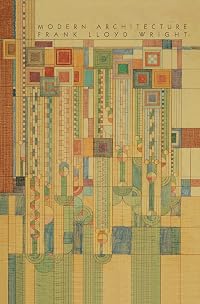
Modern Architecture is a landmark text--the first book in which America's greatest architect put forth the principles of a fundamentally new, organic architecture that would reject the trappings of historical styles while avoiding the geometric abstraction of the machine aesthetic advocated by contemporary European modernists. One of the most important documents in the development of modern architecture and the career of Frank Lloyd Wright, Modern Architecture is a provocative and profound show more polemic against America's architectural eclecticism, commercial skyscrapers, and misguided urban planning. The book is also a work of savvy self-promotion, in which Wright not only advanced his own concept of an organic architecture but also framed it as having anticipated by decades--and bettered--what he saw as the reductive modernism of his European counterparts. Based on the 1931 original, for which Wright supplied the cover illustration, this beautiful edition includes a new introduction that puts Modern Architecture in its broader architectural, historical, and intellectual context for the first time. The subjects of these lively lectures--from "Machinery, Materials and Men" to "The Tyranny of the Skyscraper" and "The City"--move from a general statement of the conditions of modern culture to particular applications in the fields of architecture and urbanism at ever broadening scales. Wright's vision in Modern Architecture is ultimately to equate the truly modern with romanticism, imagination, beauty, and nature--all of which he connects with an underlying sense of American democratic freedom and individualism. show lessTags
Recommendations




















Members
- Recently Added By
Lists

Trinity College Booklist (1951): Class Seven, Fine Arts and Music
46 works; 3 members
Author Information

219+ Works 4,365 Members
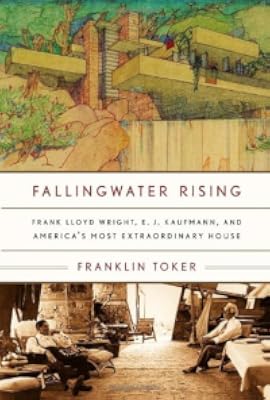
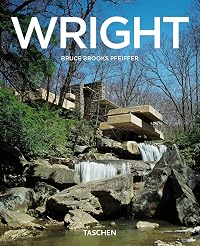
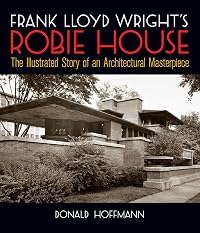
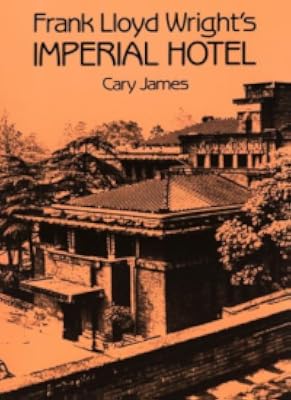
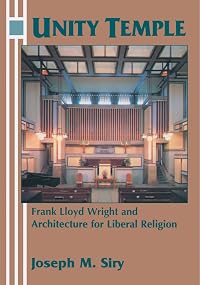
Wright is widely considered the greatest American architect and certainly one of the most influential. Throughout a career of nearly 70 years, he produced masterpiece after masterpiece, each different and boldly new and yet each with the unmistakable touch of Wright's genius in the treatment of material, the detailing, and the overall concept. show more Born in Wisconsin of Welsh ancestry, Wright studied civil engineering at the University of Wisconsin and began his career in Chicago as chief assistant to Louis Henry Sullivan, who influenced his early thinking on the American architect as harbinger of democracy and on the organic nature of the true architecture. Out of these ideas, Wright developed the so-called prairie house, of which the Robie House in Chicago and the Avery Coonley House in Riverdale, Illinois, are outstanding examples. In the "prairie-style," Wright used terraces and porches to allow the inside to flow easily outside. Movement within such houses is also open and free-floating from room to room and from layer to layer. Public buildings followed: the Larkin Administration Building in Buffalo (destroyed) and the Unity Temple in Oak Park, Illinois, the former probably the most original and seminal office building up to that time (1905). The Midway Gardens in Chicago and the Imperial Hotel in Tokyo (both gone) came next, winning Wright still greater acclaim. Personal tragedy, misunderstanding, and neglect dogged Wright's middle years, but he prevailed, and in his later life gathered enormous success and fame. The masterworks of his mature years are the Johnson Wax Building in Racine, Wisconsin, and Fallingwater, Bear Run, Pennsylvania---with its bold cantilevered balconies over a running stream, probably the most admired and pictured private house in American architecture; then, toward the end of his life, the spiral design of the Guggenheim Museum in New York City. Wright's own houses, to which he joined architectural studios, are also noteworthy: Taliesin West was a true Shangri-la in the Arizona desert, to which he turned in order to escape the severe winters in Wisconsin, where he had built his extraordinary Taliesin East. Wright was a prolific and highly outspoken writer, ever polemical, ever ready to propagate his ideas and himself. All of his books reflect a passionate dedication to his beliefs---in organic architecture, democracy, and creativity. (Bowker Author Biography) show less
Some Editions
Series

Classifications
Statistics
- Members
- 39
- Popularity
- 748,563
- Languages
- English
- Media
- Paper, Ebook
- ISBNs
- 3