On This Page
Description
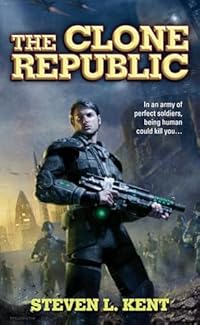
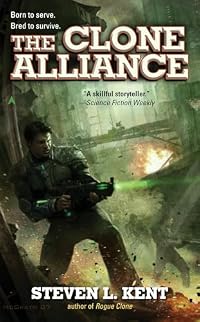
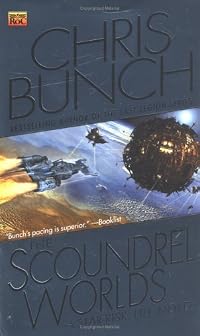
Earth, 2508 A.D. Humans have spread across the six arms of the Milky Way Galaxy. The Unified Authority controls Earth's colonies with an iron fist and a powerful military-a military made up almost entirely of clones... Private first-class Wayson Harris was raised in a U.A. orphanage among thousands of clones born and bred as the ultimate soldiers. But Harris isn't like the other Marines: he has a mind of his own. He figures he's paying for that independent streak when his first assignment show more out of boot camp is the smallest Marine outpost in the whole U.A. When a rogue general surfaces, the remote desert world Harris thought was a dead-end posting becomes anything but. Fighting off the general's raid gains Harris a promotion. But it also brings him to the attention of some unfriendly U.A. leaders. They have their own plans for the military-plans Harris disrupts by his very existence. For in an army of clones, the one unforgivable sin is to be different... show lessTags
Recommendations
Member Reviews
This was a book for a RL book group, and not something I would have chosen to read myself. I was pleasantly surprised however, it had more depth than I expected for a Military SF book.
It is set in 2508 and humanity has spread throughout the Milky-Way. There are colony worlds scattered throughout, but all is run from earth by the Unified Authority. Based in Washington DC the new government is based on 2 things, the US Constitution and the 3rd book of Plato's Republic. The form of government is really an oligarchy with a Committee composed of Senators taking the place of the Executive branch. The Senators are chosen from elite, wealthy, families who have become UA aristocrats. The House of Representatives is made up of elected show more representatives of earth, and all the colonies. They make lots of noise, but have no power.
The leaders of the UA keep control by breeding millions of clones who are the military arm and are hardwired, and programmed to follow orders without question. They are also built with a self-destruct mechanism, that if they ever find out they are clones they will die. They are raised in orphanages and given military training from an early age. They see themselves as looking different from all the others, whom they know are clones.
The POV, Wayson Harris, is a human orphan who is very good at his military skills, but slower than a clone, because his brain has to process his orders. The book is about him just starting his military career - he is a Marine.
There are factions within the UA government and the military, and Harris seems to be at point zero whenever something important happens. There are a group of separatists, that are fighting the military; stubborn civilians whose cultural choices invite a massacre; and in-fighting at the command level of the military, as different commanders end up in charge of the fleet with Harris in it.
He moves through the book, trying to do his best, but also questioning the various orders, and plans. It is the first book in a series, and I don't know if I will continue with it. Mostly because I already have so many other books and series to read, that I am reluctant to add another. I enjoyed the book, but it wasn't a book that I couldn't put down. show less
It is set in 2508 and humanity has spread throughout the Milky-Way. There are colony worlds scattered throughout, but all is run from earth by the Unified Authority. Based in Washington DC the new government is based on 2 things, the US Constitution and the 3rd book of Plato's Republic. The form of government is really an oligarchy with a Committee composed of Senators taking the place of the Executive branch. The Senators are chosen from elite, wealthy, families who have become UA aristocrats. The House of Representatives is made up of elected show more representatives of earth, and all the colonies. They make lots of noise, but have no power.
The leaders of the UA keep control by breeding millions of clones who are the military arm and are hardwired, and programmed to follow orders without question. They are also built with a self-destruct mechanism, that if they ever find out they are clones they will die. They are raised in orphanages and given military training from an early age. They see themselves as looking different from all the others, whom they know are clones.
The POV, Wayson Harris, is a human orphan who is very good at his military skills, but slower than a clone, because his brain has to process his orders. The book is about him just starting his military career - he is a Marine.
There are factions within the UA government and the military, and Harris seems to be at point zero whenever something important happens. There are a group of separatists, that are fighting the military; stubborn civilians whose cultural choices invite a massacre; and in-fighting at the command level of the military, as different commanders end up in charge of the fleet with Harris in it.
He moves through the book, trying to do his best, but also questioning the various orders, and plans. It is the first book in a series, and I don't know if I will continue with it. Mostly because I already have so many other books and series to read, that I am reluctant to add another. I enjoyed the book, but it wasn't a book that I couldn't put down. show less
I bought this 2006 paperback from Better World Books. It has several sequels.
Harris was raised in a Unified Authority orphanage among thousands of clones born and bred to be soldiers. But Harris isn't like the others, he has a mind of his own. His first assignment out of boot camp is to the smallest outpost in the whole U.A. When a rogue general surfaces on the remote world Harris is posted on, he ends up with a promotion. However, that brings him to the attention of some unfriendly U.A. leaders. They have their own plans for the military - plans that Harris disrupts by his very existence.
Not really a bad book, but I just couldn't warm to Harris, and it really cut into my engagement with the plot. By the end of it, I didn't really care show more what happened to him, or anyone else. show less
Harris was raised in a Unified Authority orphanage among thousands of clones born and bred to be soldiers. But Harris isn't like the others, he has a mind of his own. His first assignment out of boot camp is to the smallest outpost in the whole U.A. When a rogue general surfaces on the remote world Harris is posted on, he ends up with a promotion. However, that brings him to the attention of some unfriendly U.A. leaders. They have their own plans for the military - plans that Harris disrupts by his very existence.
Not really a bad book, but I just couldn't warm to Harris, and it really cut into my engagement with the plot. By the end of it, I didn't really care show more what happened to him, or anyone else. show less
I bought this as a pulp science fiction novel to read at Xmas. I was pleasantly surprised by a well written novel. The characters and the scenario were plausible, especially the notion of politicians using clones as cannon-fodder.
The galaxy is ruled by the U.A.[Unified Authority]. Their will is enforced by an army of clones, who are programmed to not know they are clones. One man, Wayson, is a new type of clone, promptly discontinued, because he is self-aware and has an insatiable bloodlust in battle.
Basically about his rise through the ranks and the politic'ing going on around him. It was an ok read, but I am just not a big fan of military scifi overall. Won't be reading any more in the Clone series.
Basically about his rise through the ranks and the politic'ing going on around him. It was an ok read, but I am just not a big fan of military scifi overall. Won't be reading any more in the Clone series.
To be honest, I was expecting something better. I liked the basic premise - that in the future, the military breed clones in orphanages to become expendible soldiers, to fight in intergalactic battles. So far, so good. But the writing wasn't up to scratch. It didn't engage or intrigue me. There was way too much description of the ship's layout, and not enough character building. World building was laborious and though the battles were good, the time between them lagged. I don't think I'll follow this series any more. Disappointing really, because it's the genre I really like...
I found this to be very boring and dry. I do like military fiction, but I really could not picture what was happening in this novel. The concept was interesting, but the characters just were not engaging to me.
Ratings
Members
- Recently Added By
Author Information

33+ Works 2,127 Members
Steven L. Kent turned a lifelong joystick addiction into a fifteen-year gig writing for outlets like 4 Microsoft News, Boys' Life, USA Today, the Chicago Tribune, and The Japan Times. In addition to his two-volume account The Ultimate History of Video Games, Kent wrote The Making of Final Fantasy: The Spirits Within 2nd The Making of Doom 3. Also show more a novelist, he authored the Clone Republic series and co-authored 100 Fathoms Below with Nicholas Kaufmann. He lives in Seattle, Washington. show less
Some Editions
Series

Work Relationships
Common Knowledge
- Canonical title
- The Clone Republic
- Original publication date
- 2006-04
- People/Characters
- Wayson Harris; Ray Freeman; Admiral Klyber
- Important places
- Earth; Scutom-Crux Arm; Hubble; Ravenwood
- Epigraph
- "You had good reason, he said, to be ashamed of the lie which you were going to tell."
"True, I replied, but there is more coming; I have only told you half." - Dedication
- I would like to dedicate this work to Professor Ned Williams, because he taught a bear to dance.
- First words
- "You picked a hell of a place to die, Marine," I told myself.
- Last words
- (Click to show. Warning: May contain spoilers.)"Are you still looking for a partner?" I asked.
Classifications
Statistics
- Members
- 348
- Popularity
- 90,225
- Reviews
- 6
- Rating
- (3.45)
- Languages
- English, German
- Media
- Paper, Audiobook, Ebook
- ISBNs
- 7
- UPCs
- 1
- ASINs
- 2