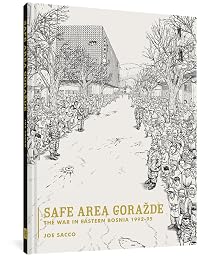
Safe Area Goražde: The War in Eastern Bosnia 1992-1995
by Joe Sacco
On This Page
Description
Praised by The New York Times, Brill's Content and Publishers Weekly, Safe Area Gorazde is the long-awaited and highly sought after 240-page look at war in the former Yugoslavia. Sacco (the critically-acclaimed author of Palestine) spent five months in Bosnia in 1996, immersing himself in the human side of life during wartime, researching stories that are rarely found in conventional news coverage. The book focuses on the Muslim-held enclave of Gorazde, which was besieged by Bosnian Serbs show more during the war. Sacco lived for a month in Gorazde, entering before the Muslims trapped inside had access to the outside world, electricity or running water. Safe Area Gorazde is Sacco's magnum opus and with it he is poised too become one of America's most noted journalists. The book features an introduction by Christopher Hitchens, political columnist for The Nation and Vanity Fair. show lessTags
Recommendations

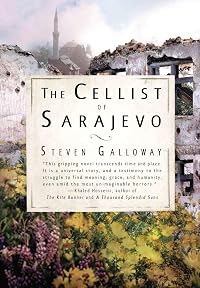
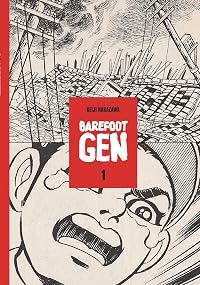
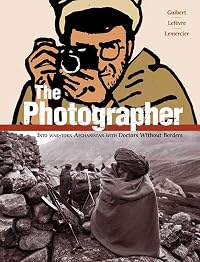
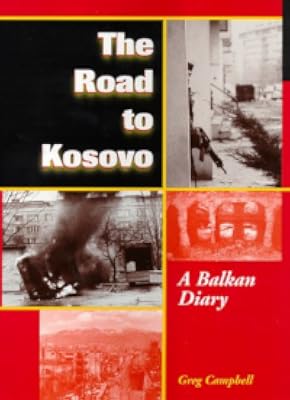


Member Recommendations
Member Reviews
http://nhw.livejournal.com/520565.html
Sacco has a superb portrait here of a community under siege, not actually sure if there is a future, yet alone what it might hold (there were persistent rumours that Goražde might be traded to the Serbs in return for concessions elsewhere). He shows himself as an outsider, both slightly sinister (with his eyes never visible behind his glasses) and slightly absurd (with his lips grotesquely enlarged, giving him literally a big mouth). The inhabitants of Goražde, and their assailants, are shown as normal human beings, caught up in scenes of horror and destruction.
As well as providing a narrative of the people of Goražde, Sacco uses the book to make a couple of factual assertions that I have not show more seen anywhere else in writing about the war. One is that chemical weapons were used by the Serbs against refugees fleeing Srebrenica. He is completely convinced of this, although he concedes that Human Rights Watch, who also looked into the question, were not. I can add a little more supporting, though circumstantial, evidence from our report on Yugoslav arms sales to Iraq published in late 2002: it is a matter of record that the old Yugoslav army had a chemical weapons stockpile in the Sarajevo suburb of Hadžići, and that nobody (at least three years ago) seemed to know precisely what had happened to the stockpile after the army withdrew from Sarajevo in 1992. Quite likely most of it did reach military depots in Serbia, but it is far from impossible that some was diverted into Bosnian Serb hands en route, or subsequently.
Sacco's second factual point is linked to the notorious assertion by General Sir Michael Rose, at the time in charge of British peace-keepers, that a tank attack on the town could have been stopped by "one bloke with a crowbar" and that the defenders of Goražde were asking UN peacekeepers to do their fighting for them. Sacco's depiction of the tank attack on a terrified and poorly armed civilian population is a far more eloquent refutation of Rose's statement than could possibly have been achieved by the written word alone.
Perhaps few people these days will be very interested in the politics and history of Goražde. It is after all ten years after the Dayton negotiations which ended the Bosnian war. The debate about the rights and wrongs of international intervention is now, alas, completely different from the period when President Clinton and the rest of the international community displayed utter spinelessness in the face of warlordism and genocide in Somalia, Rwanda and Bosnia, before finally doing the right thing in Kosovo.
But the book remains very much worth reading as a human story of how people do survive in extreme circumstances, and ought to be celebrated as a classic of its genre. show less
Sacco has a superb portrait here of a community under siege, not actually sure if there is a future, yet alone what it might hold (there were persistent rumours that Goražde might be traded to the Serbs in return for concessions elsewhere). He shows himself as an outsider, both slightly sinister (with his eyes never visible behind his glasses) and slightly absurd (with his lips grotesquely enlarged, giving him literally a big mouth). The inhabitants of Goražde, and their assailants, are shown as normal human beings, caught up in scenes of horror and destruction.
As well as providing a narrative of the people of Goražde, Sacco uses the book to make a couple of factual assertions that I have not show more seen anywhere else in writing about the war. One is that chemical weapons were used by the Serbs against refugees fleeing Srebrenica. He is completely convinced of this, although he concedes that Human Rights Watch, who also looked into the question, were not. I can add a little more supporting, though circumstantial, evidence from our report on Yugoslav arms sales to Iraq published in late 2002: it is a matter of record that the old Yugoslav army had a chemical weapons stockpile in the Sarajevo suburb of Hadžići, and that nobody (at least three years ago) seemed to know precisely what had happened to the stockpile after the army withdrew from Sarajevo in 1992. Quite likely most of it did reach military depots in Serbia, but it is far from impossible that some was diverted into Bosnian Serb hands en route, or subsequently.
Sacco's second factual point is linked to the notorious assertion by General Sir Michael Rose, at the time in charge of British peace-keepers, that a tank attack on the town could have been stopped by "one bloke with a crowbar" and that the defenders of Goražde were asking UN peacekeepers to do their fighting for them. Sacco's depiction of the tank attack on a terrified and poorly armed civilian population is a far more eloquent refutation of Rose's statement than could possibly have been achieved by the written word alone.
Perhaps few people these days will be very interested in the politics and history of Goražde. It is after all ten years after the Dayton negotiations which ended the Bosnian war. The debate about the rights and wrongs of international intervention is now, alas, completely different from the period when President Clinton and the rest of the international community displayed utter spinelessness in the face of warlordism and genocide in Somalia, Rwanda and Bosnia, before finally doing the right thing in Kosovo.
But the book remains very much worth reading as a human story of how people do survive in extreme circumstances, and ought to be celebrated as a classic of its genre. show less
Another stunning non-fiction graphic novel. Joe Sacco went to live in Gorazde, a small Bosnian Muslim enclave that was cut off from Sarajevo and surrounded by Bosnian Serbian militia groups. It was declared a 'safe area' by the UN for refugees, but that did not prevent it being repeatedly shelled and attacked. Sacco here tells the story of Gorazde and the people he came to know there and how they lived and survived through the war. By the time Sacco arrives there, the fighting is mostly over, but the fate of Gorazde is still uncertain, as there is talk of it being traded to the Serbs for territory further to the west. The ruminations by various inhabitants about whether they would leave their homes if this does happen, or whether they show more could ever live with their Serb neighbours again as they did before the war are truly heartbreaking. This is first class reporting, wonderfully touching, brutally honest and beautifully illustrated. The people Sacco came to know are shown with their faults and quirks, not lionized or idealized but shown in all their humanity. I can't recommend this enough. show less
In late 1995, only a month after the Bosnian War's official cease-fire, cartoonist Joe Sacco successfully navigated United Nations red tape, obtained a press pass and hopped aboard an armored vehicle to the besieged town of Goražde. Wanting more than simply to collect interviews and photo opportunities, Sacco embedded himself in the community, gaining the trust of residents and refugees alike, even forming some close friendships. Their horrifying experiences and misery are illustrated here in disquieting detail.
Safe Area Goražde is a phenomenal and unforgettable read. Prior to reading, I'd had only a vague understanding of the conflict and the players involved -- now I'm certain I'll never forget.
Safe Area Goražde is a phenomenal and unforgettable read. Prior to reading, I'd had only a vague understanding of the conflict and the players involved -- now I'm certain I'll never forget.
Four stars, plus an added 1/2 for the tears. Sacco's drawings are dark and real (crosshatching will get you everywhere, my dear), needfully ugly, when the time comes, without being needlessly ugly. He shows his gratitude to the people of Gorazde for embracing him and his sorrow at all the shocking sick sad times they had to go through, and your heart goes out to them - heroes, or if the measure of a hero is that he goes out looking, not heroes but incredibly brave people with good hearts. Like a cross between my Austrian family and my Turkish friends, all of whom you hope will never have to see their homes descend into hell like this and pray will be able to bear up if they do.
And that brings us to the "How could this happen? Why did it show more happen here?" and the other real strength of this book is how Sacco sets the ground's-eye stories and portraits of friends in larger political context - you feel like you've gotten a really good lecture on the subject as well as yer human interest. And he is damning, especially to the UN and the West generally. And good for him. I think I understand why decisionmakers fumbled the Yugoslav breakup so badly, aside from all the political expediancy reasons - the cold war was over and we all just wanted the world to be better and get nicer than it . . . got and is. Which is understandable, and forgivable in a teenage boy like I was back then, but not so much when innocents start dying of a put-upon people's pique and all you've got is cowards in blue helmets and magnificent statements of concern. show less
And that brings us to the "How could this happen? Why did it show more happen here?" and the other real strength of this book is how Sacco sets the ground's-eye stories and portraits of friends in larger political context - you feel like you've gotten a really good lecture on the subject as well as yer human interest. And he is damning, especially to the UN and the West generally. And good for him. I think I understand why decisionmakers fumbled the Yugoslav breakup so badly, aside from all the political expediancy reasons - the cold war was over and we all just wanted the world to be better and get nicer than it . . . got and is. Which is understandable, and forgivable in a teenage boy like I was back then, but not so much when innocents start dying of a put-upon people's pique and all you've got is cowards in blue helmets and magnificent statements of concern. show less
An informative and engaging graphic journey through the Serb-Bosnian conflict in former Yugoslavia in the 90's. Sacco's stories of his time in Bosnia, and the stories he relates from others, range from intense and dark to funny and endearing. By the end of the novel, I felt in some ways that I had traveled with him, met the same people and come to know them and their situation.
This is not a conflict or a region I knew much about when I picked up this book. I had some vague memories from childhood, and more recently the trials of Slobodan Milošević and Ratko Mladić. Some parts of the left in the United States still hold that much of the ethnic cleansing against Muslims in the region was a myth made to help extend NATO power. Reading show more Safe Area Goražde gave me more information from someone who traveled there during the conflict, witnessed the damage and heard the stories of people who had witnessed the horror of ethnic cleansing by Serbian militias.
This is a well-illustrated and relatively quick read, I highly recommend it. show less
This is not a conflict or a region I knew much about when I picked up this book. I had some vague memories from childhood, and more recently the trials of Slobodan Milošević and Ratko Mladić. Some parts of the left in the United States still hold that much of the ethnic cleansing against Muslims in the region was a myth made to help extend NATO power. Reading show more Safe Area Goražde gave me more information from someone who traveled there during the conflict, witnessed the damage and heard the stories of people who had witnessed the horror of ethnic cleansing by Serbian militias.
This is a well-illustrated and relatively quick read, I highly recommend it. show less
As a comic book nerd I've long enjoyed Joe Sacco's amazing work. Superb journalism presented in comic book format, he is an artist who reminds us of all of the promise in the format.
I bought Safe Area Goražde at my local comic book store because I am in a period of learning more about the Bosnian War and it was by Joe Sacco and I could afford it at the time. I read it following my read of Logavina Street by Barbara Demick and it was a great companion piece. Where Demick's book is all about Sarajevo, Sacco's is about conditions in Safe Area Goražde, a small place that was under unrelenting siege from 1992 to 1995. Sacco gives a great deal of background information about the conflict while at the same time humanizing it through format show more and the eyes of the people who lived through the siege (including his own). Each in their own put themselves in the center of the stories they're telling - an acknowledgment of the myth of objectivity.
I've read a lot of history and a lot of historical fiction and when the words "siege warfare" come up I tend to think about castles and knights and big walls and the people inside eating their horses. Safe Area Goražde taught me a lot about modern siege warfare and opened my eyes further to a story I have neglected. It is simple to understand why Mr. Sacco won the Eisner Award for this book. Brilliant, heart-stopping, and terribly sad this is a work of genius - highly recommended. show less
I bought Safe Area Goražde at my local comic book store because I am in a period of learning more about the Bosnian War and it was by Joe Sacco and I could afford it at the time. I read it following my read of Logavina Street by Barbara Demick and it was a great companion piece. Where Demick's book is all about Sarajevo, Sacco's is about conditions in Safe Area Goražde, a small place that was under unrelenting siege from 1992 to 1995. Sacco gives a great deal of background information about the conflict while at the same time humanizing it through format show more and the eyes of the people who lived through the siege (including his own). Each in their own put themselves in the center of the stories they're telling - an acknowledgment of the myth of objectivity.
I've read a lot of history and a lot of historical fiction and when the words "siege warfare" come up I tend to think about castles and knights and big walls and the people inside eating their horses. Safe Area Goražde taught me a lot about modern siege warfare and opened my eyes further to a story I have neglected. It is simple to understand why Mr. Sacco won the Eisner Award for this book. Brilliant, heart-stopping, and terribly sad this is a work of genius - highly recommended. show less
The graphic novel is a good book to read snippets of throughout the day. I was able to put away a fair amount of the book before lunchtime, and then finished it off (uninterrupted) in the evening. I found that I read quickly, and didn't pay the attention that was due to the lovely images (so much work went into this book!).
So, the author Joe Sacco is a journalist. He was sent to Eastern Bosnia (cities/towns you may have heard of there are Sarajevo, Gorazde and the now infamous Srebrenica) to cover the Bosnian War. Media attention was focussed on Sarajevo, but languishing further to the East was the designated Safe Area of Gorazde. Its status as safe was in name only. The Bosnian Serbs shelled it, had snipers based around it, many many show more people were killed and injured, and eventually after 3.5 years of this the Muslim population were forced out. The town was eventually "handed back" once peace was declared, but was surrounded by Serbian territory, with only a narrow corridor connecting it to the rest of Bosnia.
The author/illustrator spent a total of 4 weeks in Gorazde and made friends there who told him their stories of the various offensives they endured, the escapes, near-misses, sightings of mass murders, burning and looting of their homes, the constant moving around to safety, trying to exist on meager food available, the lack of information and communication. This is the human face of war. You see the faces in the illustrations and it makes for a fuller story.
For me this book highlighted the problems with modern media: they fly in for a few shots of the war-torn area, talk to one or two people for a "sound-bite" and then fly out again. The true, fully-fleshed stories never come out until afterwards. Despicable things were happening to the Bosnian Muslims, and nothing was done as the UN "had to keep impartial". The Serbian leaders were making promises of cease-fire and then breaking them straight away, they did this multiple times even in a day. Yet, the UN kept on refusing to intervene, I presume choosing to trust the word of the Serbian leader over evidence that massacres were occurring.
This book pushes through all the soundbites and official statements, and tells it like it really was for people living as prisoners in their own town. Sad and traumatising, but real stories. show less
So, the author Joe Sacco is a journalist. He was sent to Eastern Bosnia (cities/towns you may have heard of there are Sarajevo, Gorazde and the now infamous Srebrenica) to cover the Bosnian War. Media attention was focussed on Sarajevo, but languishing further to the East was the designated Safe Area of Gorazde. Its status as safe was in name only. The Bosnian Serbs shelled it, had snipers based around it, many many show more people were killed and injured, and eventually after 3.5 years of this the Muslim population were forced out. The town was eventually "handed back" once peace was declared, but was surrounded by Serbian territory, with only a narrow corridor connecting it to the rest of Bosnia.
The author/illustrator spent a total of 4 weeks in Gorazde and made friends there who told him their stories of the various offensives they endured, the escapes, near-misses, sightings of mass murders, burning and looting of their homes, the constant moving around to safety, trying to exist on meager food available, the lack of information and communication. This is the human face of war. You see the faces in the illustrations and it makes for a fuller story.
For me this book highlighted the problems with modern media: they fly in for a few shots of the war-torn area, talk to one or two people for a "sound-bite" and then fly out again. The true, fully-fleshed stories never come out until afterwards. Despicable things were happening to the Bosnian Muslims, and nothing was done as the UN "had to keep impartial". The Serbian leaders were making promises of cease-fire and then breaking them straight away, they did this multiple times even in a day. Yet, the UN kept on refusing to intervene, I presume choosing to trust the word of the Serbian leader over evidence that massacres were occurring.
This book pushes through all the soundbites and official statements, and tells it like it really was for people living as prisoners in their own town. Sad and traumatising, but real stories. show less
Members
- Recently Added By
Lists

Recommended Comics / Graphic Novels
595 works; 122 members

Favorite graphic novels
17 works; 1 member
Club Read's Graphic Stories Recommendations
127 works; 2 members

Read
293 works; 4 members

Drawn Out: The 50 Best Non-Superhero Graphic Novels
175 works; 8 members

Recommend the 20 best books you've read in the last five years
2,168 works; 606 members
Best Graphic Novel Nonfiction
199 works; 101 members

Books That Changed Our Perspective
423 works; 168 members
Author Information

55+ Works 7,537 Members
All Editions
Some Editions
Awards and Honors
Awards
Notable Lists
Series
Belongs to Publisher Series
Work Relationships
Common Knowledge
- Canonical title
- Safe Area Goražde: The War in Eastern Bosnia 1992-1995
- Original title
- Safe Area Goražde: The War in Eastern Bosnia 1992-1995
- Alternate titles
- Safe Area Goražde: The War in Eastern Bosnia 1992-95
- Original publication date
- 2000-06
- People/Characters
- Joe Sacco
- Important places
- Bosnia and Herzegovina
- Important events
- Bosnian War
- Dedication
- This book is dedicated to the town of Gorazde, where I spent some of my happiest moments.
- First words
- We were sitting in the Alkatraz, "backs to the wall Doc Holliday style" as Edin liked to say, waiting for the end of the war ...
- Last words
- (Click to show. Warning: May contain spoilers.)He wanted to get on with things.
- Blurbers
- Said, Edward W.; Rieff, David
- Original language
- English
- Disambiguation notice
- The Special edition, 2011, has 34 page intro by Sacco: 'Some reflections on Bosnia, Sarajevo, and Gorazde' and a 24 p. interview of Sacco by Gary Groth, and a Bibliography.
Classifications
- Genre
- Graphic Novels & Comics
- DDC/MDS
- 949.703 — History & geography History of Europe Greece, Albania, Yugoslavia, Serbia, Romania, Bulgaria Former Yugoslavia (Bosnia and Herzegovina ∙ Croatia ∙ Kosovo ∙ Montenegro ∙ Macedonia ∙ Serbia ∙ Slovenia) [formerly also Bulgaria]
- LCC
- DR1313.32 .G67 .S33 — History of Europe, Asia, Africa and Oceania Balkan Peninsula History of Balkan Peninsula Yugoslavia History By period 1918-
- BISAC
Statistics
- Members
- 1,178
- Popularity
- 21,222
- Reviews
- 33
- Rating
- (4.37)
- Languages
- 13 — Bosnian, Czech, Dutch, English, French, German, Galician, Italian, Polish, Spanish, Swedish, Portuguese (Portugal), Portuguese (Brazil)
- Media
- Paper, Audiobook, Ebook
- ISBNs
- 27
- ASINs
- 16