On This Page
Description
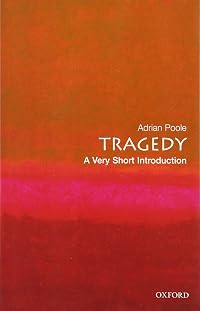
What has tragedy been made to mean by dramatists, story-tellers critics, philosophers, politicians, and journalists? This work shows the relevance of tragedy to the modern world, and extends beyond drama and literature into visual art and everyday experience.Tags
Recommendations











Member Reviews
This small book is crammed full of intriguing stuff, and I have no idea where to start or how to even summarize it. It set out a number of questions in its introduction that it aimed to answer in its nine chapters. While each chapter is very interesting and full of information, in the end I did not feel the expected answers are presented with much clarity, overall. The problem for me may have been the way each chapter is constructed: with many small subtopics with little introduction or summation.
Most of my experience with classical tragedy comes from Shakespeare, but beyond that I have never made a real study of tragedy itself. The subject and its application to contemporary literature; such as that of Joyce Carol Oates, intrigues show more me.
What interested me most was the various elements and aspects of tragedy that might be applicable to contemporary literature (I was less interested in how it might apply to our contemporary overuse? of the word in the news, though that is touched upon), so I will cherry pick, and mention some of these 'aspects' for your own cerebral stimulation. (was the last book you called a tragedy, really so?)
Classical tragedy is concerned with ideas of fate, fortune and chance (which can be linked to our modern concept of accident)
Classic tragedy, often said to have ended with the 17th century, is concerned with Gods, collective myth, public figures, and poetry.
Tragedy is full of ghosts, not all materialize. “...tragedy always deals with toxic matter bequeathed from the past to the present. In personal terms, this often means what mothers and fathers have passed on to their children in the form of duties, loyalties, passions and injuries.”
There are many kinds of scapegoats in tragedy. Scapegoats are meant to solve the problems of guilt or innocence, but in tragedy they raise questions about the process of judgement by which blame is affixed and punsihment executed.”
Tragedy explores pain and our ideas of it. “Yet is it not so much the pain my pain or yours with which tragedy is concerned... It is the pain of others, and the painful questions to which this gives rise: such as “whose business is it?”
This is just a few teaser tidbits. Despite it's construction, I do recommend the book as an introduction. show less
Most of my experience with classical tragedy comes from Shakespeare, but beyond that I have never made a real study of tragedy itself. The subject and its application to contemporary literature; such as that of Joyce Carol Oates, intrigues show more me.
What interested me most was the various elements and aspects of tragedy that might be applicable to contemporary literature (I was less interested in how it might apply to our contemporary overuse? of the word in the news, though that is touched upon), so I will cherry pick, and mention some of these 'aspects' for your own cerebral stimulation. (was the last book you called a tragedy, really so?)
Classical tragedy is concerned with ideas of fate, fortune and chance (which can be linked to our modern concept of accident)
Classic tragedy, often said to have ended with the 17th century, is concerned with Gods, collective myth, public figures, and poetry.
Tragedy is full of ghosts, not all materialize. “...tragedy always deals with toxic matter bequeathed from the past to the present. In personal terms, this often means what mothers and fathers have passed on to their children in the form of duties, loyalties, passions and injuries.”
There are many kinds of scapegoats in tragedy. Scapegoats are meant to solve the problems of guilt or innocence, but in tragedy they raise questions about the process of judgement by which blame is affixed and punsihment executed.”
Tragedy explores pain and our ideas of it. “Yet is it not so much the pain my pain or yours with which tragedy is concerned... It is the pain of others, and the painful questions to which this gives rise: such as “whose business is it?”
This is just a few teaser tidbits. Despite it's construction, I do recommend the book as an introduction. show less
Ratings
Members
- Recently Added By
Lists

The Great Courses: Shakespeare's Tragedies
35 works; 1 member
Author Information
18+ Works 331 Members
Series

Common Knowledge
- Canonical title
- Tragedy: A Very Short Introduction
- First words
- Tragedy is a precious word.
- Last words
- (Click to show. Warning: May contain spoilers.)All are essential to the reverberations with which great tragedies continue to end.
Classifications
- Genres
- Literature Studies and Criticism, Fiction and Literature
- DDC/MDS
- 809.9162 — Literature & rhetoric Literature, rhetoric & criticism History, description, critical appraisal of more than two literatures Literature displaying specific features, miscellaneous writings Literature displaying specific qualities of style, mood, viewpoint Horror And Tragedy Tragedy
- LCC
- PN1892 .P66 — Language and Literature Literature (General) Literature (General) Drama Special types
- BISAC
Statistics
- Members
- 157
- Popularity
- 207,140
- Reviews
- 1
- Rating
- (3.80)
- Languages
- English
- Media
- Paper, Ebook
- ISBNs
- 7
- ASINs
- 1