On This Page
Description
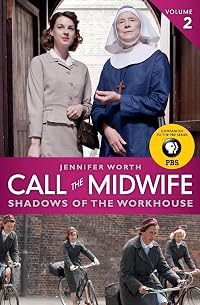
The sequel to Jennifer Worth's New York Times bestselling memoir and the basis for the PBS series Call the Midwife. When twenty-two-year-old Jennifer Worth, from a comfortable middle-class upbringing, went to work as a midwife in the direst section of postwar London, she not only delivered hundreds of babies and touched many lives, she also became the neighborhood's most vivid chronicler. Woven into the ongoing tales of her life in the East End are the true stories of the people Worth met show more who grew up in the dreaded workhouse, a Dickensian institution that limped on into the middle of the twentieth century. Orphaned brother and sister Peggy and Frank lived in the workhouse until Frank got free and returned to rescue his sister. Bubbly Jane's spirit was broken by the cruelty of the workhouse master until she found kindness and romance years later at Nonnatus House. Mr. Collett, a Boer War veteran, lost his family in the two world wars and died in the workhouse. Though these are stories of unimaginable hardship, what shines through each is the resilience of the human spirit and the strength, courage, and humor of people determined to build a future for themselves against the odds. This is an enduring work of literary nonfiction, at once a warmhearted coming-of-age story and a startling look at people's lives in the poorest section of postwar London. show lessTags
Recommendations
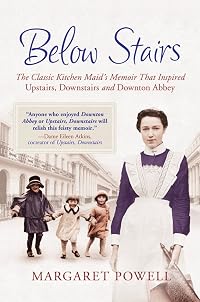

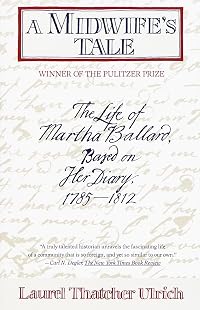
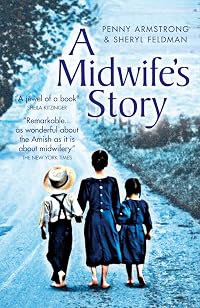
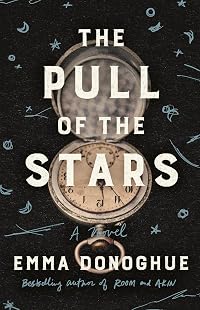
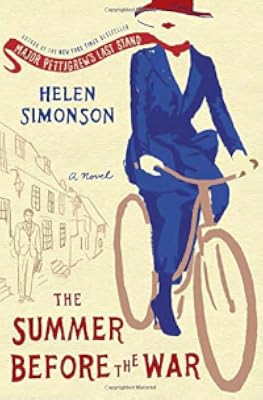
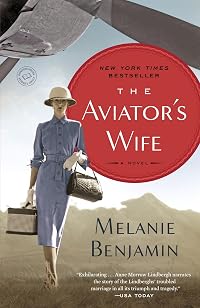
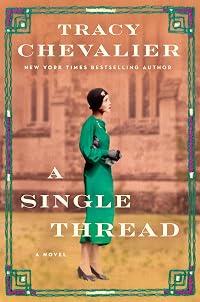
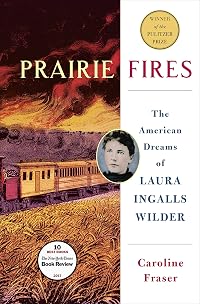



Member Recommendations

Member Reviews
This is the second book by Jennifer Worth about her time as a midwife in London's East End during the 1950s. I loved the first book, Call the Midwife, and this one didn't disappoint either. Once again, Worth recounts the grinding poverty and unimaginable living conditions of the day. Once again, I'm astounded that this is a time within living memory and not some distant century; my mother would have been a young girl then.
As in Call the Midwife, there is a lot of background information about the health system and changes in midwifery, along with the everday tasks of the midwives, but here the focus is on the workhouses, going back a century before Worth's main narrative, and their sad legacy. It makes this book rather more dark than show more the first one, although Worth does try to give a balanced account and highlight some of the positive aspects, such as they are; nevertheless, it is a bleak picture. The living conditions and treatment of people were horrific, especially when it came to the children. Jane's story in particular was heartbreaking for me.
Both books tie in closly with the wonderful BBC series, Call the Midwife, and are a very worthwhile read about our more recent history; I'm looking forward to reading the next one. show less
As in Call the Midwife, there is a lot of background information about the health system and changes in midwifery, along with the everday tasks of the midwives, but here the focus is on the workhouses, going back a century before Worth's main narrative, and their sad legacy. It makes this book rather more dark than show more the first one, although Worth does try to give a balanced account and highlight some of the positive aspects, such as they are; nevertheless, it is a bleak picture. The living conditions and treatment of people were horrific, especially when it came to the children. Jane's story in particular was heartbreaking for me.
Both books tie in closly with the wonderful BBC series, Call the Midwife, and are a very worthwhile read about our more recent history; I'm looking forward to reading the next one. show less
Very little midwifery goes on in this second book of Jennifer Worth's Midwife Trilogy. Instead, the author tells the story of two male patients she cared for, as the midwives of Nonnatus House also performed what we would today call home health nursing for East End residents. First she tells the story of timid Jane, a middle-aged resident at Nonnatus House who assisted the nurses with various tasks; cleaning woman Peggy; and Peggy's fishmonger brother, Frank. These three had known each other as children in one of London's workhouses. The middle section of the book is devoted to elderly Sister Monica Joan and the discovery and consequences of her kleptomania. The final section tells the story of former soldier Joseph Collett, an elderly show more patient whom Jenny adopted as a surrogate grandfather.
The account of the workhouse experiences presented in the first section of the book is disturbing, but also puzzling. Unlike the other sections of the book where Worth was recalling events that she experienced and stories told to her by a patient, readers are not told how Worth learned the details about the childhood experiences of Jane, Peggy, and Frank. Some of the details are so intimate and so humiliating that it is difficult to believe any of the three would have confided them to a nurse young enough to be their daughter. The children were so young when some of the events occurred that it's hard to believe they had any memories to share of those events. It's hard not to question the extent to which Worth embellished this section, or whether Jane, Peggy, and Frank were real people or composites based on people that Worth encountered as a nurse in the East End. show less
The account of the workhouse experiences presented in the first section of the book is disturbing, but also puzzling. Unlike the other sections of the book where Worth was recalling events that she experienced and stories told to her by a patient, readers are not told how Worth learned the details about the childhood experiences of Jane, Peggy, and Frank. Some of the details are so intimate and so humiliating that it is difficult to believe any of the three would have confided them to a nurse young enough to be their daughter. The children were so young when some of the events occurred that it's hard to believe they had any memories to share of those events. It's hard not to question the extent to which Worth embellished this section, or whether Jane, Peggy, and Frank were real people or composites based on people that Worth encountered as a nurse in the East End. show less
Second book in amazing memoir trilogy of life in the London East end docks in the 1950s. This one concentrates more on the story of the workhouses - the last resort for women and children who were so poor they had nowhere else to go. Where once you walked through the gate, a family was separated and might never see each other again.
Jennifer tells the story of a brother and sister, and the brothers determination to earn enough money to rescue his only living relative from the workhouse.
There is also the funny tale of the 93 year old nun Sister Monica Joan and her trial for theft and her shenanigans in the court room which provides a light contrast to the bleak tales of poverty.
Jennifer tells the story of a brother and sister, and the brothers determination to earn enough money to rescue his only living relative from the workhouse.
There is also the funny tale of the 93 year old nun Sister Monica Joan and her trial for theft and her shenanigans in the court room which provides a light contrast to the bleak tales of poverty.
"A blank, hopeless look on all the faces, the same dull eyes, the same death-like despair"
By sally tarbox on 19 October 2017
Format: Audible Audio Edition
I guess most people come to Jennifer Worth's books via the 'Call the Midwife' TV series. I have to say I've only ever caught snippets of the show and have avoided it like the plague as I can't abide Miranda Hart, cutesy nurses, unbelievable nuns spouting sanctimonious cliches or endless childbirth (that's the impression I got!)
However this was among a load of books given me by a relative so I took it on holiday - and it's actually fairly interesting and movingly written. The author focusses on three cases from her nursing experiences in 1950s East London: A bright young girl who becomes show more an adult with no self-belief after a brutalizing childhood in a workhouse; a brother and sister, separated by the same establishment, but who later meet up again. And an old soldier who ends up in a dire home for the elderly with more than a passing resemblance to the long-gone workhouse...
By no means a deep look at this institution, but quite an interesting read which brings home how it left its mark even into our own time. show less
By sally tarbox on 19 October 2017
Format: Audible Audio Edition
I guess most people come to Jennifer Worth's books via the 'Call the Midwife' TV series. I have to say I've only ever caught snippets of the show and have avoided it like the plague as I can't abide Miranda Hart, cutesy nurses, unbelievable nuns spouting sanctimonious cliches or endless childbirth (that's the impression I got!)
However this was among a load of books given me by a relative so I took it on holiday - and it's actually fairly interesting and movingly written. The author focusses on three cases from her nursing experiences in 1950s East London: A bright young girl who becomes show more an adult with no self-belief after a brutalizing childhood in a workhouse; a brother and sister, separated by the same establishment, but who later meet up again. And an old soldier who ends up in a dire home for the elderly with more than a passing resemblance to the long-gone workhouse...
By no means a deep look at this institution, but quite an interesting read which brings home how it left its mark even into our own time. show less
This is a charming book. It is the memories of a woman who was a young midwife in the 50s in the post-war, poverty-stricken East End of London where little had moved on since Edwardian and even Victorian times. She worked and lived in a convent of nursing nuns and writes both of her patients in the community and their colourful, if difficult lives, and the nuns she lives with. Generally speaking, memoirs of the religious life show nuns in a somewhat dour, if respectful, light. Jennifer Worth rather humanises these good women with individual portraits - the most startling being the well-bred 90 year old nun hauled up in court for kleptomania. The stories of her patients, several of them told in detail, are affectionate, non-judgemental show more vignettes of those who survived harsh times conventionally and otherwise and whose hard-come-by happiness you will rejoice in as you read this book. show less
Like a lot of other people, I really enjoy the TV series Call the Midwife. I also enjoyed the first book by Jennifer Worth – strangely enough, called Call the Midwife. After the second season of the show ended, I was eager for more tales of Jenny, Cynthia, Chummy, Trixie and the nuns.
The book is somewhat different to what I expected - I was looking for more nursing tales, but instead, this book focuses on several people that Jennifer met while she was in Poplar. There are still some good times with the other midwives, but this book belongs to Frank and Peggy, Jane, Sister Monica Joan and Joe Collett. The majority of these stories have also been played out on the show. This didn’t dent my enthusiasm; in fact it was rather nice to show more have the stories in both written and visual form.
Sister Monica Joan is a comical character in the book and I thoroughly enjoyed Jenny’s story of how she was caught shoplifting and what the nuns did for her. Joe’s story, full of hardship and life in the tenements, was a tearjerker. But the story of Frank, Peggy and Jane was truly heartbreaking. I don’t think I’ve ever read an account of the workhouse so bare, brutal and shocking.
Despite the hardships of these people, the book is a sound read as Jennifer brings to life 1950s London. I only wish there had been a bit more of ‘midwife’ action – births, camaraderie and friendships. However, I do have the television show for that!
I will be continuing to read Jennifer’s next book, Farewell to the East End, for another dose of all things Poplar.
http://samstillreading.wordpress.com show less
The book is somewhat different to what I expected - I was looking for more nursing tales, but instead, this book focuses on several people that Jennifer met while she was in Poplar. There are still some good times with the other midwives, but this book belongs to Frank and Peggy, Jane, Sister Monica Joan and Joe Collett. The majority of these stories have also been played out on the show. This didn’t dent my enthusiasm; in fact it was rather nice to show more have the stories in both written and visual form.
Sister Monica Joan is a comical character in the book and I thoroughly enjoyed Jenny’s story of how she was caught shoplifting and what the nuns did for her. Joe’s story, full of hardship and life in the tenements, was a tearjerker. But the story of Frank, Peggy and Jane was truly heartbreaking. I don’t think I’ve ever read an account of the workhouse so bare, brutal and shocking.
Despite the hardships of these people, the book is a sound read as Jennifer brings to life 1950s London. I only wish there had been a bit more of ‘midwife’ action – births, camaraderie and friendships. However, I do have the television show for that!
I will be continuing to read Jennifer’s next book, Farewell to the East End, for another dose of all things Poplar.
http://samstillreading.wordpress.com show less
Book two of the Call the Midwife series. These are longer stories, mainly about those affected so deeply by the workhouse and crushing poverty of the East End, with an interlude of Sister Monica Joan. Once again, the great affection and compassion she has for the East End and it's people really shines through. The stories can be hard to take, they are not often cheerful, but they make for compelling reading
Members
- Recently Added By
Lists

Books Read in 2016
4,666 works; 197 members
Author Information

14+ Works 5,521 Members
Jennifer Worth was born Jennifer Lee in Clacton-on-Sea, Essex on September 25, 1935. She trained as a nurse at the Royal Berkshire Hospital in Reading, and then moved to London to train as a midwife. She later worked at the Royal London Hospital, the Elizabeth Garrett Anderson Hospital in Euston, and the Marie Curie Hospital in Hampstead. She left show more nursing in 1973 to study music. She received the Licentiate of the London College of Music in 1974 and was awarded a Fellowship ten years later. She taught and performed solo and in choirs throughout the United Kingdom and Europe. When she felt her musical talents ebbing, she turned to writing. She wrote three books about her experience as a midwife: Call the Midwife, Shadows of the Workhouse, and Farewell to the East End. These books are the basis of the BBC television series Call the Midwife. Her other works include Food Allergy: The Hidden Cause? and In the Midst of Life. She died of cancer on May 31, 2011 at the age of 75. (Bowker Author Biography) show less
Some Editions
Series

Work Relationships
Is contained in
Common Knowledge
- Canonical title
- Shadows of the Workhouse
- Original title
- Shadows of the Workhouse
- Alternate titles
- Call the Midwife: Shadows of the Workhouse
- Original publication date
- 2005
- People/Characters
- Jennifer Worth; Sister Julienne; Jane; Peggy; Frank; Mr Collett (show all 11); Cynthia Miller; Trixie Franklin; Chummy Browne; Sister Evangelina; Sister Monica Joan
- Important places
- London, England, UK (East End); Poplar, London, England, UK
- Related movies
- Call the Midwife (2012 | IMDb)
- Dedication
- Dedicated with respect and gratitude to Patricia Holt-Schooling of Merton Books, whose vision, enterprise and courage led to the first publication of these books.
- First words
- Nonnatus House was both a convent and the working base for the nursing and midwifery services of the Sisters of St. Raymond Nonnatus.
- Last words
- (Click to show. Warning: May contain spoilers.)And then he disappeared.
Classifications
- Genres
- Biography & Memoir, Nonfiction, General Nonfiction, History
- DDC/MDS
- 305.569094215 — Society, government, & culture Social sciences, sociology & anthropology Social group - Age, Gender, Ethnicity People by social and economic levels Lower, alienated, excluded classes Poor people History, geographic treatment, biography Europe England & Wales London
- LCC
- HV4086 .L66 .W67 — Social sciences Social pathology. Social and public welfare. Criminology Social pathology. Social and public welfare. Protection, assistance and relief Poor in cities. Slums
- BISAC
Statistics
- Members
- 1,123
- Popularity
- 22,512
- Reviews
- 35
- Rating
- (4.04)
- Languages
- 6 — Dutch, English, Finnish, German, Italian, Swedish
- Media
- Paper, Audiobook, Ebook
- ISBNs
- 30
- ASINs
- 12