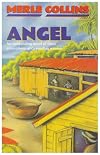
Angel
by Merle Collins
On This Page
Description
A dramatic coming-of-age tale that parallels the life of a young woman with the political fortunes of her Caribbean island nation, Angel vividly portrays the harshness of life in the Third World. . . . An enthralling look at women's lives in a developing country (Library Journal).Tags
Recommendations


















Member Reviews
50/2021. Angel by Merle Collins, is a novel about three generations of Grenadian women, during the thirty years from 1951 to 1983, that the author originally wrote and published in 1987 and then rewrote and republished with Peepal Tree Press in 2011.
This book is mostly written in Standard English but various characters also speak varieties of Grenadian Creole English and even Grenadian Creole French. There's more older Creole than I'm used to reading in Caribbean literatures and I was glad of the two page glossary at the back, especially for words of African or Carib or French origin, so I wouldn't necessarily recommend this to every reader although there's no deliberate obscurity (or obfuscation to use my own specialist vocabulary, show more lol) by Collins who clearly wants her work to be read as well as being representative. Many scholars consider this text to be a valuable archive of historic language in addition to a historical novel.
In form the novel is divided into chapters and each chapter divided into shorter scenes headed by Creole proverbs. In style and content this reads as much like an oral history collection as a novel, which is intentional on the author's part, with the structure following three generations of women in one family: through ageing and death, through motherhood, and through growing up and coming of age, through Independence from Britain, through the revolution, and through the US invasion.
The conclusion of the book is, of course, not happy: that Grenada doesn't count as a country with its own borders because economics dictate people must work abroad, and because the US (or any larger power) can impose its will through military or economic violence at any time it pleases; that those (men) who fight their way into leadership positions are often either destructively corrupt or destructively egotistical; that if only the chickens would work together as a flock then the chickenhawks would go home hungry more often than not, but chickens scatter by instinct and have to be taught their best hope is mutual aid. 4.5*
Quotes
Bush: "When she looked up, the other trees around had started rustling too as the breeze got stronger. She lowered her eyes, left them to their conversation, and went on inside."
Proverb: "Never trouble trouble until trouble trouble you."
Poverty ("caan" = can't): "'Well is so it is!' Cousin Maymay said, 'We caan let one another sink. Is you, is me. We ha hol one another up!'"
Education ("djab" = diables = devils): "We did just know bout Britain an we feel British, so we great! Poor djab us!"
Chickens and chickenhawks ("caan" = can't): "'Allyou self too stupid,' she said to the fowls, 'Don run when they try to frighten you. Stay together an dey caan get none!'" show less
This book is mostly written in Standard English but various characters also speak varieties of Grenadian Creole English and even Grenadian Creole French. There's more older Creole than I'm used to reading in Caribbean literatures and I was glad of the two page glossary at the back, especially for words of African or Carib or French origin, so I wouldn't necessarily recommend this to every reader although there's no deliberate obscurity (or obfuscation to use my own specialist vocabulary, show more lol) by Collins who clearly wants her work to be read as well as being representative. Many scholars consider this text to be a valuable archive of historic language in addition to a historical novel.
In form the novel is divided into chapters and each chapter divided into shorter scenes headed by Creole proverbs. In style and content this reads as much like an oral history collection as a novel, which is intentional on the author's part, with the structure following three generations of women in one family: through ageing and death, through motherhood, and through growing up and coming of age, through Independence from Britain, through the revolution, and through the US invasion.
The conclusion of the book is, of course, not happy: that Grenada doesn't count as a country with its own borders because economics dictate people must work abroad, and because the US (or any larger power) can impose its will through military or economic violence at any time it pleases; that those (men) who fight their way into leadership positions are often either destructively corrupt or destructively egotistical; that if only the chickens would work together as a flock then the chickenhawks would go home hungry more often than not, but chickens scatter by instinct and have to be taught their best hope is mutual aid. 4.5*
Quotes
Bush: "When she looked up, the other trees around had started rustling too as the breeze got stronger. She lowered her eyes, left them to their conversation, and went on inside."
Proverb: "Never trouble trouble until trouble trouble you."
Poverty ("caan" = can't): "'Well is so it is!' Cousin Maymay said, 'We caan let one another sink. Is you, is me. We ha hol one another up!'"
Education ("djab" = diables = devils): "We did just know bout Britain an we feel British, so we great! Poor djab us!"
Chickens and chickenhawks ("caan" = can't): "'Allyou self too stupid,' she said to the fowls, 'Don run when they try to frighten you. Stay together an dey caan get none!'" show less
If it wasn't for the fact that the U.S. invasion of Grenada has been horribly neglected in fiction, this review of ANGEL might not appear here at all. But it is important that the invasion be remembered - especially by a Grenadian. But that is not totally what ANGEL is about. It is the story of a family in Grenada, but is is also the story of the community surrounding the family and the country surrounding the community. It is about life, love, and the pursuit of politics. The book spans at least a quarter of a century, but would be more effective if an entire century had been used, or perhaps even the opposite extreme: a one-month period. Twenty-five years in under three-hundred pages is difficult at best, and there is a sense that show more Collins has failed with what she really wanted to do. Description in general seems to be the downfall of Collins' writing. The main problem with the book is the extent to which conversation is used to control and direct the plot, almost to the point where the reader is crying out for a paragraph or two of descriptive writing. Dialogue is in Grenadian dialect which seems inconsistent in the way it is rendered and dense to the point where even those familiar with Grenada may find themselves turning to the glossary. A very difficult read, but perhaps worth the attempt for those interested in hearing a bit of the Grenadian side of the U.S. invasion. show less
Ratings
Members
- Recently Added By
Lists

Novels Published in 1987
81 works; 19 members
Author Information

10+ Works 176 Members
Awards and Honors
Notable Lists
Common Knowledge
- Canonical title
- Angel
- Original title
- Angel
- Original publication date
- 1987; 2011
- Important places
- Grenada
- Original language
- English; Grenadian Creole English; Grenadian Creole French
Classifications
- Genres
- Fiction and Literature, General Fiction, Historical Fiction
- DDC/MDS
- 813.54 — Literature & rhetoric American literature in English American fiction in English 1900-1999 1945-1999
- LCC
- PR9275 .G73 .C65 — Language and Literature English English Literature English literature: Provincial, local, etc.
- BISAC
Statistics
- Members
- 72
- Popularity
- 438,196
- Reviews
- 2
- Rating
- (3.30)
- Languages
- English
- Media
- Paper
- ISBNs
- 5
- ASINs
- 2