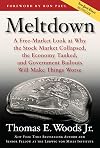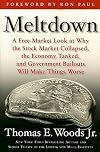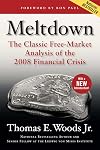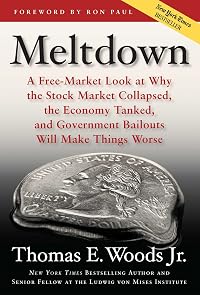
Meltdown: A Free-Market Look at Why the Stock Market Collapsed, the Economy Tanked, and Government Bailouts Will Make Things Worse
by Thomas E. Woods
On This Page
Description
Woods explains how government intervention in the economy actually caused the housing bubble.Tags
Recommendations



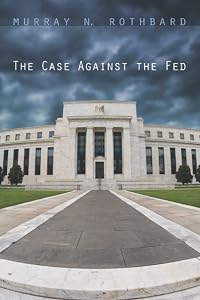
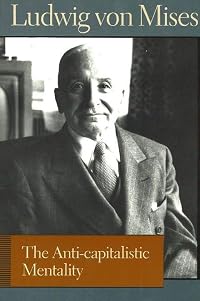
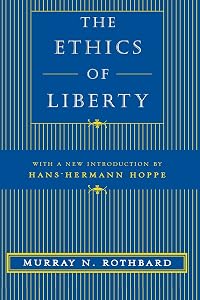
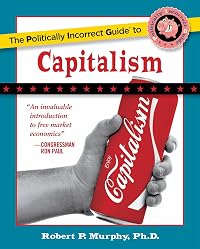




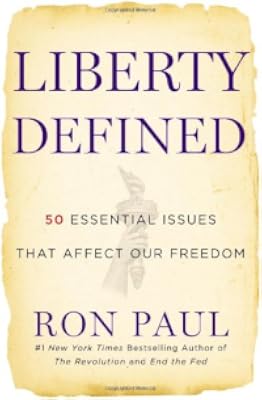
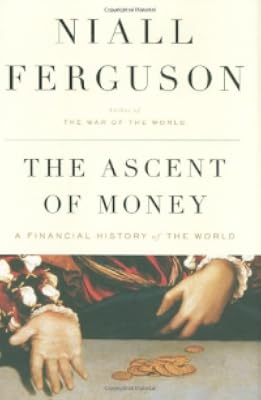
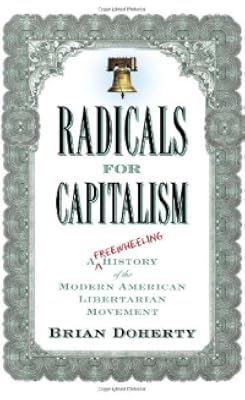
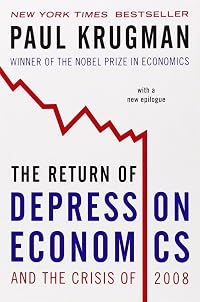
Member Reviews
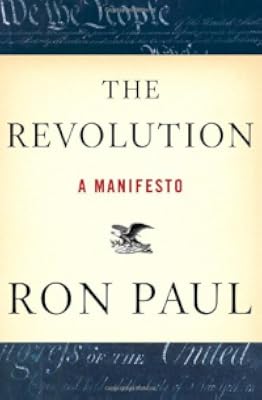
In discussions of today's economic meltdown and what to do about it, the Federal Reserve is a stealth helicopter: it never shows up on the radar. With the exception of a few esoteric specialists and those Ron Paul Revolutionaries who burst into chants of "Abolish the Fed!" during campus rallies last year, it's like something has been put in our water to cause our eyes to glaze over and our minds to wander off at the very mention of centralized banking.
Which is, of course, a Problem, since as historian Thomas Woods notes in this important book, the Federal Reserve bears a large part of the blame for the mess we're in. In the first part of "Meltdown," Woods shows how both in theory (the Austrian School, to be precise) and in practice, Fed show more policy fueled an artificial boom and instead of allowing the necessary, if unpleasant, short-term bust that will lead to recovery, is pursuing policies guaranteed to drive us deeper into the abyss. Little of this finds its way into the popular or business press, suggesting that the people who know the truth aren't talking, and the people who are talking either don't know or are deliberately trying to keep the helicopter hidden. As Woods writes, "critics of the market who ignore the arguments raised in this chapter are, to say the least, not being honest" (p. 86).
But to paraphrase Will Rogers (no relation), it's not so much the things we don't know that are a problem, it's the things we DO know that aren't really true. That's why every bit as important as Woods' explanation of the role of the Federal Reserve in the unnecessary cycle of boom and bust is his taking down of decades' worth of myths about the government's role in the economy. As the author points out, historians have more or less abandoned the idea that New Deal intervention "got us out of the Depression," but the myth remains stronger than ever among journalists and the public. The result of this is not only a profound misunderstanding of American history, but more to the point, a widespread delusion that "history proves" massive government spending promoting consumer demand is the way out of a recession. Here again we see the apocalyptic power of bad ideas.
All this suggests the economic crisis, and particularly the stimulus-driven response to it on the part of the Bush and Obama administrations, are a domestic equivalent of the Iraq War (I want to note that this is my metaphor, not Woods'): an over-reaction to a situation by and large of our own creation, and sold to the American people through a series of lies, the plan largely benefits those who argue for it most strongly while the rest of us end up poorer. The "opposition" is arguing over details while conceding the fundamental principle -- an intervention that gives the government a foothold of occupation it will probably never relinquish.
That's why "Meltdown" is so important -- and why the Austrian School, which alone not only foresaw the coming crash but understood why it was going to happen, deserves so much wider attention. If I could improve anything about "Meltdown," I would have made even more prominent the citations of thinkers and books interested readers should pursue. Woods does do this in an appendix, and I strongly recommend you read the footnotes closely. But something like the "additional reading" or "books they don't want you to read" call-outs of the author's The Politically Incorrect Guide to American History would, I think, have been even more useful.
If "respectable opinion" does pay attention to this book and the ideas it promotes, it will do so with the same combination of pity and contempt that earlier book received. As Woods writes, "You do not win friends in the political and media establishments by proposing a monetary system that cannot be exploited by governments to enrich their friends, enable their addiction to spending and looting, and fund their bailouts" (p. 134). But out here among the non-establishment, you DO make friends by telling the truth. And Tom Woods has a lot of friends. show less
Which is, of course, a Problem, since as historian Thomas Woods notes in this important book, the Federal Reserve bears a large part of the blame for the mess we're in. In the first part of "Meltdown," Woods shows how both in theory (the Austrian School, to be precise) and in practice, Fed show more policy fueled an artificial boom and instead of allowing the necessary, if unpleasant, short-term bust that will lead to recovery, is pursuing policies guaranteed to drive us deeper into the abyss. Little of this finds its way into the popular or business press, suggesting that the people who know the truth aren't talking, and the people who are talking either don't know or are deliberately trying to keep the helicopter hidden. As Woods writes, "critics of the market who ignore the arguments raised in this chapter are, to say the least, not being honest" (p. 86).
But to paraphrase Will Rogers (no relation), it's not so much the things we don't know that are a problem, it's the things we DO know that aren't really true. That's why every bit as important as Woods' explanation of the role of the Federal Reserve in the unnecessary cycle of boom and bust is his taking down of decades' worth of myths about the government's role in the economy. As the author points out, historians have more or less abandoned the idea that New Deal intervention "got us out of the Depression," but the myth remains stronger than ever among journalists and the public. The result of this is not only a profound misunderstanding of American history, but more to the point, a widespread delusion that "history proves" massive government spending promoting consumer demand is the way out of a recession. Here again we see the apocalyptic power of bad ideas.
All this suggests the economic crisis, and particularly the stimulus-driven response to it on the part of the Bush and Obama administrations, are a domestic equivalent of the Iraq War (I want to note that this is my metaphor, not Woods'): an over-reaction to a situation by and large of our own creation, and sold to the American people through a series of lies, the plan largely benefits those who argue for it most strongly while the rest of us end up poorer. The "opposition" is arguing over details while conceding the fundamental principle -- an intervention that gives the government a foothold of occupation it will probably never relinquish.
That's why "Meltdown" is so important -- and why the Austrian School, which alone not only foresaw the coming crash but understood why it was going to happen, deserves so much wider attention. If I could improve anything about "Meltdown," I would have made even more prominent the citations of thinkers and books interested readers should pursue. Woods does do this in an appendix, and I strongly recommend you read the footnotes closely. But something like the "additional reading" or "books they don't want you to read" call-outs of the author's The Politically Incorrect Guide to American History would, I think, have been even more useful.
If "respectable opinion" does pay attention to this book and the ideas it promotes, it will do so with the same combination of pity and contempt that earlier book received. As Woods writes, "You do not win friends in the political and media establishments by proposing a monetary system that cannot be exploited by governments to enrich their friends, enable their addiction to spending and looting, and fund their bailouts" (p. 134). But out here among the non-establishment, you DO make friends by telling the truth. And Tom Woods has a lot of friends. show less
Don't expect this author to hurl the blame for the nation's fiscal woes in the direction of any one political faction. Woods makes a compelling argument that there is more than enough blame to go around. The premise of this work is that government intervention -- not deregulation -- causes economic chaos. While the book's review of economic theory and monetary policy becomes necessarily dry in spots, it's highly educational. Woods makes a Herculean effort to simplify some incredibly complex issues. He lays out the tenets of Austrian Economics, then explores some of the historic economic crises the nation has weathered. The housing bubble, Woods asserts, was the result of government entities and private sector players pushing people to show more buy homes who simply didn't have the financial instrastructure to sustain ownership. He also argues that cheap money (artifically depressed interest rates) lures people into speculative ventures who do not belong in this arena. The author even argues that some of the New Deal policies advanced in response to the Great Depression actually prolonged the economic pain. It takes some patience and discpline to make it through "Meltdown," but the journey is worth the effort. show less
Having followed adherents of the Austrian school of economics for some time, I knew exactly what point of view to expect from Tom Woods. I knew I would buy and read this book with the primary intention of lending to others who were not already familiar with the ideas contained within. However, I was pleasantly surprised that even with some familiarity of the subject matter, the book was an interesting read. More importantly, I was extremely impressed with the scope and depth of coverage contained in the ~160 pages of text. Woods and his editor did an excellent job in choosing what material to include and how much time to devote to it. The result is an astoundingly simple presentation of a very complex issue. This is not an easy thing to show more do, and Woods pulled it off without a hitch. This truly is as close as you can get to one-stop shopping for a concise analysis of the current recession. To readers who are not already familiar with the Austrian school of economics, and especially to those readers who have a healthy skepticism of the views of the book, please do not overlook the Acknowledgments, Further Reading, and Notes sections at the end of the book, as they provide reference to the intellectual clout that stands at the foundation of the ideas and analysis offered an overview. show less
A book like this will never be read by the people who need to read it and certainly never be believed by those who argue for massive government intervention. Although I am familiar with most of the tenets of the Austrian school of economics, there is always something more to learn. In this case Thomas E. Woods addresses why regulators (and rating agencies) are so upset with short sellers. It is because when an investor sells a stock short and succeeds, it only points out how wrong the regulators were in claiming that there was nothing wrong with this stock, this sector, or the entire economy. But my favorite quote was from William Leggett, who wrote in 1837 that the average person "is bewildered in his attempts to investigate the cause show more of the confusion, and is ready to listen to an explanation that fixes the blame of the disaster on those whom he had previously regarded with dislike." This perfectly explains the immense amounts of ire that people are heaping on bankers, brokers, and businessmen. Some of this is certainly well earned, but misses the entire point of where the problem lies - with the manipulation of interest rates and the money supply by the federal reserve. If you were a bank and were offered "free money", you would certainly take some. So why castigate the bankers for doing exactly what the federal government told them to do? Unfortunately though the suggestions for ending this current depression are sound, they will never be politically possible as long as the government is handing out "free money" to those "in need". show less
Wow! No doubt in my mind that all herein is correct but then, I've been part of the choir for some time. The material is presented simply (which is good, right?) and the conclusions should flow like lava across the Fed's printing presses already! I have to admit, however, that I'm not left uplifted after having finished the book, the obvious next steps each seem a pill the size of an elephant and my fellow humans are risk averse and, frankly, quite a few of us are relatively comfortable in our part of the economic bell-curve trying to grasp the opportunities that present themselves right now - if not, are you a teacher?
"Meltdown" talks about the economic downturn, market collapse, and housing bubble which burst at the end of Bush's last term. However, Woods doesn't believe that Obama will be a better steward of the economy - quite the contrary. He faults both the Republican as well as Democratic party leaders and the mainstream economic thinkers in power during both the Bush and Obama Administrations. He makes the case that bailouts and increased government spending is not the answer to our problems. Woods subscribes to the Austrian School of Economic theory, the one school of thought which claims to NOT have been caught by surprise by the economic problems starting in 2007 and peaking in early 2009. Followers of the Austrian school claim to have show more predicted the current crisis, and to be able to explain the on-going boom and bust cycles of our economy. Woods discusses in laymans terms the causes of the economic downturn and and what needs to be done about it. The book also points the reader to other sources of further reading to supplement your economic "enlightenment". Since the intro was written by Ron Paul, I will assume that if you liked Paul's "End the Fed", you'll enjoy this book as well. show less
With the continuing collapse of our financial system, this book provides insight to the root causes as well as solutions that would get us out of our current recession/ depression. You don't need a degree in economics to understand this book- in fact it probably helps if you have not been brainwashed by socialist-leaning professors in today's colleges and universities. The Austrian School of Economics has provided warnings for decades about the problems we are experiencing today. Our politicians and leaders rely on the ignorance of the American populace to perpetuate their controls and continue building a society that depends on government.
A poignant analogy in this book: a home builder has his supply of bricks necessary for a house on show more the lot where he is going to build it; he cannot buy more bricks; upon nearing completion he recognizes that he is far short of the bricks necessary for the size house he has constructed; this far into the house his only remaining option is to tear down the house and start over; had he realized early on in the project that he was short he could have revised the plans and built a home based on the actual bricks he had. show less
A poignant analogy in this book: a home builder has his supply of bricks necessary for a house on show more the lot where he is going to build it; he cannot buy more bricks; upon nearing completion he recognizes that he is far short of the bricks necessary for the size house he has constructed; this far into the house his only remaining option is to tear down the house and start over; had he realized early on in the project that he was short he could have revised the plans and built a home based on the actual bricks he had. show less
Members
- Recently Added By
Lists

Read These Too
458 works; 9 members
Author Information

28+ Works 3,034 Members
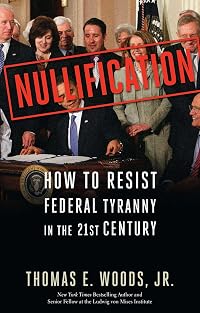
Thomas E. Woods Jr. was born on August 1, 1972. He holds a BA degree in history from Harvard and his masters and PhD from Columbia University. He served as a history department faculty member at Suffolk County Community College in N.Y. until 2006 then moved on to resident scholar and senior faculty member of Ludwig Von Misses Institute in Alabama. show more He is a N.Y. Times bestselling author of 10 books such as Meltdown: A Free Market Look at Why the Stock Market Collapsed, The Economy Tanked and Government Bailout Will Make Things Worse and Nullification: How to resist Federal Tyranny in the 21st Century. He has also written for several scholarly periodicals such as Historical Review and Investors Daily. He won the $50, 000 first prize in the Templeton Enterprise Awards for 2006 for his book The Church and The Market. He has been the associate editor for the Latin Mass magazine for 11 years. He has also appeared on MSNBC's Scarborough County and Bloomberg Television. (Bowker Author Biography) show less
Common Knowledge
- Original publication date
- 2009-02-09
- Dedication
- To Murray N. Rothbard (1926-1995) and Ron Paul, who told the truth.
- First words
- Since the fall of 2008, as the stock market plummeted, companies folded, and economic fear and uncertainty began to spread, Americans have been bombarded with a predictable and relentless refrain: the free-market economy has ... (show all)failed.
Classifications
- Genres
- Economics, Nonfiction, Business, General Nonfiction, Politics and Government
- DDC/MDS
- 338.542 — Society, government, & culture Economics Production Microeconomics Fluctuations Business Cycles
- LCC
- HB3722 .W66 — Social sciences Economic theory. Demography Economic theory. Demography Business cycles. Economic fluctuations
- BISAC
Statistics
- Members
- 348
- Popularity
- 90,850
- Reviews
- 10
- Rating
- (4.11)
- Languages
- Czech, English
- Media
- Paper, Audiobook, Ebook
- ISBNs
- 8
- UPCs
- 1
- ASINs
- 5