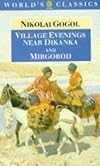
Village Evenings Near Dikanka and Mirgorod
by Nikolai Gogol
On This Page
Description
Hailed universally as Russia's finest comic writer, and by many as its greatest writer of prose, Nikolai creates a unique Ukranian world, from the darkest Gothic to folkloric levity. Here, this extraordinary countryside is revealed in all its variety in his first two collections of short stories. The only translation available of this cycle of stories, this edition captures fully the spirit and vigor of his important early work for the first time.Tags
Recommendations














Member Reviews
Nikolaj Wasiljewitsj Gogol (1809–1852) bezocht het gymnasium te Nezjin. Hij was werkzaam als ambtenaar in Petersburg van 1828 tot 1831, maar vluchtte naar Duitsland nadat zijn epische gedicht Hans Küchelgarten genadeloos was afgekraakt. Enkele weken later keerde hij terug naar Petersburg, waar hij zijn baan weer opnam. Hij publiceerde zijn eerste verhalen in tijdschriften. In deze tijd maakte hij ondermeer kennis met Poesjkin.
In 1831–1832 verscheen een verzameling spookachtige verhalen onder de titel Avonden op een dorp bij Dikanka, die door publiek en critici gunstig werd ontvangen. Dit gold ook voor zijn blijspel De Revisor (dat nog altijd wereldwijd wordt opgevoerd). Toch was Gogol teleurgesteld in de betekenis die het publiek show more hem toekende en hij vertrok opnieuw naar het buitenland. Hoewel hij reeds bij leven faam verwierf met een reeks onvergetelijke novellen, waaronder De neus, Dagboek van een gek en De mantel wordt zijn grote, in Rome voltooide schelmenroman Dode zielen overal ter wereld toch beschouwd als zijn meesterwerk en zelfs als een van de absolute hoogtepunten uit de hele Russische literatuur. Een tweede, eveneens voltooid deel, waarin hij de hoofdpersoon, de oplichter Tsjitsjikow tot inkeer liet komen, gaf hij kort voor zijn dood in een vlaag van artistieke integriteit aan de vlammen prijs: er zijn slechts fragmenten van bewaard gebleven. Vladimir Nabokov heeft dit voorval in zijn korte biografie Gogol aangrijpend beschreven. Gogol stierf in 1852, nadat hij weigerde nog enig voedsel tot zich te nemen. show less
In 1831–1832 verscheen een verzameling spookachtige verhalen onder de titel Avonden op een dorp bij Dikanka, die door publiek en critici gunstig werd ontvangen. Dit gold ook voor zijn blijspel De Revisor (dat nog altijd wereldwijd wordt opgevoerd). Toch was Gogol teleurgesteld in de betekenis die het publiek show more hem toekende en hij vertrok opnieuw naar het buitenland. Hoewel hij reeds bij leven faam verwierf met een reeks onvergetelijke novellen, waaronder De neus, Dagboek van een gek en De mantel wordt zijn grote, in Rome voltooide schelmenroman Dode zielen overal ter wereld toch beschouwd als zijn meesterwerk en zelfs als een van de absolute hoogtepunten uit de hele Russische literatuur. Een tweede, eveneens voltooid deel, waarin hij de hoofdpersoon, de oplichter Tsjitsjikow tot inkeer liet komen, gaf hij kort voor zijn dood in een vlaag van artistieke integriteit aan de vlammen prijs: er zijn slechts fragmenten van bewaard gebleven. Vladimir Nabokov heeft dit voorval in zijn korte biografie Gogol aangrijpend beschreven. Gogol stierf in 1852, nadat hij weigerde nog enig voedsel tot zich te nemen. show less
Oct 8, 2015Dutch
Ratings
Members
- Recently Added By
Author Information

584+ Works 28,860 Members
Nikolai Vasilevich Gogol was born in 1809 in the Ukraine. His father was an amateur playwright who had a small estate with a number of serfs. From the ages of 12 to 19, young Gogol attended a boarding school where he became known for his sharp wit and ability to amuse his classmates. After school he worked as a government clerk. He soon began show more writing memories of his childhood. His quaint depictions of the Ukrainian countryside marked his style and helped to make him famous. Gogol quickly gained fame and formed a friendship with the influential poet, Aleksandr Pushkin. Gogol is largely remembered for his realistic characterizations, his rich imagination, and his humorous style. His works include Mirgorod, a collection of short stories including Taras Bulba. Gogol's wit is evident in his short story, The Nose, where a man's nose wanders off around town in a carriage. Gogol's masterpiece is the novel Dead Souls. In this work, a swindler plots to buy from landowners their dead serfs. Towards the end of Gogol's life, his creative powers faded and he fled to Moscow. Here, he came under the power of a fanatical priest. Ten days before his death he burned some manuscripts of the second part of Dead Souls. He died of starvation in 1852, on the cusp of madness. (Bowker Author Biography) show less
Some Editions
Series
Belongs to Publisher Series
Work Relationships
Contains
Common Knowledge
- Canonical title
- Village Evenings Near Dikanka and Mirgorod
- Original language
- Russian
Classifications
- Genres
- Fiction and Literature, General Fiction, Horror
- DDC/MDS
- 891.733 — Literature & rhetoric Asian Literature East Indo-European and Celtic literatures Russian and East Slavic languages Russian fiction 1800–1917
- LCC
- PG3333 .A6 — Language and Literature Slavic languages and literatures. Baltic languages. Albanian language Slavic. Baltic. Albanian Russian literature Individual authors and works 1800-1870 Gogol'
- BISAC
Statistics
- Members
- 247
- Popularity
- 130,937
- Reviews
- 1
- Rating
- (3.77)
- Languages
- Dutch, English, Lithuanian, Russian
- Media
- Paper, Audiobook, Ebook
- ISBNs
- 13