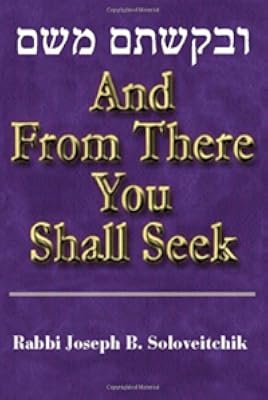
And from There You Shall Seek (Meotzar Horav)
by Joseph B. Soloveitchik
Me-otzar HoRav Series: Selected Writings of Rabbi Joseph B. Soloveitchik (10)
On This Page
Description
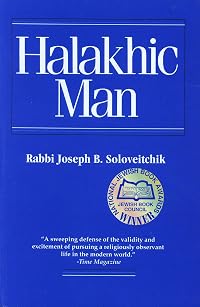
"The present volume is a translation of Rabbi Joseph B. Soloveitchik's classic essay, "U-Vikkashtem mi-Sham." Drafted in the 1940's as a companion to his earlier treatise Halakhic Man, this powerful and wide-ranging work was published in Hebrew only in 1978. Drawing its title from Deuteronomy 4:29 - "And from there you shall seek the Lord your God, and you shall find Him if you search for Him with all of your heart and all of your soul" - and framed by the evocative metaphors of the Song of show more Songs, the essay charts the individual's search for God, a quest which culminates in the stage of devekut, cleaving to Him." "The human being initially seeks God by examining the natural and spiritual worlds. But this search fails; hence God must reveal Himself and express His will. Rabbi Soloveitchik explicates the contrast between these two different modes of experiencing the divine: the natural consciousness, marked by freedom and creativity, and the revelational consciousness, marked by compulsion and discipline. The remainder of the work elaborates on this dialectic, exploring such themes as the imitation of God, devekut, mercy and justice, trust and fear, love and awe, the rule of intellect, elevation of the body, the perpetuity of God's word, and creation and revelation." "And From There You Shall Seek is Rabbi Soloveitchik's fullest and most elaborate examination of religious consciousness and the dynamics of religious experience. Its presentation of the challenging interplay between cultural creativity, religious practice, and spiritual quest is sure to enrich the contemporary reader."--BOOK JACKET. show lessTags
Recommendations














Member Reviews
Rabbi Joseph B. Soloveitchik's And From There You Shall Seek was originally published in Hebrew in 1978 and appears in English here for the first time. Soloveitchik uses The Song of Songs as the starting point for an extended argument on the necessity of following Jewish law, or halakah, in order to build a meaningful relationship with God. Soloveitchik was a seminal voice in the Modern Orthodox movement and his writings reflect many aspects of Modern Orthodox theology and worldview- the importance of education, of engagement with society at large and of combining studying and living halakah with the performance of good deeds and righteous acts.
Soloveitchik begins his treatise with an analysis of the Song of Songs as the longing of man show more for God- man constantly cleaves to God, constantly longs for God, but God is elusive and slips away just as man believes he will finally unite with Him. So how then to join with God? Soloveitchik argues that man joins with God through engagement with the world, studying Torah, living Torah through obedience to halakah and studying Torah through recitation and study of the works of other Torah scholars. He ends by suggesting that man stays close to God by being part of a larger community and identifying with the fate of the Jewish people.
Soloveitchik's purpose is not to explain or justify individual aspects of halakah but to present an argument which advocates for its adoption as a whole and connects halakah to a deeper relationship with God; this he does persuasively and passionately. His work here is intellectually rigorous and challenging but still accessible and it is highly recommended for academic collections of Judaica and for those seeking a greater understanding of Modern Orthodox theology and principles. show less
Soloveitchik begins his treatise with an analysis of the Song of Songs as the longing of man show more for God- man constantly cleaves to God, constantly longs for God, but God is elusive and slips away just as man believes he will finally unite with Him. So how then to join with God? Soloveitchik argues that man joins with God through engagement with the world, studying Torah, living Torah through obedience to halakah and studying Torah through recitation and study of the works of other Torah scholars. He ends by suggesting that man stays close to God by being part of a larger community and identifying with the fate of the Jewish people.
Soloveitchik's purpose is not to explain or justify individual aspects of halakah but to present an argument which advocates for its adoption as a whole and connects halakah to a deeper relationship with God; this he does persuasively and passionately. His work here is intellectually rigorous and challenging but still accessible and it is highly recommended for academic collections of Judaica and for those seeking a greater understanding of Modern Orthodox theology and principles. show less
Members
- Recently Added By
Lists

Tablet Magazine's List of 101 Great Jewish Books
103 works; 9 members
Author Information

99 Works 1,204 Members
Series

Common Knowledge
- Alternate titles
- U-Vikkashtem mi-Sham
Classifications
Statistics
- Members
- 31
- Popularity
- 903,735
- Reviews
- 1
- Rating
- (3.00)
- Languages
- English
- Media
- Paper
- ISBNs
- 1