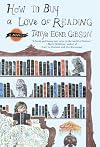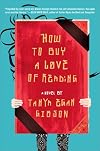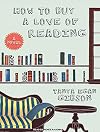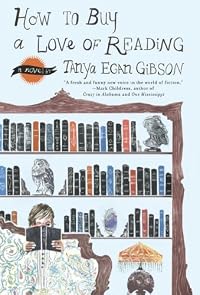
How to Buy a Love of Reading
by Tanya Egan Gibson 
On This Page
Description
To Carley Wells, words are the enemy-her tutor's innumerable SAT flashcards; her personal trainer's "fifty-seven pounds overweight" assessment; and the endless reading assignments from her English teacher, Mr. Nagel. When Nagel reports to her parents that she has answered "What is your favorite book?" with "Never met one I liked," they decide to fix what he calls her "intellectual impoverishment." They will commission a book to be written just for her-one she'll have to love-that will show more impress her teacher and the whole town of Fox Glen with their family's devotion to the arts. They will be patrons-the Medicis of Long Island. They will buy their daughter The Love of Reading.Impossible though it is for Carley to imagine loving books, she is in love with a young bibliophile who cares about them more than anything. Anything, that is, but a good bottle of scotch. Hunter Cay, Carley's best friend and Fox Glen's resident golden boy, is becoming a stranger to her lately as he drowns himself in F. Scott Fitzgerald, booze, and Vicodin.When the Wellses move struggling writer Bree McEnroy into their mansion to write Carley's book, Carley's sole interest in the project is to distract Hunter from drinking and give them something to share. But as Hunter's behavior becomes erratic and dangerous, she finds herself increasingly drawn into the fictional world Bree has created and begins to understand for the first time the power of stories-those we read, those we want to believe in, and most of all, those we tell ourselves about ourselves. Stories powerful enough to destroy a person. Or save her. show lessTags
Recommendations







Member Reviews
How to Buy a Love of Reading is a novel that, early on, seems entirely determined by its setting. The characters live near the “Eggs” that Gatsby spoke of, and their pretension is just the same. Their language is just as unbelievable. Their wealth is unattainable. And just like Gatsby, you could focus on all of these overblown elements, but then you would miss the whole story. You would miss the point: that no of this other stuff matters. All that matters is how you feel about yourself.
Tanya Egan Gibson openly says that she was no fan of Fitzergerld in her youth (her appreciation came later-like a fine wine), but it is his work that ironically ties this piece together for the young, high school Carley. Carley’s best friend show more Hunter-Mr. Unbelievable- is like no high school student that I have met. He lives alone. He has $60,000 at his immediate disposal. He is given LOTS of alcohol by adults. Hunter becomes Gatsby; he spends most of the novel beating his “boat against the current”, trying to undo who he has become. And it is in this quest-the quest to learn to love books, but mostly to love who you are-where How to Buy took me in.
I worry that some readers would start How to Buy and would focus on the surface elements. Other readers would get tired of the superficial vocabulary, the diverse characters. They would think that this was all the novel was about. How to Buy a Love of Reading has a lot more interesting things going on if you can take the time to visit the land of Gatsby. If you become like Carly and just take the time to look. show less
Tanya Egan Gibson openly says that she was no fan of Fitzergerld in her youth (her appreciation came later-like a fine wine), but it is his work that ironically ties this piece together for the young, high school Carley. Carley’s best friend show more Hunter-Mr. Unbelievable- is like no high school student that I have met. He lives alone. He has $60,000 at his immediate disposal. He is given LOTS of alcohol by adults. Hunter becomes Gatsby; he spends most of the novel beating his “boat against the current”, trying to undo who he has become. And it is in this quest-the quest to learn to love books, but mostly to love who you are-where How to Buy took me in.
I worry that some readers would start How to Buy and would focus on the surface elements. Other readers would get tired of the superficial vocabulary, the diverse characters. They would think that this was all the novel was about. How to Buy a Love of Reading has a lot more interesting things going on if you can take the time to visit the land of Gatsby. If you become like Carly and just take the time to look. show less
I was concerned about two possible outcomes when I first read the cover flap to How to Buy a Love of Reading: the first that the book would be overwrought with literary devices, self-referential and self-deferential -- obsessed with its own cleverness, the second that as a "young adult" book, the writing would be so simplistic, so easy to read, that it would not be worth my time.
Gibson walks a narrow line without ever venturing into either extreme in this novel, which is filled with a rich and moving narrative, well-depicted and sympathetic characters and metafictional devices, theme, tone and point-of-view. It is not only the sort of book that one can read many times to find out what it is "really about" (and certainly, because it is show more the sort of book that makes one hark back to their own exposure to the concept of literature as more than narrative, I was tempted midway through to sit down and write a 5 paragraph essay about the Dark Journey and Coming of Age imagery.) but also the sort of book wherein "stuff happens" and the reader cares about what will happen.
The writing is elegant, readable, funny and terribly, terribly sad. It is easy to identify with parts of each of the (many) characters, while despising others. Ultimately, it is a book about narrative, as each of the main characters has a different struggle with living their own narrative -- Hunter who lives his life according to his own internal narration, Carley, who rewrites her life in Aftermemory, Bree who is so self-conscious and defensive that she invents literary devices in her life and Justin, who does not live at all, rather inventing the story of his life to be printed in the papers. show less
Gibson walks a narrow line without ever venturing into either extreme in this novel, which is filled with a rich and moving narrative, well-depicted and sympathetic characters and metafictional devices, theme, tone and point-of-view. It is not only the sort of book that one can read many times to find out what it is "really about" (and certainly, because it is show more the sort of book that makes one hark back to their own exposure to the concept of literature as more than narrative, I was tempted midway through to sit down and write a 5 paragraph essay about the Dark Journey and Coming of Age imagery.) but also the sort of book wherein "stuff happens" and the reader cares about what will happen.
The writing is elegant, readable, funny and terribly, terribly sad. It is easy to identify with parts of each of the (many) characters, while despising others. Ultimately, it is a book about narrative, as each of the main characters has a different struggle with living their own narrative -- Hunter who lives his life according to his own internal narration, Carley, who rewrites her life in Aftermemory, Bree who is so self-conscious and defensive that she invents literary devices in her life and Justin, who does not live at all, rather inventing the story of his life to be printed in the papers. show less
I used to sneer at people who claimed that a novel or movie could ever change their minds on something or change their perspective. Why would anyone be so keen to surrender a piece of their mind to a mere story that some stranger wrote?
How to Buy a Love of Reading is the rock upon which my indifference has been dashed. It is an amazing novel, combining both an earnest and gut-wrenching coming-of-age in the pitiless environment of the ultra-rich families of Fox Glen, and cold and clinical metafiction which not only dissects the story, but also dissects itself, following the metafictional desire to self-criticize and self-consume.
To know that this is Tanya Egan Gibson's debut novel is astounding.
This is definitely my favourite kind of show more novel, the kind that's packed with creativity (another of my favourites in this vein is The Female Man, by Joanna Russ). I highly invite people with open minds and hearts to read it. show less
How to Buy a Love of Reading is the rock upon which my indifference has been dashed. It is an amazing novel, combining both an earnest and gut-wrenching coming-of-age in the pitiless environment of the ultra-rich families of Fox Glen, and cold and clinical metafiction which not only dissects the story, but also dissects itself, following the metafictional desire to self-criticize and self-consume.
To know that this is Tanya Egan Gibson's debut novel is astounding.
This is definitely my favourite kind of show more novel, the kind that's packed with creativity (another of my favourites in this vein is The Female Man, by Joanna Russ). I highly invite people with open minds and hearts to read it. show less
"How to Buy a Love of Reading" centers around a situation where someone is trying to do just that -- some wealthy parents decide to pay an author to write a book specifically to appeal to their shallow, anti-literary daughter. Not surprisingly given that set-up, the parents, daughter, and hired author all have significant emotional stuff going on that churns to the fore over the course of the book.
While I could see this book genuinely appealing to readers who enjoy the Gossip Girl / Nanny Diaries genre of "rich people behaving badly", for me it was a dry and irritating read.
Myself, I love reading the most when I actually *like* the people I'm reading about, at least a little -- after all, reading can be like spending time with a new show more friend, hearing their story. I don't need the characters in every book to sound like wonderful, amazing people who I want for my new BFF, but there does need to be something about them I find appealing. And the reality is that with this book, there was not a one of the main characters who I'd be interested in spending any time with. show less
While I could see this book genuinely appealing to readers who enjoy the Gossip Girl / Nanny Diaries genre of "rich people behaving badly", for me it was a dry and irritating read.
Myself, I love reading the most when I actually *like* the people I'm reading about, at least a little -- after all, reading can be like spending time with a new show more friend, hearing their story. I don't need the characters in every book to sound like wonderful, amazing people who I want for my new BFF, but there does need to be something about them I find appealing. And the reality is that with this book, there was not a one of the main characters who I'd be interested in spending any time with. show less
I really enjoyed this book despite what I think is fairly deceptive flap copy. I expected a much more tongue-in-cheek narrative that this book offers- the satire is fairly light in my opinion. Despite that, the story itself is compelling, and Carley (who I disliked in the beginning) develops into a character with wonderful depth. Her struggle to survive while trying to save her best friend is unexpectedly poignant, and I enjoyed watching Carley slowly come to recognize her own worth outside of Hunter's reflected glory.
There was plenty of scope for wry laughter once Bree (and her painful novel) make an appearance. Bree's level of narrative deconstruction will entertain anyone who's ever endured a college writing class. Her efforts to show more find a narrative truth are unexpectedly assisted by Carley's hatred of books and refusal to accept Bree's idea of storytelling.
Gibson perfectly captures the feelings of isolation and confusion that all teenagers experience (no matter their parents' socio-economic situation), and ably crafts a realistic (though rather surreal) story. Highly recommended. show less
There was plenty of scope for wry laughter once Bree (and her painful novel) make an appearance. Bree's level of narrative deconstruction will entertain anyone who's ever endured a college writing class. Her efforts to show more find a narrative truth are unexpectedly assisted by Carley's hatred of books and refusal to accept Bree's idea of storytelling.
Gibson perfectly captures the feelings of isolation and confusion that all teenagers experience (no matter their parents' socio-economic situation), and ably crafts a realistic (though rather surreal) story. Highly recommended. show less
I liked this book. While the book wasn’t ruined because of it, I was distressed to read a spoiler, an important one, in a Goodreads member’s review, while I was in the midst of reading the book. At one moment toward the end of the book, my heart was in my throat, but that moment would have been so much more powerful if I’d not known what I knew because of that review.
The story is both hilarious and terribly sad, funny although I never really laughed, and melancholy though I didn’t cry, though I came close at one point toward the end and again during the last few pages.
So much goes on with so many characters. There are stories with the story: the imagining-fantasizing (storytelling) within the story and also the story in the book show more being written. While I certainly saw their function, I wasn’t that enamored of them. I liked some of the characters and subplots better than others. By the end of the book, I liked only 5 characters, and most of those with some reservations.
The story takes place in a wealthy privileged community. It felt a tad wearing for me to read about the ultra rich. Among the teens there is drinking, drugs, sex. Many of the adults are shown to be shallow, judgmental, and unlikable in many ways. I had a difficult time identifying with many of the characters and much of the story, not that I didn’t feel empathy for the characters because I did for almost all of them. I did love the concept of “aftermemory” (having experienced it myself) and (unfortunately) recognized the parental obsession with weight issues, and parental neglect, disapproval, and control.
I am not a fan ofF. Scott Fitzgerald or The Great Gatsby, which has a central role in this book. Those who are fans might appreciate this book even more than I did. This book is very clever in many other ways too, including, for instance, having the section title names that it does.
The book has some wonderful things to say about reinventing yourself, how we can’t change others, how we look at others from our own point of view and often don’t see them at all for who they really are, about what shapes us, about our choices. It’s cleverly written and constructed, I was engaged throughout, and it all came together believably at the end, but while I liked it, I just can’t quite love it. I wanted to love it though, so I’m a bit disappointed, but I’m glad that I read it.
I do love the book’s title and the book’s premise, both brilliant. show less
The story is both hilarious and terribly sad, funny although I never really laughed, and melancholy though I didn’t cry, though I came close at one point toward the end and again during the last few pages.
So much goes on with so many characters. There are stories with the story: the imagining-fantasizing (storytelling) within the story and also the story in the book show more being written. While I certainly saw their function, I wasn’t that enamored of them. I liked some of the characters and subplots better than others. By the end of the book, I liked only 5 characters, and most of those with some reservations.
The story takes place in a wealthy privileged community. It felt a tad wearing for me to read about the ultra rich. Among the teens there is drinking, drugs, sex. Many of the adults are shown to be shallow, judgmental, and unlikable in many ways. I had a difficult time identifying with many of the characters and much of the story, not that I didn’t feel empathy for the characters because I did for almost all of them. I did love the concept of “aftermemory” (having experienced it myself) and (unfortunately) recognized the parental obsession with weight issues, and parental neglect, disapproval, and control.
I am not a fan ofF. Scott Fitzgerald or The Great Gatsby, which has a central role in this book. Those who are fans might appreciate this book even more than I did. This book is very clever in many other ways too, including, for instance, having the section title names that it does.
The book has some wonderful things to say about reinventing yourself, how we can’t change others, how we look at others from our own point of view and often don’t see them at all for who they really are, about what shapes us, about our choices. It’s cleverly written and constructed, I was engaged throughout, and it all came together believably at the end, but while I liked it, I just can’t quite love it. I wanted to love it though, so I’m a bit disappointed, but I’m glad that I read it.
I do love the book’s title and the book’s premise, both brilliant. show less
It will always be debatable, whether the “greats” of yesterday (Homer to Emerson to Fitzgerald) would still have written about deep things, had that been alive, today. Or, as some might propose, would Homer be a cheesy romance writer, Emerson a gossip columnist and Fitzgerald a head writer for The O.C.? There is, simply, no way to tell, lacking that windbag pundit Wells’ time machine, but the real point is that what we deem deep, looking back, may very well have been, to their then-modern-day critiques, fairly trivial. And, looking forward, what we toss off as pulp, today, may be hailed by future generations as the wisdom of days gone by, unappreciated during its time.
All of this said, I’m not sure (though, again, who knows what show more the future may hold) that How to Buy a Love of Reading will make the cut. With all of the backdrop and drinking of Fitzgerald’s timeless, Long Island miseries mixed with either a jab or an attempt at Pynchon’s satirical absurdity, Gibson’s would-be parody falls a bit flat of or far from greatness. Mentioned throughout and quoted tirelessly (at least, it seemed, for the author) was one of my favorite authors, Fitzgerald. I do think, however, it might take a bit more than wild nights and western Long Island to pair the two writers together.
The curtain opens on Carley Wells, a sympathetically pathetic high school junior. Pleasantly plump, virtually friendless, academically clueless and reality-t.v. obsessed, she finds herself both locked into and locked out of a society that values everything she is not. Those around her, including her parents and two best friends, hoard gossip and waste money, but she seems completely out-of-place, in a useless, rather than poetic, sort of way.
Instead of acting as some sort of metaphoric commentary on the evils of Society, the “character” ff Carly (for she really never develops beyond a reality show version of a scripted extra) appears to have no grounding, neither in the mystical world of the North Eastern elite nor in, what is usually the antithesis of such a thing, usually, some crunchy-granola or artistically subversive backlash against the haughty gaudiness.
There are points of redemption that pop up, not in any one character, but in slivers of interaction. There are two writers (one too successful, one decidedly not successful at all) and a Boy, with an capital B, that hint at something deeper. Of course, I was never really sure that they were mentioned, superficially, to show Carly’s lack of understanding or written vaguely because they really weren’t supposed to be taken that deeply at all, even perhaps, by the author. Regardless of the intent, the few moments of higher thinking weren’t enough to bring Fitzgerald anywhere near this story. The whole thing reminded me of a half-hearted attempt at merging an episode of The O.C. and Gossip Girl without any of the funny parts.
I really don’t mean for this to come off as terrible as I’m sure it must. There were moments of insight; I just wish that those had been the main focuses, rather than the humdrum cliches that made up most of the book. Of course, there’s an eternal optimist in every cynic and I’ll be interested in Tanya Egan Gibson’s next book to see if she manages to get away from the teen angst to go for the heavier stuff. show less
All of this said, I’m not sure (though, again, who knows what show more the future may hold) that How to Buy a Love of Reading will make the cut. With all of the backdrop and drinking of Fitzgerald’s timeless, Long Island miseries mixed with either a jab or an attempt at Pynchon’s satirical absurdity, Gibson’s would-be parody falls a bit flat of or far from greatness. Mentioned throughout and quoted tirelessly (at least, it seemed, for the author) was one of my favorite authors, Fitzgerald. I do think, however, it might take a bit more than wild nights and western Long Island to pair the two writers together.
The curtain opens on Carley Wells, a sympathetically pathetic high school junior. Pleasantly plump, virtually friendless, academically clueless and reality-t.v. obsessed, she finds herself both locked into and locked out of a society that values everything she is not. Those around her, including her parents and two best friends, hoard gossip and waste money, but she seems completely out-of-place, in a useless, rather than poetic, sort of way.
Instead of acting as some sort of metaphoric commentary on the evils of Society, the “character” ff Carly (for she really never develops beyond a reality show version of a scripted extra) appears to have no grounding, neither in the mystical world of the North Eastern elite nor in, what is usually the antithesis of such a thing, usually, some crunchy-granola or artistically subversive backlash against the haughty gaudiness.
There are points of redemption that pop up, not in any one character, but in slivers of interaction. There are two writers (one too successful, one decidedly not successful at all) and a Boy, with an capital B, that hint at something deeper. Of course, I was never really sure that they were mentioned, superficially, to show Carly’s lack of understanding or written vaguely because they really weren’t supposed to be taken that deeply at all, even perhaps, by the author. Regardless of the intent, the few moments of higher thinking weren’t enough to bring Fitzgerald anywhere near this story. The whole thing reminded me of a half-hearted attempt at merging an episode of The O.C. and Gossip Girl without any of the funny parts.
I really don’t mean for this to come off as terrible as I’m sure it must. There were moments of insight; I just wish that those had been the main focuses, rather than the humdrum cliches that made up most of the book. Of course, there’s an eternal optimist in every cynic and I’ll be interested in Tanya Egan Gibson’s next book to see if she manages to get away from the teen angst to go for the heavier stuff. show less
Members
- Recently Added By
Author Information

1 Work 346 Members
Tanya Egan Gibson is a LibraryThing Author, an author who lists their personal library on LibraryThing.
Common Knowledge
- Original publication date
- 2006
- People/Characters
- Carley Wells; Hunter Cay; Mr. Nagel; Bree McEnroy
- Important places
- Long Island, New York, USA
- Epigraph
- All good writing is swimming under water and holding your breath.
-F. Scott Fitzgerald, from an undated letter to his daughter, Frances Scott Fitzgerald - Dedication
- For Josh, Dylan, and Cole- my everything
- First words
- The idea came to Carley's father amid the whir of a hundred handheld sanders at Bunny Gardner's Sweet Sixteen, an event that had burst into life with the birthday girl's parents whipping a satin drape off their pedestaled dau... (show all)ghter at the center of the Glen Club ballroom, where she held a pose she would later tell her classmates was "Winged Victory, except not headless" through applause people would say she milked a bit too long before stepping down.
- Last words
- (Click to show. Warning: May contain spoilers.)Then, in the ebbing, water races through the narrowest of inlets in search of ocean, rushing back to that place where everything began.
Classifications
Statistics
- Members
- 346
- Popularity
- 90,979
- Reviews
- 24
- Rating
- (3.35)
- Languages
- English
- Media
- Paper, Audiobook, Ebook
- ISBNs
- 7
- ASINs
- 4