On This Page
Description
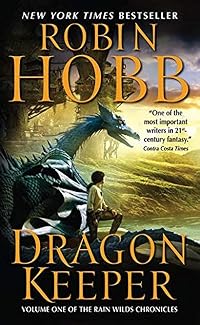
After many years, dragons have hatched again outside the ancient city of Cassarick. But something is wrong with the creatures; each is inferior or weak in some way, and many die. Tending these stunted dragons has left the people of the surrounding area weary. The Traders Council, the city's leadership, fears that if the Rain Wilders stop providing for the young dragons, the hungry and neglected creatures will rampage and destroy Cassarick. To avert catastrophe, the council rules to relocate show more the young dragons to "a better location" up river, and residents are recruited to escort the valuable yet fearsome creatures on the arduous journey. Among them are Thymara, an unschooled Rain Wilds girl of sixteen, and Alise, a wealthy, educated, and deeply unsatisfied Bingtown Trader's wife. show lessTags
Recommendations



Member Recommendations
Member Reviews
Continuing my Realm of the Elderlings read into series I'm reading for the first time.
The dragon Tintaglia has guided the sea serpents into the Rain Wilds to hatch into dragons, but the hatching did not go according to plan and the new dragons are scrawny and malformed, unable to fly or provide for themselves. As the people of the Rain Wilds grow tired of supporting them, plans are made to escort the dragons upriver to try to find their ancient stomping grounds at the abandoned dragon/elderling city of Kelsingra. Coming along on this journey are Alise, a Bingtown woman married to a man she despises chasing her dream of being the foremost dragon expert; Leftrin, Rain Wild trader with a few secrets about the nature of his ship; and show more Thymara, a Rain Wilds girl whose physical attributes mean she should have been abandoned at birth. Will their journey be successful?
I'm always a little wary of leaving my beloved Fitz and the Fool behind, but Hobb drew me right into this new series with some fascinating new characters (and some cameos from old ones, too). So far my favorites are Alise and Leftrin. This is shorter than some of her other books, which maybe explains why this series got 4 books instead of 3, and I think all 4 are very closely linked -- more like one long book than 4 separate ones. So I'll be reading the next book quite quickly. 4.5 stars. show less
The dragon Tintaglia has guided the sea serpents into the Rain Wilds to hatch into dragons, but the hatching did not go according to plan and the new dragons are scrawny and malformed, unable to fly or provide for themselves. As the people of the Rain Wilds grow tired of supporting them, plans are made to escort the dragons upriver to try to find their ancient stomping grounds at the abandoned dragon/elderling city of Kelsingra. Coming along on this journey are Alise, a Bingtown woman married to a man she despises chasing her dream of being the foremost dragon expert; Leftrin, Rain Wild trader with a few secrets about the nature of his ship; and show more Thymara, a Rain Wilds girl whose physical attributes mean she should have been abandoned at birth. Will their journey be successful?
I'm always a little wary of leaving my beloved Fitz and the Fool behind, but Hobb drew me right into this new series with some fascinating new characters (and some cameos from old ones, too). So far my favorites are Alise and Leftrin. This is shorter than some of her other books, which maybe explains why this series got 4 books instead of 3, and I think all 4 are very closely linked -- more like one long book than 4 separate ones. So I'll be reading the next book quite quickly. 4.5 stars. show less
If there is one thing Robin Hobb does well, it is torture her characters. Nothing ever is easy, and few things work out perfectly, despite incredible efforts by dedicated people with the best of intentions. How... realistic is that.
Dragon Keeper picks up where her Assassin, Live Ships and Tawny Man series ended.
The one dragon who is alive, helps to usher sea serpents up the Rain Wilds River to cocoon and become more dragons. Only... Well, the sea serpents have been at sea for too long and the hatching doesn't go well, and the story is about what to do with 'failed' dragons.
It is a moving tale, as are all her books, difficult in that you want things to work, but somehow they never quite seem to work well. But at the same time, she can show more grow her characters like no one else can, letting them struggle against impossible odds which might defeat them, but never quite breaks them
Highly recommended, if you are NOT looking for light or happy fantasy. show less
Dragon Keeper picks up where her Assassin, Live Ships and Tawny Man series ended.
The one dragon who is alive, helps to usher sea serpents up the Rain Wilds River to cocoon and become more dragons. Only... Well, the sea serpents have been at sea for too long and the hatching doesn't go well, and the story is about what to do with 'failed' dragons.
It is a moving tale, as are all her books, difficult in that you want things to work, but somehow they never quite seem to work well. But at the same time, she can show more grow her characters like no one else can, letting them struggle against impossible odds which might defeat them, but never quite breaks them
Highly recommended, if you are NOT looking for light or happy fantasy. show less
The first in the Rain Wilds trilogy and I was hooked from the beginning. Dragons have been hatched in the Rain Wilds after many years without them. But these dragons are malformed and unable to care for themselves. The humans assigned to them do as little as possible until the dragons themselves begin to remember a place where their kind were content. In a scheme to kill two birds with one stone, the humans offer the position of "Dragon Keeper" to those lesser members of society who should have been left to die at birth. Both keepers and dragons grow in different ways. My only complaint about this book - it does not stand alone. I had to instantly get the second one to keep reading.
Life in the jungle filled Rain Wilds is tough. Whether you live in half-ruined Bingtown, recently rebuilding from a war with a long time adversary, or if you live deeper in the Rain Wilds, where buildings are built into the trees, and social position is based on how low to the ground you can manage to live, its a tough life. The fact that the river itself is somewhat acidic and inimical adds to the dangerous ground.
To this dangerous environment, add Dragons, hatched from Sea Serpent eggs, and protected by a bargain the egg layer has made with the Rain Wilds folk to care for the creatures. Mix in the fact that these dragons are stunted, malformed and some of them are nearly feral. These are far from your typical fantasy dragons!
Set in show more (as you might already have guessed) Hobb's Farseer world, Dragon Keeper is the story of these malformed dragons, offspring of the true dragon Tintaglia (who featured prominently in the Liveship Traders series). Malformed and stunted as they are, they are not the creatures anyone expects, and are a burden on the Rain Wilders. The Dragons seize a chance to get the Rain Wilders to get them out of each other's hair by sending them, with their keepers, upriver, in search of a legendary city from the prior Elderling civilization.
Dragon Keeper is also the story of two young and very different women. Thymara has the mutations and markings that make her a semi-outcast even amongst her people, and it is no wonder that she leaps at the chance to escape her home environment and join that expedition to repatriate the dragons further upriver. By comparison, Alise is a sheltered young woman, bound in a marriage that is literally only in name, whose study of scrolls and documents makes her, improbably, the foremost theoretical expert on Dragons and their former world. She, too, with both hands, leaps at the chance to escape her home life and join the expedition.
There are a small flock of secondary characters as well that mainly serve as relief and contrast to Alise and Thymara (although compared to many authors, they serve very well as defined characters).Sedric, secretary to Hest, and unwilling companion to Alise on her journey, is close as they come to being a third main character in the novel.
I've read a few of Hobb's novels before (and under her pen name Megan Lindholm as well). Like those previous novels, she provides solid characters, a well fleshed out and thought out world, and has captured the magic of "one more page, one more chapter" in her writing style, leading the reader on to continue the journey. In addition to cutting between the two main characters, the chapters also have the text of messages sent between bird keepers, which provides a third, objective view of some events and helps flesh out the world as really extending beyond the words on the page.
While I think reading some of the previous Farseer books (especially the Liveship Traders--there are Liveships in this novel, naturally) might be useful for understanding some events, since most of this book is set in the isolated backcountry, I think this book can serve as a gateway book to Hobb's work.
The only weakness to the book, and its endemic to a lot of fantasy these days, is that this is an unfinished story.This is the first in a duology and even as such, this first novel does not stand alone.
However, given the richness of the book, I will *definitely* be looking to getting and reading the second book when it comes out. I also need to fill in the backlog of books of Hobbs in the Farseer world I haven't read--Dragon Keeper helped remind me of the skill and craft in her worldbuilding and characters.
If you are looking for a low magic fantasy world with a different take on dragons, or if you are a previous fan of Hobb's Farseer world, I recommend Dragon Keeper to you. show less
To this dangerous environment, add Dragons, hatched from Sea Serpent eggs, and protected by a bargain the egg layer has made with the Rain Wilds folk to care for the creatures. Mix in the fact that these dragons are stunted, malformed and some of them are nearly feral. These are far from your typical fantasy dragons!
Set in show more (as you might already have guessed) Hobb's Farseer world, Dragon Keeper is the story of these malformed dragons, offspring of the true dragon Tintaglia (who featured prominently in the Liveship Traders series). Malformed and stunted as they are, they are not the creatures anyone expects, and are a burden on the Rain Wilders. The Dragons seize a chance to get the Rain Wilders to get them out of each other's hair by sending them, with their keepers, upriver, in search of a legendary city from the prior Elderling civilization.
Dragon Keeper is also the story of two young and very different women. Thymara has the mutations and markings that make her a semi-outcast even amongst her people, and it is no wonder that she leaps at the chance to escape her home environment and join that expedition to repatriate the dragons further upriver. By comparison, Alise is a sheltered young woman, bound in a marriage that is literally only in name, whose study of scrolls and documents makes her, improbably, the foremost theoretical expert on Dragons and their former world. She, too, with both hands, leaps at the chance to escape her home life and join the expedition.
There are a small flock of secondary characters as well that mainly serve as relief and contrast to Alise and Thymara (although compared to many authors, they serve very well as defined characters).Sedric, secretary to Hest, and unwilling companion to Alise on her journey, is close as they come to being a third main character in the novel.
I've read a few of Hobb's novels before (and under her pen name Megan Lindholm as well). Like those previous novels, she provides solid characters, a well fleshed out and thought out world, and has captured the magic of "one more page, one more chapter" in her writing style, leading the reader on to continue the journey. In addition to cutting between the two main characters, the chapters also have the text of messages sent between bird keepers, which provides a third, objective view of some events and helps flesh out the world as really extending beyond the words on the page.
While I think reading some of the previous Farseer books (especially the Liveship Traders--there are Liveships in this novel, naturally) might be useful for understanding some events, since most of this book is set in the isolated backcountry, I think this book can serve as a gateway book to Hobb's work.
The only weakness to the book, and its endemic to a lot of fantasy these days, is that this is an unfinished story.This is the first in a duology and even as such, this first novel does not stand alone.
However, given the richness of the book, I will *definitely* be looking to getting and reading the second book when it comes out. I also need to fill in the backlog of books of Hobbs in the Farseer world I haven't read--Dragon Keeper helped remind me of the skill and craft in her worldbuilding and characters.
If you are looking for a low magic fantasy world with a different take on dragons, or if you are a previous fan of Hobb's Farseer world, I recommend Dragon Keeper to you. show less
*****I just wanted to say that I have finished the second book, Dragon Haven. The improvement from the first book is almost miraculous. So, though I stand by my low rating and negative review of Dragon Keeper, I would recommend you push through it and read the rest of the series, because I adored the second book.*****
I'm only about a quarter through this book, but it is frustrating me so much that I have to vent my feelings. This is a good story, but the writing does it absolutely no justice. I adored the Farseer & Tawny Man series from Hobb, and her writing style was perfectly fine in those. And her wide variety of characters, and in particular her representations of women, were excellent. I think her Liveship series was somewhere in show more between the others and this book in quality.
The story is ridiculously overwritten. 211 pages in, and I cannot recall any ordinary conversations- they are all super long, almost formal, and seem to talk about the same town issues/ over and over again, with no distinct differences in the perspective from different characters. The speech between one character and the next is almost identical sometimes, and conversation tends to repeat another character's thoughts from a mere one page earlier. I cannot believe an editor was so lax as to approve this! I can ignore bad writing for the sake of a good story, but repetitive, uncreative writing just jars me from the story, and bores and frustrates me.
As for the female characters- why are they so downtrodden? I get that Hobb might want to talk about the struggles of women in a less-developed, slightly oppressive environment, but she has gone overboard. In this, and the Liveship series, no women seem to be free from oppression of some sort, which makes for a boring story and stunts their characters. And I am a strong feminist, so normally I wouldn't make that kind of argument. But Hobb could show the struggles of oppressed women, and even show a few of their perspectives, without repeating the same story over and over again. Yes, fantasy should explore social issues. But it should also be entertaining, and all the oppression just makes me depressed. And the series are completely uncreative in their oppression. They constantly use rape, abuse, or threat of them, as a plotline. Use some imagination for god's sake! Show some more subtle forms of oppression. In the Farseer & Tawny Man series- the women had their troubles, most even faced sexism and oppression, but it was only one facet of their experiences, which made for well-rounded, interesting characters. Free your women, give them more chance to LIVE!
The Farseer & Tawny Man series are about a royal bastard (the born out of wedlock kind, not the jerk kind). The equivalent of this in those stories would be if Hobb had written in an extra five characters facing the troubles of being a bastard in a conservative society, and instead of making their experiences unique, she merely repeated the storyline of the first character with slight differences, over and over again, until their bastardhood overshadowed everything else about them and their experiences.
I sincerely hope this story will improve as it goes along. If just baffles my mind that Hobb could write such amazing, beloved stories, and then turn around and write this disaster. show less
I'm only about a quarter through this book, but it is frustrating me so much that I have to vent my feelings. This is a good story, but the writing does it absolutely no justice. I adored the Farseer & Tawny Man series from Hobb, and her writing style was perfectly fine in those. And her wide variety of characters, and in particular her representations of women, were excellent. I think her Liveship series was somewhere in show more between the others and this book in quality.
The story is ridiculously overwritten. 211 pages in, and I cannot recall any ordinary conversations- they are all super long, almost formal, and seem to talk about the same town issues/ over and over again, with no distinct differences in the perspective from different characters. The speech between one character and the next is almost identical sometimes, and conversation tends to repeat another character's thoughts from a mere one page earlier. I cannot believe an editor was so lax as to approve this! I can ignore bad writing for the sake of a good story, but repetitive, uncreative writing just jars me from the story, and bores and frustrates me.
As for the female characters- why are they so downtrodden? I get that Hobb might want to talk about the struggles of women in a less-developed, slightly oppressive environment, but she has gone overboard. In this, and the Liveship series, no women seem to be free from oppression of some sort, which makes for a boring story and stunts their characters. And I am a strong feminist, so normally I wouldn't make that kind of argument. But Hobb could show the struggles of oppressed women, and even show a few of their perspectives, without repeating the same story over and over again. Yes, fantasy should explore social issues. But it should also be entertaining, and all the oppression just makes me depressed. And the series are completely uncreative in their oppression. They constantly use rape, abuse, or threat of them, as a plotline. Use some imagination for god's sake! Show some more subtle forms of oppression. In the Farseer & Tawny Man series- the women had their troubles, most even faced sexism and oppression, but it was only one facet of their experiences, which made for well-rounded, interesting characters. Free your women, give them more chance to LIVE!
The Farseer & Tawny Man series are about a royal bastard (the born out of wedlock kind, not the jerk kind). The equivalent of this in those stories would be if Hobb had written in an extra five characters facing the troubles of being a bastard in a conservative society, and instead of making their experiences unique, she merely repeated the storyline of the first character with slight differences, over and over again, until their bastardhood overshadowed everything else about them and their experiences.
I sincerely hope this story will improve as it goes along. If just baffles my mind that Hobb could write such amazing, beloved stories, and then turn around and write this disaster. show less
I grew up on a toxic waste dump. I realize that sounds melodramatic, but technically it's accurate. My childhood home was ringed by no fewer than five Superfund sites - and, as we like to say, those are just the spots they've cleaned.
When I was a kid people weren't so concerned about the pollution. Arsenic was in the dust we kicked up on the playgrounds, on the berries we picked in the woods, in the small ponds where nothing lived and no birds ever stopped. The waterways were lined with gray heaps of slag from the copper smelter, in some spots enlivened by oil-slick rainbow stains made by unknown chemicals seeping out from the rocks. We were told not to fish or swim in the bay, which seemed to us kids to be hilarious: looking down off show more the docks into the still, metallic depths, we couldn't picture fish living down there at all, let alone anything you'd think of eating. And that was just the water. I still don't know what the mills were belching into the air, or what they're still churning out - sometimes, when the wind is right, you can both smell and taste the air: a sulphuric grit which stings your eyes and irritates your throat.
Now it's been spruced up. They sealed off the slag heaps and built fancy condos on top of them, planted new grass along the edges, dug up people's lawns and replaced them with new, cleaner topsoil. The smelter company offered a cash settlement to the people living closest to the plant, and they took it, even though the surveys hadn't been completed. They worked hard to restore the bay, and now when you stroll through the new grass and out along the docks you can look down to see bright colonies of starfish and sea anemones clinging to the piers, and deeper down, the quick dark shapes of fish.
Later, of course, we learned that the pollution went farther and deeper than the smelter operators had admitted to. Too late for the people who had settled, and too late for all of us who grew up splashing in that water and breathing that air. Statistics are readily available about disease rates in my hometown, telling us that you're much more likely to die of obscure cancers or get heart or lung disease there. I haven't seen anything on autoimmune disease, except that it's a hotspot for diabetes. I'm curious mostly because everyone I know, just about, has something crazy and unlikely wrong with them. Lupus, MS, celiac disease, autism, Crohn's disease, asthma - you name it. We're a sickly bunch.
We're not alone. All over the planet, people grow up in the shadow of industrial toxins, watch their kids and their friends get sick and die, watch their own bodies with wary concern. What can you do? You go on. Sometimes your pain and your poison can be transmuted into something beautiful, into art, into action, into something meaningful. Sometimes you just have to learn to accept your limitations and endure the pain.
And so this is a story for us. Here is a world where profit has trumped issues of morality and health, where generations grow up living with the legacy of pollution. It's sort of a counterpoint to the sunny ending of the Liveship books, where dragons and men are reunited and the deformed people of the Rain Wilds are transformed into something better. In this new series, we meet the people who were left behind, still deformed, without the hope that some magical intervention will save them from themselves. How they go on, and how they learn to transform themselves, is nothing short of inspirational.
This is what fantasy is best at, and this is why it's necessary. show less
When I was a kid people weren't so concerned about the pollution. Arsenic was in the dust we kicked up on the playgrounds, on the berries we picked in the woods, in the small ponds where nothing lived and no birds ever stopped. The waterways were lined with gray heaps of slag from the copper smelter, in some spots enlivened by oil-slick rainbow stains made by unknown chemicals seeping out from the rocks. We were told not to fish or swim in the bay, which seemed to us kids to be hilarious: looking down off show more the docks into the still, metallic depths, we couldn't picture fish living down there at all, let alone anything you'd think of eating. And that was just the water. I still don't know what the mills were belching into the air, or what they're still churning out - sometimes, when the wind is right, you can both smell and taste the air: a sulphuric grit which stings your eyes and irritates your throat.
Now it's been spruced up. They sealed off the slag heaps and built fancy condos on top of them, planted new grass along the edges, dug up people's lawns and replaced them with new, cleaner topsoil. The smelter company offered a cash settlement to the people living closest to the plant, and they took it, even though the surveys hadn't been completed. They worked hard to restore the bay, and now when you stroll through the new grass and out along the docks you can look down to see bright colonies of starfish and sea anemones clinging to the piers, and deeper down, the quick dark shapes of fish.
Later, of course, we learned that the pollution went farther and deeper than the smelter operators had admitted to. Too late for the people who had settled, and too late for all of us who grew up splashing in that water and breathing that air. Statistics are readily available about disease rates in my hometown, telling us that you're much more likely to die of obscure cancers or get heart or lung disease there. I haven't seen anything on autoimmune disease, except that it's a hotspot for diabetes. I'm curious mostly because everyone I know, just about, has something crazy and unlikely wrong with them. Lupus, MS, celiac disease, autism, Crohn's disease, asthma - you name it. We're a sickly bunch.
We're not alone. All over the planet, people grow up in the shadow of industrial toxins, watch their kids and their friends get sick and die, watch their own bodies with wary concern. What can you do? You go on. Sometimes your pain and your poison can be transmuted into something beautiful, into art, into action, into something meaningful. Sometimes you just have to learn to accept your limitations and endure the pain.
And so this is a story for us. Here is a world where profit has trumped issues of morality and health, where generations grow up living with the legacy of pollution. It's sort of a counterpoint to the sunny ending of the Liveship books, where dragons and men are reunited and the deformed people of the Rain Wilds are transformed into something better. In this new series, we meet the people who were left behind, still deformed, without the hope that some magical intervention will save them from themselves. How they go on, and how they learn to transform themselves, is nothing short of inspirational.
This is what fantasy is best at, and this is why it's necessary. show less
Though I've of course heard the name before, I'd never read a Robin Hobb book before this: before I picked this up, I didn't even know she was a woman. Well, I'll give most things with dragons a chance, and I'm glad I did. Despite taking forever for me to finish, I enjoyed this a lot, and when I finally did read it I had a hard time putting it down.
It switches between different characters, and while I'm not gonna say I liked all of them, they were interesting and there wasn't a single perspective that made me sigh or feel disinterested. Which is rare, for books with heavy multi-POV. But all these characters, different as they were, brought interesting insights and views when speaking.
Though I can't get over the name "Hest Finbok". That show more literally translates to "Horse Finebook" in Swedish, except horse is misspelled into our most ancient meme (similar to doge). I can't even begin to explain how much I couldn't take him seriously, and that's probably why I didn't hate the guy as much as he deserved. What an ass he was.
I was annoyed that a certain relationship took forever to be properly established, but since it actually was, I'm not holding it against the book. Had it continued to be "discreet" or whatever I would have maybe even retracted a star, but now I don't find that necessary.
The dragons were interesting too. At first I was a bit skeptical about them being serpents and "hatching", because it doesn't sound like something that isn't an insect would do but ... dragons aren't fucking real, so what's to say they don't? It was certainly refreshing.
Will definitely read the rest of this series, which I absolutely did not expect picking it up. Might even go on to read more by the author, dragons or no dragons. show less
It switches between different characters, and while I'm not gonna say I liked all of them, they were interesting and there wasn't a single perspective that made me sigh or feel disinterested. Which is rare, for books with heavy multi-POV. But all these characters, different as they were, brought interesting insights and views when speaking.
Though I can't get over the name "Hest Finbok". That show more literally translates to "Horse Finebook" in Swedish, except horse is misspelled into our most ancient meme (similar to doge). I can't even begin to explain how much I couldn't take him seriously, and that's probably why I didn't hate the guy as much as he deserved. What an ass he was.
I was annoyed that a certain relationship took forever to be properly established, but since it actually was, I'm not holding it against the book. Had it continued to be "discreet" or whatever I would have maybe even retracted a star, but now I don't find that necessary.
The dragons were interesting too. At first I was a bit skeptical about them being serpents and "hatching", because it doesn't sound like something that isn't an insect would do but ... dragons aren't fucking real, so what's to say they don't? It was certainly refreshing.
Will definitely read the rest of this series, which I absolutely did not expect picking it up. Might even go on to read more by the author, dragons or no dragons. show less
Members
- Recently Added By
Published Reviews
ThingScore 75
Lists

Here There Be Dragons
143 works; 23 members

Book Riddle Titles (HM)
21 works; 1 member

Book Riddle Titles (CC)
19 works; 1 member

Books Read in 2014
2,343 works; 86 members

Books Read in 2017
4,249 works; 129 members

Books Read in 2019
4,052 works; 108 members

Books Read in 2013
1,630 works; 51 members
Author Information

142+ Works 107,070 Members
Robin Hobb was born in California but grew up in Alaska. It was there that she learned to love the forest and the wilderness. She has lived most of her life in the Pacific Northwest and currently resides in Tacoma, Washington. She is the author of five critically acclaimed fantasy series: The Rain Wilds Chronicles (Dragon Keeper, Dragon Haven, show more City of Dragons, Blood of Dragons), The Soldier Son Trilogy, The Tawny Man Trilogy, The Liveship Traders Trilogy, and The Farseer Trilogy. Under the name Megan Lindholm she is the author of The Wizard of the Pigeons, Windsingers, and Cloven Hooves. The Inheritance, a collection of stories, was published under both names. Her short fiction has won the Asimov's Readers' Award and she has been a finalist for both the Nebula and Hugo awards. (Publisher Provided) Margaret Astrid Lindholm Ogden was born in Berkeley, California on March 5, 1952. She writes under the pseudonyms Megan Lindholm and Robin Hobb. She writes fantasy and science fiction under the name Robin Hobb including the Farseer Trilogy, the Liveship Traders Trilogy, the Tawny Man Trilogy, the Soldier Son Trilogy, the Rain Wilds Chronicles, and the Fitz and the Fool Trilogy. Her title, Assassin's Fate, made The New York Times Best Seller List in 2017. (Bowker Author Biography) show less
Some Editions
Awards and Honors
Series


Work Relationships
Common Knowledge
- Canonical title
- Dragon Keeper
- Original title
- Dragon Keeper
- Original publication date
- 2009-06-25
- People/Characters
- Erek (Keeper of the Birds, Bingtown); Detozi (Keeper of the Birds, Trehaug); Sisarqua; Tintaglia; Maulkin; Alise Kincarron (show all 10); Thymara; Hest Finbok; Leftrin; Sedric Meldar
- Important places
- Bingtown; Trehaug; Cassarick
- Dedication
- To the memory of Spot and Smokey, Brownie-butt and Rainbow, Rag-bag and Sinbad. Fine pigeons, one and all.
- First words
- They had come so far, yet now that she was here, the years of journeying were already fading in her mind, giving way to the desperate needs of the present.
- Last words
- (Click to show. Warning: May contain spoilers.)Hij fatsoendeerde zijn jas, opende de deur van zijn hut en liep het dek van de Tarman op.
(Click to show. Warning: May contain spoilers.)He would have to wait to see if he would ever see her again. - Blurbers
- Martin, George R.R.
- Original language
- English
Classifications
Statistics
- Members
- 3,625
- Popularity
- 4,480
- Reviews
- 103
- Rating
- (3.81)
- Languages
- 6 — Czech, Dutch, English, French, German, Italian
- Media
- Paper, Audiobook, Ebook
- ISBNs
- 36
- ASINs
- 20