The Spy Game
by Georgina Harding
On This Page
Description
On a freezing January morning in 1961, eight-year-old Anna's mother disappears into the fog. That same morning a spy case breaks in the news--the case of the Krogers, apparently ordinary people who were not who they said they were; people who had disappeared in one place and reappeared in another with other identities, leading other lives. Anna's brother, Peter, begins to construct a theory that their mother, a refugee from eastern Germany, was a spy working undercover, and might even still show more be alive. show lessTags
Recommendations











































Member Reviews
Sparsely written, yet touching to the core. This is a novel about a displaced mother, who disappears in the fog when her son and daughter are still at a young age. Anna and Peter speculate about their mother’s mysterious disappearance and her origins – could she be a spy, secretly working for the Russians?
The novel is set in both the early to mid 1960s, when the mom disappears and in the post cold war era, when Anna, now a married mom herself, travels to Berlin and Kaliningrad (Konigsberg) to see what she can reconstruct of her deceased mom’s life. The very fact that their dad did not take them to the funeral and graveside (until much later) provides ground for wild speculation – the kids know that their mom originally came show more from Germany, their parents met in 1947 in Berlin, and they grow up at a time when The Cambridge spy network hits the news big time. Could their mom be a sleeper spy, found out and erased from their lives? Did their mom flee and go back to Russia? Why does Anna have to go to a piano teacher, Sarah Cahn, who must be a Jewish German immigrant herself, and possibly another spy colluding with their dad (and missing mom)? Sarah Cahn has a mysterious Hungarian visitor, who gets stuck, snowed-in for months during the tough winter of 1963 – Is he yet another spy? When the kids go to Oxford for a shopping trip, they think they recognize their mom’s coat – worn by a woman they cannot distinguish very well, who links up with the Hungarian man. Especially Peter gets estranged from his home, because of the mysteries surrounding his missing mom – he escapes from boarding school at some stage, getting caught in Hook of Holland, on the run.
Much later, when her dad has died and Peter has moved abroad (in Hong Kong?), Anna finally gets to go on her own travel to Berlin and Kaliningrad, trying to discover traces of her mother’s life, piecing together tidbits of recollections, stories, and some trinkets she left behind. By coincidence she meets a nice elderly German couple in Kaliningrad that proves helpful, taking her to the local archives, to localize her mother’s place in old, but gone, Konigsberg. And then suddenly all falls in place – a life-long jigsaw is solved – her mom had a cat like trinket with a very German name, and that name proves to belong to an old woman (grandma?) living on the 5th floor of a building described by Anna’s mom. The old woman’s son lived below stairs and was a highly ranked SS officer. And then the secretive behaviour of Anna’s mother starts to make sense.
Not the first book I read by Georgina Harding, which explores a bit of niche with her novels on war, memory, trauma and the intergenerational experience of such. My previous read of hers was the Painter of Silence, which I considered impressive. show less
The novel is set in both the early to mid 1960s, when the mom disappears and in the post cold war era, when Anna, now a married mom herself, travels to Berlin and Kaliningrad (Konigsberg) to see what she can reconstruct of her deceased mom’s life. The very fact that their dad did not take them to the funeral and graveside (until much later) provides ground for wild speculation – the kids know that their mom originally came show more from Germany, their parents met in 1947 in Berlin, and they grow up at a time when The Cambridge spy network hits the news big time. Could their mom be a sleeper spy, found out and erased from their lives? Did their mom flee and go back to Russia? Why does Anna have to go to a piano teacher, Sarah Cahn, who must be a Jewish German immigrant herself, and possibly another spy colluding with their dad (and missing mom)? Sarah Cahn has a mysterious Hungarian visitor, who gets stuck, snowed-in for months during the tough winter of 1963 – Is he yet another spy? When the kids go to Oxford for a shopping trip, they think they recognize their mom’s coat – worn by a woman they cannot distinguish very well, who links up with the Hungarian man. Especially Peter gets estranged from his home, because of the mysteries surrounding his missing mom – he escapes from boarding school at some stage, getting caught in Hook of Holland, on the run.
Much later, when her dad has died and Peter has moved abroad (in Hong Kong?), Anna finally gets to go on her own travel to Berlin and Kaliningrad, trying to discover traces of her mother’s life, piecing together tidbits of recollections, stories, and some trinkets she left behind. By coincidence she meets a nice elderly German couple in Kaliningrad that proves helpful, taking her to the local archives, to localize her mother’s place in old, but gone, Konigsberg. And then suddenly all falls in place – a life-long jigsaw is solved – her mom had a cat like trinket with a very German name, and that name proves to belong to an old woman (grandma?) living on the 5th floor of a building described by Anna’s mom. The old woman’s son lived below stairs and was a highly ranked SS officer. And then the secretive behaviour of Anna’s mother starts to make sense.
Not the first book I read by Georgina Harding, which explores a bit of niche with her novels on war, memory, trauma and the intergenerational experience of such. My previous read of hers was the Painter of Silence, which I considered impressive. show less
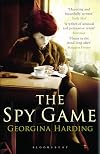
The direct gaze of the woman sipping a cup of tea on the dustjacket of the UK hardback, really caught my eye - a spendid cover and evocative title too. Reading the blurb, expected an espionage story straight out of John Le Carre, but this thoughtful and slow-burning novel is something completely different.
Set in the post-war years of the Cold War, Anna's mother goes out in the car in the fog, and she never sees her again. The same day, a spy case breaks in the news, and this leads Anna's brother Peter to wonder if she was a sleeper, a spy in deep-cover waiting to be called into action. He can't believe she died in a car accident - he's sure she's alive somewhere with a different identity.
Their mother was a refugee from eastern Germany show more - with no family left - that's all they know about her; their rather distant father prefers to disappear into his garden. This allows Peter to obsess about an alter ego for her - who she may have been meeting, what she may have been involved in. Anna is confused and feels her mother's loss strongly, but goes along with her brother's game. Eventually Peter goes off to boarding school, but he's still haunted by his imaginings. The children grow up, grow apart and start families of their own. When Anna's father dies, she feels a need for closure with her mother too, and plans to visit Konigsberg where she was born ...
This profound and subtle novel explores loss and letting go. You feel a little of what it was like to be a 'German' or Eastern European in England after the war, that slight strangeness and not quite fitting in, that led Peter's imagination into overload. Beautifully written, it takes its time getting to its conclusion, concentrating on the motherless siblings and how it affects their lives. show less
Set in the post-war years of the Cold War, Anna's mother goes out in the car in the fog, and she never sees her again. The same day, a spy case breaks in the news, and this leads Anna's brother Peter to wonder if she was a sleeper, a spy in deep-cover waiting to be called into action. He can't believe she died in a car accident - he's sure she's alive somewhere with a different identity.
Their mother was a refugee from eastern Germany show more - with no family left - that's all they know about her; their rather distant father prefers to disappear into his garden. This allows Peter to obsess about an alter ego for her - who she may have been meeting, what she may have been involved in. Anna is confused and feels her mother's loss strongly, but goes along with her brother's game. Eventually Peter goes off to boarding school, but he's still haunted by his imaginings. The children grow up, grow apart and start families of their own. When Anna's father dies, she feels a need for closure with her mother too, and plans to visit Konigsberg where she was born ...
This profound and subtle novel explores loss and letting go. You feel a little of what it was like to be a 'German' or Eastern European in England after the war, that slight strangeness and not quite fitting in, that led Peter's imagination into overload. Beautifully written, it takes its time getting to its conclusion, concentrating on the motherless siblings and how it affects their lives. show less
I seldom have read a book which gave me goose bumps, but that one definitely did. It wasn't because of violence on the contrary it is such a lot of love, the deep missing of Anna and Peter's mother and the search for her roots that made me quivering. After their mother's death the children have got the feeling that her mother must have been a spy. Therefore they started their own spy game with the intention to find their mother because both of them were believed devoutly that her mother is still alive. Her mother hadn't told them much about her past and also their father wasn't about to tell them more. In the beginning Anna and Peter were very close but with the times they drifted apart. It was Anna who went to the East to search for show more her mother's roots.
It's a mystery within a mystery and thoughtfully written. show less
It's a mystery within a mystery and thoughtfully written. show less
Anna remembers her mother leaving, and people saying she died, but she and her brother Peter didn't get to attend the funeral. They both think there is something more to the story, and this book is about how they grow up and try to figure out this mystery that is their mother.
She starts the book talking about the fog that she remembers so vividly from the day her mother left. I think this is an interpretation of the whole fog of their lives concerning their mom and their background. The whole time I was reading I felt like I was waiting for some conclusion that never came. The book was more about how this not knowing shaped their lives as children, and then again as adults. The narrator goes back and forth from being a kid and talking show more about the things happening at the time, and being an adult and going to look for any proof of who she was, and who her mother could have been.
I really liked this book, it gives you the choice to come up with your own conclusion. And leaves you wanting more. show less
She starts the book talking about the fog that she remembers so vividly from the day her mother left. I think this is an interpretation of the whole fog of their lives concerning their mom and their background. The whole time I was reading I felt like I was waiting for some conclusion that never came. The book was more about how this not knowing shaped their lives as children, and then again as adults. The narrator goes back and forth from being a kid and talking show more about the things happening at the time, and being an adult and going to look for any proof of who she was, and who her mother could have been.
I really liked this book, it gives you the choice to come up with your own conclusion. And leaves you wanting more. show less
Mother vanishes the day the Soviet spies were caught in Britain. I felt more sympathy for the main character than I expected to -- the novel was subtle.
This book was quite slow moving, and it felt too vague and flimsy overall for me to fully enjoy it. The story follows a girl named Anna, whose mom supposedly dies in a car crash in 1962, when Anna is eight. On the news, there are all sorts of reports about spies, and Anna's brother begins to suspect that their mom did not die after all but instead was a spy and moved on to reinvent herself somewhere else.
Promises to be a great story. At the same time as the capture of a sleeper spy ring in the UK in the 1960s, a german born mother who disappears leaving her children believing she was a spy too.
The story moves to the present day with her now 50 year old daughter travelling Eastern Europe to pick up clues to her mothers previous life.
Although I loved the prose style in this but found the ending rather flat and disappointing.
The story moves to the present day with her now 50 year old daughter travelling Eastern Europe to pick up clues to her mothers previous life.
Although I loved the prose style in this but found the ending rather flat and disappointing.
Members
- Recently Added By
Lists

Top Five Books of 2014
1,064 works; 398 members
Author Information

8+ Works 756 Members
Common Knowledge
- Canonical title*
- Il gioco delle spie
- Original title
- The Spy Game
- Important places
- Gloucestershire, England, UK; Kaliningrad, Russia; Berlin, Germany
- Important events
- Big freeze of 1963; Arrest of Portland Spy Ring (1961-01-07)
- Dedication
- For Nellie,
and for Kay - First words
- Fog that morning, a freezing fog: the flagstones dark and slippery outside the door.
*Some information comes from Common Knowledge in other languages. Click "Edit" for more information.
Classifications
Statistics
- Members
- 158
- Popularity
- 203,978
- Reviews
- 13
- Rating
- (3.18)
- Languages
- Dutch, English, Italian
- Media
- Paper, Audiobook, Ebook
- ISBNs
- 12
- ASINs
- 3