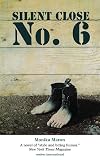
Silent Close No. 6
by Monika Maron
On This Page
Description
Monika Maron was born in wartime Berlin in 1941 to an anti-fascist mother of Polish Jewish ancestry and a German father. Her step-father was the first Minister of the Interior of the new East German state, having been chief of police. Following her early upbringing in a Communist family, Maron joined the Party in 1965, thinking to oppose "anti-democratic" tendencies from within the Party. She soon understood, however, that "you cannot close up a people in a wall." She left the Party and show more worked in television, as a drama school teacher, and for six years as a journalist. Silent Close No. 6 concerns one of the high Communist rulers, whose self-explanations are never allowed to justify his past actions. The novel is an important critique of Germany's recent past by one of the country's leading intellectuals. show lessTags
Recommendations










































Member Reviews
Stille Zeile sechs was written whilst the dust of reunification was still settling, and is clearly meant as a gesture of closure. It deals with the classic problem that (metaphorically, at least), you have to kill your parents to make a revolution. As the only group of Germans with a solid, documented claim to have resisted Hitler, the reactionary generation of Stalinists running the DDR had an even stronger psychological advantage over their children than most, and Maron (who happens to be the step-daughter of a government minister from the early days of the DDR) is essentially saying with this book that it was only the death of her parents' generation that made the reform of the DDR possible, and that her own generation had to deal show more with this symbolic parricide before it could move on.
The narrator is Rosalind Polkowski, who has given up her academic job researching the early history of the labour movement in Saxony and Thuringia because she can no longer bear to "think for money". Instead, she agrees to take on the relatively mindless task of working as amanuensis two afternoons a week for an elderly man, Herbert Beerenbaum, who is writing his memoirs. Beerenbaum is a communist of the first generation, survivor of concentration camps and Russian exile, and has held important offices in the Workers' and Peasants' State. And of course it becomes increasingly difficult for Rosalind to take dictation and keep her mouth shut as he piles up the lies and platitudes and ignores the harm he has done, particularly when she finds out that Beerenbaum was responsible for hurting one of her own friends.
The big political story of this surprisingly short novel is mixed in with other threads of discussion about the anti-intellectualism of the founding generation of communists, about the male community of the local pub, the geography of Berlin, the untranslatability of Don Giovanni, and much else. Very rewarding and entertaining. show less
The narrator is Rosalind Polkowski, who has given up her academic job researching the early history of the labour movement in Saxony and Thuringia because she can no longer bear to "think for money". Instead, she agrees to take on the relatively mindless task of working as amanuensis two afternoons a week for an elderly man, Herbert Beerenbaum, who is writing his memoirs. Beerenbaum is a communist of the first generation, survivor of concentration camps and Russian exile, and has held important offices in the Workers' and Peasants' State. And of course it becomes increasingly difficult for Rosalind to take dictation and keep her mouth shut as he piles up the lies and platitudes and ignores the harm he has done, particularly when she finds out that Beerenbaum was responsible for hurting one of her own friends.
The big political story of this surprisingly short novel is mixed in with other threads of discussion about the anti-intellectualism of the founding generation of communists, about the male community of the local pub, the geography of Berlin, the untranslatability of Don Giovanni, and much else. Very rewarding and entertaining. show less
Ratings
Members
- Recently Added By
Lists

Books Read in 2016
4,666 works; 199 members
Author Information

27+ Works 643 Members
Awards and Honors
Series
Belongs to Publisher Series
Fischer Taschenbuch (11804)
Common Knowledge
- Canonical title
- Silent Close No. 6
- Original title
- Stille Zeile Sechs
- Original publication date
- 1991
- People/Characters*
- Rosalind Polkowski; Herbert Beerenbaum
- Important places
- Berlin, Germany
- Dedication*
- für Jonas
- First words*
- Beerenbaum wurde auf dem Pankowwer Friedhof beigesetzt, in jenem Teil, der Ehrenhain genannt wurde und in dessen Erde begraben zu werden der Asche so bedeutender Personen wie Beerenbaum vorbehalten war.
- Last words*
- (Click to show. Warning: May contain spoilers.)Ich werde es auf keinen Fall öffnen.
- Original language*
- Deutsch
*Some information comes from Common Knowledge in other languages. Click "Edit" for more information.
Classifications
- Genres
- Fiction and Literature, General Fiction
- DDC/MDS
- 833.914 — Literature & rhetoric German & related literatures German fiction 1900- 1900-1990 1945-1990
- LCC
- PT2673 .A4686 .S7513 — Language and Literature German, Dutch and Scandinavian literatures German literature Individual authors or works 1961-2000
Statistics
- Members
- 137
- Popularity
- 239,647
- Reviews
- 2
- Rating
- (3.90)
- Languages
- 5 — Dutch, English, French, German, Italian
- Media
- Paper, Ebook
- ISBNs
- 14
- ASINs
- 4