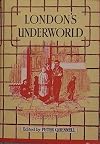
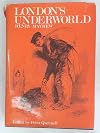
London's Underworld
by Peter Quennell (Editor), Henry Mayhew (Writer)
Mayhew's London (3), London Labour and the London Poor (Quennell — )
On This Page
Tags
Recommendations





















Member Reviews
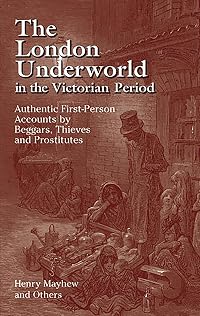
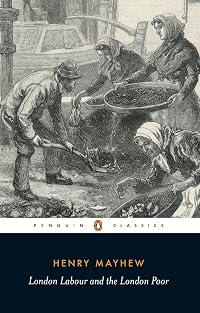
This is a gem of a book as it is a good source material of social history of London's Underworld around the 1850s.
Henry Mayhew while proclaiming to be objective is not that all, he certainly comes in with 'an holier than thou attitude' about the profession that 'these' people undertake.
He goes through an extensive analysis of prostitution, he categorises the levels of engagement that women participate. For example Mayhew defines one class as 'female operatives' who can be milliners, dress makers, furriers, shoe-binders who only partake in prostitution to fund their extravagant life style or their own sexual gratification. In other classes of prostitution he reasons that some women undertake this type of work in the hope of finding a show more husband. I mean it is really fascinating the way he tries to reason prostitution. With the female operatives he decides the following is the cause of the lax morality:
'1 Low wages inadequate to their sustenance
2 Natural levity and the example around them
3 Love of dress and display, couple with the desire for a sweetheart
4 Sedentary employment and want of proper exercise
5 Low and cheap literature of an immoral tendency
6 Absence of parental care and the inculcation of proper precepts, In short, bad bringing up.'
Number 4 is where he blames the abundance of penny romance novels as a reason that women were driven to prostitution.
There are wonderful characters and descriptions in this book for example "Opposite to this was the Rose and Crown public-house, resorted to by all classes of the light-fingered gentry, from the mobman and his 'Amelia' to the lowest of the street thieves and his 'Poll'. I n the tap-room might be seen Black Charlie the fiddler, with ten or a dozen lads and lasses enjoying the dance and singing and smoking over potations of gin and water, more or less plentiful according to the proceeds of the previous night - all apparently free from care in their wild carousals."
If you enjoy social history, if you reading almost first hand accounts, if you want to understand a period of English history, then this is a really interesting read. show less
Henry Mayhew while proclaiming to be objective is not that all, he certainly comes in with 'an holier than thou attitude' about the profession that 'these' people undertake.
He goes through an extensive analysis of prostitution, he categorises the levels of engagement that women participate. For example Mayhew defines one class as 'female operatives' who can be milliners, dress makers, furriers, shoe-binders who only partake in prostitution to fund their extravagant life style or their own sexual gratification. In other classes of prostitution he reasons that some women undertake this type of work in the hope of finding a show more husband. I mean it is really fascinating the way he tries to reason prostitution. With the female operatives he decides the following is the cause of the lax morality:
'1 Low wages inadequate to their sustenance
2 Natural levity and the example around them
3 Love of dress and display, couple with the desire for a sweetheart
4 Sedentary employment and want of proper exercise
5 Low and cheap literature of an immoral tendency
6 Absence of parental care and the inculcation of proper precepts, In short, bad bringing up.'
Number 4 is where he blames the abundance of penny romance novels as a reason that women were driven to prostitution.
There are wonderful characters and descriptions in this book for example "Opposite to this was the Rose and Crown public-house, resorted to by all classes of the light-fingered gentry, from the mobman and his 'Amelia' to the lowest of the street thieves and his 'Poll'. I n the tap-room might be seen Black Charlie the fiddler, with ten or a dozen lads and lasses enjoying the dance and singing and smoking over potations of gin and water, more or less plentiful according to the proceeds of the previous night - all apparently free from care in their wild carousals."
If you enjoy social history, if you reading almost first hand accounts, if you want to understand a period of English history, then this is a really interesting read. show less
Ratings
Members
- Recently Added By
Lists

Fiction about the Working Class
74 works; 10 members
Author Information


Henry Mayhew had a varied career as a London writer of the mid-Victorian period. He was the son of a London solicitor, Joshua Mayhew, who reputedly was a rather tyrannous father. Apparently, Henry was a bitter disappointment to his father; the younger Mayhew had been educated at the Westminster School but, in objection to a flogging he had show more received, ran away from school and went to sea for a year. On his return, he was articled to his father but after three years, he abandoned the law to seek a career as a journalist and a dramatist. Mayhew achieved some early success as a dramatist, most notably with his 1834 farce, "The Wandering Minstrel." In the late 1830's, he was the joint editor of a successful satirical weekly, Figaro in London, and later helped to found Figaro's most significant and long-lived successor, Punch. Evidently, a fairly serious rift developed between Mayhew and his magazine colleagues, although the details of this falling-out remain a mystery---one of the many unanswered questions about Mayhew's life. Mayhew was never without financial worries, and, as a means of making quick money, he collaborated on a number of comic novels with his younger brother, Augustus (1826--75). Their most successful work is "The Greatest Plague of Life" (1847), which was issued in monthly numbers and proved very popular. They followed it with "Whom to Marry and How to Get Married" (1848); later Mayhew singly authored 1851, or, "The Adventures of Mr. and Mrs. Sandbags 1851," (1851). Mayhew's attempt, in 1851, to publish the 82 "letters" he had written for the Morning Chronicle, in which he investigates the plight of London's urban poor, was a financial failure. They were issued in 1861, however, in four volumes under the title London Labour and the London Poor. It is for this classic work that Mayhew is today best known. In it, he unhesitatingly depicts the opprobrium under which most of the London working classes led their lives. In many ways, London Labour and the London Poor epitomizes the Victorian tendency to be simultaneously repulsed and fascinated by the working classes, the "Great Unwashed" huddled together in the urban centers of England. Along with Edwin Chadwick and J.P. Kay-Shuttleworth, Mayhew stands as one of the earliest of urban sociologists. Although recent years have witnessed an increase in interest in Henry Mayhew, a "definitive" biography remains to be written. The introductions to his work, notably John Rosenberg's preface to the Dover facsimile edition of London Labour and the London Poor and the essays framing the edition of "The Unknown Mayhew," are good sources of information. (Bowker Author Biography) show less
Series


Work Relationships
Is contained in
Is an abridged version of
Common Knowledge
- Original publication date
- 1950
- Important places
- London, England, UK
- Original language
- English
- Disambiguation notice
- This is a selection from Henry Mayhew's London Labour and the London Poor and is edited and introduced by Peter Quennell. Please do not combine with other selections made and introduced by other editors.
Classifications
- Genres
- Nonfiction, History, Sociology, General Nonfiction
- DDC/MDS
- 973 — History & geography History of North America United States
- LCC
- HV4088 .L8 .M52 — Social sciences Social pathology. Social and public welfare. Criminology Social pathology. Social and public welfare. Protection, assistance and relief Poor in cities. Slums
Statistics
- Members
- 149
- Popularity
- 219,876
- Reviews
- 1
- Rating
- (4.30)
- Languages
- English
- Media
- Paper
- ISBNs
- 2
- ASINs
- 13