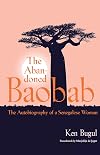
The Abandoned Baobab: The Autobiography of a Senegalese Woman
by Ken Bugul
On This Page
Description
The subject of intense admiration--and not a little shock, when it was first published--The Abandoned Baobab has consistently captivated readers ever since. The book has been translated into numerous languages and was chosen by QBR Black Book Review as one of Africa's 100 best books of the twentieth century. No African woman had ever been so frank, in an autobiography, or written so poignantly, about the intimate details of her life--a distinction that, more than two decades later, still show more holds true. Abandoned by her mother and sent to live with relatives in Dakar, the author tells of being educated in the French colonial school system, where she comes gradually to feel alienated from her family and Muslim upbringing, growing enamored with the West. Academic success gives her the opportunity to study in Belgium, which she looks upon as a "promised land." There she is objectified as an exotic creature, however, and she descends into promiscuity, alcohol and drug abuse, and, eventually, prostitution. (It was out of concern on her editor's part about her candor that the author used the pseudonym Ken Bugul, the Wolof phrase for "the person no one wants.") Her return to Senegal, which concludes the book, presents her with a past she cannot reenter, a painful but necessary realization as she begins to create a new life there. As Norman Rush wrote in the New York Times Book Review, "One comes away from The Abandoned Baobab reluctant to take leave of a brave, sympathetic, and resilient woman." Despite its unflinching look at our darkest impulses, and at the stark facts of being a colonized African, the book is ultimately inspirational, for it exposes us to a remarkable sensibility and a hard-won understanding of one's place in the world. CARAF Books: Caribbean and African Literature Translated from French show lessTags
Recommendations















Member Reviews
Ken Bugul. the protagonist and pseudonym of Mariétou M'Baye, a Senegalese author born in 1947, chronicles her coming of age in the late 1960s and 1970s with flashbacks to her youth at a French school in Dakar and her early childhood in a small Senegalese village. Her somewhat fictionalized chronicle begins with her journey to Brussels, where she has won a scholarship to study: "The North of dreams, the North of illusions, the North of allusions. The frame of reference North, the Promised Land North."
But the book is framed within that childhood village and the family compound shaded by a baobab sprouted from a seed children left behind. A baobab, a compound, and a village eventually abandoned.
Indeed the overarching theme of the book is show more abandonment -- an abandoned child, an abandoned childhood, an abandoned culture and religion superseded by colonial values, even the abandoned idea of a new kind of life. Ken's sense of displacement is heightened by the drug use and sexual freedom of the era's counter-culture. While the book is revelatory and important, it is often agonizing to read. Not for the faint of heart. show less
But the book is framed within that childhood village and the family compound shaded by a baobab sprouted from a seed children left behind. A baobab, a compound, and a village eventually abandoned.
Indeed the overarching theme of the book is show more abandonment -- an abandoned child, an abandoned childhood, an abandoned culture and religion superseded by colonial values, even the abandoned idea of a new kind of life. Ken's sense of displacement is heightened by the drug use and sexual freedom of the era's counter-culture. While the book is revelatory and important, it is often agonizing to read. Not for the faint of heart. show less
Senegal. Without at all intending to diminish the importance of post-colonialism as a destroyer of group and individual identity in this disconnected, often anguished memoir, there appears to be more going on than that. Whether her account is accurate or heightened for literary purposes, Bugul would seem to have a personality disorder as well as cultural disruption and dissonance. Certainly both forms of alienation and fragmented identity could co-occur and heighten each other. Her behavior and emotions are so extreme and self-harmful that, rather than being wrenched by the conflicts of post-colonial existence, the reader may simply see Bugul as dangerous to be close to.
Bugul uses symbolism and returns to pivotal events that are show more reductive and serve more as emblems than explanations. The style is poetic but the descriptions and assertions are often ultimately incoherent. As an artifact of drug abuse and emotional splintering, it's vivid. Ultimately, though, African writers such as [a:Alain Mabanckou|70642|Alain Mabanckou|http://photo.goodreads.com/authors/1283691655p2/70642.jpg], [a:Abdourahman A. Waberi|56973|Abdourahman A. Waberi|http://www.goodreads.com/assets/nophoto/nophoto-U-50x66.jpg], and [a:Donato Ndongo|1124325|Donato Ndongo|http://www.goodreads.com/assets/nophoto/nophoto-M-50x66.jpg] express themselves more effectively in similar styles. Granted, Mabanckou and Waberi are also sardonic and poke fun at themselves, so there is an ironic distance. Bugul's anger and apparent disorientation may not provide sufficient separation from the subject for her to craft an effective narrative. show less
Bugul uses symbolism and returns to pivotal events that are show more reductive and serve more as emblems than explanations. The style is poetic but the descriptions and assertions are often ultimately incoherent. As an artifact of drug abuse and emotional splintering, it's vivid. Ultimately, though, African writers such as [a:Alain Mabanckou|70642|Alain Mabanckou|http://photo.goodreads.com/authors/1283691655p2/70642.jpg], [a:Abdourahman A. Waberi|56973|Abdourahman A. Waberi|http://www.goodreads.com/assets/nophoto/nophoto-U-50x66.jpg], and [a:Donato Ndongo|1124325|Donato Ndongo|http://www.goodreads.com/assets/nophoto/nophoto-M-50x66.jpg] express themselves more effectively in similar styles. Granted, Mabanckou and Waberi are also sardonic and poke fun at themselves, so there is an ironic distance. Bugul's anger and apparent disorientation may not provide sufficient separation from the subject for her to craft an effective narrative. show less
Ken Bugul is the pseudonym of Mariétou M'Baye, a Senegalese author born in 1947. Apparently this memoir, which is translated from the French, caused a stir when it was first published in the very early 80s due to her frankness about all aspects of her life - including her sex life, drug use and prostitution. The memoir basically tells the story of Bugul's life in Africa up to when she leaves to study in Belgium and her years in Europe. The narrative is not chronological, and the book begins with Ken's 'prehistory' reminiscent of traditional African storytelling. The afterward calls the book an autobiographical novel which suggests some of the material is fiction, but truth can still be found in inexactitude, so this didn't bother me as show more much as I thought it would. This is a story of a young woman's search for identity - a young, bright, colonized, black African woman's story. Her struggle is painful to 'watch' as she suffers and stumbles quite a bit before she comes to an understanding of her place in the world. Her observations of the progressive European mindset at that time (late 60s, early 70s) are very interesting. This is a very good book, enlightening. show less
Histoire d'une jeune sénégalaise qui émigre en Belgique au temps de la colonisation/post-colonisation.
500 great books by women
don't know what to say about this. every reading after the first, i picked it up with a sigh.
don't know what to say about this. every reading after the first, i picked it up with a sigh.
Eine Afrikanerin in Europa
Dec 26, 2014German
Ratings
Members
- Recently Added By
Lists

500 Great Books by Women
507 works; 60 members
Author Information

Some Editions
Awards and Honors
Series
Belongs to Publisher Series
Common Knowledge
- Canonical title
- The Abandoned Baobab: The Autobiography of a Senegalese Woman
- Original title
- Le baobab fou
- Original publication date
- 1982
- People/Characters
- Ken Bugul
- Important places
- Senegal; Belgium
- First words*
- Fode Ndao war es gelungen, die heissbegehrte Frucht loszuschlagen.
- Last words*
- (Click to show. Warning: May contain spoilers.)Ich blieb lange vor diesem toten Stamm stehen, ohne einen Gedanken.
- Original language
- French
*Some information comes from Common Knowledge in other languages. Click "Edit" for more information.
Classifications
Statistics
- Members
- 86
- Popularity
- 371,462
- Reviews
- 6
- Rating
- (3.50)
- Languages
- 5 — Dutch, English, French, German, Spanish
- Media
- Paper, Ebook
- ISBNs
- 12