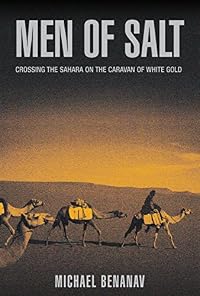
Men of Salt: Crossing the Sahara on the Caravan of White Gold
by Michael Benanav
On This Page
Description
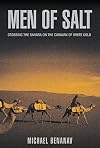
Century after century, camels and their drivers have traveled the sands between the fabled city of Timbuktu and the infamous salt mines of Taoudenni, hauling supplies from the proverbial end of the earth to an even farther-flung outpost, deep in Mali's slice of the Sahara. They return laden with tombstone-sized slabs of solid salt. While nearly all of the great trans-Saharan trade routes have disappeared, the Caravan of White Gold--so called because the salt was once literally worth its show more weight in gold--marches on, spared by unmatched isolation. Hearing that the caravans were threatened by the introduction of trucks, author Benanav joined a caravan, becoming one of the few Westerners to do so. show lessTags
Recommendations




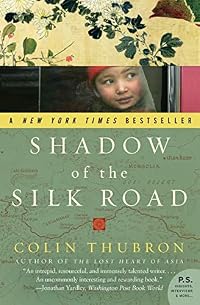
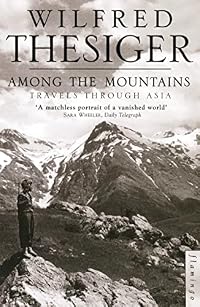
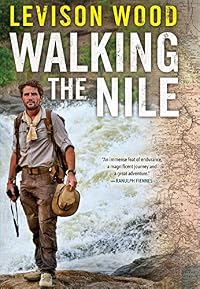
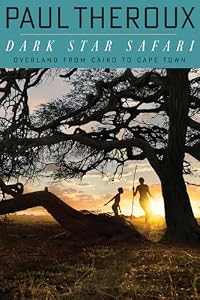




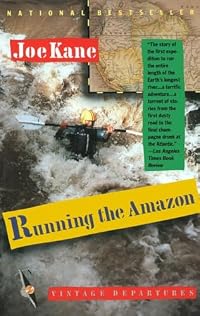

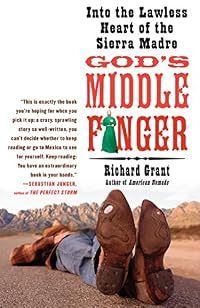
Member Recommendations
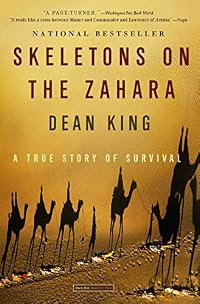
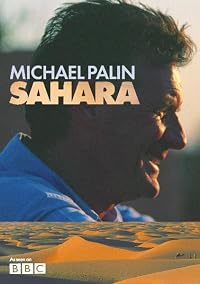
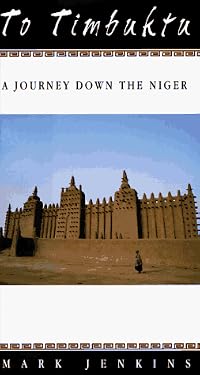
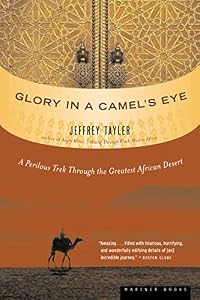
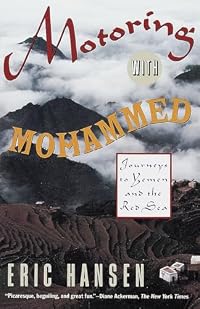
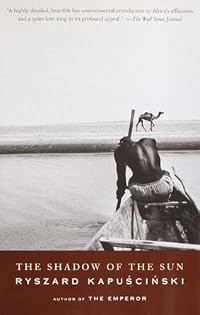
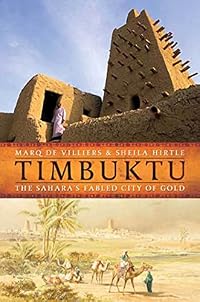
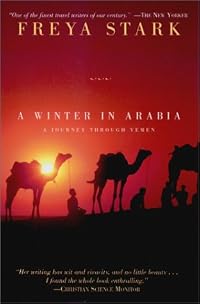
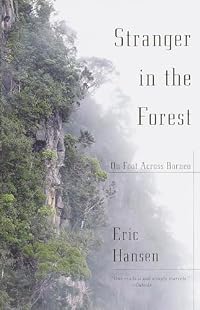
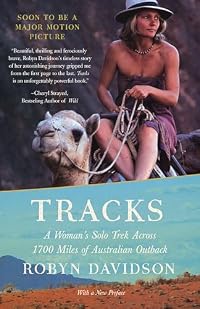
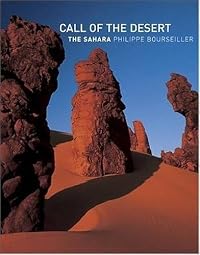
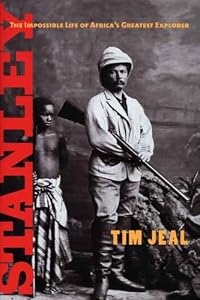
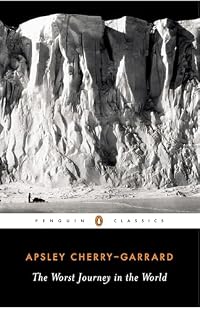
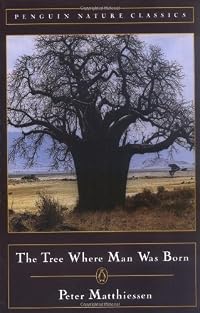
Stbalbach Both are recent Sahara travel books by American authors.
Member Reviews
Michael Benanav is a Jewish, American journalist. Perhaps he does not have a death wish, but he does walk on the wild side. Reading that the camel caravans to the salt mines near Timbuktu are in danger of becoming extinct due to the truck transport of salt, Benanav decides to experience a camel journey before they become extinct. As much a mental journey as a grueling physical one, Benanav realizes that this harsh lifestyle has a richer, more complex history than the largely ignorant press has portrayed. Before he was allowed to participate in a long journey through one of the harshest deserts in the world, Benanav had to sign a waiver that if he were responsible for slowing down the caravan (and, thus, risking the lives of the camels show more and people), the caravan had the right to leave him to rot and die alone in the desert! Benanav does not leave us with easy answers concerning the fate of the caravans or the very real people he comes to respect. In many ways, Men of Salt leaves readers with more questions than answers. The questions, however, are so good that readers will seek more information and forever hold in hearts a much fuller, more human picture of both the people and the camels in this part of our world. Filled with pictures, this book is highly recommended for both middle school and high school libraries despite the fact that is an adult book. One of my favorites this or any year! show less
I first learned about this book from one of those 'Favourite books from 2013' lists (this one was at World Weaver Press' blog --> http://bit.ly/1dYhi3U). Since one of my goals this year is to read more non-fiction it sounded like a good fit. And it really, really was. This is a travel memoir, but it's also a really GOOD story, and I felt like it truly introduced me to a place I'll never likely see in my lifetime (the Sahara). Fantastic reading, the pages flew by.
In 2003 Michael Benanav was in his 30s and lived in New Mexico. Following a lifelong interest in exploring deserts, he traveled to Mali and paid a tourist agency for a 3-week trip by camel to the middle of the Sahara Desert, traveling with a caravan that carries salt from an ancient mine north of Timbuktu. It's a grueling journey physically, not something undertaken or accomplished easily. His writing is honest, simple and believable, Benanav comes across as likable person.
Nothing particularly dangerous happens other than the perils of daily life in the Sahara. It's a pleasant story though not as introspective as great travel writing can be, perhaps a limitation of Benanav's age or writing experience; it won a recommendation for younger show more readers from the ALA. There are other better known Sarah travel books, the benefit of this account over older classics is it is recent, it shows how modernity and ancient ways can coexist in harmony. It's a submersion into an ancient way of life, nearly anthropological in detail, curious and fascinating for anyone from the developed world to experience.
--Review by Stephen Balbach, via CoolReading (c) 2010 cc-by-nd show less
Nothing particularly dangerous happens other than the perils of daily life in the Sahara. It's a pleasant story though not as introspective as great travel writing can be, perhaps a limitation of Benanav's age or writing experience; it won a recommendation for younger show more readers from the ALA. There are other better known Sarah travel books, the benefit of this account over older classics is it is recent, it shows how modernity and ancient ways can coexist in harmony. It's a submersion into an ancient way of life, nearly anthropological in detail, curious and fascinating for anyone from the developed world to experience.
--Review by Stephen Balbach, via CoolReading (c) 2010 cc-by-nd show less
This book is a stunning narrative about a journey in a camel caravan from Timbuktu to the salt mines of Taoudenni. Being used to living and traveling in deserts, Michael Benanav joins a caravan through the Sahara to salt mines to bring back a resource as priceless as gold. Along the way he learns the life of the azalai, camel drivers, and how to exist in one of the harshest and uncompromising parts of the world.
This was fun! I enjoyed Benanav's adventure in the desert very much as I sat in a soft chair with water nearby. What a forbidding place the Sahara is, and how glad I am that I don't have to go there.
Fascinating adventure
"As though we'd entered a different room in the desert, the scenery changed dramatically. Here, rows of red sand ridges poured like ribs from both sides of a spine of ancient black rock. A few flat-topped mesas abruptly broke the northern horizon line, jutting more than a thousand feet from the desert floor....
".... Since we were in the midst of the most stunning terrain we had yet crossed, I asked Walid and Baba if they, too, thought it was beautiful.
"They each grimaced involuntarily, looked at me as if I were crazy, and simultaneously said 'No.'
"I'm sure I looked at them as if they were crazy, and Walid asked, 'Why? Do you?'
"'Yes,' I said, 'it's very beautiful. It's my favorite place so far.'
"Walid shook his head in befuddlement and show more the three of us laughed in mutual disbelief at the vast discrepancy between our impressions. For them, the most beautiful places in the Sahara are those where enough vegetation grows to support herds of goats and sheep and camels. Everywhere else is the region of death, too terrible to be beautiful. This was as profound as any other cultural difference between us, for I thought that the landscape surrounding us made a powerful case for the objective nature of beauty, which nobody could deny. We grew to appreciate this difference in each other, and it became the source of a comedy routine we'd enact when Walid wanted to make other people laugh: He'd mention this place and ask me what I thought of it. Happy to play my part, I'd praise it in the most poetic terms I could muster. Without fail, our audience would widen their eyes in surprise, then crack up at the fool ideas of a foreigner." pp. 113-114
"The next five days and nights [of travel with the caravan] were a grueling exercise in endurance....
"There were times when thinking about the rest of the day, the rest of the journey, became overwhelming. As I fought to put one weary foot in front of the other, to bear the sun staring me in the face, or to stay seated atop Lachmar [the camel] when ready to drop from exhaustion, it was impossible to imagine making it to the next camp, let alone all the way back to Timbuktu. In order to slip from beneath the crushing weight of future thoughts, I adopted a technique of focusing solely on the moment I was living. In itself, removed from the time line that stretched forward and backward from the present, no single moment was that bad. Perhaps I was walking under a starry sky at 2 AM; forgetting that we'd already been on the move for five hours, and probably had another twelve to go, I could find pleasure in being exactly where I was, right then. Maybe because I was so tired it was easy to achieve an altered state of consciousness; with a little focus I was able to travel through the desert as though in a temporal bubble, totally immersed in the present, as though past and future no longer existed. It became something of a spiritual practice - the transcendence of suffering by meditating on 'the now' - and I nearly signed on wholeheartedly to the cliched mantra of 'Live the moment.' Then I realized that, while I spent half my time doing just that, I spent the other half of the time escaping the moment - distracting myself with mind games, reading while I rode - and that that was just as crucial to maintaining my sanity." pp.164-165 show less
".... Since we were in the midst of the most stunning terrain we had yet crossed, I asked Walid and Baba if they, too, thought it was beautiful.
"They each grimaced involuntarily, looked at me as if I were crazy, and simultaneously said 'No.'
"I'm sure I looked at them as if they were crazy, and Walid asked, 'Why? Do you?'
"'Yes,' I said, 'it's very beautiful. It's my favorite place so far.'
"Walid shook his head in befuddlement and show more the three of us laughed in mutual disbelief at the vast discrepancy between our impressions. For them, the most beautiful places in the Sahara are those where enough vegetation grows to support herds of goats and sheep and camels. Everywhere else is the region of death, too terrible to be beautiful. This was as profound as any other cultural difference between us, for I thought that the landscape surrounding us made a powerful case for the objective nature of beauty, which nobody could deny. We grew to appreciate this difference in each other, and it became the source of a comedy routine we'd enact when Walid wanted to make other people laugh: He'd mention this place and ask me what I thought of it. Happy to play my part, I'd praise it in the most poetic terms I could muster. Without fail, our audience would widen their eyes in surprise, then crack up at the fool ideas of a foreigner." pp. 113-114
"The next five days and nights [of travel with the caravan] were a grueling exercise in endurance....
"There were times when thinking about the rest of the day, the rest of the journey, became overwhelming. As I fought to put one weary foot in front of the other, to bear the sun staring me in the face, or to stay seated atop Lachmar [the camel] when ready to drop from exhaustion, it was impossible to imagine making it to the next camp, let alone all the way back to Timbuktu. In order to slip from beneath the crushing weight of future thoughts, I adopted a technique of focusing solely on the moment I was living. In itself, removed from the time line that stretched forward and backward from the present, no single moment was that bad. Perhaps I was walking under a starry sky at 2 AM; forgetting that we'd already been on the move for five hours, and probably had another twelve to go, I could find pleasure in being exactly where I was, right then. Maybe because I was so tired it was easy to achieve an altered state of consciousness; with a little focus I was able to travel through the desert as though in a temporal bubble, totally immersed in the present, as though past and future no longer existed. It became something of a spiritual practice - the transcendence of suffering by meditating on 'the now' - and I nearly signed on wholeheartedly to the cliched mantra of 'Live the moment.' Then I realized that, while I spent half my time doing just that, I spent the other half of the time escaping the moment - distracting myself with mind games, reading while I rode - and that that was just as crucial to maintaining my sanity." pp.164-165 show less
Members
- Recently Added By
Author Information
6 Works 172 Members
Awards and Honors
Awards
Distinctions
Common Knowledge
- Original publication date
- 2006-01-01
- Important places
- Sahara
Classifications
Statistics
- Members
- 107
- Popularity
- 302,086
- Reviews
- 7
- Rating
- (3.98)
- Languages
- English, French
- Media
- Paper, Ebook
- ISBNs
- 4
- UPCs
- 1
- ASINs
- 3