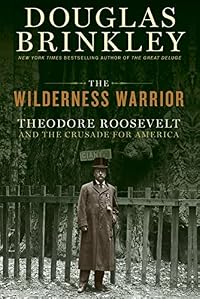
The Wilderness Warrior: Theodore Roosevelt and the Crusade for America
by Douglas Brinkley
On This Page
Description
Evaluates Theodore Roosevelt's role in launching modern conservationsim, identifying the contributions of such influences as James Audubon and John Muir while describing how Roosevelt's exposure to natural wonders in his early life shaped his environmental values.Tags
Recommendations


Member Reviews
Excellent piece chronicling the role of TR as a political conservationist and academic naturalist in both private and public life. It was very interesting to read about the early appearance of the tensions between conservationism and preservationism. My impression has long been that the rise of "modern ecology" didn't occur until the 60s and "silent spring." That said, reading this book strongly challenged that view. Silent Spring may have brought a renewed focus, and depth of detailed appreciation for the complex issues involved--however, after reading the accounts of the wars over mid-west deforestation, and southern "birding" its hard to think of an issue that hadn't been grasped in at least its most rudimentary form 50 years earlier show more in the progressive era. All in all, a good reminder that the world was not created anew with the baby-boom and the the threads of progress are longer than any one generation can take credit for.
(2014 Review #1) show less
(2014 Review #1) show less
3.25 stars
President Theodore Roosevelt was a bird lover, a lover of nature in general, and also a hunter. As president from 1901- 1909, he created numerous national parks and monuments and expanded more; he brought in laws protecting birds, as well as created hunting seasons and licensing. He admired Darwin and his theories. He did a lot for conservation in the United States in the early 20th century.
Sadly, I also felt he was very contradictory due to his joy of hunting (including trophy hunting!) Yes, he did a LOT for conservation, but that was dimmed (in my opinion) by his love of hunting, particularly big game, in many cases just to put the animal’s head on his wall. Even in some of his parks, he still allowed hunting, but only of show more predators, not prey. This was a very long book at just under 1000 pages, so there were times I lost interest. I did learn some interesting things, too – I didn’t know “teddy bears” were named after him (but he didn’t like being called “Teddy”, either). show less
President Theodore Roosevelt was a bird lover, a lover of nature in general, and also a hunter. As president from 1901- 1909, he created numerous national parks and monuments and expanded more; he brought in laws protecting birds, as well as created hunting seasons and licensing. He admired Darwin and his theories. He did a lot for conservation in the United States in the early 20th century.
Sadly, I also felt he was very contradictory due to his joy of hunting (including trophy hunting!) Yes, he did a LOT for conservation, but that was dimmed (in my opinion) by his love of hunting, particularly big game, in many cases just to put the animal’s head on his wall. Even in some of his parks, he still allowed hunting, but only of show more predators, not prey. This was a very long book at just under 1000 pages, so there were times I lost interest. I did learn some interesting things, too – I didn’t know “teddy bears” were named after him (but he didn’t like being called “Teddy”, either). show less
Theodore Roosevelt defies easy description or characterization. Forceful to the point of being bull-headed, energetic and capable of work beyond the capacity of most people, he dominated the first decade of the 1900s in the United States, setting the tone for the American Century. His public service was guided by his progressive worldview, even as it was limited by certain blindspots in that worldview.
Tackling the gamut of Roosevelt's passions and experiences is daunting, so perhaps historian Douglas Brinkley was wise to narrow his focus to Roosevelt's lifelong interest in the natural world and his well-known push for conservation in his political career. Even so, Brinkley's book, The Wilderness Warrior, is an 800-page narrative. show more Through this depth of research, some of which seems to be newly rediscovered, he paints a compelling overall portrait of the 26th President.
Roosevelt's passion for nature began early in his life. Even before he was a teenager, he was identifying birds and collecting (and preserving) specimens for his personal collection. His youthful passion and precocious knowledge brought him into conversation with some leading collectors and naturalists of the period (helped, no doubt, by his father's influence and connections).
Roosevelt's interest in nature yielded a number of things in his life. It led to a lifetime of hunting trips around the world – though when he was president, some of these trips were partially stage-managed to give him every opportunity to make the big kill. As part of these trips, though, Roosevelt not only brought back game to stuff but cataloged his observations of bird and animal life. This led to his authoring several books and articles on the animals and birds of North America.
Fully half of the book details Roosevelt's actions as a conservationist president, establishing bird sanctuaries, forests, parks and monuments across the country, but especially in the American West. Often, Roosevelt faced significant opposition to establishing and policing these new federal lands – indeed, some of the rangers were killed by poachers and loggers.
Overall, Brinkley offers a deep appreciation for Roosevelt's legacy in land management (which is why he offers such compelling accounts of the obstacles faced in establishing the conservation system). He has a good eye for some of the contradictions in Roosevelt's character – the naturalistic components of the “Rough Riders” expedition are both amusing and mind-boggling – but is at his best in showing how Roosevelt's lifelong passion for the natural world significantly impacted his influential life. It was not a hobby (though one wonders if Roosevelt could have any aspect of his life that was “only” a hobby), but a motivating purpose from his earliest years. show less
Tackling the gamut of Roosevelt's passions and experiences is daunting, so perhaps historian Douglas Brinkley was wise to narrow his focus to Roosevelt's lifelong interest in the natural world and his well-known push for conservation in his political career. Even so, Brinkley's book, The Wilderness Warrior, is an 800-page narrative. show more Through this depth of research, some of which seems to be newly rediscovered, he paints a compelling overall portrait of the 26th President.
Roosevelt's passion for nature began early in his life. Even before he was a teenager, he was identifying birds and collecting (and preserving) specimens for his personal collection. His youthful passion and precocious knowledge brought him into conversation with some leading collectors and naturalists of the period (helped, no doubt, by his father's influence and connections).
Roosevelt's interest in nature yielded a number of things in his life. It led to a lifetime of hunting trips around the world – though when he was president, some of these trips were partially stage-managed to give him every opportunity to make the big kill. As part of these trips, though, Roosevelt not only brought back game to stuff but cataloged his observations of bird and animal life. This led to his authoring several books and articles on the animals and birds of North America.
Fully half of the book details Roosevelt's actions as a conservationist president, establishing bird sanctuaries, forests, parks and monuments across the country, but especially in the American West. Often, Roosevelt faced significant opposition to establishing and policing these new federal lands – indeed, some of the rangers were killed by poachers and loggers.
Overall, Brinkley offers a deep appreciation for Roosevelt's legacy in land management (which is why he offers such compelling accounts of the obstacles faced in establishing the conservation system). He has a good eye for some of the contradictions in Roosevelt's character – the naturalistic components of the “Rough Riders” expedition are both amusing and mind-boggling – but is at his best in showing how Roosevelt's lifelong passion for the natural world significantly impacted his influential life. It was not a hobby (though one wonders if Roosevelt could have any aspect of his life that was “only” a hobby), but a motivating purpose from his earliest years. show less
Holy crap, this was long! It was interesting, but it was very tedious at times. I had no idea that Roosevelt basically set up the National Park system, wildlife reserves, national forests and saved the Grand Canyon from developers ... almost all of it through sheer force of will. He somehow managed to reconcile his ardor for hunting with wildlife conservation without being completely hypocritical (although he did have his moments). I did not realize that he was a sickly child and would likely have been diagnosed as manic-depressive in this day and age. He hated the name Teddy and the actual story behind the Teddy bear was misleading and somewhat shameful. Today's Republicans would hate Teddy. He could never function in today's show more environment. He issued executive orders willy-nilly and was still pretty much loved by all except those who were busy trying to destroy the environment and/or wipe out whole species. Overall, it was interesting, but I will not be in a hurry to read Brinkley again. Too long-winded and too dry. show less
Very detailed (maybe a little too detailed) account of Theodore Roosevelt's passion for natural history, Darwinism, and creating frameworks for protecting American wilderness and its flora and fauna. Given how much minutia is packed into the book, the ending is rather abrupt; almost as if Brinkley just had enough of his topic.
[Audiobook note: The reader, Dennis Holland, was good. But I had to run it at 145% normal speed to make it tolerable.]
[Audiobook note: The reader, Dennis Holland, was good. But I had to run it at 145% normal speed to make it tolerable.]
An intense,encompassing and extremely enlightening book on Theodore Roosevelt a man of multiple talents and accomplishments.
Weighing in at over 900 pages this dense volume keeps the reader intrigued through Roosevelt's boyhood fascination with ornithology and the Roosevelt Museum; his Harvard years and his relationship with his uncle Robert B. Roosevelt; his marriages and children's lives; his 'strenuous life' philosophy and western travels and explorations; his entry into politics and it's formation of his policies of conservationism and land management and sustainability. Through cabinet posts, Governorship of New York state and ultimately the White House.
Theodore (don't call him Teddy!...) proved years ahead of his time in show more developing the system of National Parks, Forests, Monuments, Bird Reserves that has American citizenry forever in his debt. Saving almost 225 million acres of wilderness and natural treasures to be enjoyed by generations of people into eternity.
A deft politician, he brought into federal service many types of experts on birds, fish, forestry, land use and conservation and other sciences of nature, giving them power to enact governmental policies and help guide America to a place at the forefront of the world's nations in wilderness preservation and governmental ecological planning for the future.
One drawback of the book is it's sheer size. The material described is densely packed on the page and demands to be savored and not skimmed lightly through. This require an amount of commitment as a reader and believe me it's worth it.
You'll come away with a new found sense of respect and admiration for our twenty -sixth president, a true wilderness warrior. show less
Weighing in at over 900 pages this dense volume keeps the reader intrigued through Roosevelt's boyhood fascination with ornithology and the Roosevelt Museum; his Harvard years and his relationship with his uncle Robert B. Roosevelt; his marriages and children's lives; his 'strenuous life' philosophy and western travels and explorations; his entry into politics and it's formation of his policies of conservationism and land management and sustainability. Through cabinet posts, Governorship of New York state and ultimately the White House.
Theodore (don't call him Teddy!...) proved years ahead of his time in show more developing the system of National Parks, Forests, Monuments, Bird Reserves that has American citizenry forever in his debt. Saving almost 225 million acres of wilderness and natural treasures to be enjoyed by generations of people into eternity.
A deft politician, he brought into federal service many types of experts on birds, fish, forestry, land use and conservation and other sciences of nature, giving them power to enact governmental policies and help guide America to a place at the forefront of the world's nations in wilderness preservation and governmental ecological planning for the future.
One drawback of the book is it's sheer size. The material described is densely packed on the page and demands to be savored and not skimmed lightly through. This require an amount of commitment as a reader and believe me it's worth it.
You'll come away with a new found sense of respect and admiration for our twenty -sixth president, a true wilderness warrior. show less
I can't decide whether to criticze this book for its length - 817 pp plus appendices, notes, etc. Well, I did read it entirely so such complaint would lack credibility. It was interesting to learn in great depth TR's passionate interest in nature, conservation and preservation. We are fortunate that he was so passionate about this and determined to act on this, as in his era the country was on the way to being irretrievably despoiled by corporate rapaciousness. To a large degree great damage had been done, particularly to wildlife, e.g.s bison, birds decimated for their plummage, etc. The deep feelings TR had for nature, grounded by his belief in Darwin's science, were put into action by bold decisions, most notably the Antiquities Act show more of 1906 that authorized the president to designate national monuments without congressional approval.
Despite his genuine reverence for nature TR was a vigorous hunter throughout his life. The author notes that TR's hunts always included a scientific aspects as he wrote on his observations for the naturalist community and collected specimens for museums.
You get a good sense of the driving force of TR's personality and his energy and exuberance in his dealings with friends and foes. There is little mention of the other political and diplomatic endeavors during his presidency, only enough to keep the story line moving along.
I picked up this book in the visitors' center of the Muir Woods during a recent vacation. The woods visually and spiritually affirm how valuable to all generations was TR's commitment to nature preservation. show less
Despite his genuine reverence for nature TR was a vigorous hunter throughout his life. The author notes that TR's hunts always included a scientific aspects as he wrote on his observations for the naturalist community and collected specimens for museums.
You get a good sense of the driving force of TR's personality and his energy and exuberance in his dealings with friends and foes. There is little mention of the other political and diplomatic endeavors during his presidency, only enough to keep the story line moving along.
I picked up this book in the visitors' center of the Muir Woods during a recent vacation. The woods visually and spiritually affirm how valuable to all generations was TR's commitment to nature preservation. show less
Members
- Recently Added By
Published Reviews
ThingScore 75
Brinkley... has absorbed a huge amount of research, but encyclopedic inclusiveness and repetition occasionally mar narrative movement... But this book has Rooseveltian energy. It is largehearted, full of the vitality of its subject and a palpable love for the landscapes it describes.
added by Shortride
Mr. Brinkley’s fervent enthusiasm for his material eventually prevails over the book’s sprawling data and slow pace.
added by Shortride
Author Information

45+ Works 8,582 Members
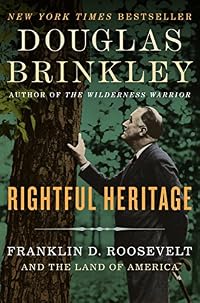
Douglas Brinkley was born in Atlanta, Georgia on December 14, 1960. He received a B.A. from Ohio State University in 1982 and a Ph.D. from Georgetown University in 1989. He was a professor at Tulane University, Princeton University, the U.S. Naval Academy, Hofstra University, and the University of New Orleans. In 2007, he became a professor at show more Rice University and the James Baker Institute for Public Policy. He is a commentator for CBS News and a contributing editor to the magazine Vanity Fair. His first book, Jean Monnet: The Path to European Unity, was published in 1992. His other works include Dean Acheson: The Cold War Years, The Unfinished Presidency: Jimmy Carter's Journey Beyond the White House, Wheels for the World: Henry Ford, His Company, and a Century of Progress, The Boys of Pointe du Hoc: Ronald Reagan, D-Day, and the U.S. Army 2nd Ranger Battalion, The Wilderness Warrior: Theodore Roosevelt and the Crusade for America, Cronkite, and Rightful Heritage: Franklin D. Roosevelt and the Land of America. He also wrote three books with historian Stephen E. Ambrose: The Rise to Globalism: American Foreign Policy Since 1938, Witness to History, and The Mississippi and the Making of a Nation: From the Louisiana Purchase to Today. He has won several awards including the Theodore and Franklin Roosevelt Naval History Prize for Driven Patriot and the Robert F. Kennedy Book Award for The Great Deluge: Hurricane Katrina, New Orleans, and the Mississippi Gulf Coast. (Bowker Author Biography) show less
Awards and Honors
Awards
Distinctions
Common Knowledge
- Original title
- The wilderness warrior
- Original publication date
- 2009
- People/Characters
- Theodore Roosevelt; John Muir, naturalist (naturalist and founder of the Sierra Club); Gifford Pinchot (forester and first chief of the US Forest Service); US Congressman John F. Lacey (conservationist); John Burroughs (naturalist and essayist); C. Hart Merriam (biologist, chief of the US Biological Survey) (show all 7); George Bird Grinnell (anthropologist, naturalist, and editor of Forest & Stream)
- Important places
- USA
- Epigraph
- Defenders of the short-sighted men who in their greed and selfishness will, if permitted, rob our country of half its charm by their reckless extermination of all useful and beautiful wild things sometimes seek to champion th... (show all)em by saying that "the game belongs to the people." So it does, and not merely to the people now alive, but to the unborn people. The "greatest good for the greatest number" applies to the number within the womb of time, compared to which those now alive form but an insignificant fraction. Our duty to the whole, including the unborn generations, bids us to restrain an unprincipled present-day minority from wasting the heritage of these unborn generations. The movement for the conservation of wild life and the larger movement for the conservation of all our natural resources are essentially democratic in spirit, purpose, and method.
- Theodore Roosevelt, A Book-lover's Holidays in the Open (1916) - Dedication
- Dedicated to the memory of Dr. John A. Gable (1943 - 2005), executive director of the Theodore Roosevelt Association; and Sheila Schafer of Medora, North Dakota, whom I love with all my heart; and Robert M. Utley (aka "Old Bi... (show all)son") Historian of the American West.
- First words
- On a wintry morning in 1903 President Theodore Roosevelt arrived at a White House cabinet meeting unexpectedly and with great exuberance.
- Last words
- (Click to show. Warning: May contain spoilers.)As forces of globalization run amok, Roosevelt's stout resoluteness to protect our environment is a strong reminder of our national wilderness heritage, as well as an increasingly urgent call to arms.
- Blurbers
- Goodwin, Doris Kearns; Isaacson, Walter; Worster, Donald; Burns, Ken; Beschloss, Michael
- Original language
- English US
Classifications
- Genres
- History, Nonfiction, Science & Nature, Biography & Memoir, General Nonfiction, Sports and Leisure
- DDC/MDS
- 973.911092 — History & geography History of North America United States 1901- WW1, WW2, Depression (1901-1953) Theodore Roosevelt 1901-1909
- LCC
- E757 .B856 — History of the United States United States Twentieth century Theodore Roosevelt's administrations,
- BISAC
Statistics
- Members
- 1,052
- Popularity
- 24,310
- Reviews
- 16
- Rating
- (3.75)
- Languages
- English
- Media
- Paper, Audiobook, Ebook
- ISBNs
- 13
- ASINs
- 6