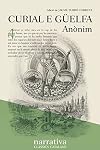
Curial and Guelfa
by Anonymous
On This Page
Description
Among 15th-century literature in the Romance languages, Curial and Guelfa is one of the most successful romances of chivalry. It is a veritable jewel of late medieval European literature and of narrative in the Crown of Aragon in particular. Curial shares a range of features - realism, humanity, believable deeds of chivalry, historical background, allusions to everyday life, elements of humour and parody, variation between literary and popular language - with contemporary French chivalric show more narratives, and with the Valencian Joanot Martorell's Tirant lo Blanc. In this compan show lessTags
Recommendations




















Member Reviews
La obra fue escrita en idioma valenciano no en catalán, por mucho que se empeñen muchos en adueñarse de todas las obras de la literatura clásica valenciana como si fueran catalanas. Aunque se ha afirmado que el autor es anónimo, se cree que fue obra de un caballero de armas y letras educado en la corte valenciana. Y no, el valenciano no deriva del catalán, más bien al contrario, ya que el primer escrito oficial el primer documento valenciano escrito en valenciano fue descubierto por el profesor Vicent García Edo en un pergamino escrito el 17 de mayo de 1253 en Almassora (Castellón).
Apr 25, 2025Spanish
JB-3
Oct 23, 2020Catalan
Ratings
Members
- Recently Added By
Author Information
3 Works 2,966 Members
Some Editions
Series
Belongs to Publisher Series
Work Relationships
Has the adaptation
Has as a study
Common Knowledge
- Canonical title
- Curial and Guelfa
- Alternate titles*
- Curial y Guelfa
- People/Characters
- Curial; Guelfa
- Dedication
- For Emma and Peter, Selma and Safiya
(1982 Pamela Waley ed.). - First words
- Curial and Guelfa was written between 1440 and 1460, and it survives in a single manuscript which was identified in the Biblioteca Nacional, Madrid, in 1876.
Introduction (1982 Pamela Waley ed.).
How great is the danger, how many the anxieties and cares of those who strive in the toils of love!
Book one (1982 Pamela Waley ed.). - Last words
- (Click to show. Warning: May contain spoilers.)And weary old Melchior, when he saw the Prince, embraced him with tears of joy saying: 'Now lettest thou thy servant depart in peace, Lord, according to thy word.'
The end, thanks be to God.
(1982 Pamela Waley ed.). - Original language
- Catalan
*Some information comes from Common Knowledge in other languages. Click "Edit" for more information.
Classifications
Statistics
- Members
- 134
- Popularity
- 243,121
- Reviews
- 2
- Rating
- (3.91)
- Languages
- Catalan, English, French, Spanish
- Media
- Paper, Ebook
- ISBNs
- 17
- ASINs
- 1