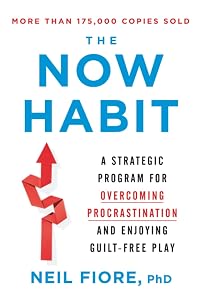
The Now Habit: A Strategic Program for Overcoming Procrastination and Enjoying Guilt-Free Play
by Neil Fiore
On This Page
Description
Simple, Effective, Immediately Useful! The first comprehensive strategic system for overcoming the causes and eliminating the effects of procrastination. Techniques to help any busy person get more things done more quickly, without the anxiety and stress brought on by delay and pressing deadlines. If you are a professional, manager, student, entrepreneur, writer, or homemaker, this audio book will help you achieve your goals more rapidly-whether they be large, complex challenges or the show more small, essential tasks of everyday life and work. If you now work effectively even though you have too much to do and too little time, THE NOW HABIT will show you how to prioritize your goals to allow more time for guilt-free play. Step by step, Neil Fiore, Ph. D. reveals numerous tested strategies for ridding your life of procrastination: * Use the symptoms of procrastination to trigger the cure. * Overcome the perfectionism and fear of failure that lie behind procrastination. * Benefit from making positive statements about work instead of sabotaging yourself with negative statements. * Make your worry work for you. * Use the Unschedule time-management techniques. * Accomplish more in less time through efficient "flow state" work styles. * Assist the procrastinators in your life in overcoming their problems. THE NOW HABIT promises you the chance to truly enjoy guilt-free recreational time, knowing the work is really behind you. show lessTags
Recommendations

Member Reviews
I'm not usually one to read a bunch of self help sort of books, though I occasionally will run through one on a recommendation, such as the odd finance book about getting debt under control. But, despite other problems that I have in life the single biggest, hands down, is procrastination.
People who don't procrastinate will look at a procrastinator and see only that that person is either not working hard enough or putting off work. They don't procrastinate and as such don't understand the motivations and reasons behind why someone would. So they demand "get to work" and "just do it" and "work harder" which more often than not will just cause more procrastination.
This book is the first I've ever come across that actually understands show more procrastination. Reading through its pages I found myself nodding my head a lot because it described my internal struggle with work almost perfectly. And more importantly, the methods and exercises it provides for battling procrastination seem perfectly valid and easily doable. I've already started changing my habits by simply recognizing when I'm headed toward procrastination and being able to head it off before it happens.
And most importantly, this book isn't just about working harder. It's about working better and integrating play into your schedule because it recognizes the single most important element to procrastination - the reason we get bummed out and piddle around is the prospect that work is going to take away time from play. So by putting play on your schedule first and building work around play, you flip the whole thing on its head.
The only hesitation I had in giving this 5 stars is that the last couple of chapters delve into the sort of hippy zen breathing chanting mantra type stuff that I tend to loath in self help books. But up until that point it was an excellent book, and really you can ignore that part and still get a lot out of it. show less
People who don't procrastinate will look at a procrastinator and see only that that person is either not working hard enough or putting off work. They don't procrastinate and as such don't understand the motivations and reasons behind why someone would. So they demand "get to work" and "just do it" and "work harder" which more often than not will just cause more procrastination.
This book is the first I've ever come across that actually understands show more procrastination. Reading through its pages I found myself nodding my head a lot because it described my internal struggle with work almost perfectly. And more importantly, the methods and exercises it provides for battling procrastination seem perfectly valid and easily doable. I've already started changing my habits by simply recognizing when I'm headed toward procrastination and being able to head it off before it happens.
And most importantly, this book isn't just about working harder. It's about working better and integrating play into your schedule because it recognizes the single most important element to procrastination - the reason we get bummed out and piddle around is the prospect that work is going to take away time from play. So by putting play on your schedule first and building work around play, you flip the whole thing on its head.
The only hesitation I had in giving this 5 stars is that the last couple of chapters delve into the sort of hippy zen breathing chanting mantra type stuff that I tend to loath in self help books. But up until that point it was an excellent book, and really you can ignore that part and still get a lot out of it. show less
Self help books tend to disappoint me. This was OK.
Helpful:
- The idea that procrastination can come from anxiety over failure and from rebellion against authority. My dad was never impressed by anything I did; and while not relentlessly critical, he let me know I wasn't up to standard. When I think about tasks I avoid now that influence is visible. i like to fix things and tinker, but I avoid any task where someone might see me working.
- The idea that procrastinating sets up some perverse reward loops in your brain
- The idea that focusing on starting, rather than finishing the whole task, can be helpful
- That prioritizing guilt free play and relaxation can help reduce procrastinating
- Thoughts that start with 'should do,' might not be show more things I need to do. Are they really important to me?
Not-helpful
- There is an overlong section where the author walks readers through relaxing and meditating. It was too much and too painful. It might have been better as an appendix. show less
Helpful:
- The idea that procrastination can come from anxiety over failure and from rebellion against authority. My dad was never impressed by anything I did; and while not relentlessly critical, he let me know I wasn't up to standard. When I think about tasks I avoid now that influence is visible. i like to fix things and tinker, but I avoid any task where someone might see me working.
- The idea that procrastinating sets up some perverse reward loops in your brain
- The idea that focusing on starting, rather than finishing the whole task, can be helpful
- That prioritizing guilt free play and relaxation can help reduce procrastinating
- Thoughts that start with 'should do,' might not be show more things I need to do. Are they really important to me?
Not-helpful
- There is an overlong section where the author walks readers through relaxing and meditating. It was too much and too painful. It might have been better as an appendix. show less
How do you overcome procrastination? It may seem counterintuitive to start with play, but that is what Neil Fiore recommends. If you approach a task feeling like you "have to" do it, you'll be naturally resistant. But if you put guilt-free play onto your "un-schedule" first, and then freely make the choice to start a task in the remaining time, procrastination may become a thing of the past. I read a lot of time management books (usually while procrastinating), and this one reiterates much common advice. Break tasks into small pieces. Just get started. But Fiore is unusual in his focus on the importance of play. He advocates being realistic about how much time you actually have for project-based work, setting realistic goals, and making show more sure you make time for enjoyable activities too. It was somewhat serendipitous that I finished this one right before finals week! show less
This is a book I wish I'd read at eighteen; it probably could have saved me more than a few years of painfully figuring out the right habits to deal with anxiety-driven procrastination. Having taken the long road to the same conclusions, however, I didn't find myself picking up many new ideas here.
I did take away a good reminder about the importance of making time for real play and relaxation without guilt (something I'm super bad at), though I didn't find the ideas of scheduling play very appealing.
As with most psych/self-help books, it could probably be a third of its length and not lose much.
I did take away a good reminder about the importance of making time for real play and relaxation without guilt (something I'm super bad at), though I didn't find the ideas of scheduling play very appealing.
As with most psych/self-help books, it could probably be a third of its length and not lose much.
Continuing with my research on writer's block/procrastination, next up in the pile is Neil Fiore's The Now Habit. This book wasn't on my original list when I scoured the internet for research, but it should've been, because the person who introduced me to the book at a later date was the very person I'd gone to for suggestions not more than a week earlier! He used this book as a basis for an online chat on writer's habits, and it caught my attention enough to snag the title and read it all the way through.
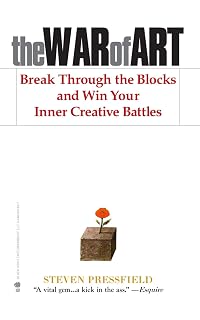
I don't know if I've reached a point where everything I'm reading is kind of simmering into ONE GREAT TRUTH about procrastination and the things that cause it and how to fight it, or if Fiore just made much better sense than the others show more I've read. He lacks the philosophical crap of Pressfield (unlike Pressfield's book, Fiore's The Now Habit deserves to be labeled and shelved in self-help), and he also doesn't bother with eyebrow-raising notions of bi-vocal thinking introduced in Peterson's Write.
The biggest difference is that unlike the other two titles, both aimed at getting over procrastination and writer's block, Fiore's book has nothing to do with the craft of writing. Writing a novel might be a project he refers to from time to time, but Fiore is focused on the problem of procrastination itself. Like Peterson, he doesn't believe in beating people over the head with the notion that if you're a procrastinator, you must be lazy and therefore unworthy of your undertaking, and like Peterson, he believes that it's necessary and healthy for people to engage in play, because in doing so, your work becomes something else, something worthwhile, if only you can adjust your attitude about it.
There's nothing new-agey (except for maybe the relaxation exercise detailed in the back of the book) or preachy about Fiore's strategy or exposition. He tackles the problem of procrastination for what it really is rather than what everyone else assumes it to be (like Pressfield). His strategy focuses on how guilt-free play can lead to quality work, as well as how to use an "unschedule" to meet your deadlines and make big projects far more manageable, the latter being something that Kelly Stone touched on in Time to Write.
It's actually refreshing to read a book that has nothing to do with the writing process and all about procrastination and its roots. This book has clicked with me in ways the others haven't, and I suspect it's because it looks at procrastination as the big picture, rather than one narrow aspect of it (in my case, writing a novel). I would've killed to know about this book back when I started my degree in 2006, even more so to have known about this book in my second year in 2007, when procrastination had truly started to become disabling. Even without trying the "unschedule," I can already see how this book's principles and strategies can create a healthier, more productive mindset for someone like me, and I'm glad I've got this book in my arsenal.
My Rating
Must Have: Obviously. This book is for more than just writers, it's for anyone who puts off doing ANYTHING for any reason and feels guilty/worthless/lazy for doing so. It's for the workaholic as well. It's a book I'll recommend to anyone without feeling bad or needing to clarify my recommendation, so if you or someone you know suffers from procrastination of ANY kind for ANY kind of project, even if it's just paying the bills on time or not being late, this is the book to go to. show less
I don't know if I've reached a point where everything I'm reading is kind of simmering into ONE GREAT TRUTH about procrastination and the things that cause it and how to fight it, or if Fiore just made much better sense than the others show more I've read. He lacks the philosophical crap of Pressfield (unlike Pressfield's book, Fiore's The Now Habit deserves to be labeled and shelved in self-help), and he also doesn't bother with eyebrow-raising notions of bi-vocal thinking introduced in Peterson's Write.
The biggest difference is that unlike the other two titles, both aimed at getting over procrastination and writer's block, Fiore's book has nothing to do with the craft of writing. Writing a novel might be a project he refers to from time to time, but Fiore is focused on the problem of procrastination itself. Like Peterson, he doesn't believe in beating people over the head with the notion that if you're a procrastinator, you must be lazy and therefore unworthy of your undertaking, and like Peterson, he believes that it's necessary and healthy for people to engage in play, because in doing so, your work becomes something else, something worthwhile, if only you can adjust your attitude about it.
There's nothing new-agey (except for maybe the relaxation exercise detailed in the back of the book) or preachy about Fiore's strategy or exposition. He tackles the problem of procrastination for what it really is rather than what everyone else assumes it to be (like Pressfield). His strategy focuses on how guilt-free play can lead to quality work, as well as how to use an "unschedule" to meet your deadlines and make big projects far more manageable, the latter being something that Kelly Stone touched on in Time to Write.
It's actually refreshing to read a book that has nothing to do with the writing process and all about procrastination and its roots. This book has clicked with me in ways the others haven't, and I suspect it's because it looks at procrastination as the big picture, rather than one narrow aspect of it (in my case, writing a novel). I would've killed to know about this book back when I started my degree in 2006, even more so to have known about this book in my second year in 2007, when procrastination had truly started to become disabling. Even without trying the "unschedule," I can already see how this book's principles and strategies can create a healthier, more productive mindset for someone like me, and I'm glad I've got this book in my arsenal.
My Rating
Must Have: Obviously. This book is for more than just writers, it's for anyone who puts off doing ANYTHING for any reason and feels guilty/worthless/lazy for doing so. It's for the workaholic as well. It's a book I'll recommend to anyone without feeling bad or needing to clarify my recommendation, so if you or someone you know suffers from procrastination of ANY kind for ANY kind of project, even if it's just paying the bills on time or not being late, this is the book to go to. show less
This is a heavy book, as in there is a lot of take in and comprehend, but it's well written. I started reading this book few years ago but put it down. Came back to it as an audiobook this year. I think it's better suited for audio listening, but only if you can focus on this alone. This is not a multitasking audio book. Great words of wisdom and advice. I've gained a lot from looking at my "un-schedule" even if I may not follow it every day. Also working on changing my mindset about things so that I am not dreading each task in life and procrastinating on everything.
It started out with some promise but then devovled into yet another positive talk self-help book with no substance and little help. The Unschedule will not become part of my life. At least it was a quick read, though that was perhaps due to the major skimming towards the end.
Members
- Recently Added By
Lists

Boardtc's reading list
24 works; 1 member

Tom's Bookstore
346 works; 2 members
Author Information

15 Works 1,898 Members
Dr. Neil Fiore is the bestselling author of The Now Habit and Coping with the Emotional Impact of Cancer. He has worked as a psychologist at the Counseling Center of the University of California, Berkeley, and now conducts seminars and lectures at major schools and businesses. He lives in the greater San Francisco Bay Area.
Common Knowledge
- Original publication date
- 2007-04-05 (revised edition) (revised edition)
- Epigraph
- The healthy individual has an appetite for fruitful activity and for a high quality of life. - Geroge Bernard Shaw
- Dedication
- This book is dedicated to all those people who had the courage and perseverance to seek help with the frustrating problem of procrastination. It has been written for all the people who, in their quest for help, brought with... (show all) them a battered sense of self-worth, a desire to save some part of themselves, and a burning conviction that they had some good work to contribute. But most especially,this book is for Elizabeth.
- First words
- Your strategic program begins with identifying your procrastination patterns so you can apply the appropriate techniques for replacing them with the effective work patterns of producers.
- Quotations
- ...chaos is exhausting and a real time waster...When you create structures for the chaos in your life you free yourself. You free up your time and emotional energy for the good stuff. - Dr. Joan Minninger, p. 102
Procrastination is a mechanism for coping with the anxiety associated with starting or completing any task or decision. - page xv - Last words
- (Click to show. Warning: May contain spoilers.)Even if the procrastinators in your life don't get around to reading this book, your use of Now Habit strategies will clarify your communication and model for them the quality work and guilt-free play of a producer.
Classifications
Statistics
- Members
- 1,634
- Popularity
- 13,816
- Reviews
- 20
- Rating
- (3.67)
- Languages
- 5 — English, German, Polish, Portuguese, Spanish
- Media
- Paper, Audiobook, Ebook
- ISBNs
- 21
- UPCs
- 1
- ASINs
- 9