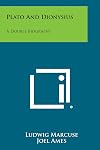
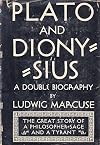
Plato and Dionysius a double biography
by Ludwig Marcuse
On This Page
Description
Plato and Dionysius: A Double Biography is a book written by Ludwig Marcuse that explores the lives of two influential figures in ancient Greece. The book provides a comprehensive biography of both Plato and Dionysius, tracing their lives and achievements from their early years to their deaths. The book examines the philosophical and political ideas of both Plato and Dionysius, including their views on democracy, tyranny, and the role of the state. Marcuse also explores the relationship show more between the two men, who were both born in the same city and lived during the same period, but had vastly different personalities and beliefs. The book is divided into two parts, with the first part focusing on Plato's life and ideas, and the second part focusing on Dionysius. Throughout the book, Marcuse provides detailed analysis and interpretation of the works of both philosophers, including Plato's Republic and Dionysius' letters. Overall, Plato and Dionysius: A Double Biography is a fascinating exploration of two of the most important figures in ancient Greek philosophy and politics. It provides a detailed and nuanced account of their lives and ideas, and offers readers a deeper understanding of their enduring legacies.This scarce antiquarian book is a facsimile reprint of the old original and may contain some imperfections such as library marks and notations. Because we believe this work is culturally important, we have made it available as part of our commitment for protecting, preserving, and promoting the world's literature in affordable, high quality, modern editions, that are true to their original work. show lessTags
Recommendations
Member Recommendations

Thorwald_Franke Both books tell the same story, but from a different perspective.
Member Reviews
Eternal truths of power and spirit / but misses Plato's genius
The philosopher Ludwig Marcuse traces step by step the events that brought together in Syracuse on Sicily Plato with the tyrants Dionysius I and II, and exemplarily shows how spirit and power clashed. Marcuse, however, is not interested in historical accuracy and the philosophy of Plato, but Marcuse used the events especially to show some "eternal truths". The result is still amazingly historically accurate, but Plato and his philosophy is clearly missed.
For Marcuse Plato is only the exemplary representative of a simplistic utopian thinking. He is reduced to a revolutionary geek who is driven by personally experienced injustice and by class antagonisms. Marcuse is subject to show more the error, that he can equate Plato with Karl Marx; that is why Marcuse also calls Plato "the first great Marxist" and sees him as a ruthless dictator in spirit. The difference of the Platonic ideal state to naive utopia is missed by Marcuse, and Plato's re-thinking after the failure of the Syracusean experiment is simply interpreted as resignation and a control mania of age stubbornness instead of recognizing it as a valuable idea, turning away from naive idealism. In the end Marcuse even welcomes utopian experiments, because according to him they advanced the human race - that is why you wonder how much Marcuse despite his sober analysis of the events really understood?
Marcuse's unabashed, practical, psychologizing analysis of the very human motivations of the protagonists provides many useful insights into the historical events, on the other hand Marcuse confuses the reader with an erratic style that produces many unresolved contradictions. Marcuse, who is considered to follow the concepts of "Lebensphilosophie", writes a somewhat unwieldy and brash style, but earns some sympathy with this because he is also stimulating and unconventional in result. All in all an interesting stimulating, sometimes enlightening and informative read, which has to be enjoyed with caution.
Although the booklet offers various very good opportunities to mention Plato's Atlantis account, Marcuse stays silent on this. Marcuse seems to be unable to classify Plato's Atlantis into the events, because he has not fully understood Plato's philosophy. After all, Marcuse has rightly recognized that the actually utopian text by Plato - if the term "utopian" is permitted at all when it comes to Plato - is Plato's Republic. show less
The philosopher Ludwig Marcuse traces step by step the events that brought together in Syracuse on Sicily Plato with the tyrants Dionysius I and II, and exemplarily shows how spirit and power clashed. Marcuse, however, is not interested in historical accuracy and the philosophy of Plato, but Marcuse used the events especially to show some "eternal truths". The result is still amazingly historically accurate, but Plato and his philosophy is clearly missed.
For Marcuse Plato is only the exemplary representative of a simplistic utopian thinking. He is reduced to a revolutionary geek who is driven by personally experienced injustice and by class antagonisms. Marcuse is subject to show more the error, that he can equate Plato with Karl Marx; that is why Marcuse also calls Plato "the first great Marxist" and sees him as a ruthless dictator in spirit. The difference of the Platonic ideal state to naive utopia is missed by Marcuse, and Plato's re-thinking after the failure of the Syracusean experiment is simply interpreted as resignation and a control mania of age stubbornness instead of recognizing it as a valuable idea, turning away from naive idealism. In the end Marcuse even welcomes utopian experiments, because according to him they advanced the human race - that is why you wonder how much Marcuse despite his sober analysis of the events really understood?
Marcuse's unabashed, practical, psychologizing analysis of the very human motivations of the protagonists provides many useful insights into the historical events, on the other hand Marcuse confuses the reader with an erratic style that produces many unresolved contradictions. Marcuse, who is considered to follow the concepts of "Lebensphilosophie", writes a somewhat unwieldy and brash style, but earns some sympathy with this because he is also stimulating and unconventional in result. All in all an interesting stimulating, sometimes enlightening and informative read, which has to be enjoyed with caution.
Although the booklet offers various very good opportunities to mention Plato's Atlantis account, Marcuse stays silent on this. Marcuse seems to be unable to classify Plato's Atlantis into the events, because he has not fully understood Plato's philosophy. After all, Marcuse has rightly recognized that the actually utopian text by Plato - if the term "utopian" is permitted at all when it comes to Plato - is Plato's Republic. show less
Members
- Recently Added By
Author Information

40+ Works 274 Members
Common Knowledge
- Canonical title
- Plato And Dionysius A Double Biography; Plato and Dionysius a double biography
Classifications
Statistics
- Members
- 12
- Popularity
- 1,877,517
- Reviews
- 1
- Rating
- (3.00)
- Languages
- English
- Media
- Paper
- ISBNs
- 3
- ASINs
- 2