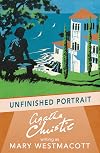
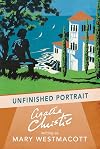
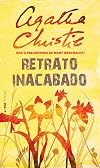
Unfinished Portrait
by Agatha Christie
On This Page
Description
Bereft of the three people she has held most dear - her mother, her husband and her daughter - Celia is on the verge of suicide. Then one night on an exotic island she meets Larraby, a successful portrait painter, and through a long night of talk reveals how she is afraid to commit herself to a second chance of happiness with another person, yet is not brave enough to face life alone. Can Larraby help Celia come to terms with the past or will they part, her outcome still uncertain?Tags
Recommendations









Member Reviews
Embellished Autobiography
Agatha Christie's life hides behind the thin veneer of fiction in Unfinished Portrait, the 1934 novel she penned under the pseudonym of Mary Westmacott. The "portrait" of Celia so closely mirrors that of Agatha that the barrier between author and character is even thinner than veneer: clear plastic wrap is more like it.
Looking for something a little different in the Christie section of my home library and wanting a break from the murder mystery formula, I decided to take Mary Westmacott for a spin this past week. It turned out to be less than a joyride.
Sure, Agatha's playful dance with the written word is still here, but the book itself moves at the pace of a drunk elephant wading through molasses. My show more displeasure with the book probably stems from the fact that I've already read her Autobiography, and so rehashing those familiar events, characters and emotions was like staring at a plate of leftovers—covered in plastic wrap, of course.
Let's backtrack for a minute: why did Agatha write these Mary Westmacott books (of which there were six)? We turn to her Autobiography, the real autobiography, for Agatha's perspective:
It had been exciting, to begin with, to be writing books—partly because, as I did not feel I was a real author, it was each time astonishing that I should be able to write books that were actually published. Now I wrote books as a matter of course. It was my business to do so….What I wanted to do now was to write something other than a detective story. So, with a rather guilty feeling, I enjoyed myself writing a straight novel called Giant's Bread.
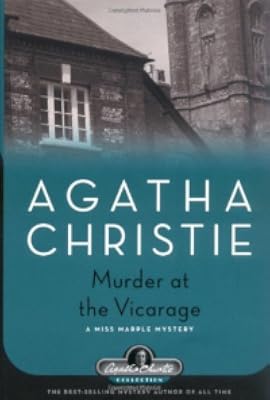
That first Westmacott novel, springing up from her restlessness to sneak out of the prison of cozy mysteries, was published in 1930, the same year as Murder at the Vicarage (in which we also find her trying something new—the character of Miss Marple). No one suspected that this novel of a musician caught in a love triangle was written by the same woman who described nice country folk murdering each other with blunt instruments. That secret identity was kept until 1949 when the London Sunday Times pulled the mask off of Mary Westmacott. Agatha wrote two more Westmacott novels after that (her last was The Burden in 1956).
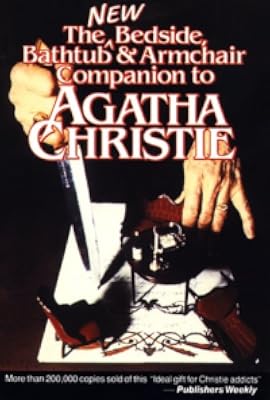
In their well-written, spot-on essay "The Romantic Englishwoman" found in the Bedside, Bathtub & Armchair Companion to Agatha Christie, Pat Maida and Nick Spornick write that using the Westmacott disguise did more than give Agatha another genre market into which she could tap—it also freed her to explore the mystery of her own character, to spelunk down into the dark cave of her soul:
The intense personal feeling poured into these novels may well have kept Christie in hiding. A shy, introverted woman, Agatha Christie was never one to expose her emotions. But she may have needed a way to channel this dimension of herself, which could never be expressed within the confines of the detective story.
And, as even the most casual Christie fan knows, there was plenty of high drama in Agatha's life in the 1920s when her marriage to Archie Christie imploded with his infidelity and her subsequent mysterious (and still unsolved) disappearance in December 1926. Writing a book about tormented lovers in which nothing is killed except a marriage, was just the kind of outlet Agatha needed at the time. As Maida and Spornick note, "For Christie, this romance [Unfinished Portrait] may have been an exorcism in grief."
Unfortunately, Unfinished Portrait turns out to be an exercise in tedium for the reader. Agatha paints with some pretty broad strokes when describing huge chunks of Celia's life which pass before our eyes in the space of thickly-worded paragraphs. Characters come and go and it's difficult to keep track of them without flipping back and scanning the page to the spot where they were first mentioned.
Unfinished Portrait chronicles the life of Celia, raised as a sheltered child in the twilight years of the Victorian era. As we find in Christie's Autobiography, there's a long parade of maids, cooks, governesses, tutors, suitors, dance partners, and eventually a husband—Dermot, here; Archie, in real life. Throughout, Celia is portrayed as a girl who is "queer and panic stricken and horribly lonely" (all traits to which Agatha has admitted). She's never really able to get a good grip on who she is as a person. Marriage to an exacting, demanding husband sucks even more self-confidence away from her.
Nothing much happens in the way of action; the high point of drama comes when Celia has a baby and upsets Dermot's carefully-ordered, everything-in-its-proper-place universe. There are tears, recriminations, apologies, and reconciliations—the stuff of three sopping hankies. A far cry from the tightly-plotted, swiftly-moving mysteries, this novel takes its own slow time, ambling along at an obese pace from scene to scene.
As I could have guessed, Unfinished Portrait really only picks up steam in the final chapters when Celia's marriage to Dermot falls apart and she is driven to the brink of suicide (literally the brink in a scene where she teeters at the edge of a cliff). I came to Unfinished Portrait hoping for more clues into the mystery of Agatha's 1926 disappearance, but I was left with little more than a strong suspicion she was planning to commit suicide during those eleven "lost" days. Unfinished Portrait does fill in the gaps of what was missing in the Autobiography, supplying us with much more emotion as Celia spirals down into madness and despair.
Agatha pulls no punches in her depiction of Dermot as an absolute brute who was a bright, punishing sun to Celia's obedient, revolving planet. If there is any truth to the fiction (and I believe there are more than just a couple of grains), then Archie must have been an intolerable husband who mentally abused Agatha for years. Eventually, Celia says she fears for her life, that Dermot wants to kill her to be rid of his "silly" little wife. And that is when she decides to "escape" to "somewhere safe." In 1926, that was a spa in Yorkshire where Agatha was found, suffering from amnesia (so went the stories in the press). Agatha writes of Celia in Unfinished Portrait, "She was going away—out of it all. She couldn't bear any more. It hurt too much."
She, Agatha, has cathartically transferred her own pain to the page in Unfinished Portrait. Unfortunately for the reader, that pain just turns into a dull ache. show less
Agatha Christie's life hides behind the thin veneer of fiction in Unfinished Portrait, the 1934 novel she penned under the pseudonym of Mary Westmacott. The "portrait" of Celia so closely mirrors that of Agatha that the barrier between author and character is even thinner than veneer: clear plastic wrap is more like it.
Looking for something a little different in the Christie section of my home library and wanting a break from the murder mystery formula, I decided to take Mary Westmacott for a spin this past week. It turned out to be less than a joyride.
Sure, Agatha's playful dance with the written word is still here, but the book itself moves at the pace of a drunk elephant wading through molasses. My show more displeasure with the book probably stems from the fact that I've already read her Autobiography, and so rehashing those familiar events, characters and emotions was like staring at a plate of leftovers—covered in plastic wrap, of course.
Let's backtrack for a minute: why did Agatha write these Mary Westmacott books (of which there were six)? We turn to her Autobiography, the real autobiography, for Agatha's perspective:
It had been exciting, to begin with, to be writing books—partly because, as I did not feel I was a real author, it was each time astonishing that I should be able to write books that were actually published. Now I wrote books as a matter of course. It was my business to do so….What I wanted to do now was to write something other than a detective story. So, with a rather guilty feeling, I enjoyed myself writing a straight novel called Giant's Bread.
That first Westmacott novel, springing up from her restlessness to sneak out of the prison of cozy mysteries, was published in 1930, the same year as Murder at the Vicarage (in which we also find her trying something new—the character of Miss Marple). No one suspected that this novel of a musician caught in a love triangle was written by the same woman who described nice country folk murdering each other with blunt instruments. That secret identity was kept until 1949 when the London Sunday Times pulled the mask off of Mary Westmacott. Agatha wrote two more Westmacott novels after that (her last was The Burden in 1956).
In their well-written, spot-on essay "The Romantic Englishwoman" found in the Bedside, Bathtub & Armchair Companion to Agatha Christie, Pat Maida and Nick Spornick write that using the Westmacott disguise did more than give Agatha another genre market into which she could tap—it also freed her to explore the mystery of her own character, to spelunk down into the dark cave of her soul:
The intense personal feeling poured into these novels may well have kept Christie in hiding. A shy, introverted woman, Agatha Christie was never one to expose her emotions. But she may have needed a way to channel this dimension of herself, which could never be expressed within the confines of the detective story.
And, as even the most casual Christie fan knows, there was plenty of high drama in Agatha's life in the 1920s when her marriage to Archie Christie imploded with his infidelity and her subsequent mysterious (and still unsolved) disappearance in December 1926. Writing a book about tormented lovers in which nothing is killed except a marriage, was just the kind of outlet Agatha needed at the time. As Maida and Spornick note, "For Christie, this romance [Unfinished Portrait] may have been an exorcism in grief."
Unfortunately, Unfinished Portrait turns out to be an exercise in tedium for the reader. Agatha paints with some pretty broad strokes when describing huge chunks of Celia's life which pass before our eyes in the space of thickly-worded paragraphs. Characters come and go and it's difficult to keep track of them without flipping back and scanning the page to the spot where they were first mentioned.
Unfinished Portrait chronicles the life of Celia, raised as a sheltered child in the twilight years of the Victorian era. As we find in Christie's Autobiography, there's a long parade of maids, cooks, governesses, tutors, suitors, dance partners, and eventually a husband—Dermot, here; Archie, in real life. Throughout, Celia is portrayed as a girl who is "queer and panic stricken and horribly lonely" (all traits to which Agatha has admitted). She's never really able to get a good grip on who she is as a person. Marriage to an exacting, demanding husband sucks even more self-confidence away from her.
Nothing much happens in the way of action; the high point of drama comes when Celia has a baby and upsets Dermot's carefully-ordered, everything-in-its-proper-place universe. There are tears, recriminations, apologies, and reconciliations—the stuff of three sopping hankies. A far cry from the tightly-plotted, swiftly-moving mysteries, this novel takes its own slow time, ambling along at an obese pace from scene to scene.
As I could have guessed, Unfinished Portrait really only picks up steam in the final chapters when Celia's marriage to Dermot falls apart and she is driven to the brink of suicide (literally the brink in a scene where she teeters at the edge of a cliff). I came to Unfinished Portrait hoping for more clues into the mystery of Agatha's 1926 disappearance, but I was left with little more than a strong suspicion she was planning to commit suicide during those eleven "lost" days. Unfinished Portrait does fill in the gaps of what was missing in the Autobiography, supplying us with much more emotion as Celia spirals down into madness and despair.
Agatha pulls no punches in her depiction of Dermot as an absolute brute who was a bright, punishing sun to Celia's obedient, revolving planet. If there is any truth to the fiction (and I believe there are more than just a couple of grains), then Archie must have been an intolerable husband who mentally abused Agatha for years. Eventually, Celia says she fears for her life, that Dermot wants to kill her to be rid of his "silly" little wife. And that is when she decides to "escape" to "somewhere safe." In 1926, that was a spa in Yorkshire where Agatha was found, suffering from amnesia (so went the stories in the press). Agatha writes of Celia in Unfinished Portrait, "She was going away—out of it all. She couldn't bear any more. It hurt too much."
She, Agatha, has cathartically transferred her own pain to the page in Unfinished Portrait. Unfortunately for the reader, that pain just turns into a dull ache. show less
This was an odd listen. Read by a man, I spent quite a lot of the book undecided if the narrator was actually male or female, it didn't feel right being read by a man. The end revealed the unnamed and largely invisible narrator was a man. I remain unconvinced.
It tells of Celia starting with a probably suicide attempt, then fills in her narrative. It is a Victorian upbringing in the middle class, servants, a nurse, parents who socialse (but don't apparently work). Celia herself is a product of her time. She's sheltered, naive, unaware of the world and doesn't really have any idea of herself. She seems quite happy to mould herself to be whatever is expected of her. In short, a wet hen. Not my favourite character type. She passes through show more childhood and into adulthood without having any clear idea of what she wants from life, not that having any purpose is allowed to her (I think it would have done her the world of good). She gets engaged, then marries someone else, Dermot, who is so self centered that it's difficult to not dislike him. Quite how they ever thought they'd be suited, I don;t know. Celia spends her entire time giving in to him, accommodating his wishes. Well apart form their child, which he doesn't want as it would take Celia's attention away from him. He gets on just fine with his daughter once he realises that she's another person that can revolve about him. The end of the marriage was just a matter of time. When it comes, it is with typical Dermot arrogance and nearly destroys Celia. The remainder of her life is skipped over as is necessary. The last part, the finsihing the story that the first section started, struck me as somewhat trite.
The book has lovely passages of writing, but it is all very flat. There's no sense of highs and lows of emotion, even the suicide attempt is all a bit matter of fact.
I'm not sure what to make of this. As a story it's eventful enough, but the telling of it is lacking. The words are good enough, but it feels like a woman telling the story, yet is narrated by a man. I'm not sure it works. There's nothing to make this any more than a nondescript OK. show less
It tells of Celia starting with a probably suicide attempt, then fills in her narrative. It is a Victorian upbringing in the middle class, servants, a nurse, parents who socialse (but don't apparently work). Celia herself is a product of her time. She's sheltered, naive, unaware of the world and doesn't really have any idea of herself. She seems quite happy to mould herself to be whatever is expected of her. In short, a wet hen. Not my favourite character type. She passes through show more childhood and into adulthood without having any clear idea of what she wants from life, not that having any purpose is allowed to her (I think it would have done her the world of good). She gets engaged, then marries someone else, Dermot, who is so self centered that it's difficult to not dislike him. Quite how they ever thought they'd be suited, I don;t know. Celia spends her entire time giving in to him, accommodating his wishes. Well apart form their child, which he doesn't want as it would take Celia's attention away from him. He gets on just fine with his daughter once he realises that she's another person that can revolve about him. The end of the marriage was just a matter of time. When it comes, it is with typical Dermot arrogance and nearly destroys Celia. The remainder of her life is skipped over as is necessary. The last part, the finsihing the story that the first section started, struck me as somewhat trite.
The book has lovely passages of writing, but it is all very flat. There's no sense of highs and lows of emotion, even the suicide attempt is all a bit matter of fact.
I'm not sure what to make of this. As a story it's eventful enough, but the telling of it is lacking. The words are good enough, but it feels like a woman telling the story, yet is narrated by a man. I'm not sure it works. There's nothing to make this any more than a nondescript OK. show less
Well, I quite enjoyed this novel. I didn't quite get it at first, but then it didn't matter because I got into the story, and then it made sense by the end. This is a very contemplative, almost tragic novel that demonstrates Agatha Christie's skill at crafting characters. Some aspects of it are dated, but the themes of lying to and sublimating oneself for love and of making choices based on childhood experiences and habits are timeless.
Better than average from Agatha Christie in the non mystery genre. Her prose is typical Christie sparse but moves the story along.
Portrait is a good name for this book. It is nearly a pscycological case study. As a reflection on Celia, it is beautiful, sometimes even lyrical. The end is a little jarring, because the narrator tries to objectively assess Celia's condition and it breaks down the sympathy that the reader has built up over the course of many pages. The profile of society, acceptable norms, the state of marriage and divorce, and the relationships between children and their parents is a period snapshot of the 1930s. Celia herself is of a fragile self-esteem, blaming herself for many things that go wrong and the disposition of everyone around her. She misses her own place in her circles and is missunderstood as well as taking too much responsibility on show more herself. She is an imaginative and fanciful person trapped in a marriage with a cruel, selfish and prosaic man.
The book is a good study in character profile, but the plot is classic English introspection, it slows the plot down dramatically. Nevertheless, Unfinished Portrait is a good read for the sensitivity of exploring Celia's mind through the fine artistic storytelling of the Grande Dame. show less
The book is a good study in character profile, but the plot is classic English introspection, it slows the plot down dramatically. Nevertheless, Unfinished Portrait is a good read for the sensitivity of exploring Celia's mind through the fine artistic storytelling of the Grande Dame. show less
It is indicated by Christie's daughter, Rosalind Hicks that "It (Unfinished Portrait) also relied a lot on her (Agatha Christie) own experiences and early life." For more details, see the link at the bottom of this review.
There are moments when it seems absolutely impossible that the Mary Westmacott novels were written during the time period of 1930 - 1956. I can't imagine the joy for those that had the opportunity on their life journey to interact with Agatha Christie. She is so insightful and through her characters conveys an amazing clarity of relationships (e.g. husband/wife, father/daughter, mother/daughter, nurse/child, grandmother/granddaughter).
But there is also a sadness to the main character of Celia and perhaps it is best show more explained by quotes by Agatha Christie during her lifetime.
• “Everybody said, "Follow your heart". I did, it got broken”
• “But surely for everything you love you have to pay some price.”
I am looking forward to reading the next romance titled, "Absent in the Spring."
Don't miss reading more about the novels by Christie's daughter, Rosalind Hicks...
https://www.agathachristie.com/about-christie/family-memories/the-mary-westmacot... show less
There are moments when it seems absolutely impossible that the Mary Westmacott novels were written during the time period of 1930 - 1956. I can't imagine the joy for those that had the opportunity on their life journey to interact with Agatha Christie. She is so insightful and through her characters conveys an amazing clarity of relationships (e.g. husband/wife, father/daughter, mother/daughter, nurse/child, grandmother/granddaughter).
But there is also a sadness to the main character of Celia and perhaps it is best show more explained by quotes by Agatha Christie during her lifetime.
• “Everybody said, "Follow your heart". I did, it got broken”
• “But surely for everything you love you have to pay some price.”
I am looking forward to reading the next romance titled, "Absent in the Spring."
Don't miss reading more about the novels by Christie's daughter, Rosalind Hicks...
https://www.agathachristie.com/about-christie/family-memories/the-mary-westmacot... show less
This is basically Agatha Christie's autobiography, but stopped before she knew she would be happy again. It's bleak
Members
- Recently Added By
Lists

Agatha Christie
28 works; 3 members
Author Information

2,163+ Works 441,043 Members
One of the most successful and beloved writer of mystery stories, Agatha Mary Clarissa Christie was born in 1890 in Torquay, County Devon, England. She wrote her first novel, The Mysterious Affair at Styles, in 1920, launching a literary career that spanned decades. In her lifetime, she authored 79 crime novels and a short story collection, 19 show more plays, and six novels written under the name of Mary Westmacott. Her books have sold over a billion copies in the English language with another billion in 44 foreign languages. Some of her most famous titles include Murder on the Orient Express, Mystery of the Blue Train, And Then There Were None, 13 at Dinner and The Sittaford Mystery. Noted for clever and surprising twists of plot, many of Christie's mysteries feature two unconventional fictional detectives named Hercule Poirot and Miss Jane Marple. Poirot, in particular, plays the hero of many of her works, including the classic, The Murder of Roger Ackroyd (1926), and Curtain (1975), one of her last works in which the famed detective dies. Over the years, her travels took her to the Middle East where she met noted English archaeologist Sir Max Mallowan. They married in 1930. Christie accompanied Mallowan on annual expeditions to Iraq and Syria, which served as material for Murder in Mesopotamia (1930), Death on the Nile (1937), and Appointment with Death (1938). Christie's credits also include the plays, The Mousetrap and Witness for the Prosecution (1953; film 1957). Christie received the New York Drama Critics' Circle Award for 1954-1955 for Witness. She was also named Dame Commander of the Order of the British Empire in 1971. Christie died in 1976. (Bowker Author Biography) show less
Series
Belongs to Publisher Series
Heyne Allgemeine Reihe (6955)
Work Relationships
Common Knowledge
Classifications
Statistics
- Members
- 403
- Popularity
- 77,025
- Reviews
- 13
- Rating
- (3.68)
- Languages
- 16 — Dutch, English, Estonian, Finnish, French, German, Hungarian, Italian, Latvian, Polish, Portuguese, Russian, Serbian, Spanish, Swedish, Turkish
- Media
- Paper, Audiobook, Ebook
- ISBNs
- 44
- ASINs
- 12