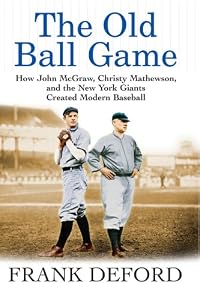
The Old Ball Game: How John McGraw, Christy Mathewson, and the New York Giants Created Modern Baseball
by Frank Deford
On This Page
Description
In The Old Ball Game, Frank Deford, NPR sports commentator and Sports Illustrated journalist retells the story of an unusual friendship between two towering figures in baseball history. At the turn of the twentieth century, Christy Mathewson was one of baseball's first superstars. Over six feet tall, clean cut, and college educated, he didn't pitch on the Sabbath and rarely spoke an ill word about anyone. He also had one of the most devastating arms in all of baseball. New York Giants show more manager John McGraw, by contrast, was ferocious. The pugnacious tough guy was already a star infielder who, with the Baltimore Orioles, helped develop a new, scrappy style of baseball, with plays like the hit-and-run, the Baltimore chop, and the squeeze play. When McGraw joined the Giants in 1902, the Giants were coming off their worst season ever. Yet within three years, Mathewson clinched New York City's first World Series for McGraw's team by throwing three straight shutouts in only six days, an incredible feat that is invariably called the greatest World Series performance ever. Because of their wonderful odd-couple association, baseball had its first superstar, the Giants ascended into legend, and baseball as a national pastime bloomed. show lessTags
Recommendations

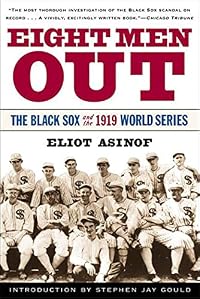

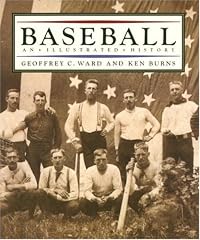
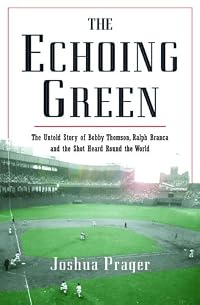

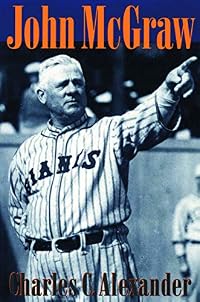








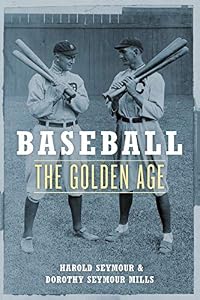

Member Recommendations

mrmapcase He was Mathewson's battery mate.
Member Reviews
Summary: A dual biography of John McGraw and Christy Mathewson of the New York Giants and their partnership in elevating the game.
Muggsy and Mattie. Those are the nicknames of the subjects of this dual biography of John McGraw and Christy Mathewson. Two men could not be more different. McGraw grew up in a hardscrabble Irish community and was a scrapper as ballplayer and manager. He fought with umpires, often getting ejected from games. Mathewson was the good looking, college-educated pitcher, the poster child for “muscular Christianity.” Surprisingly, they got along so well that they and their wives shared lodgings for many years. The secret, Frank Deford reveals, is that they loved the art and strategy of the game, and not just the show more physical athleticism.
In this work, veteran sportswriter Frank Deford combines a dual biography of the two men with a study of their unique partnership. Together, they elevated the New York Giants, and professional baseball, from mediocrity to greatness. They were a part of the transformation of baseball from poorly run teams of “ne’er do wells” to increasingly well-managed and more highly disciplined teams. This was accompanied by a move from ramshackle, small stadiums to modern concrete and steel ballparks able to accommodate the larger crowds the game attracted.
But it almost didn’t happen. Specifically, Mathewson signed for a mediocre Giants team under poor ownership. And McGraw loved his wife’s home of Baltimore, coming to manage the new Baltimore franchise in the American League. From 1900 to 1902, Matty showed only glimpses of future greatness, including a no-hitter in 1901. But McGraw was finding out he didn’t fit the manager mold of Ban Johnson, the organizer of the American League. So he was forced out in 1902. Then New York hired him, along with a pitching ace from Baltimore, “Iron Man” McGinnity.
By 1905, they won the pennant and agreed to play in the nascent World Series against the Philadelphia Athletics. While there had been a couple previous “inter-league series” this was the first to garner national attention. Deford takes us through game by game, chronicling the utter mastery of Mathewson over the A’s. He won three shutout games, with Iron Man winning the other in a five game series. McGraw’s Giants dominated.
However, they never repeated this success during Mathewson’s years despite a number of 30 game seasons for Mathewson and pennant wins. They missed out on one pennant due to a baserunning error at the end of a game that would have put the Giants in the Series. Although the winning run scored, the baserunner on first never tagged second base. The error was spotted, the ball thrown to second and the run nullified. While everyone on the Giants insisted he had tagged second, Mathewson stood out by saying he didn’t. Then in 1912, a dropped fly ball cost Matty a victory and the Giants a the Series.
McGraw was know as “The Little Napolean,” not only for his size but his tight control of how his team played. A mark of the confidence he had in Matty is that he was the only one permitted to call his own game, including positioning his fielders. He tried to keep his players sober by tight discipline, including some with drinking problems. Sadly, alcohol would contribute to his own ill health in later years. Players stopped listening to him. He finally hung it up in 1932, dying two years later.
However, tragedy came for Mathewson young. One brother died of tuberculosis, another took his own life. But Mattie kept winning over twenty games a year until 1914, after which his arm gave out. He won only a handful more, finishing with 373 wins. In 1916, McGraw helped Matty get a managing job in Cincinnati. But he wasn’t there long before going to war. He was never the same after, debilitated by gas exposure. His lungs weakened, he contracted tuberculosis. He returned to the Giants as a coach, recovered briefly in 1922, but worsened in 1924, dying the next year on October 7, at the end of the first game of the 1925 World Series.
Deford’s account focuses less on statistics than on the character and achievements of the two men. Together, they helped lift the Giants from mediocrity in 1902 to become a powerhouse team through the rest of the decade. They attracted record crowds to the re-built Polo Grounds. Mathewson defined the art of pitching with his consummate control. McGraw became the model of the tough guy manager, later exemplified by Earl Weaver, and Woody Hayes and Bobby Knight. All in all, it is a fascinating account–a good way to begin another season of baseball. show less
Muggsy and Mattie. Those are the nicknames of the subjects of this dual biography of John McGraw and Christy Mathewson. Two men could not be more different. McGraw grew up in a hardscrabble Irish community and was a scrapper as ballplayer and manager. He fought with umpires, often getting ejected from games. Mathewson was the good looking, college-educated pitcher, the poster child for “muscular Christianity.” Surprisingly, they got along so well that they and their wives shared lodgings for many years. The secret, Frank Deford reveals, is that they loved the art and strategy of the game, and not just the show more physical athleticism.
In this work, veteran sportswriter Frank Deford combines a dual biography of the two men with a study of their unique partnership. Together, they elevated the New York Giants, and professional baseball, from mediocrity to greatness. They were a part of the transformation of baseball from poorly run teams of “ne’er do wells” to increasingly well-managed and more highly disciplined teams. This was accompanied by a move from ramshackle, small stadiums to modern concrete and steel ballparks able to accommodate the larger crowds the game attracted.
But it almost didn’t happen. Specifically, Mathewson signed for a mediocre Giants team under poor ownership. And McGraw loved his wife’s home of Baltimore, coming to manage the new Baltimore franchise in the American League. From 1900 to 1902, Matty showed only glimpses of future greatness, including a no-hitter in 1901. But McGraw was finding out he didn’t fit the manager mold of Ban Johnson, the organizer of the American League. So he was forced out in 1902. Then New York hired him, along with a pitching ace from Baltimore, “Iron Man” McGinnity.
By 1905, they won the pennant and agreed to play in the nascent World Series against the Philadelphia Athletics. While there had been a couple previous “inter-league series” this was the first to garner national attention. Deford takes us through game by game, chronicling the utter mastery of Mathewson over the A’s. He won three shutout games, with Iron Man winning the other in a five game series. McGraw’s Giants dominated.
However, they never repeated this success during Mathewson’s years despite a number of 30 game seasons for Mathewson and pennant wins. They missed out on one pennant due to a baserunning error at the end of a game that would have put the Giants in the Series. Although the winning run scored, the baserunner on first never tagged second base. The error was spotted, the ball thrown to second and the run nullified. While everyone on the Giants insisted he had tagged second, Mathewson stood out by saying he didn’t. Then in 1912, a dropped fly ball cost Matty a victory and the Giants a the Series.
McGraw was know as “The Little Napolean,” not only for his size but his tight control of how his team played. A mark of the confidence he had in Matty is that he was the only one permitted to call his own game, including positioning his fielders. He tried to keep his players sober by tight discipline, including some with drinking problems. Sadly, alcohol would contribute to his own ill health in later years. Players stopped listening to him. He finally hung it up in 1932, dying two years later.
However, tragedy came for Mathewson young. One brother died of tuberculosis, another took his own life. But Mattie kept winning over twenty games a year until 1914, after which his arm gave out. He won only a handful more, finishing with 373 wins. In 1916, McGraw helped Matty get a managing job in Cincinnati. But he wasn’t there long before going to war. He was never the same after, debilitated by gas exposure. His lungs weakened, he contracted tuberculosis. He returned to the Giants as a coach, recovered briefly in 1922, but worsened in 1924, dying the next year on October 7, at the end of the first game of the 1925 World Series.
Deford’s account focuses less on statistics than on the character and achievements of the two men. Together, they helped lift the Giants from mediocrity in 1902 to become a powerhouse team through the rest of the decade. They attracted record crowds to the re-built Polo Grounds. Mathewson defined the art of pitching with his consummate control. McGraw became the model of the tough guy manager, later exemplified by Earl Weaver, and Woody Hayes and Bobby Knight. All in all, it is a fascinating account–a good way to begin another season of baseball. show less
When you hear Deford's commentary on NPR's Morning Edition (or see it on HBO's Real Sports), his love of sports - especially the history of sports - is evident in his grandfatherly voice. He clearly knows his sports (he's been a Sports Illustrated writer since the Sixties), but what really makes Deford's stand out from all the other sports opinionists is his storytelling ability. While he doesn't ignore player stats and team records, Deford realizes that in the end his readers don't want a history book, they just want a good story. And that's what Deford gives them in The Old Ball Game.
Game documents the rarely-mentioned pre-Ruthian era of baseball, before it became the Great American Past-time (and way before it stopped being the show more nation's favorite past-time). Although the two men at the center of the book are shown to be early innovators of the sport (one in the dugout, the other on the pitcher's mound), Deford keeps their stories on a personal level. You read about their accomplishments, but you also read about their lives off the field, their tight relationship with each other, and how they were treated by (and they treated) other players. The fact that their dedication to improving their team's chances resulted in professional baseball that actually looked professional and drew public attention (and respect) to their young sport, well, that just makes the story Deford's telling even more satisfying. A quick and fun read. show less
Game documents the rarely-mentioned pre-Ruthian era of baseball, before it became the Great American Past-time (and way before it stopped being the show more nation's favorite past-time). Although the two men at the center of the book are shown to be early innovators of the sport (one in the dugout, the other on the pitcher's mound), Deford keeps their stories on a personal level. You read about their accomplishments, but you also read about their lives off the field, their tight relationship with each other, and how they were treated by (and they treated) other players. The fact that their dedication to improving their team's chances resulted in professional baseball that actually looked professional and drew public attention (and respect) to their young sport, well, that just makes the story Deford's telling even more satisfying. A quick and fun read. show less
Deford tries a bit hard to cop the vibe of the early 1900's at some points, writing a bit too much in that style, but an overall solid effort.
Deford is a fine sportswriter who excels in telling good stories. But as a historian--well, he makes a fine sportswriter.
The subject matter of this book seemed so promising, however the writing was not. Some (very few) parts were interesting, but overall it was really like an extended magazine article that kept repeating itself. I was very disappointed.
Ratings
Members
- Recently Added By
Lists

Best Baseball Books
42 works; 19 members
Author Information

31+ Works 1,471 Members
Benjamin Franklin Deford III was born in Baltimore, Maryland on December 16, 1938. He graduated from Princeton University in 1962. He began his career at Sports Illustrated as a researcher. He wrote for Sports Illustrated for more than 30 years, appeared on HBO's Real Sports with Bryant Gumbel for 22 years, and gave 1,656 weekly commentaries for show more NPR's Morning Edition. He was a six-time Sportswriter of the Year, a National Magazine Award recipient, a member of the National Sportscasters and Sportswriters Hall of Fame, and the first sportswriter to be given a National Humanities Medal. He wrote both fiction and nonfiction books including two memoirs entitled Alex: The Life of a Child and Over Time: My Life as a Sportswriter. He died on May 28, 2017 at the age of 78. (Bowker Author Biography) show less
Common Knowledge
- Original publication date
- 2005-04
- People/Characters
- Christy Mathewson; John McGraw
Classifications
- Genres
- Sports and Leisure, Nonfiction, General Nonfiction, History
- DDC/MDS
- 796.357 — Arts & recreation Recreation, sports, and performing arts Sports Ball sports Ball and stick sports Baseball
- LCC
- GV875 .N42 .D44 — Geography, Anthropology and Recreation Recreation. Leisure Recreation. Leisure Sports Ball games: Baseball, football, golf, etc.
- BISAC
Statistics
- Members
- 229
- Popularity
- 141,716
- Reviews
- 5
- Rating
- (3.57)
- Languages
- English
- Media
- Paper, Audiobook, Ebook
- ISBNs
- 5
- ASINs
- 4