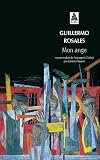
Boarding Home
by Guillermo Rosales
On This Page
Description
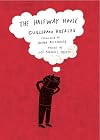
Never before available in English,The Halfway House is a trip to the darkest corners of the human condition. Humiliations, filth, stench, and physical abuse comprise the asphyxiating atmosphere of a halfway house for indigents in Miami where, in a shaken mental state, the writer William Figueras lives after his exile from Cuba. He claims to have gone crazy after the Cuban government judged his first novel "morose, pornographic, and also irreverent, because it dealt harshly with the Communist show more Party," and prohibited its publication. By the time he arrives in Miami twenty years later, he is a "toothless, skinny, frightened guy who had to be admitted to a psychiatric ward that very day" instead of the ready-for-success exile his relatives expected to welcome and receive among them. Placed in a halfway house, with its trapped bestial inhabitants and abusive overseers, he enters a hell. Romance appears in the form of Frances, a mentally fragile woman and an angel, with whom he tries to escape in this apocalyptic classic of Cubanliterature. "Behind the hardly one hundred pages,"Canarias Diario stated, "is the work of a tireless fabulist, a writer who delights in language, extracting verbs and adjectives which are powerful enough to stop the reader in his tracks." show lessTags
Recommendations












































Member Reviews
Nel mezzo del cammin di nostra vita… In the middle of my life’s journey, I came to myself in a dark wood, where the direct way was lost. That’s how Dante’s Inferno begins, and this is pretty much the starting point for Rosales’ hellish little novel about Cuban exile William Figueras. After his American relatives greet him at the airport, expecting a successful man of letters but finding a bitter and irrational husk gibbering insults, Figueras finds himself shunted to a succession of psychiatric wards and asylums, winding up at long last in the circle of hell realized by a converted Miami home packed to the gills with dazed and suffering souls, watched over with casual cruelty by the demons of this place – a sports fishing show more capitalist and his degenerate, abusive flunky. Abandon all hope, ye who enter here. Or as Figueras says, “The house said ‘boarding home’ on the outside, but I knew that it would be my tomb.” The book is completely unflinching in its depiction of these lower depths, and the hapless castaways that populate its cells and hallways, enfeebled by age, insane, crippled, or simply abandoned by the living, breathing world that exists all around them, and yet seems at an unbridgeable remove from their sordid, shambling existence. But the reek of urine or the tang and stench of other vile bodily frailties and exigencies are not the most disturbing thing. For many readers the book will cross a threshold when the narrator himself, a man of learning if questionable sanity, takes part in the cruel treatment of his fellow inmates. This happens in Dante also, when the narrator does terrible things to the damned like kicking at heads that emerge from the brimstone, but Dante enjoys a rock-hard certainty about the damned and deserving status of his victims, while for Rosales/Figueras, life seems to have more to do with chance than karma. There is hope here, too – the kind of hope that noir buffs such as me can spot a mile off – and a romance, of sorts. I shouldn’t say more, but I hope I’ve given enough of a window on the various debasements of this book that when I say the book is beautiful, it will resonate with the sort of reader who knows what that means, and drive away the rest. It is beautiful, not like a car crash, or like a ruin, or like cancer. It is beautiful like Dante. show less
Guillermo Rosales (1946-1993) was a Cuban novelist and journalist, who has been characterized as a "misfit", as he opposed the positions of both the Castro government and the Cuban exiles living in America, and because he suffered from mental illness throughout his adult life. He emigrated to the United States in 1979, where he was diagnosed as being schizophrenic. He lived much of the remainder of his life in a variety of halfway houses and mental hospitals, and ultimately committed suicide in Miami. He published four novels, but he destroyed all but this one, and El Juego de la Vbiola, which is currently being translated into English.
Like the author, the narrator of The Halfway House, William Figueras, is a Cuban writer who emigrates show more to Miami, and meets his expatriated relatives, who are disappointed to learn that the "future winner" they were expecting is, instead, a "crazy, nearly toothless, skinny, frightened guy who had to be admitted to a psychiatric ward that very day because he eyed everyone in the family with suspicion and, instead of hugging and kissing them, insulted them." After he spends six months in and out of psychiatric wards, his aunt drops him off at a halfway house that caters to Latinos, telling him that "nothing more can be done."
William very quickly learns that he has landed in Hell. His housemates are all demented, stuffing toilets with clothes and relieving themselves all over the house. The owner, Mr. Curbelo, steals their Social Security checks, and provides them with less amenities than the worst jail. Order is kept by several "employees", especially Arsenio, who steals from and beats the male residents, and rapes the female ones. Out of anger and frustration, William also begins to physically and sexually abuse his housemates, earning him the respect of Arsenio.
One day a young, innocent and disturbed woman, Frances, becomes a resident. William immediately takes to her, and the two create a plan to escape from the halfway house and build a life together. However, Mr. Curbelo and Arsenio have a plan for them.
This novella, although quite sad, was not morbidly depressing, as it is infused with warmth and humor, and the narrator does not descend into madness or despair despite his obvious pain and anguish. show less
Like the author, the narrator of The Halfway House, William Figueras, is a Cuban writer who emigrates show more to Miami, and meets his expatriated relatives, who are disappointed to learn that the "future winner" they were expecting is, instead, a "crazy, nearly toothless, skinny, frightened guy who had to be admitted to a psychiatric ward that very day because he eyed everyone in the family with suspicion and, instead of hugging and kissing them, insulted them." After he spends six months in and out of psychiatric wards, his aunt drops him off at a halfway house that caters to Latinos, telling him that "nothing more can be done."
William very quickly learns that he has landed in Hell. His housemates are all demented, stuffing toilets with clothes and relieving themselves all over the house. The owner, Mr. Curbelo, steals their Social Security checks, and provides them with less amenities than the worst jail. Order is kept by several "employees", especially Arsenio, who steals from and beats the male residents, and rapes the female ones. Out of anger and frustration, William also begins to physically and sexually abuse his housemates, earning him the respect of Arsenio.
One day a young, innocent and disturbed woman, Frances, becomes a resident. William immediately takes to her, and the two create a plan to escape from the halfway house and build a life together. However, Mr. Curbelo and Arsenio have a plan for them.
This novella, although quite sad, was not morbidly depressing, as it is infused with warmth and humor, and the narrator does not descend into madness or despair despite his obvious pain and anguish. show less
The Halfway House by Guillermo Rosales is a story about a schizophrenic forced to live with other “nut jobs” in a Miami home ruled by a boorish ex con and his boss, an indifferent and cruel opportunist who filches money off of the tenants in order to satisfy his sportfishing needs. And although the book is small in size, it is heavy with characterization and description. Everywhere vivid scenes come alive. Sounds, smells, tastes and sights – mental pictures of the halfway house that lend to its depressing environment. I’ve not read prose so honest and vivid in a long while, no wonder I was drawn to the story. Equally impressive was Rosales’ use of the first person point of view. Set at just the right temperature to keep the show more story going. Not too much mental insight – a fault I see in other first person narratives these days. How satisfying it was to be able to stand in the shoes of the narrator without being bombarded by the narrator’s predilictions. Rosales gives the protagonist, William Figueroa, just enough “life” for us to want to follow him throughout his adventures.
I’ll be honest: the ending came too swift for me. I wanted more, of course. More development in the final scenes. But I have to remember what I had read about Rosales. How he destroyed most of his works before committing suicide. And I have to content myself with the fact that The Halfway House is one of a miniscule of Rosales’ surviving works. And what an impressive work it is. show less
I’ll be honest: the ending came too swift for me. I wanted more, of course. More development in the final scenes. But I have to remember what I had read about Rosales. How he destroyed most of his works before committing suicide. And I have to content myself with the fact that The Halfway House is one of a miniscule of Rosales’ surviving works. And what an impressive work it is. show less
Guillermo Rosales, a Cuban-American writer who suffered from mental illness, committed suicide in 1993 after destroying most of his work. The Halfway House survived and is the first of Rosales’s novels to be translated into English.
In this autobiographical novel (a novella, really), Rosales’s protagonist, William Figueras, flees to Miami from Cuba. Instead of the “future winner” Figueras’s relatives expect to greet at the airport, they discover “a crazy, nearly toothless, skinny, frightened guy who had to be admitted to a psychiatric ward that very day.” After a couple unsuccessful moves, Figueras’s relatives eventually abandon him to a decrepit halfway house. The Halfway House, comprising Figueras’s first-person show more narrative of his life in the halfway house, begins with this characteristically dark and pointed line: “The house said ‘boarding home’ on the outside, but I knew that it would be my tomb.”
This compact novel (under 150 pages) is structured around the routines of the halfway house: its inedible meals, the residents’ unsanitary habits, the nightly dramas of sexual abuse, and Figueras’s rambling walks through the city. The Halfway House’s elegant structure contrasts markedly with its squalid subject. In another stark contrast, Figueras exhibits very few symptoms of mental illness and, thus, finds himself in a position of relative power. As if from the perspective of an objective observer, Figueras’s narrates his own gradual transition from victim to victimizer and then back again. Although he exerts some control over his status as a victim or a victimizer, his attempts to break out of the cycle altogether fail.
Anna Kushner’s masterful translation retains the bite of Rosales’s prose and also its subtle humor and playfulness. The Halfway House reveals the horror of a halfway house run by unscrupulous men and, at the same time, the beauty of the residents’ undeniable humanity.
This review also appears on my blog Literary License. show less
In this autobiographical novel (a novella, really), Rosales’s protagonist, William Figueras, flees to Miami from Cuba. Instead of the “future winner” Figueras’s relatives expect to greet at the airport, they discover “a crazy, nearly toothless, skinny, frightened guy who had to be admitted to a psychiatric ward that very day.” After a couple unsuccessful moves, Figueras’s relatives eventually abandon him to a decrepit halfway house. The Halfway House, comprising Figueras’s first-person show more narrative of his life in the halfway house, begins with this characteristically dark and pointed line: “The house said ‘boarding home’ on the outside, but I knew that it would be my tomb.”
This compact novel (under 150 pages) is structured around the routines of the halfway house: its inedible meals, the residents’ unsanitary habits, the nightly dramas of sexual abuse, and Figueras’s rambling walks through the city. The Halfway House’s elegant structure contrasts markedly with its squalid subject. In another stark contrast, Figueras exhibits very few symptoms of mental illness and, thus, finds himself in a position of relative power. As if from the perspective of an objective observer, Figueras’s narrates his own gradual transition from victim to victimizer and then back again. Although he exerts some control over his status as a victim or a victimizer, his attempts to break out of the cycle altogether fail.
Anna Kushner’s masterful translation retains the bite of Rosales’s prose and also its subtle humor and playfulness. The Halfway House reveals the horror of a halfway house run by unscrupulous men and, at the same time, the beauty of the residents’ undeniable humanity.
This review also appears on my blog Literary License. show less
A rather disturbing little book that takes place in a halfway house for "nuts" in Miami. Whether they are mentally challenged, old and rejected, or need medication, the residents have been housed here. The owner does not follow state rules and pockets his extra profits, food is poor, sanitation poor, residents poor.
But hope--just hope--seems able to save the problems of two people.
Until they manage their escape, and the owner has them picked up for taking their own SS checks. And then her mother takes her home to NJ--why had she put her in this home in the first place?
But hope--just hope--seems able to save the problems of two people.
Op wishlist ivm recensie de Volkskrant 10/3/18
Members
- Recently Added By
Author Information
4 Works 159 Members
Awards and Honors
Series
Belongs to Publisher Series
Common Knowledge
- Canonical title
- Boarding Home;
- Original title
- Casa de los Naufragos
- Alternate titles
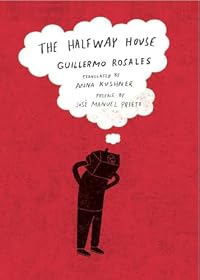
- The Halfway House
- Important places*
- Cuba; Miami, Floride, Etats-Unis
*Some information comes from Common Knowledge in other languages. Click "Edit" for more information.
Classifications
- Genres
- Fiction and Literature, General Fiction
- DDC/MDS
- 863.64 — Literature & rhetoric Spanish, Portuguese, Galician literatures Spanish fiction 20th Century 1945-2000
- LCC
- PQ7390 .R665 .C3713 — Language and Literature French, Italian, Spanish and Portuguese literatures Spanish literature Provincial, local, colonial, etc. Spanish America
- BISAC
Statistics
- Members
- 145
- Popularity
- 224,674
- Reviews
- 9
- Rating
- (3.78)
- Languages
- 9 — Czech, Dutch, English, French, German, Italian, Portuguese, Spanish, Turkish
- Media
- Paper, Ebook
- ISBNs
- 14
- ASINs
- 1