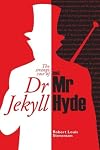
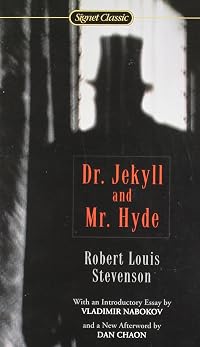
Dr. Jekyll and Mr. Hyde with Other Fables
by Robert Louis Stevenson
On This Page
Description
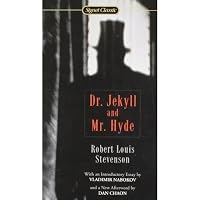
The Strange Case of Dr. Jekyll and Mr. Hyde depicts the gripping struggle of two opposing personalities, one essentially good, the other evil, for the soul of one man. The story reflects a tingling suspense, and an intelligent and sensitive portrayal of man's dual nature.Tags
Recommendations





















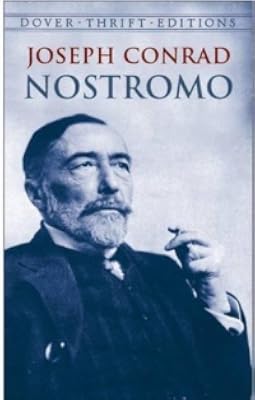
Member Reviews
My memory of reading this as a teenager focuses almost entirely on the one shockingly violent scene in this novella, the one where Edward Hyde viciously attacks a prominent Parliamentarian in a London street. In my immature haste to get to the action I had clearly bypassed all the diversions -- the discussions, the dialogues and the descriptions -- as irrelevant waffle. For years I laboured under the impression that Hyde continued to roam the back alleys of the capital after story's end, causing mayhem and fear. I long wondered if I'd confused elements of this tale with Oscar Wilde's The Picture of Dorian Gray (which was in fact published five years after this, in 1890) or a title by Arthur Machen concerning flâneurs in London (such as show more The Hill of Dreams, 1907).
In truth, Jekyll and Hyde plays on the meme of a dismal, foggy London in which dark deeds occur in side streets, a meme which every fin de siècle and early 20th-century novel exhibits, from the Sherlock Holmes stories to Joseph Conrad's The Secret Agent and beyond. It is the epitome of Ruskin's 'pathetic fallacy', the notion that nature echoes the human spirit when it is actually the reverse: London's habitual murky darkness is merely a metaphor for human depravity, if anything the cause not the effect.
My younger self then was not in sympathy with how atmosphere was created and developed in a novel; but I hoped the passage of years would allow me now to enjoy the slow build-up to a dénouement that only a reader reared in complete isolation could be in ignorance of.
That dénouement we all know now, is that Jekyll and Hyde are one and the same. Or rather, they are one but not entirely the same: Jekyll has, by dint of allowing free rein to his baser desires, has unwittingly allowed them to not only rise to the surface but to effectively take over, save for one small chink that will finally bring him release. Hyde is the skin that Jekyll uses to, as it were, hide in plain sight; Hyde is Jekyll without a shred of remorse for his behaviour which, though it is only hinted at, seems to encompass sex and violence as well as, ultimately, murder.
Jekyll & Hyde was classed as a 'fable' by Stevenson himself. In the 1896 posthumous edition the publishers included not only his shorter literary fables but a preface which described this novella as one of his "semi-supernatural stories ... in the composition of which there was combined with the dream element ... the element of moral allegory or apologue." In other words, Jekyll & Hyde was a fable without an explicit moral; readers are expected to draw the moral out for themselves. This lesson seems to be that we all have the propensity to do evil things though most of us resist the temptation; but those who, like Jekyll, attempt to absolve themselves of responsibility for ignoble and wicked actions must of necessity face the consequences of those actions.
Stevenson reportedly -- as with Mary Shelley and Frankenstein -- was inspired by a vivid waking dream to develop his story. The tale is presented as a series of narratives, first by an omniscient storyteller who introduces Mr Gabriel Utterson the lawyer and his cousin Mr Richard Enfield, who muse on a curious incident involving Mr Edward Hyde, a child and a door. Hyde has "something wrong with his appearance; something displeasing, something downright detestable." Utterson then discusses with Dr Lanyon his concerns about their mutual friend Dr Henry Jekyll and the latter's relationship to Mr Edward Hyde.
Those concerns are not allayed by Hyde's reported frenzied attack on Sir Davers Carew. After the murder everything seems to go quiet, Hyde disappears from public view and Dr Jekyll appears to regain a composure he had lost. But Utterson has not lost sight of his suspicions regarding Hyde's mysterious hold on Jekyll, especially after Dr Lanyon's unexpected decline and demise. When Jekyll becomes reclusive, Utterson gains the support of Jekyll's butler and breaks into the rooms where Jekyll has locked himself up; here they find the body of Hyde and a final note in the hand of Jekyll, explaining everything.
The mystery of Jekyll and Hyde is no mystery to us now, but the first readers of Stevenson's fable must have been very shocked as they grew to realise the truth of the matter, as confirmed in the final revelation. The story must have appealed to respectable Victorian society's worst fears: the threat from the worst the lower classes (as Hyde appears to be part of) could inflict on them; the dark, almost magical, arts that the renegade scientist might be attracted to; and the latent evil, perhaps a trace of original sin, that might lurk within any or all of them, ready to emerge unless severely repressed.
Nowadays we might not so readily conflate evil with a conventionally unattractive appearance as exhibited by Jekyll's altered state -- even traditional tales likes Cupid and Psyche and other tales of the Beauty and the Beast type warn us against such leaps to judgement -- but authors then felt no such constraints. Classic fiction has often favoured simplistic correlations for the sake of narrative.
In psychological terms Jekyll's alter ego could also be the shadow, an aspect of the personality that writers have explored before and since the publication of Stevenson's fable. It becomes evident that The Strange Case of Dr Jekyll and Mr Hyde (the novella was first published in 1885 without the definite article) is not about a split personality but about Jekyll's deliberate liberation of his baser instincts, a liberation that leads to degradation, deaths and Jekyll's own suicide when he realises he has become the shadow he sought to split off from himself.
In one sense Jekyll's story is the precursor of J M Barrie's Peter Pan, "the boy who wouldn't grow up", and who had a shadow that could be separated, even if only temporarily, from Pan. Jekyll, for all his learned sophistication, childishly wants to indulge his primitive instincts by letting his shadow self take over; by consuming the concoctions he has himself prepared he hopes to release his shadow self, and even gives it a new name. Unlike Peter Pan, though, here things don't end so well.
https://wp.me/s2oNj1-jekyll show less
In truth, Jekyll and Hyde plays on the meme of a dismal, foggy London in which dark deeds occur in side streets, a meme which every fin de siècle and early 20th-century novel exhibits, from the Sherlock Holmes stories to Joseph Conrad's The Secret Agent and beyond. It is the epitome of Ruskin's 'pathetic fallacy', the notion that nature echoes the human spirit when it is actually the reverse: London's habitual murky darkness is merely a metaphor for human depravity, if anything the cause not the effect.
My younger self then was not in sympathy with how atmosphere was created and developed in a novel; but I hoped the passage of years would allow me now to enjoy the slow build-up to a dénouement that only a reader reared in complete isolation could be in ignorance of.
That dénouement we all know now, is that Jekyll and Hyde are one and the same. Or rather, they are one but not entirely the same: Jekyll has, by dint of allowing free rein to his baser desires, has unwittingly allowed them to not only rise to the surface but to effectively take over, save for one small chink that will finally bring him release. Hyde is the skin that Jekyll uses to, as it were, hide in plain sight; Hyde is Jekyll without a shred of remorse for his behaviour which, though it is only hinted at, seems to encompass sex and violence as well as, ultimately, murder.
Jekyll & Hyde was classed as a 'fable' by Stevenson himself. In the 1896 posthumous edition the publishers included not only his shorter literary fables but a preface which described this novella as one of his "semi-supernatural stories ... in the composition of which there was combined with the dream element ... the element of moral allegory or apologue." In other words, Jekyll & Hyde was a fable without an explicit moral; readers are expected to draw the moral out for themselves. This lesson seems to be that we all have the propensity to do evil things though most of us resist the temptation; but those who, like Jekyll, attempt to absolve themselves of responsibility for ignoble and wicked actions must of necessity face the consequences of those actions.
Stevenson reportedly -- as with Mary Shelley and Frankenstein -- was inspired by a vivid waking dream to develop his story. The tale is presented as a series of narratives, first by an omniscient storyteller who introduces Mr Gabriel Utterson the lawyer and his cousin Mr Richard Enfield, who muse on a curious incident involving Mr Edward Hyde, a child and a door. Hyde has "something wrong with his appearance; something displeasing, something downright detestable." Utterson then discusses with Dr Lanyon his concerns about their mutual friend Dr Henry Jekyll and the latter's relationship to Mr Edward Hyde.
Those concerns are not allayed by Hyde's reported frenzied attack on Sir Davers Carew. After the murder everything seems to go quiet, Hyde disappears from public view and Dr Jekyll appears to regain a composure he had lost. But Utterson has not lost sight of his suspicions regarding Hyde's mysterious hold on Jekyll, especially after Dr Lanyon's unexpected decline and demise. When Jekyll becomes reclusive, Utterson gains the support of Jekyll's butler and breaks into the rooms where Jekyll has locked himself up; here they find the body of Hyde and a final note in the hand of Jekyll, explaining everything.
The mystery of Jekyll and Hyde is no mystery to us now, but the first readers of Stevenson's fable must have been very shocked as they grew to realise the truth of the matter, as confirmed in the final revelation. The story must have appealed to respectable Victorian society's worst fears: the threat from the worst the lower classes (as Hyde appears to be part of) could inflict on them; the dark, almost magical, arts that the renegade scientist might be attracted to; and the latent evil, perhaps a trace of original sin, that might lurk within any or all of them, ready to emerge unless severely repressed.
Nowadays we might not so readily conflate evil with a conventionally unattractive appearance as exhibited by Jekyll's altered state -- even traditional tales likes Cupid and Psyche and other tales of the Beauty and the Beast type warn us against such leaps to judgement -- but authors then felt no such constraints. Classic fiction has often favoured simplistic correlations for the sake of narrative.
In psychological terms Jekyll's alter ego could also be the shadow, an aspect of the personality that writers have explored before and since the publication of Stevenson's fable. It becomes evident that The Strange Case of Dr Jekyll and Mr Hyde (the novella was first published in 1885 without the definite article) is not about a split personality but about Jekyll's deliberate liberation of his baser instincts, a liberation that leads to degradation, deaths and Jekyll's own suicide when he realises he has become the shadow he sought to split off from himself.
In one sense Jekyll's story is the precursor of J M Barrie's Peter Pan, "the boy who wouldn't grow up", and who had a shadow that could be separated, even if only temporarily, from Pan. Jekyll, for all his learned sophistication, childishly wants to indulge his primitive instincts by letting his shadow self take over; by consuming the concoctions he has himself prepared he hopes to release his shadow self, and even gives it a new name. Unlike Peter Pan, though, here things don't end so well.
https://wp.me/s2oNj1-jekyll show less
Ratings
Members
- Recently Added By
Author Information

2,823+ Works 139,815 Members
Novelist, poet, and essayist Robert Louis Stevenson was born in Edinburgh, Scotland. A sickly child, Stevenson was an invalid for part of his childhood and remained in ill health throughout his life. He began studying engineering at Edinburgh University but soon switched to law. His true inclination, however, was for writing. For several years show more after completing his studies, Stevenson traveled on the Continent, gathering ideas for his writing. His Inland Voyage (1878) and Travels with a Donkey (1878) describe some of his experiences there. A variety of essays and short stories followed, most of which were published in magazines. It was with the publication of Treasure Island in 1883, however, that Stevenson achieved wide recognition and fame. This was followed by his most successful adventure story, Kidnapped, which appeared in 1886. With stories such as Treasure Island and Kidnapped, Stevenson revived Daniel Defoe's novel of romantic adventure, adding to it psychological analysis. While these stories and others, such as David Balfour and The Master of Ballantrae (1889), are stories of adventure, they are at the same time fine studies of character. The Master of Ballantrae, in particular, is a study of evil character, and this study is taken even further in The Strange Case of Dr. Jekyll and Mr. Hyde (1886). In 1887 Stevenson and his wife, Fanny, went to the United States, first to the health spas of Saranac Lake, New York, and then on to the West Coast. From there they set out for the South Seas in 1889. Except for one trip to Sidney, Australia, Stevenson spent the remainder of his life on the island of Samoa with his devoted wife and stepson. While there he wrote The Wrecker (1892), Island Nights Entertainments (1893), and Catriona (1893), a sequel to Kidnapped. He also worked on St. Ives and The Weir of Hermiston, which many consider to be his masterpiece. He died suddenly of apoplexy, leaving both of these works unfinished. Both were published posthumously; St. Ives was completed by Sir Arthur Quiller-Couch, and The Weir of Hermiston was published unfinished. Stevenson was buried on Samoa, an island he had come to love very much. Although Stevenson's novels are perhaps more accomplished, his short stories are also vivid and memorable. All show his power of invention, his command of the macabre and the eerie, and the psychological depth of his characterization. (Bowker Author Biography) show less
Common Knowledge
- Canonical title
- Dr. Jekyll and Mr. Hyde with Other Fables
Classifications
Statistics
- Members
- 27
- Popularity
- 1,012,656
- Reviews
- 1
- Rating
- (4.50)
- Languages
- English
- Media
- Paper, Ebook
- ISBNs
- 2
- ASINs
- 2