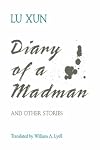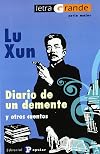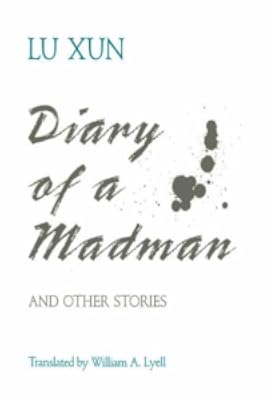
Diary of a Madman and Other Stories
by Lu Xun
On This Page
Description
"Here at last is an accurate and enjoyable rendering of Lu Xun's fiction in an American English idiom that masterfully captures the sardonic wit, melancholy pathos, and ironic vision of China's first truly modern writer." -Michael S. Duke, University of British ColumbiaThe inventor of the modern Chinese short story, Lu Xun is universally regarded as twentieth century China’s greatest writer. This long awaited volume presents new translations of all Lu Xun’s stories, including his first, show more “Remembrances of the Past,” written in classical Chinese. These new renderings faithfully convey both the brilliant style and the pungent expression for which Lu Xun is famous.Also included are a substantial introduction by the translator and sufficient annotation to make the stories fully accessible, enabling readers approaching Lu Xun for the first time to appreciate why these stories occupy a permanent place not only in Chinese literature but in world literature as well. show lessTags
Recommendations









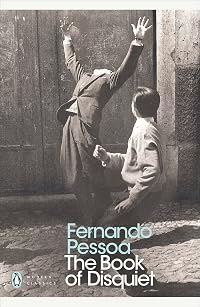
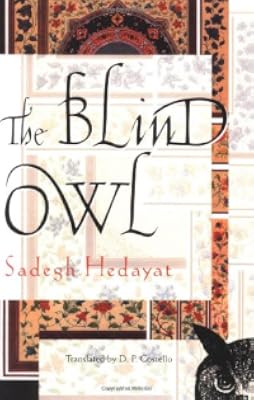
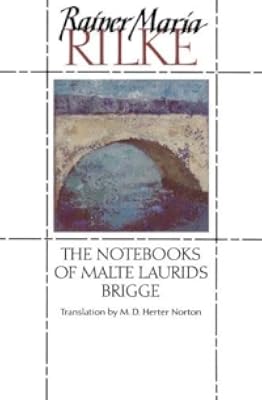
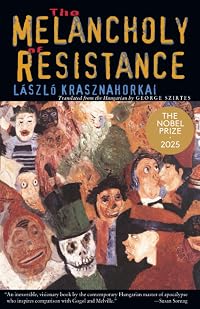


Member Reviews
I listened to the title story, rather than read the book (which might have made a difference). The madness of the protagonist was delineated very quickly and like ripples from a stone dropped into a pool, it rapidly and obsessively spread out with more and more detail. But the stone that sunk to the depths? The original causation factor? That was missing which left the book frustratingly without depth. Perhaps this is what madness looks like, it certainly isn't madness explained.
The story begins with the narrator's visit to a pair of brothers who were close friends of his during his school years. The older brother informs him that the younger one suffered from a mental illness but got better and took a job in another city. During the time of his illness the brother kept a diary that the narrator is allowed to read. This is the "madman's diary" . The diary tells of the protagonist's growing obsession with the cannibalism which he believes is routinely practiced by those around him. He is convinced that sooner or later he will be eaten. As his paranoia increases, and with it his sense that cannibalism is widespread and prevalent even within his family, he despairs of saving himself.
Very short story. Man studies Confucian classics, thinks people are going to eat him. There's a bit of a political metaphor.
�EÂEÂEÂEÂEÂEÂE©ÂEÂÂE! (Save the children!)
�EÂEÂEÂEÂEÂEÂE©ÂEÂÂE! (Save the children!)
Comprising Lu Xun’s two published collections of short stories, Cheering From the Sidelines, (1922) and Wondering Where to Turn (1925), these translations by William Lyell reveal Lu Xun as one of the supreme masters of the short story to rank alongside Chekhov and Maupassant, and the greatest writer of modern China, at once that country’s Dickens and Joyce.
Read the full review on The Lectern
Read the full review on The Lectern
Ratings
Members
- Recently Added By
Lists

Best Fiction Set in China
43 works; 27 members

The 100 Best Books of All Time by Norwegian Book Club (World Library)
104 works; 23 members

In and About the 1920s
181 works; 31 members

Hidden Classics
73 works; 15 members

Canon de la narrativa universal del siglo XX
254 works; 6 members

Canon de la narrativa universal del s. XX (cicutadry)
499 works; 3 members
Author Information

298+ Works 2,461 Members
A writer, essayist, translator, poet, and literary theorist and critic, Lu Hsun was born in the Chekiang Province of an educated family whose fortunes were in decline. He went to Japan to study Western medicine, but he dropped out of Sendai Medical College in 1906 after seeing news slides of Japanese soldiers decapitating Chinese in Manchuria. He show more made a decision to cure the "souls" of his countrymen rather than their bodies and chose literature as his medium. Lu Hsun returned to China in 1909 and watched the progress of the 1911 revolution with dismay. His spirits were raised somewhat in 1917 when the magazine New Youth raised the banner of literary revolution. He joined the ranks of the new writers with his short story "Diary of a Madman." Several more stories soon followed, the most famous of which was "The True Story of Ah Q" in the early 1920's. In 1926, after one of many periodic bouts of depression, Lu Hsun traveled for a while in the south and then settled in Shanghai, where he was greeted as a doyen on the literary scene. However, although many young writers wanted to become his disciples, he had an ambivalent attitude toward them and often became bitter or angry when he disagreed with their theories. The League of Left-Wing Writers was founded in 1930 and promptly took him as their leader. But from the beginning, relations were quite strained, and, by the time he died in 1936, he was completely alienated from these men who would later sing his praises. The extent of Lu Hsun's work and his high standards laid the foundation for modern Chinese literature, and he is still considered to be China's greatest twentieth-century writer in the People's Republic. His stories are satiric, unflinchingly realistic, disturbing, and brilliantly crafted in tone and style. In addition to this rich legacy, he also translated a number of European works of literature and theoretical studies on art and literature into Chinese, and he helped to introduce modern art to China. (Bowker Author Biography) show less
Some Editions
Awards and Honors
Series
Belongs to Publisher Series
Mirmanda (45)
Common Knowledge
- Canonical title
- Diary of a Madman and Other Stories
- Alternate titles
- A Madman's Diary, and Other Stories
- Original publication date
- 1918
Classifications
- Genres
- Fiction and Literature, General Fiction
- DDC/MDS
- 895.1 — Literature & rhetoric Literatures of other languages Literatures of East and Southeast Asia Chinese
- LCC
- PL2754 .S5 .A25 — Language and Literature Languages and literatures of Eastern Asia, Africa, Oceania Languages of Eastern Asia, Africa, Oceania Chinese language and literature Chinese literature Individual authors and works
- BISAC
Statistics
- Members
- 355
- Popularity
- 88,772
- Reviews
- 4
- Rating
- (3.91)
- Languages
- 9 — Catalan, Chinese, English, French, Indonesian, Norwegian (Bokmål), Portuguese, Russian, Spanish
- Media
- Paper, Ebook
- ISBNs
- 10
- ASINs
- 3