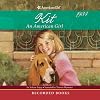
Kit: An American Girl, 1934
by Valerie Tripp
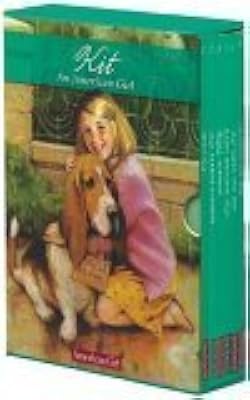
American Girls: Kit (Collections and Selections — Boxed Set)
On This Page
Description
It is 1934, and the Great Depression has found the Kittredges. First, Kit's father loses his job, then the family is forced to take in boarders to make ends meet.Tags
Recommendations





Member Reviews
The collection of stories about American Girl Margaret Mildred 'Kit' Kittredge is the only one in the series that my local library has in audio. As I write this review, it's April, 2025, and current events reminded me of Kit's life in 1934, the Great Depression. This is the fourth time I've checked this book out and it is as compelling as when I first listened to it in April, 2010.
Kit's life has been a comfortable one, even during the early years of the Great Depression. Her father owns a car dealership in Cincinnati, Ohio. She lives with her parents and her older brother, Charlie, in a nice house. Kit loves to type up a daily newspaper about home happenings to give to her father after work. All of that changes in 1934. Her father, who show more has been paying his employees from his savings, has had to close his dealership. Charlie will not be going off to college after all. Margaret Kittredge, Kit's mother, goes to her rich uncle Hendrick to help, but he refuses. He wants the Kittredge family to move in with him and his spoiled Scottish terrier, Inky.
Instead, Mrs. Kittredge decides they should turn their home into a boarding house. They're already housing her friend, Mrs. Howard, and her son, Sterling, who is Kit's age. Mr. Howard has gone to Chicago to look for work. Even though Kit dislikes the pink and frilly girls' dream that her mother turned her bedroom into a few months earlier, she's not happy about giving it up to the Howards. Then again, Kit is able to turn the attic into a bedroom that suits her tastes.
Short and spindly Sterling Howard seems hopeless to Kit and her best friend, Ruthie, but he's not really the fragile creature his mother imagines he is. Sterling has spirit and as much talent for drawing as Kit has for writing. It's not long before they're collaborating on the newsletter for the boarding house.
Even the boarders' rent isn't enough to keep the Kittredges afloat. Kit manages to earn the $2.40 needed to pay the electric bill by doing errands for cantankerous Uncle Hendrick. The old skinflint isn't feeling well and Mrs. Kittredge is too busy managing the boarding house to cater to his whims.
Kit's pride takes a beating from her family's reduced circumstances, even leading to a nasty quarrel with Ruthie, whose father still has a job. She's sorry afterward, but it takes a while for the quarrel to be mended.
The family would have lost their home if Mr. Kittredge's adoptive mother, 'Aunt Millie' hadn't saved the day by giving them her life savings. Aunt Millie also comes to visit from Kentucky. Her country ways are full of wisdom about getting by in hard times. Kit, Ruthie, and Sterling create 'Aunt Millie's Waste Not Want Not Almanac' from the things they're taught. The tips are quite interesting. (If the tip about making sheets that are worn out in the middle useful again seems as if it wouldn't work with bottom sheets, 'fitted sheets,' as they're called, weren't invented until 1959.) I'm 70. When I was young I knew an old woman whose mother made her dresses from flour sacks. By the way, 'bloomers' is an old-fashioned word for underpants.
Kit and Sterling's adventures visiting a hobo camp would have been harmless had Kit listened to their new hobo friend, Will, instead of a hobo jerk his age. Kit learns about hoboes and the hardships they face, including what can happen if they hop a freight train (take a free ride in a boxcar). That walk on the bridge was scary.
It's February when nasty Uncle Hendrick has a fall and breaks his wrist and ankle. Instead of hiring a nurse, he insists that he and Inky stay with the Kittredges. (We are not told if the old miser actually paid their going rate for the room he uses.) Uncle Hendrick enjoys ordering Kit around. Because it was his right wrist that he broke, he dictates his letters to the newspaper editor to Kit and makes her deliver them. Kit keeps her mouth shut when he spouts drivel about President Roosevelt and what he's doing for the country even though Uncle Hendrick knows how much Charlie's six months working for the Civilian Conservation Corps helped the Kittredges earlier and that Kit's father owes his new part-time job to the Civil Works Administration.
Kit gets a new coat that was made out of one of her father's old coats. She and her friends take her outgrown coat to the local soup kitchen to give to one of the homeless children. They are appalled by the condition of the clothing and shoes those children are wearing. This leads to an argument between Kit and ignorant Uncle Hendrick when he dictates a letter about not using a closed-down hospital to house the homeless. Kit writes a letter of her own and uses all the film in the old camera her brother gave her to photograph the children at the soup kitchen (with their and their parents' permission, of course). I very much liked the result of that letter and its photos.
As is usual with the American Girls series, we're given information about what life was like during the Great Depression at the end of each story. I would like to point out that doctors who have written more recent articles on the illness that paralyzed Franklin Delano Roosevelt's legs think it was probably Guillain-Barré syndrome rather than poliomyelitis, better known as 'polio'. (The earliest one I found at our National Library of Medicine's PubMed is 'What was the cause of Franklin Delano Roosevelt's paralytic illness?' by Armond S. Goldman, et al. in the November 2003 'Journal of Medical Biography', 11(4), pages 232-240.)
I definitely recommend this book. show less
Kit's life has been a comfortable one, even during the early years of the Great Depression. Her father owns a car dealership in Cincinnati, Ohio. She lives with her parents and her older brother, Charlie, in a nice house. Kit loves to type up a daily newspaper about home happenings to give to her father after work. All of that changes in 1934. Her father, who show more has been paying his employees from his savings, has had to close his dealership. Charlie will not be going off to college after all. Margaret Kittredge, Kit's mother, goes to her rich uncle Hendrick to help, but he refuses. He wants the Kittredge family to move in with him and his spoiled Scottish terrier, Inky.
Instead, Mrs. Kittredge decides they should turn their home into a boarding house. They're already housing her friend, Mrs. Howard, and her son, Sterling, who is Kit's age. Mr. Howard has gone to Chicago to look for work. Even though Kit dislikes the pink and frilly girls' dream that her mother turned her bedroom into a few months earlier, she's not happy about giving it up to the Howards. Then again, Kit is able to turn the attic into a bedroom that suits her tastes.
Short and spindly Sterling Howard seems hopeless to Kit and her best friend, Ruthie, but he's not really the fragile creature his mother imagines he is. Sterling has spirit and as much talent for drawing as Kit has for writing. It's not long before they're collaborating on the newsletter for the boarding house.
Even the boarders' rent isn't enough to keep the Kittredges afloat. Kit manages to earn the $2.40 needed to pay the electric bill by doing errands for cantankerous Uncle Hendrick. The old skinflint isn't feeling well and Mrs. Kittredge is too busy managing the boarding house to cater to his whims.
Kit's pride takes a beating from her family's reduced circumstances, even leading to a nasty quarrel with Ruthie, whose father still has a job. She's sorry afterward, but it takes a while for the quarrel to be mended.
The family would have lost their home if Mr. Kittredge's adoptive mother, 'Aunt Millie' hadn't saved the day by giving them her life savings. Aunt Millie also comes to visit from Kentucky. Her country ways are full of wisdom about getting by in hard times. Kit, Ruthie, and Sterling create 'Aunt Millie's Waste Not Want Not Almanac' from the things they're taught. The tips are quite interesting. (If the tip about making sheets that are worn out in the middle useful again seems as if it wouldn't work with bottom sheets, 'fitted sheets,' as they're called, weren't invented until 1959.) I'm 70. When I was young I knew an old woman whose mother made her dresses from flour sacks. By the way, 'bloomers' is an old-fashioned word for underpants.
Kit and Sterling's adventures visiting a hobo camp would have been harmless had Kit listened to their new hobo friend, Will, instead of a hobo jerk his age. Kit learns about hoboes and the hardships they face, including what can happen if they hop a freight train (take a free ride in a boxcar). That walk on the bridge was scary.
It's February when nasty Uncle Hendrick has a fall and breaks his wrist and ankle. Instead of hiring a nurse, he insists that he and Inky stay with the Kittredges. (We are not told if the old miser actually paid their going rate for the room he uses.) Uncle Hendrick enjoys ordering Kit around. Because it was his right wrist that he broke, he dictates his letters to the newspaper editor to Kit and makes her deliver them. Kit keeps her mouth shut when he spouts drivel about President Roosevelt and what he's doing for the country even though Uncle Hendrick knows how much Charlie's six months working for the Civilian Conservation Corps helped the Kittredges earlier and that Kit's father owes his new part-time job to the Civil Works Administration.
Kit gets a new coat that was made out of one of her father's old coats. She and her friends take her outgrown coat to the local soup kitchen to give to one of the homeless children. They are appalled by the condition of the clothing and shoes those children are wearing. This leads to an argument between Kit and ignorant Uncle Hendrick when he dictates a letter about not using a closed-down hospital to house the homeless. Kit writes a letter of her own and uses all the film in the old camera her brother gave her to photograph the children at the soup kitchen (with their and their parents' permission, of course). I very much liked the result of that letter and its photos.
As is usual with the American Girls series, we're given information about what life was like during the Great Depression at the end of each story. I would like to point out that doctors who have written more recent articles on the illness that paralyzed Franklin Delano Roosevelt's legs think it was probably Guillain-Barré syndrome rather than poliomyelitis, better known as 'polio'. (The earliest one I found at our National Library of Medicine's PubMed is 'What was the cause of Franklin Delano Roosevelt's paralytic illness?' by Armond S. Goldman, et al. in the November 2003 'Journal of Medical Biography', 11(4), pages 232-240.)
I definitely recommend this book. show less
I was too "old" when American Girl 1st came out. BUT, as an adult I wanted to know what all the hype was. Little did I know that I'd fall in love with the whole American Girl idea! Kit was by far my favorite and I loved reading about the 1930's. A GREAT way to get your little girl learning about history. These books will always be in my classroom no matter what grade I teach!
Summary: Kit is an American Girl who lives during the Great Depression. Her series of books show some of the struggles families faced during that time frame.
Personal Reaction: I own the series of books and enjoyed reading them as a young girl. I thought they were sad, but informative. The main character, Kit, is an example for young girls everywhere.
Classroom Extension: These books could be read as part of a study on the Great Depression. Students could write their own story about that time frame. Students could also act out scenes from the story.
Personal Reaction: I own the series of books and enjoyed reading them as a young girl. I thought they were sad, but informative. The main character, Kit, is an example for young girls everywhere.
Classroom Extension: These books could be read as part of a study on the Great Depression. Students could write their own story about that time frame. Students could also act out scenes from the story.
Read these out of curiosity as an adult--loved them!
Ratings
Members
- Recently Added By
Author Information

287+ Works 68,155 Members
Valerie Tripp graduated with honors from the first coeducational class at Yale University in 1973. She received a Masters of Education from Harvard University in 1981. From 1974 to 1980, she was a writer for the Addison-Wesley Reading Program. She then became a freelance writer for The Hampton-Brown Company and ELHI Publishers Services creating show more educational materials for major publishers. In 1983, Tripp and Pleasant Rowland decided to write a series of books about girls growing up all over the country during some of the most historical events of the past. Rowland envisioned the books as one of the cornerstones of a new company she had just founded called the Pleasant Co. Tripp's first assignment for Pleasant Co. was writing four of the six books about Samantha, a girl in turn-of-the-century America. Tripp then wrote about Felicity, Molly, and Josephina for the American Girls series. Her other works include the Hopscotch Hill School series. (Bowker Author Biography) show less
Series

Belongs to Publisher Series
American Girl (Kit Boxed Set 1-6)
Work Relationships
Contains
Common Knowledge
- Canonical title
- Kit: An American Girl, 1934
- Important places
- Cincinnati, Ohio, USA
- Important events
- Great Depression
- Disambiguation notice
- "Kit's Story Collection" and "Kit: An American Girl" are both collections of the 6 primary Kit stories. However, the "Story Collection" is a single hardbound format that is missing the final "Looking Back" chapters of 5 books... (show all), while "Kit: An American Girl" is a boxed set with 6 individual books. Please do not combine these!
Classifications
Statistics
- Members
- 218
- Popularity
- 149,349
- Reviews
- 4
- Rating
- (4.08)
- Languages
- English
- Media
- Paper, Audiobook
- ISBNs
- 9
- UPCs
- 1
- ASINs
- 2