On This Page
Description
The first novel in Stephen Baxter's acclaimed Time's Tapestry series.“EPIC HISTORICAL FICTION laced with a science fiction premise...a vividly convincing picture of a past world.”—SFX
It is The Prophecy. Inscribed in Latin, the ancient scroll has resided in the hands of a single family for generations, revealing secrets about the world that is to come, and guiding them to wealth and power. It begins when a Celtic noble betrays his people at the behest of his mother’s belief in The show more Prophecy—and sides with the conquering Roman legions.
For the next 400 years, Britannia thrives, as does the family while Rome rules over the island. But loyalties are torn when Constantine, most powerful Emperor of them all, comes to Britannia.
And even as the sun begins to set on the Roman Empire, the Prophecy is renewed—a message from an unknowable future promising the world to those who can decipher its cryptic words... Historical Fiction. Science Fiction. Fiction. show less
Tags
Recommendations








Member Reviews
You know that whole "don't judge a book by its cover" thing? Yeah, well, I totally did. In a heady bit of book buying when I graduated from college and got a full time job, I may have celebrated by overindulging in a Books-a-Million and grabbing anything that struck my fancy. I may or may not have read the book blurbs. After all, I was young, financially independent, had a whole life ahead of me to read--who cared how many books I wantonly threw into my book basket? Life was a library, baby, and I was going to spend it all in the stacks.
Tragic mistakes were made that I'm still paying for 7 years later.
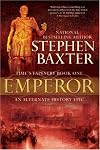
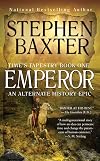
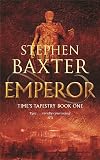
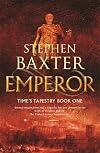
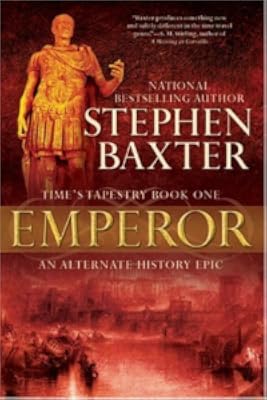
For example, Emperor, a book that I feel must shoulder some of the blame for underwhelming me because of its blatantly misleading cover. show more There's a statue of Julius Caesar on the front pictured over what is clearly Rome. You might think that this is what the book is about. As did I. We're both mistaken because the book takes place in Britain and focuses on the rule of Claudius, Hadrian, and Constantine. It's the literary equivalent of being roofied and waking up next to an ugly book.
Emperor revolves around a prophecy passed down from one family's generation to another in Britain around the time of Roman rule. Unable to understand the enigmatic message in its entirety, each generation uses it to its own ends: during the reign of Claudius, it is mistakenly believed to vouchsafe Britain against conquest by Rome; during the reign of Hadrian, it is used to gain the family profit by manipulating the emperor into building an ill-advised stone wall to protect his empire in Britain; and during the time of Constantine, it is used to make an assassination attempt on the emperor's life.
Consisting of three interlocking narratives that necessarily skip forward in time with only loose connections to the previous tale, the reader never really gets to know any of the characters--which is a shame because many of them could be fascinating if given more depth. Baxter writes with authority about the time periods involved, but the novel is billed as an alternative science fiction history. Without a historian's understanding of the time period, it is difficult to ascertain which parts are alternative and which are authentic. And the science fiction bit is definitely AWOL. There's some very brief philosophical debate about the nature of time (is it linear, or do the past, present, and future coexist at the exact same time?) and about whether or not the prophecy was sent by someone in the future (known only as the Weaver) attempting to change the past, but nothing that I would classify as "science fiction."
The novel would have been far more successful for me if it had been a straight historical fiction (really the alternative part is virtually nonexistent and seems to stem entirely from the prophecy, which never really changes events) and focused on one of the three narratives presented. Baxter has the ability to bring the past to life in a real and satisfying way, but the lack of payoff in terms of the novel's presentation and in its use of the prophecy as an unnecessary device to explore the past make it a tedious read. While I will not read the other books in the series, I would not entirely rule out reading another Baxter novel.
So, the moral of the story is: the next time a cute little book starts making eyes at me from the shelf, I'm damn sure going to take the time to read the blurb before I take it home with me.
Cross posted at This Insignificant Cinder show less
Tragic mistakes were made that I'm still paying for 7 years later.
For example, Emperor, a book that I feel must shoulder some of the blame for underwhelming me because of its blatantly misleading cover. show more There's a statue of Julius Caesar on the front pictured over what is clearly Rome. You might think that this is what the book is about. As did I. We're both mistaken because the book takes place in Britain and focuses on the rule of Claudius, Hadrian, and Constantine. It's the literary equivalent of being roofied and waking up next to an ugly book.
Emperor revolves around a prophecy passed down from one family's generation to another in Britain around the time of Roman rule. Unable to understand the enigmatic message in its entirety, each generation uses it to its own ends: during the reign of Claudius, it is mistakenly believed to vouchsafe Britain against conquest by Rome; during the reign of Hadrian, it is used to gain the family profit by manipulating the emperor into building an ill-advised stone wall to protect his empire in Britain; and during the time of Constantine, it is used to make an assassination attempt on the emperor's life.
Consisting of three interlocking narratives that necessarily skip forward in time with only loose connections to the previous tale, the reader never really gets to know any of the characters--which is a shame because many of them could be fascinating if given more depth. Baxter writes with authority about the time periods involved, but the novel is billed as an alternative science fiction history. Without a historian's understanding of the time period, it is difficult to ascertain which parts are alternative and which are authentic. And the science fiction bit is definitely AWOL. There's some very brief philosophical debate about the nature of time (is it linear, or do the past, present, and future coexist at the exact same time?) and about whether or not the prophecy was sent by someone in the future (known only as the Weaver) attempting to change the past, but nothing that I would classify as "science fiction."
The novel would have been far more successful for me if it had been a straight historical fiction (really the alternative part is virtually nonexistent and seems to stem entirely from the prophecy, which never really changes events) and focused on one of the three narratives presented. Baxter has the ability to bring the past to life in a real and satisfying way, but the lack of payoff in terms of the novel's presentation and in its use of the prophecy as an unnecessary device to explore the past make it a tedious read. While I will not read the other books in the series, I would not entirely rule out reading another Baxter novel.
So, the moral of the story is: the next time a cute little book starts making eyes at me from the shelf, I'm damn sure going to take the time to read the blurb before I take it home with me.
Cross posted at This Insignificant Cinder show less
Again, Baxter flags up a suppressed desire to write historical fiction, though as a loyal SF writer he can't resist throwing a spanner into the works. This book would be a family saga, with three generations of the same family experiencing the visitations of three Roman emperors - Claudius, Hadrian and Constantine - to Britain. But the linking factor to each stage of this family drama is a prophecy. All well and good, the Romans were quite fond of prophecies, but this one has a twist - three quarters of the way through, it suddenly lapses into the American Declaration of Independence....
The reaction of the characters to this is interesting; they seize on the bits of the prophesy with alacrity, seeking out meaning and divinations. But show more the lines about "life, liberty and the pursuit of happiness" nonplusses them for the most part.
(This is a bit of a double-edged sword. The science fiction fans amongst the readers immediately pricked up their ears, and then read the rest of the book waiting for some hint as to the reason for this anomalous text. But to judge by some of the reviews from first-time readers, this threw them off-balance and - because it is the aim of Baxter to work this plot out over four novels - it seemed totally superfluous.)
What then follows is a fairly straight historical novel, though by taking three separate chunks of Romano-British history, Baxter achieves a sense of the span of the history of Roman Britain rather than focusing on any one family story in detail. But that's not his intention; it is that span of history that he's interested in. I was particularly taken with the recurring image of certain buildings, such as the arched gateway to Camulodunum (Colchester), the fort at Rutupiae (Richborough) or the mile-forts on the Roman Wall, and how they are changed over the centuries, reflecting the vibrancy and state of Romano-British society in that segment of the book; that imagery I found most telling.
At the climax of the third part, the attempted assassination of the Emperor Constantine, sf fans will recognise a potential historical change as one of the characters experiences a vision of different outcomes of the unfolding events. This is a little reminiscent of the Brian Aldiss short story, 'The Day of the Doomed King', which is essentially about an alternate history that fails to be created as events follow their historical path rather than launch down new and untrodden timelines. (Apparently, some editions of this book in some markets are subtitled 'An alternate history epic', which is a bit naughty of the publishers for setting up some readers' expectations.)
At the end of the book, another prophecy is made in a manner that suggests some sort of cyclical chain of events.
The book is a pretty quick read; chapters are short and the overall length is of the sort that we would have expected some thirty years ago.
In short, then; if you aren't seized by the mystery of the initial premise, this book might seem to be too slight, with too much historical scene-painting and not enough family drama. If you are intrigued by the premise, though, you'll probably want to read on but will have to put up with not getting answers just yet. show less
The reaction of the characters to this is interesting; they seize on the bits of the prophesy with alacrity, seeking out meaning and divinations. But show more the lines about "life, liberty and the pursuit of happiness" nonplusses them for the most part.
(This is a bit of a double-edged sword. The science fiction fans amongst the readers immediately pricked up their ears, and then read the rest of the book waiting for some hint as to the reason for this anomalous text. But to judge by some of the reviews from first-time readers, this threw them off-balance and - because it is the aim of Baxter to work this plot out over four novels - it seemed totally superfluous.)
What then follows is a fairly straight historical novel, though by taking three separate chunks of Romano-British history, Baxter achieves a sense of the span of the history of Roman Britain rather than focusing on any one family story in detail. But that's not his intention; it is that span of history that he's interested in. I was particularly taken with the recurring image of certain buildings, such as the arched gateway to Camulodunum (Colchester), the fort at Rutupiae (Richborough) or the mile-forts on the Roman Wall, and how they are changed over the centuries, reflecting the vibrancy and state of Romano-British society in that segment of the book; that imagery I found most telling.
At the climax of the third part, the attempted assassination of the Emperor Constantine, sf fans will recognise a potential historical change as one of the characters experiences a vision of different outcomes of the unfolding events. This is a little reminiscent of the Brian Aldiss short story, 'The Day of the Doomed King', which is essentially about an alternate history that fails to be created as events follow their historical path rather than launch down new and untrodden timelines. (Apparently, some editions of this book in some markets are subtitled 'An alternate history epic', which is a bit naughty of the publishers for setting up some readers' expectations.)
At the end of the book, another prophecy is made in a manner that suggests some sort of cyclical chain of events.
The book is a pretty quick read; chapters are short and the overall length is of the sort that we would have expected some thirty years ago.
In short, then; if you aren't seized by the mystery of the initial premise, this book might seem to be too slight, with too much historical scene-painting and not enough family drama. If you are intrigued by the premise, though, you'll probably want to read on but will have to put up with not getting answers just yet. show less
I’m not really sure what to make of Baxter’s novels. He’s frighteningly prolific, and keeping up with his books is almost a career in itself. Some of his novels I’ve enjoyed and thought quite good. And then the next one I pick up is weak and juvenile. And there doesn’t seem to be any pattern to it. For example, I liked the first book of the Destiny’s Children quartet, Coalescent, but was bitterly disappointed by the second, Exultant, and I really must read last two some day… Emperor I quite enjoyed, although it was ridiculously contrived. A woman in pre-Roman Britain begins speaking in tongues while in labour. Someone recognises it as Latin and writes it down. She dies in childbirth, but the son survives. And the Latin show more becomes the family prophecy… It is supposedly the words of the “Weaver”, a mysterious someone from the future. At least, this is the interpretation by several of the characters, as the prophecty is passed down, and mangled, through generations, and elements of it come true. The novel paints an interesting portrait of Roman Britain, mostly in the region around Hadrian’s Wall – the building of which comprises one section, and a visit to it a couple of centuries later forms another. The whole Weaver thing, however, feels too modern a conceit for the novel’s setting, but since it’s the link which ties the four novels of the quartet together – or so I’m guessing – then I suppose the novel is stuck with it. As Baxter novels go, this is a thin one, a mere 302 pages in hardback. I’m hoping I’ll find the second book as enjoyable a read, unlike the Destiny’s Children quartet. show less
The problem with writing a book that follows one family through the ups and downs of Roman Britain is that it inevitably causes the reader, or at least this reader, to draw comparisons with Rosemary Sutcliff. Although Sutcliff set her books in many historical eras Roman Britain is the backdrop for many of them and, indeed, many of the best of them. Following the progress of one family is also a trick of Sutcliff's - The Capricon Bracelet does this in one volume as a series of short stories, but her most famous family must be the Aquila family who, as far as I'm aware, first appear in The Eagle of the Ninth and I last encountered them in The Shield Ring, set against the backdrop of resistance to the Norman Invasion in the Lake District. show more The problem with causing a reader to compare your work to that of a well-loved children's author is that you are almost bound to lose out.
In brief Emperor consists of three Novellas topped and tailed by a short Prologue and Epilogue. In the Prologue a prophesy is delivered, in Latin, to a Brigantian family and written down. The prophesy consists of three triplets each referring to a roman Emperor (Claudius, Hadrian and Constantine) followed by bits from the American Declaration of Independence (I think, possibly the constitution, my knowledge of American history is, I now realise, rather woeful). Each of the novellas then details the meeting of a family member interested in the prophesy with the respective Emperor and the Epilogue closes with the delivery of a new prophesy, in Anglo-Saxon, to the latest family member (all ready for book two in the series).
One of the reasons I bought Emperor is that I hugely enjoyed Neal Stephenson's System of the World series and was excited to read another novel by a respected SF author which was going to write a historical novel but, essentially, treat it as SF. I've never actually read one of Stephen Baxter's novels, although I very much liked his short story in the Solaris Book of New Science Fiction and his name is frequently linked to rumours that he will be writing for Dr Who; the poor man must have foolishly mentioned a fondness for the programme at some point. Unfortunately Emperor is not in the same league as the System of the World. Stephenson managed to present Enlightenment Europe as a strange and exotic fantasy world while never appearing to educate, Baxter, on the other hand, seems to be over-anxious to educate (character's ruminate internally on the economic forces at work in their world, and helpfully discuss the history necessary to link the three novellas while touring various examples of Roman architecture) without ever appearing actually inspired by the world as a setting. The stories in the three novellas are mostly kind of dull and the prophesy itself is not really either interesting enough nor mysterious enough to drive the plot. This all sounds fairly damning but actually the book itself benefits from being pretty short, Baxter manfully resists the tendency to pad present in buckets in fantasy writing but also evident in some SF writing. His characters are also both interesting and sympathetic which will take a book a long way - certainly this was a book I kept stealing odd moments to read during the day rather than waiting for my customary personal reading time just before bed.
The comparison with Sutcliff though was very interesting. As I said above, I don't think its a comparison Baxter could ever hope to win since it is difficult to compete with fond childhood memories, but it is interesting none-the-less. At the risk of using an over literary word I would describe Baxter's approach as post-colonial. He sees the Romans in terms of their occupation, exploitation and ultimately cultural assimilation of British, and specifically Brigantian, culture. It's quite a clever device. Sutcliff, of course, encourages the reader (mostly) to identify with the Romans but her identification is associated with viewing the Romans as a "civilising influence" and stresses their "British" values of honour and integrity. Baxter does not ask you to identify with the Romans, quite the opposite, but by encouraging the UK/US reader's natural tendency to identify with the native Britons (because of the name) accomplishes the trick of viewing Imperialism from the other side, especially if you are aware of a previous tendency to identify with the Romans. In this light the book is distinctly thought-provoking - he even briefly introduces a post-9/11 "suicide arsonist" but wisely does not pursue the idea. In fact, ultimately I was more interested in this work as a commentary on Imperialism than I was in the prophesy and this particular presentation of history with a SF slant. show less
In brief Emperor consists of three Novellas topped and tailed by a short Prologue and Epilogue. In the Prologue a prophesy is delivered, in Latin, to a Brigantian family and written down. The prophesy consists of three triplets each referring to a roman Emperor (Claudius, Hadrian and Constantine) followed by bits from the American Declaration of Independence (I think, possibly the constitution, my knowledge of American history is, I now realise, rather woeful). Each of the novellas then details the meeting of a family member interested in the prophesy with the respective Emperor and the Epilogue closes with the delivery of a new prophesy, in Anglo-Saxon, to the latest family member (all ready for book two in the series).
One of the reasons I bought Emperor is that I hugely enjoyed Neal Stephenson's System of the World series and was excited to read another novel by a respected SF author which was going to write a historical novel but, essentially, treat it as SF. I've never actually read one of Stephen Baxter's novels, although I very much liked his short story in the Solaris Book of New Science Fiction and his name is frequently linked to rumours that he will be writing for Dr Who; the poor man must have foolishly mentioned a fondness for the programme at some point. Unfortunately Emperor is not in the same league as the System of the World. Stephenson managed to present Enlightenment Europe as a strange and exotic fantasy world while never appearing to educate, Baxter, on the other hand, seems to be over-anxious to educate (character's ruminate internally on the economic forces at work in their world, and helpfully discuss the history necessary to link the three novellas while touring various examples of Roman architecture) without ever appearing actually inspired by the world as a setting. The stories in the three novellas are mostly kind of dull and the prophesy itself is not really either interesting enough nor mysterious enough to drive the plot. This all sounds fairly damning but actually the book itself benefits from being pretty short, Baxter manfully resists the tendency to pad present in buckets in fantasy writing but also evident in some SF writing. His characters are also both interesting and sympathetic which will take a book a long way - certainly this was a book I kept stealing odd moments to read during the day rather than waiting for my customary personal reading time just before bed.
The comparison with Sutcliff though was very interesting. As I said above, I don't think its a comparison Baxter could ever hope to win since it is difficult to compete with fond childhood memories, but it is interesting none-the-less. At the risk of using an over literary word I would describe Baxter's approach as post-colonial. He sees the Romans in terms of their occupation, exploitation and ultimately cultural assimilation of British, and specifically Brigantian, culture. It's quite a clever device. Sutcliff, of course, encourages the reader (mostly) to identify with the Romans but her identification is associated with viewing the Romans as a "civilising influence" and stresses their "British" values of honour and integrity. Baxter does not ask you to identify with the Romans, quite the opposite, but by encouraging the UK/US reader's natural tendency to identify with the native Britons (because of the name) accomplishes the trick of viewing Imperialism from the other side, especially if you are aware of a previous tendency to identify with the Romans. In this light the book is distinctly thought-provoking - he even briefly introduces a post-9/11 "suicide arsonist" but wisely does not pursue the idea. In fact, ultimately I was more interested in this work as a commentary on Imperialism than I was in the prophesy and this particular presentation of history with a SF slant. show less
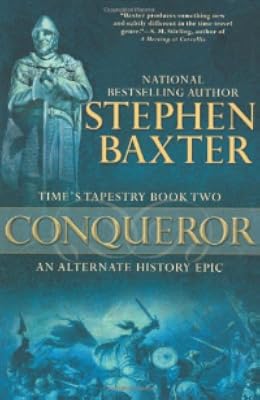
Stephen Baxter returns with a new–and surprising–series, called Time’s Tapestry. In the first book of the series, Baxter chronicles the rise and fall of the Roman Empire in Britain. Time’s Tapestry is positioned as an alternate history epic.
In Emperor, readers are introduced to the Prophecy of Nectovelin, which is central to the entire series. Broken into several parts, Emperor follows the descendents of Nectovelin through history, beginning with the second Roman invasion of Britain, and chronicles the family’s use of the Prophecy for personal gain, and family wealth.
The first obvious difference between Emperor, and Baxter’s typical work is the lack of space. Outer space is a staple in Baxter’s fiction, but barely surfaces show more in this book, except for a couple of off-handed references by the characters in the novel.
Stephen Baxter does an excellent job however, of bringing the ancient majesty of the Roman Empire to life, and richly details the novel with descriptions of daily life, and of the replacement of the British culture with the overwhelming Roman style.
One way Baxter sets this saga apart from his typical fare is to even change the style of the text, the formatting, and print-style. Quotations use only a single mark, rather than the ordinary two. There are no headers, with Baxter’s name, or the title of the book, and the chapters are very simply numbered in Roman numerals.
Though extremely different from his standard works, Baxter hints at things to come, and it’s easy to see how Time’s Tapestry could become embedded heavily into Baxter’s infinite vision of time and space. Other books, such as Coalescent, now make a lot more sense, and can be seen as building-blocks toward this series.
Emperor succeeds as a whole, and keeps the reader engaged and interested throughout, very well. The only complaint could be the abruptness with which the novel ends, seemingly too soon. Certainly the ending is appropriate, but a “to be continued” would have been nice, and not unwarranted. Nevertheless, Emperor is an excellent novel, and a promising start to the new series. show less
In Emperor, readers are introduced to the Prophecy of Nectovelin, which is central to the entire series. Broken into several parts, Emperor follows the descendents of Nectovelin through history, beginning with the second Roman invasion of Britain, and chronicles the family’s use of the Prophecy for personal gain, and family wealth.
The first obvious difference between Emperor, and Baxter’s typical work is the lack of space. Outer space is a staple in Baxter’s fiction, but barely surfaces show more in this book, except for a couple of off-handed references by the characters in the novel.
Stephen Baxter does an excellent job however, of bringing the ancient majesty of the Roman Empire to life, and richly details the novel with descriptions of daily life, and of the replacement of the British culture with the overwhelming Roman style.
One way Baxter sets this saga apart from his typical fare is to even change the style of the text, the formatting, and print-style. Quotations use only a single mark, rather than the ordinary two. There are no headers, with Baxter’s name, or the title of the book, and the chapters are very simply numbered in Roman numerals.
Though extremely different from his standard works, Baxter hints at things to come, and it’s easy to see how Time’s Tapestry could become embedded heavily into Baxter’s infinite vision of time and space. Other books, such as Coalescent, now make a lot more sense, and can be seen as building-blocks toward this series.
Emperor succeeds as a whole, and keeps the reader engaged and interested throughout, very well. The only complaint could be the abruptness with which the novel ends, seemingly too soon. Certainly the ending is appropriate, but a “to be continued” would have been nice, and not unwarranted. Nevertheless, Emperor is an excellent novel, and a promising start to the new series. show less
Although (far better) known as a science fiction author 'Emperor' is as heart, a historical novel, taking a number of periods during the Roman Occupation of Britain, starting with the Claudian invasion then following through the building of Hadrian's Wall, the visit of Constantine the Great, then the final decay of Roman power under the attacks of the Saxon invaders. This is all, very roughly held together by a prophecy presented to a woman dying in child-birth at the start of the original invasion.
This is definitely not your typical Baxter novel, and despite the existence of that prophecy, it is definitely a historical novel, with Baxter presenting his sources in his Author's Note at the end of the book, though it has to be said that show more Baxter's Rome is not presented as the glorious thing that one generally finds in pure novels! show less
This is definitely not your typical Baxter novel, and despite the existence of that prophecy, it is definitely a historical novel, with Baxter presenting his sources in his Author's Note at the end of the book, though it has to be said that show more Baxter's Rome is not presented as the glorious thing that one generally finds in pure novels! show less
Baxter likes the "literature of ideas" so much, he has one of his characters defend it from the criticism of poor characterisation. Time's Tapestry is nothing if not "literature of ideas". There are two problems with it.
The first is that, certainly throughout this first book, it is not immediately obvious what those ideas are. This is a narrative on a grand scale, covering about 400 years of history. We get a sense that somebody is trying to meddle with that history, but how or to what purpose remains unknown.
The second problem is that on the lower level of the narrative, in each individual period covered, with each set of characters, Baxter really doesn't do a very good job of characterisation. I found it difficult to form a bond show more with any of the characters. I found some of their actions and thought processes not particularly credible. Overall I just wished they'd hurry up and do stuff so I could get more of an idea of the bigger picture - and that didn't really happen.
Charles Stross remarked recently on one of his blogs (I forget which) that if you're writing a series of novel length works, each installment needs to have the structure of a novel, with a build-up and climax, and the overall series as a whole needs to have the structure of a novel - except the climax of the series needs to be sufficiently... well, climactic, to warrant the reader's investment of time to read all the books in the series. I can't yet comment on the entire Time's Tapestry series, but for me Emperor lacked a climax as a stand alone novel. I'm not even entirely sure it was enough of a build-up to make me want to read the rest of the series. I'll give it a go, but right now I'm seriously tempted to skip books two and three and go straight to Weaver. show less
The first is that, certainly throughout this first book, it is not immediately obvious what those ideas are. This is a narrative on a grand scale, covering about 400 years of history. We get a sense that somebody is trying to meddle with that history, but how or to what purpose remains unknown.
The second problem is that on the lower level of the narrative, in each individual period covered, with each set of characters, Baxter really doesn't do a very good job of characterisation. I found it difficult to form a bond show more with any of the characters. I found some of their actions and thought processes not particularly credible. Overall I just wished they'd hurry up and do stuff so I could get more of an idea of the bigger picture - and that didn't really happen.
Charles Stross remarked recently on one of his blogs (I forget which) that if you're writing a series of novel length works, each installment needs to have the structure of a novel, with a build-up and climax, and the overall series as a whole needs to have the structure of a novel - except the climax of the series needs to be sufficiently... well, climactic, to warrant the reader's investment of time to read all the books in the series. I can't yet comment on the entire Time's Tapestry series, but for me Emperor lacked a climax as a stand alone novel. I'm not even entirely sure it was enough of a build-up to make me want to read the rest of the series. I'll give it a go, but right now I'm seriously tempted to skip books two and three and go straight to Weaver. show less
Members
- Recently Added By
Lists

Cryptology - non-fiction and fiction
57 works; 4 members
Author Information

260+ Works 43,820 Members
Some Editions
Awards and Honors
Distinctions
Series


Work Relationships
Is contained in
Common Knowledge
- Canonical title
- Emperor
- Original publication date
- 2006-07-26
- People/Characters
- Nectovelin; Claudius I, Emperor of Rome; Constantine the Great
- Important places
- Banna; Camulodunum; Eburacum
- First words
- It was a hard day when Brica's baby, Cunovic's nephew, struggled to be born, a hard, long day of birth and death.
- Last words
- (Click to show. Warning: May contain spoilers.)The pain squeezed Isolde like a vast fist, and her baby fell into Maria's arms.
Classifications
Statistics
- Members
- 500
- Popularity
- 60,161
- Reviews
- 14
- Rating
- (3.35)
- Languages
- 5 — Czech, English, German, Latin, Spanish
- Media
- Paper, Ebook
- ISBNs
- 14
- ASINs
- 9