On This Page
Description
This collaborative short story brings together the creative talents of four of the Victorian era's most popular fiction writers—Wilkie Collins, Charles Dickens, Elizabeth Gaskell, and Adelaide Anne Procter each contributed a section to the work. When an elderly woman notices signs of activity at a supposedly abandoned home in her neighborhood, she devises a scheme to get to the bottom of the mysterious goings-on..
Tags
Recommendations



















Member Reviews
A House To Let is an odd little book that doesn't quite know what it is, being the brainchild of four different authors. It is actually one story throughout all these variations in style and focus, but each chapter is only loosely tied to the preceding chapters and feels like the beginning of its own story. In some places it's gothicky, ominous melodrama to suit Wilkie Collins, in others it's mawkishly comical (*cough*Charles Dickens!*cough*), and in others it's Victorian poetry of the most lugubrious and sentimental sort (Adelaide Anne Procter). Elizabeth Gaskell also had a hand in the tale and her chapter is the calmest and sanest amidst the others' excesses.
Sophonisba, an elderly spinster lady, has taken new lodgings in London on show more the advice of her doctor. She becomes fascinated with the house across the way that is always to let but never taken. When she sees an Eye in one of the windows, this casual interest is intensified into an experience of being haunted by the house's secrets. Sophonisba quickly sets her servant Trottle and friend Jabez Jarber to track down the mystery of the house and its sinister occupants.
Though a fun experiment, this story is certainly a disjointed experience for the reader. Just when I would settle into one style, the chapter would end and the next author would step up to the plate, determined (I am sure) to show up the last guy (or gal). So it's hard to review this little novella. As a literary novelty it's fun, but it doesn't have the staying power of consistent artistry and substance, and I doubt I'll ever be tempted to reread. show less
Sophonisba, an elderly spinster lady, has taken new lodgings in London on show more the advice of her doctor. She becomes fascinated with the house across the way that is always to let but never taken. When she sees an Eye in one of the windows, this casual interest is intensified into an experience of being haunted by the house's secrets. Sophonisba quickly sets her servant Trottle and friend Jabez Jarber to track down the mystery of the house and its sinister occupants.
Though a fun experiment, this story is certainly a disjointed experience for the reader. Just when I would settle into one style, the chapter would end and the next author would step up to the plate, determined (I am sure) to show up the last guy (or gal). So it's hard to review this little novella. As a literary novelty it's fun, but it doesn't have the staying power of consistent artistry and substance, and I doubt I'll ever be tempted to reread. show less
Charles Dickens is one of my favorite authors. As the book, A House to Let, is edited and (at least partially) written by him I’ve been meaning to read it for sometime. Besides, another author whose work I've enjoyed, Wilkie Collins, has also written some parts of this book.
A House to Let was originally published in 1858 in the Christmas edition of Dickens' Household Words magazine. Written by not one but four different authors, Elizabeth Gaskell and Adelaide Anne Procter besides Dickens and Collins, this book was innovative for its time to say the least. Each author wrote one chapter each, with Dickens and Collins writing the introduction and conclusion.
The book, for me had a definite ‘Dickensian’ feel to it. That is probably show more because the idea of the story was his to begin with and that he was the editor of the story. It has a Oliver Twist feel to it with elements of The Woman in White thrown in. I enjoyed the book in parts. I enjoyed the beginning and the ending chapters and Collins' chapter called 'Trottle's Report' the most. The chapter written by Gaskell was satisfactory. But I didn't like Dickens' and Procter's chapters that much. The writings of the four authors are so distinct that you could tell that it has been written by four different persons instead of one. The writing is not seamless. That is a drawback of this book. But what I really enjoyed was the atmosphere of the story. In the end, A House to Let did bring a smile to my face. On the whole, an enjoyable book. show less
A House to Let was originally published in 1858 in the Christmas edition of Dickens' Household Words magazine. Written by not one but four different authors, Elizabeth Gaskell and Adelaide Anne Procter besides Dickens and Collins, this book was innovative for its time to say the least. Each author wrote one chapter each, with Dickens and Collins writing the introduction and conclusion.
The book, for me had a definite ‘Dickensian’ feel to it. That is probably show more because the idea of the story was his to begin with and that he was the editor of the story. It has a Oliver Twist feel to it with elements of The Woman in White thrown in. I enjoyed the book in parts. I enjoyed the beginning and the ending chapters and Collins' chapter called 'Trottle's Report' the most. The chapter written by Gaskell was satisfactory. But I didn't like Dickens' and Procter's chapters that much. The writings of the four authors are so distinct that you could tell that it has been written by four different persons instead of one. The writing is not seamless. That is a drawback of this book. But what I really enjoyed was the atmosphere of the story. In the end, A House to Let did bring a smile to my face. On the whole, an enjoyable book. show less
A House to Let is a collaboration between four 19th century authors, which originally appeared as the Christmas edition of Charles Dickens' weekly magazine, Household Words, in 1858. The book is divided into six sections; the first, Over the Way, and the sixth, Let at Last, are joint efforts by Charles Dickens and Wilkie Collins, and provide the framework for the story. The other four sections are individual contributions from Elizabeth Gaskell, Charles Dickens, Adelaide Anne Procter and Wilkie Collins, in that order.
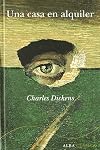
Over the Way introduces us to Sophonisba, an elderly woman who has never married but has two men vying for her attentions - one is her old admirer Jabez Jarber; the other is her servant, Trottle. When Sophonisba's doctor show more advises a change of air and scene, she leaves her home in Tunbridge Wells and moves into new lodgings in London, where she immediately becomes obsessed with the house opposite - a house which has been vacant for many years and is permanently 'to let'. Determined to discover why the house has remained empty for so long - and convinced she has seen an eye staring out from one of the windows - she asks Jarber and Trottle to investigate.
Over the Way and Let at Last are credited to both Dickens and Collins, but there's no way to tell exactly which parts were contributed by which writer. The other four chapters, though, are each written in the distinctive style of their respective authors and each tell the story of a previous occupant of the house to let. The chapter I liked the least was actually the one written solely by Dickens, Going Into Society. The story of a showman and a circus dwarf called Mr Chops, it was just too weird for me and was also quite difficult to read as it was written in dialect. It's probably significant that I found the two Dickens/Collins collaborations much easier to read than this solo effort, as I've always thought Collins was a lot more readable than Dickens.
Three Evenings in the House, the contribution by Adelaide Anne Procter, whose work I was previously unfamiliar with, is in the form of a narrative poem. I'm not a big lover of poetry but luckily for me this was only thirteen pages long and quite easy to understand. Other than providing some variety though, I don't think this chapter really added much to the story.
The Manchester Marriage by Elizabeth Gaskell stands out as an excellent piece of writing: a tragic story of Alice Wilson, who is widowed when her husband is lost at sea. After marrying again, she and her new husband move into the house to let where further tragedy awaits them. This is good enough to work as a stand-alone short story (and according to the Biographical Notes, it was actually published separately in its own right). This and the Wilkie Collins contribution, Trottle's Report, were my favourite chapters. Trottle's Report is a typical Collins story, with unusual, quirky characters, a mysterious secret, and a slightly dark and gothic feel.
If you like any of these four authors or Victorian fiction in general, then A House to Let is definitely worth reading. It also provides a good introduction to Dickens, Collins, Procter and Gaskell without having to commit yourself to one of their longer works. show less
Over the Way introduces us to Sophonisba, an elderly woman who has never married but has two men vying for her attentions - one is her old admirer Jabez Jarber; the other is her servant, Trottle. When Sophonisba's doctor show more advises a change of air and scene, she leaves her home in Tunbridge Wells and moves into new lodgings in London, where she immediately becomes obsessed with the house opposite - a house which has been vacant for many years and is permanently 'to let'. Determined to discover why the house has remained empty for so long - and convinced she has seen an eye staring out from one of the windows - she asks Jarber and Trottle to investigate.
Over the Way and Let at Last are credited to both Dickens and Collins, but there's no way to tell exactly which parts were contributed by which writer. The other four chapters, though, are each written in the distinctive style of their respective authors and each tell the story of a previous occupant of the house to let. The chapter I liked the least was actually the one written solely by Dickens, Going Into Society. The story of a showman and a circus dwarf called Mr Chops, it was just too weird for me and was also quite difficult to read as it was written in dialect. It's probably significant that I found the two Dickens/Collins collaborations much easier to read than this solo effort, as I've always thought Collins was a lot more readable than Dickens.
Three Evenings in the House, the contribution by Adelaide Anne Procter, whose work I was previously unfamiliar with, is in the form of a narrative poem. I'm not a big lover of poetry but luckily for me this was only thirteen pages long and quite easy to understand. Other than providing some variety though, I don't think this chapter really added much to the story.
The Manchester Marriage by Elizabeth Gaskell stands out as an excellent piece of writing: a tragic story of Alice Wilson, who is widowed when her husband is lost at sea. After marrying again, she and her new husband move into the house to let where further tragedy awaits them. This is good enough to work as a stand-alone short story (and according to the Biographical Notes, it was actually published separately in its own right). This and the Wilkie Collins contribution, Trottle's Report, were my favourite chapters. Trottle's Report is a typical Collins story, with unusual, quirky characters, a mysterious secret, and a slightly dark and gothic feel.
If you like any of these four authors or Victorian fiction in general, then A House to Let is definitely worth reading. It also provides a good introduction to Dickens, Collins, Procter and Gaskell without having to commit yourself to one of their longer works. show less
I love Charles Dickens, but this group effort was a total clusterf&ck! A novella written by committee, it was confusing and lacked any coherent direction, focus or mood. If it hadn't been so short, I wouldn't have finished it. Not a fan. (I'm ranking it 2-1/2 stars for the beginning and end parts which were good. It was the in-between that sucked.)
Short book, interesting to read with the different author's sections fitting in well together. Very intriguing at first, then comes Dickens chapter which is more difficult to follow. After that the book becomes more everyday. Not a bad ending, but not one I was expecting, and a little anticlimactic.
I especially liked Elizabeth Gaskell's contribution, The Manchester Marriage.
I actually have the volume with John Taylor and James K. Polk, but I'm too lazy to make a new entry.
Members
- Recently Added By
Lists

Books Read in 2009
464 works; 11 members

Which house?
423 works; 16 members
Author Information

2,578+ Works 313,139 Members
Charles Dickens, perhaps the best British novelist of the Victorian era, was born in Portsmouth, Hampshire, England on February 7, 1812. His happy early childhood was interrupted when his father was sent to debtors' prison, and young Dickens had to go to work in a factory at age twelve. Later, he took jobs as an office boy and journalist before show more publishing essays and stories in the 1830s. His first novel, The Pickwick Papers, made him a famous and popular author at the age of twenty-five. Subsequent works were published serially in periodicals and cemented his reputation as a master of colorful characterization, and as a harsh critic of social evils and corrupt institutions. His many books include Oliver Twist, David Copperfield, Bleak House, Great Expectations, Little Dorrit, A Christmas Carol, and A Tale of Two Cities. Dickens married Catherine Hogarth in 1836, and the couple had nine children before separating in 1858 when he began a long affair with Ellen Ternan, a young actress. Despite the scandal, Dickens remained a public figure, appearing often to read his fiction. He died in 1870, leaving his final novel, The Mystery of Edwin Drood, unfinished. (Bowker Author Biography) show less

395+ Works 40,125 Members
Wilkie Collins was born in London, England on January 8, 1824. He worked first in business and then law, but eventually turned to literature. During his lifetime, he wrote 30 novels, more than 60 short stories, at least 14 plays, and more than 100 non-fiction pieces. His works include Antonia, The Woman in White, The Moonstone, The Haunted Hotel, show more and Heart and Science. He was a close friend of Charles Dickens and collaborated with him. He died on September 23, 1889. (Bowker Author Biography) show less
All Editions
Series

Belongs to Publisher Series
Work Relationships
Is contained in
Contains
Common Knowledge
- Canonical title
- A House to Let
- Original publication date
- 1858 (Household Words) (Household Words)
- People/Characters
- Sophonisba; Jabez Jarber; Trottle
- First words
- I had been living at Tunbridge Wells and nowhere else, going on for ten years, when my medical man--very clever in his profession, and the prettiest player I ever saw in my life of a hand at Long Whist, which was a noble and ... (show all)a princely game before Short was heard of--said to me, one day, as he sat feeling my pulse on the actual sofa which my poor dear sister Jane worked before her spine came on, and laid her on a board for fifteen months at a stretch--the most upright woman that ever lived--said to me, "What we want, ma'am, is a fillip."
- Last words
- (Click to show. Warning: May contain spoilers.)For which I humbly thank that Gracious Being whom the restorer of the Widow's son and of the Ruler's daughter, instructed all mankind to call their Father.
Classifications
Statistics
- Members
- 220
- Popularity
- 148,696
- Reviews
- 8
- Rating
- (3.12)
- Languages
- English, Spanish
- Media
- Paper, Audiobook, Ebook
- ISBNs
- 50
- ASINs
- 8