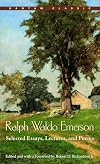
Selected Essays, Lectures, and Poems
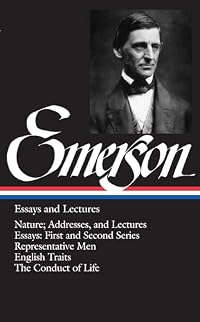
by Ralph Waldo Emerson 
On This Page
Description
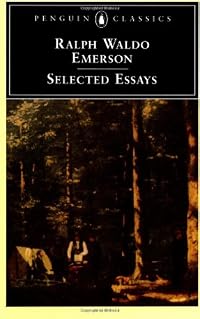
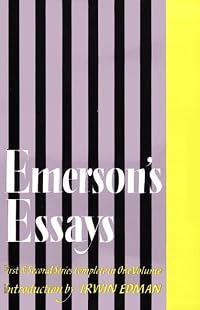
A new, wide-ranging selection of Ralph Waldo Emerson’s most influential writings, this edition captures the essence of American Transcendentalism and illustrates the breadth of one of America’s greatest philosophers and poets. The writings featured here show Emerson as a protester against social conformity, a lover of nature, an activist for the rights of women and slaves, and a poet of great sensitivity. As explored in this volume, Emersonian thought is a unique blend of belief in show more individual freedom and in humility before the power of nature. “I become a transparent eyeball,” Emerson wrote in Nature, “I am nothing; I see all; the currents of the Universal Being circulate through me; I am part or particle of God.” Written over a century ago, this passage is a striking example of the passion and originality of Emerson’s ideas, which continue to serve as a spiritual center and an ideological base for modern thought. show lessTags
Recommendations























Member Reviews
A new, wide-ranging selection of Ralph Waldo Emerson’s most influential writings, this edition captures the essence of American Transcendentalism and illustrates the breadth of one of America’s greatest philosophers and poets.The writings featured here show Emerson as a protester against social conformity, a lover of nature, an activist for the rights of women and slaves, and a poet of great sensitivity. As explored in this volume, Emersonian thought is a unique blend of belief in individual freedom and in humility before the power of nature. “I become a transparent eyeball,” Emerson wrote in Nature, “I am nothing; I see all; the currents of the Universal Being circulate through me; I am part or particle of God.” Written show more over a century ago, this passage is a striking example of the passion and originality of Emerson’s ideas, which continue to serve as a spiritual center and an ideological base for modern thought. show less
Ratings
Members
- Recently Added By
Author Information

792+ Works 20,961 Members
Known primarily as the leader of the philosophical movement transcendentalism, which stresses the ties of humans to nature, Ralph Waldo Emerson, American poet and essayist, was born in Boston in 1803. From a long line of religious leaders, Emerson became the minister of the Second Church (Unitarian) in 1829. He left the church in 1832 because of show more profound differences in interpretation and doubts about church doctrine. He visited England and met with British writers and philosophers. It was during this first excursion abroad that Emerson formulated his ideas for Self-Reliance. He returned to the United States in 1833 and settled in Concord, Massachusetts. He began lecturing in Boston. His first book, Nature (1836), published anonymously, detailed his belief and has come to be regarded as his most significant original work on the essence of his philosophy of transcendentalism. The first volume of Essays (1841) contained some of Emerson's most popular works, including the renowned Self-Reliance. Emerson befriended and influenced a number of American authors including Henry David Thoreau. It was Emerson's practice of keeping a journal that inspired Thoreau to do the same and set the stage for Thoreau's experiences at Walden Pond. Emerson married twice (his first wife Ellen died in 1831 of tuberculosis) and had four children (two boys and two girls) with his second wife, Lydia. His first born, Waldo, died at age six. Emerson died in Concord on April 27, 1882 at the age of 78 due to pneumonia and is buried in Sleepy Hollow Cemetery in Concord, Massachusetts. (Bowker Author Biography) show less
Ralph Waldo Emerson has a Legacy Library. Legacy libraries are the personal libraries of famous readers, entered by LibraryThing members from the Legacy Libraries group.
All Editions
Some Editions
Common Knowledge
- Canonical title
- Selected Essays, Lectures, and Poems
- Original publication date
- 1965
Classifications
Statistics
- Members
- 504
- Popularity
- 59,438
- Reviews
- 1
- Rating
- (3.64)
- Languages
- English
- Media
- Paper, Ebook
- ISBNs
- 10
- ASINs
- 8