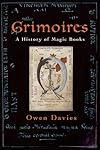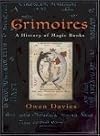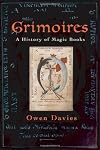
Grimoires: A History of Magic Books
by Owen Davies
On This Page
Description
Put simply, 'grimoires' are books of spells that were first recorded in the ancient Middle East and which have developed and spread across much of the Western hemisphere during the ensuing millennia. This book tells the story of the history of grimoires, from the ancient Middle East through to the modern day.Tags
Recommendations



















Member Reviews
This is less of a social history than it might have been but one cannot complain if the title is crystal clear about what is being offered - a history of magic books. And, as such, it is excellent.
At times, it seems not much more than a compilation of information about these books century by century but this serves one important purpose - it strips away any notion that the bulk of these books served any other purpose than personal aggrandisement in an age of poverty and lack of welfare provision. Men and women had every reason to clutch at straws.
One common theme from earliest times until quite recently has been the use of such texts to discover treasure by calling up demons and dark spirits and then binding and interrogating them to show more reveal it. John Dee's graveyard excursion was not novel. He was in a very long line of 'magical practitioners' who wanted a fast track to wealth - or to sexual pleasure or even just good health and a bit of happiness in a grim world.
The spiritual content of these early modern books is minimal despite the attempts of later generations to read back their own spiritual searchings into the grubby grab for power and money of what probably amounted (no doubt with exceptions) to a succession of charlatans, fraudsters, small time criminals and half-educated cunning folk determined to prey for profit on the unhappiness of the masses.
Perhaps the only person in our era to have got this magical past right was that inveterate rascal Anton LaVey whose Church of Satan used the tropes of popular 'high' magic to sell his hedonistic mix of Californian individualism and cynicism. This was the same carnival gulling of country folk, in the tradition of medieval hucksterdom, that underpinned the eighteenth century French bibliotheque bleue.
This is not to say that some of the original sources of the grimoires of early modern Europe were not of considerable spiritual importance or that the presence of grimoires did not prove vital to the creation of modern alternative spiritualities as ready-mades for interpretation.
The Hebrew cabbalistic tradition and pagan hermeticism as well as alchemy and possibly the tarot - alongside attempts to come to terms with the demonic lore of the religions of the book - were all sincere paths for the exploration of consciousness and alternative realities. Later, the equally sincere researches of Eliphas Levy, the creation of the Order of the Golden Dawn, the experimentation of Crowley and the 'invention' by Gerald Gardner of Wicca all made use of the conceits of the grimoire in order to explore consciousness and 'spirituality' in new and imaginative ways.
Even between these time poles of sincerity, there are islands of genuine investigation into 'other forces' - Kelley may have been a fraud but Dee really does seem to have believed that he could talk with the angels. Many others took demons to be really existing creatures who could be bound safely for service without threat of eternal damnation.
The fears of the Church and the authorities were part fear of the heretical and part fear of new thinking but, on closer investigation, they were equally related to the potential for grimoires to be used to part peasants and small townpeople from their money or to promote unacceptable distance between community and church.
Immense efforts have gone into rooting out popular grimoires (including the terminal force against sorcerers) over the centuries. The first relevant book burnings were of pagan writings by the newly assertive and totalitarian Christian communities of the late Roman Empire (although the Roman authorities were quite happy to burn books that defied state control of religion long before Constantine).
It is little known that book burnings continued in Germany long after the Nazis lost power. Instead of Jewish and liberal books, religious campaigners were burning books of magic. Indeed, though they disapproved of magic (despite the fantasies of Western propagandists), the Nazis seem far less extreme in this matter than fanatical Christian Democrats and Protestants.
More could perhaps have been written by Davies on the attitudes of the authorities in modernising America who seem, sensibly, to have seen grimoire production as a branch of fraud, precursors to much modern 'new age' nonsense, rather than as some threat of a more fundamental kind.
It might be argued that the detachment of these texts from educated high society and their survival out of that context also detached them from their pagan spiritual meaning and folk purpose. It degraded these texts into non-communal individualistic tools of power - personal weapons in life's struggle for oneself and against others.
Grimoires are certainly ambiguous in pre-industrial and colonial society. Davies is excellent in tracing their path from Europe into the New World and other Western colonies and back and forward across Europe, linking their influence to practical factors such as the availability of the printing press and the willingness and determination of the authorities to suppress them. Levels of literacy are key in both permitting grimoires to flourish (they require someone to read them) and defining their acceptability and use.
Once a population got a taste for such books, these texts embedded themselves deep into some communities of migrants and former slaves - most often when literacy was combined with a low level of education and canny entrepreneurs were able to provide sufficient cheap copies of 'classic works'. Magical sub-cultures emerged that were both proponents of sometimes unutterable nonsense and the basis of a culture of resistance to a non-inclusive high culture that had nothing to say to the poor and uneducated.
This, one suspects, was very different from the highly cultured world of Toledo in the High Middle Ages where Jewish, Muslim and Christian traditions and thought mingled to create the radical thinking of which the early modern grimoires were but a pale reflection. The folk memory of Toledo as centre of dark sorcery reflected this cultural debasement of a high intellectual tradition.
In successive totalitarian Christian reformations, magic became debased into a presumption of evil when all it really was was a challenge to intellectual authority. Manuscripts got mangled, attributed inappropriately, given antiquities that do not stand up to scrutiny. Whether manuscripts or printed books, these texts became systematically degraded from their origins in a tolerant High Mediterranean Culture.
Perhaps some of the more genuine intellectual magicians were still being hunted to extinction as late as the early seventeenth century in Catholic Europe but it is fairly clear that the printed versions of their texts in the eighteenth century and their adaptations in America and across Europe and their colonies in the nineteenth were little more than gobbledy-gook for cunning folk. There are some wonderful tales of gullible treasure-seeking yokels being thoroughly done over by trickster 'sorcerers' in the chapter on the pre-revolutionary era in France and Switzerland.
Davies is usefully corrective on one widespread assumption, derived no doubt from the lurid stories of Montague Summers and Dennis Wheatley that witchcraft and demonic grimoires were closely associated. The witch trials were about ... well, witches. There may have been occasional links between sorcery and witchcraft but, outside Iceland, they were rare.
This is, again, probably down to levels of literacy at the height of the witchcraft trials. You could scarcely blame a witch of sorcery by grimoire if she could not read or write. Iceland, on the other hand, had a high level of literacy for women at the time of its witch trials. There also seems to have been a greater chance of sorcery being invoked in a witch trial elsewhere if priests were being implicated in the alleged crime - their literacy permitted use of the grimoire.
There are other insights - into the controversial debate over Mormonism's debt to the grimoire tradition, into irrationalism in American settler society, into the adaptation of grimoires to creole needs and their use by various Caribbean cultures (often cleverly exploited by American pulp publishers) and, more generally, into capitalist exploitation of folk demand for grimoires (with much useful background on the American pulp publisher entry into the market).
The influence of the specialist publisher Delaurence on the creation of new religious forms in the Caribbean and Africa whose antiquity has probably been much exaggerated would be worth an anthropological study in its own right. A thoroughly Western literary form appears to have assisted in constructing new forms of religion on a basis of inherited tribal magic and cultural dislocation. Some 'slave' religions may be surprisingly modern with the same link to the past as (say) Wicca or Asatru - more tenuous than some might like to believe. Even today, DeLaurence Scott books are explicitly banned by the Jamaican Customs Service as threats to local order.
This is quite a dense book but perfectly readable. It comes alive, becoming more than a linking of antiquarian facts, when it gets to the eighteenth century. Here, the narrative starts to strengthen, especially with the narrative of migrant and former slave use of grimoires that really requires yet another historian to interpret, perhaps more theoretically. Davies certainly seems very loath to experiment with theory. What people did with grimoires is well covered. Why they used them, much less so.
The book also adds a very large footnote to Hutton's and others' work on the rise of magic amongst the elite in the industrialising West. The key figure here is the autodidact Eliphas Levy, an eccentric who played an important role in re-presenting the grimoire and the high magical tradition as a possible source for attaining access to an alternative reality.
A community of 'clerks' rather than of high-born aesthetes (pace Wheatley's fantasies) relieved the humdrum nature of their lives and created an alternative vision of society that found its early brief high point in the Order of the Golden Dawn from which all subsequent 'positive' use of grimoires probably derives. This was a moment of cultural sea-change that in France, Britain, America, Germany and Italy led to many different forms of creative irrationalism that are still transforming society as we write.
The book ends with a review of the three 'fake' modern grimoires that have spawned their own intense followings - Lovecraft's wholly fictional 'Necronomicon' (as used in Chaos Magick), Gardner's 'Book of Shadows' (which is central to Wicca) and Lavey's cobbled together 'Satanic Bible' (which is central to Satanism but which, of course, has nothing to do with Satan at all).
All three made use of grimoire lore. Before we get hyper-critical about their provenance, we might ask just how reliable the claims of divine authorship of the books of the Bible or the Koran are if we really, really think about this instead of accepting claims on faith. From this perspective, the leap of faith made by Chaos Magicians (who are just playing with belief quite knowingly), Wiccans (who, in fact, are honest that each text is personal and to be recast by every practitioner in the light of their own needs) and Satanists (who have no illusions that LaVey wrote their text and know full well that Satan does not exist) seems less absurd than that of their rivals.
Perhaps this may be one clue to the determination of the authorities to suppress the grimoire - in its cack-handed way, the grimoire says that no intermediation is required between the punter and his book. Any person with the power to interpret the book can decide their own destiny in terms of sex, power and spirit which is a standing challenge to all established priests, experts and intellectuals.
At its worst, the grimoire is not merely obscurantist but dangerous, not because it can conjure devils or perhaps give cause in extreme cases to murderous fantasy (of which there are cases) and has a proven history of fraud, but because, in truly ignorant hands, it can block the use of 'good' expert knowledge to deal with 'real' problems of sexuality, power relations, conditions of life, healthcare and spirituality. It is probably why socialists and progressives loathe it as much as any cardinal.
But, at their best, their use represents a revolutionary act under conditions where there is no power for the people, where sexual repression is normal, where conditions are poor and life short and where religion represents social order rather than personal meaning. Their use under these circumstances says that 'we the people' will, in your lack of dialogue with us, choose our own experts and our own ways of intermediation with life amd matter. We will use magic because you have given us nothing or what you give us is conditional on our acceptance of your standards and 'morality' without asking us what we want. Irrationalism represents psychic resistance to the arrogance of the powerful.
Magic as resistance will never go away except where it is decisively crushed under the authoritarian boot of State and Church. Maybe that is the eventual solution of many liberal intellectuals as well (certainly many liberal intellectuals in the West have taken the neo-conservative turn in despair at the masses' inability to be 'rational') but it seems a price too high in terms of liberty for the majority.
An alternative may be to permit a degree of healthy irrationalism within a culture based on communication and general welfare where grimoires (as symptom) have no cause to be used for fraud or criminality because their function has changed. Under new conditions, they can be used, as they increasingly are being used in the modern West, for fun and for spiritual growth rather than for the assertion of power by the powerless over circumstance and the even less powerful.
Davies makes one very profound point - perhaps his only attempt at deep analysis in a largely narrative history. It is quite simply that most of us in the West no longer need magic in our lives. Economic development, mass education and technology provide our magic because magic is nothing more nor less than a means of empowerment.
If we see magic re-emerging today (albeit mostly in the spiritual and social sphere), it is because we need it again. The new religions are actively transforming persons and cultures where old systems have failed and this process is likely to accelerate under the influence of the internet. As Davies suggests, magic and grimoires are unlikely to disappear from our culture very soon.
Finally, let me add that the illustrations of various texts, scattered throughout the book, are extensive and well placed. Oxford have done a fine editorial job and there are copious and detailed footnotes and signs to further reading.
The book is also very broad-based with information on all the main Western and Northern European markets and on North America and the European colonies. There will be gaps but a book that covers Switzerland, Denmark, Iceland and Norway as well as the different Caribbean Islands cannot be called parochial. Recommended. show less
At times, it seems not much more than a compilation of information about these books century by century but this serves one important purpose - it strips away any notion that the bulk of these books served any other purpose than personal aggrandisement in an age of poverty and lack of welfare provision. Men and women had every reason to clutch at straws.
One common theme from earliest times until quite recently has been the use of such texts to discover treasure by calling up demons and dark spirits and then binding and interrogating them to show more reveal it. John Dee's graveyard excursion was not novel. He was in a very long line of 'magical practitioners' who wanted a fast track to wealth - or to sexual pleasure or even just good health and a bit of happiness in a grim world.
The spiritual content of these early modern books is minimal despite the attempts of later generations to read back their own spiritual searchings into the grubby grab for power and money of what probably amounted (no doubt with exceptions) to a succession of charlatans, fraudsters, small time criminals and half-educated cunning folk determined to prey for profit on the unhappiness of the masses.
Perhaps the only person in our era to have got this magical past right was that inveterate rascal Anton LaVey whose Church of Satan used the tropes of popular 'high' magic to sell his hedonistic mix of Californian individualism and cynicism. This was the same carnival gulling of country folk, in the tradition of medieval hucksterdom, that underpinned the eighteenth century French bibliotheque bleue.
This is not to say that some of the original sources of the grimoires of early modern Europe were not of considerable spiritual importance or that the presence of grimoires did not prove vital to the creation of modern alternative spiritualities as ready-mades for interpretation.
The Hebrew cabbalistic tradition and pagan hermeticism as well as alchemy and possibly the tarot - alongside attempts to come to terms with the demonic lore of the religions of the book - were all sincere paths for the exploration of consciousness and alternative realities. Later, the equally sincere researches of Eliphas Levy, the creation of the Order of the Golden Dawn, the experimentation of Crowley and the 'invention' by Gerald Gardner of Wicca all made use of the conceits of the grimoire in order to explore consciousness and 'spirituality' in new and imaginative ways.
Even between these time poles of sincerity, there are islands of genuine investigation into 'other forces' - Kelley may have been a fraud but Dee really does seem to have believed that he could talk with the angels. Many others took demons to be really existing creatures who could be bound safely for service without threat of eternal damnation.
The fears of the Church and the authorities were part fear of the heretical and part fear of new thinking but, on closer investigation, they were equally related to the potential for grimoires to be used to part peasants and small townpeople from their money or to promote unacceptable distance between community and church.
Immense efforts have gone into rooting out popular grimoires (including the terminal force against sorcerers) over the centuries. The first relevant book burnings were of pagan writings by the newly assertive and totalitarian Christian communities of the late Roman Empire (although the Roman authorities were quite happy to burn books that defied state control of religion long before Constantine).
It is little known that book burnings continued in Germany long after the Nazis lost power. Instead of Jewish and liberal books, religious campaigners were burning books of magic. Indeed, though they disapproved of magic (despite the fantasies of Western propagandists), the Nazis seem far less extreme in this matter than fanatical Christian Democrats and Protestants.
More could perhaps have been written by Davies on the attitudes of the authorities in modernising America who seem, sensibly, to have seen grimoire production as a branch of fraud, precursors to much modern 'new age' nonsense, rather than as some threat of a more fundamental kind.
It might be argued that the detachment of these texts from educated high society and their survival out of that context also detached them from their pagan spiritual meaning and folk purpose. It degraded these texts into non-communal individualistic tools of power - personal weapons in life's struggle for oneself and against others.
Grimoires are certainly ambiguous in pre-industrial and colonial society. Davies is excellent in tracing their path from Europe into the New World and other Western colonies and back and forward across Europe, linking their influence to practical factors such as the availability of the printing press and the willingness and determination of the authorities to suppress them. Levels of literacy are key in both permitting grimoires to flourish (they require someone to read them) and defining their acceptability and use.
Once a population got a taste for such books, these texts embedded themselves deep into some communities of migrants and former slaves - most often when literacy was combined with a low level of education and canny entrepreneurs were able to provide sufficient cheap copies of 'classic works'. Magical sub-cultures emerged that were both proponents of sometimes unutterable nonsense and the basis of a culture of resistance to a non-inclusive high culture that had nothing to say to the poor and uneducated.
This, one suspects, was very different from the highly cultured world of Toledo in the High Middle Ages where Jewish, Muslim and Christian traditions and thought mingled to create the radical thinking of which the early modern grimoires were but a pale reflection. The folk memory of Toledo as centre of dark sorcery reflected this cultural debasement of a high intellectual tradition.
In successive totalitarian Christian reformations, magic became debased into a presumption of evil when all it really was was a challenge to intellectual authority. Manuscripts got mangled, attributed inappropriately, given antiquities that do not stand up to scrutiny. Whether manuscripts or printed books, these texts became systematically degraded from their origins in a tolerant High Mediterranean Culture.
Perhaps some of the more genuine intellectual magicians were still being hunted to extinction as late as the early seventeenth century in Catholic Europe but it is fairly clear that the printed versions of their texts in the eighteenth century and their adaptations in America and across Europe and their colonies in the nineteenth were little more than gobbledy-gook for cunning folk. There are some wonderful tales of gullible treasure-seeking yokels being thoroughly done over by trickster 'sorcerers' in the chapter on the pre-revolutionary era in France and Switzerland.
Davies is usefully corrective on one widespread assumption, derived no doubt from the lurid stories of Montague Summers and Dennis Wheatley that witchcraft and demonic grimoires were closely associated. The witch trials were about ... well, witches. There may have been occasional links between sorcery and witchcraft but, outside Iceland, they were rare.
This is, again, probably down to levels of literacy at the height of the witchcraft trials. You could scarcely blame a witch of sorcery by grimoire if she could not read or write. Iceland, on the other hand, had a high level of literacy for women at the time of its witch trials. There also seems to have been a greater chance of sorcery being invoked in a witch trial elsewhere if priests were being implicated in the alleged crime - their literacy permitted use of the grimoire.
There are other insights - into the controversial debate over Mormonism's debt to the grimoire tradition, into irrationalism in American settler society, into the adaptation of grimoires to creole needs and their use by various Caribbean cultures (often cleverly exploited by American pulp publishers) and, more generally, into capitalist exploitation of folk demand for grimoires (with much useful background on the American pulp publisher entry into the market).
The influence of the specialist publisher Delaurence on the creation of new religious forms in the Caribbean and Africa whose antiquity has probably been much exaggerated would be worth an anthropological study in its own right. A thoroughly Western literary form appears to have assisted in constructing new forms of religion on a basis of inherited tribal magic and cultural dislocation. Some 'slave' religions may be surprisingly modern with the same link to the past as (say) Wicca or Asatru - more tenuous than some might like to believe. Even today, DeLaurence Scott books are explicitly banned by the Jamaican Customs Service as threats to local order.
This is quite a dense book but perfectly readable. It comes alive, becoming more than a linking of antiquarian facts, when it gets to the eighteenth century. Here, the narrative starts to strengthen, especially with the narrative of migrant and former slave use of grimoires that really requires yet another historian to interpret, perhaps more theoretically. Davies certainly seems very loath to experiment with theory. What people did with grimoires is well covered. Why they used them, much less so.
The book also adds a very large footnote to Hutton's and others' work on the rise of magic amongst the elite in the industrialising West. The key figure here is the autodidact Eliphas Levy, an eccentric who played an important role in re-presenting the grimoire and the high magical tradition as a possible source for attaining access to an alternative reality.
A community of 'clerks' rather than of high-born aesthetes (pace Wheatley's fantasies) relieved the humdrum nature of their lives and created an alternative vision of society that found its early brief high point in the Order of the Golden Dawn from which all subsequent 'positive' use of grimoires probably derives. This was a moment of cultural sea-change that in France, Britain, America, Germany and Italy led to many different forms of creative irrationalism that are still transforming society as we write.
The book ends with a review of the three 'fake' modern grimoires that have spawned their own intense followings - Lovecraft's wholly fictional 'Necronomicon' (as used in Chaos Magick), Gardner's 'Book of Shadows' (which is central to Wicca) and Lavey's cobbled together 'Satanic Bible' (which is central to Satanism but which, of course, has nothing to do with Satan at all).
All three made use of grimoire lore. Before we get hyper-critical about their provenance, we might ask just how reliable the claims of divine authorship of the books of the Bible or the Koran are if we really, really think about this instead of accepting claims on faith. From this perspective, the leap of faith made by Chaos Magicians (who are just playing with belief quite knowingly), Wiccans (who, in fact, are honest that each text is personal and to be recast by every practitioner in the light of their own needs) and Satanists (who have no illusions that LaVey wrote their text and know full well that Satan does not exist) seems less absurd than that of their rivals.
Perhaps this may be one clue to the determination of the authorities to suppress the grimoire - in its cack-handed way, the grimoire says that no intermediation is required between the punter and his book. Any person with the power to interpret the book can decide their own destiny in terms of sex, power and spirit which is a standing challenge to all established priests, experts and intellectuals.
At its worst, the grimoire is not merely obscurantist but dangerous, not because it can conjure devils or perhaps give cause in extreme cases to murderous fantasy (of which there are cases) and has a proven history of fraud, but because, in truly ignorant hands, it can block the use of 'good' expert knowledge to deal with 'real' problems of sexuality, power relations, conditions of life, healthcare and spirituality. It is probably why socialists and progressives loathe it as much as any cardinal.
But, at their best, their use represents a revolutionary act under conditions where there is no power for the people, where sexual repression is normal, where conditions are poor and life short and where religion represents social order rather than personal meaning. Their use under these circumstances says that 'we the people' will, in your lack of dialogue with us, choose our own experts and our own ways of intermediation with life amd matter. We will use magic because you have given us nothing or what you give us is conditional on our acceptance of your standards and 'morality' without asking us what we want. Irrationalism represents psychic resistance to the arrogance of the powerful.
Magic as resistance will never go away except where it is decisively crushed under the authoritarian boot of State and Church. Maybe that is the eventual solution of many liberal intellectuals as well (certainly many liberal intellectuals in the West have taken the neo-conservative turn in despair at the masses' inability to be 'rational') but it seems a price too high in terms of liberty for the majority.
An alternative may be to permit a degree of healthy irrationalism within a culture based on communication and general welfare where grimoires (as symptom) have no cause to be used for fraud or criminality because their function has changed. Under new conditions, they can be used, as they increasingly are being used in the modern West, for fun and for spiritual growth rather than for the assertion of power by the powerless over circumstance and the even less powerful.
Davies makes one very profound point - perhaps his only attempt at deep analysis in a largely narrative history. It is quite simply that most of us in the West no longer need magic in our lives. Economic development, mass education and technology provide our magic because magic is nothing more nor less than a means of empowerment.
If we see magic re-emerging today (albeit mostly in the spiritual and social sphere), it is because we need it again. The new religions are actively transforming persons and cultures where old systems have failed and this process is likely to accelerate under the influence of the internet. As Davies suggests, magic and grimoires are unlikely to disappear from our culture very soon.
Finally, let me add that the illustrations of various texts, scattered throughout the book, are extensive and well placed. Oxford have done a fine editorial job and there are copious and detailed footnotes and signs to further reading.
The book is also very broad-based with information on all the main Western and Northern European markets and on North America and the European colonies. There will be gaps but a book that covers Switzerland, Denmark, Iceland and Norway as well as the different Caribbean Islands cannot be called parochial. Recommended. show less
I've been waiting for this book to come out for over a year. Davies did not disappoint. He's an academic, so he approaches the subject from a historical/sociological standpoint. Before this book, I thought I knew a lot about the history of occult books. I guess not. What I knew was just a drop in the bucket. This book is easily the most fascinating book I've read this year. I couldn't put it down. It really opened my eyes to a certain interconnectedness within Western occultism. I had no idea how much cross-pollination had occurred between magickal texts from the Medieval period to present and across continents. Of course much of this was written before copyright laws, so a lot of material was freely copied and plagiarized over the show more years to the point where in many cases we have no idea who the original author was.
The book describes how there were periodic "cleansings" of grimoires throughout history dating all the way back to pre-Roman times, as they were viewed as diabolical or sinister. In some cases it's pretty hard to argue that they weren't (just take the directions on how to make a "Hand of Glory" from the Petite Albert as an example). This is why so few examples survive today. Many did not escape the fires of the Inquisition. Just the act of owning one, let alone being able to read it, often meant risking one's life.
Davies covers the grimoire tradition from ancient times right up until the present. He did a tremendous amount of research. It's really a monumental achievement and far overdue. Just when I thought I'd found a gap in his research; like, "what about book X"? Sure enough, he'd cover it in a following chapter. It's loaded with footnotes, appendices, and a thorough index.
My only gripe is that I wished he had addressed, or at least touched on, contemporary talismanic publishing, such as the publications from Scarlet Imprint, not to mention modern grimoires, such as the works of Andrew Chumbley. Perhaps he'll address these in a follow-up book? Here's to hoping.
It's really an astounding book. show less
The book describes how there were periodic "cleansings" of grimoires throughout history dating all the way back to pre-Roman times, as they were viewed as diabolical or sinister. In some cases it's pretty hard to argue that they weren't (just take the directions on how to make a "Hand of Glory" from the Petite Albert as an example). This is why so few examples survive today. Many did not escape the fires of the Inquisition. Just the act of owning one, let alone being able to read it, often meant risking one's life.
Davies covers the grimoire tradition from ancient times right up until the present. He did a tremendous amount of research. It's really a monumental achievement and far overdue. Just when I thought I'd found a gap in his research; like, "what about book X"? Sure enough, he'd cover it in a following chapter. It's loaded with footnotes, appendices, and a thorough index.
My only gripe is that I wished he had addressed, or at least touched on, contemporary talismanic publishing, such as the publications from Scarlet Imprint, not to mention modern grimoires, such as the works of Andrew Chumbley. Perhaps he'll address these in a follow-up book? Here's to hoping.
It's really an astounding book. show less
“Grimoires: A History of Magic Books by Owen Davies was a fascinating read, so much do, that I couldn't put it down!
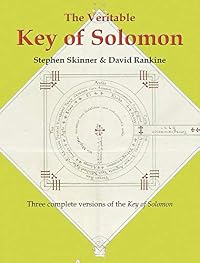
Following a timeline, it begins with the first grimoires, the Graeco-Egyptian papyri. Egypt was thought to be the birthplace of all magic, making its mark in every grimoire, secret society and occult work. Hermes Trismegistus, a mythical conflation of Thoth and Hermes, becomes an "original author" of grimoires. Moses, as another, was redefined as a magical Egyptian. Then King Solomon, whom the archangel Michael supposedly bestowed the power of trapping demons (a la Supernatural). The Clavicule or Key of Solomon is one of the more enduring grimoires, surviving into modern times. It was said that even Virgil had one. show more Saints became associated with them too, St. Cyprian being the most popular well into the 19thc. Science, in its infancy, was akin to magic so that Cornelius Agrippa and Paracelsus are featured in cover titles, not to mention rumored alchemists. Even 18thc. adventurers, like Cagliostro and Casanova, dabbled with these tomes.
But what was the purpose of a grimoire? Some focused on the magician's desires, others were medicinal or to safely hunt for treasure. While it was the power of the written word that made the grimoire, there were often stipulations for ink, parchment, or the material used to bind it. They found their way to Iceland, Toledo, Geneva, and even Canada! But in France (Affair of the Poisons?) the printing of grimoires exploded. The “Petit Albert” is the most notorious, then the “Dragon Rouge” emerged during the French Revolution. My favorite chapters were about the creolization of grimoires and their incorporation into African (through colonization) and PA Dutch folk practices. But thanks to an adaptable format and no single authorship, the grimoire survived book burnings, witch hunts and even Nazi Germany. As Davies rightly puts it: “There is no sign of these books being closed for good.” show less
Following a timeline, it begins with the first grimoires, the Graeco-Egyptian papyri. Egypt was thought to be the birthplace of all magic, making its mark in every grimoire, secret society and occult work. Hermes Trismegistus, a mythical conflation of Thoth and Hermes, becomes an "original author" of grimoires. Moses, as another, was redefined as a magical Egyptian. Then King Solomon, whom the archangel Michael supposedly bestowed the power of trapping demons (a la Supernatural). The Clavicule or Key of Solomon is one of the more enduring grimoires, surviving into modern times. It was said that even Virgil had one. show more Saints became associated with them too, St. Cyprian being the most popular well into the 19thc. Science, in its infancy, was akin to magic so that Cornelius Agrippa and Paracelsus are featured in cover titles, not to mention rumored alchemists. Even 18thc. adventurers, like Cagliostro and Casanova, dabbled with these tomes.
But what was the purpose of a grimoire? Some focused on the magician's desires, others were medicinal or to safely hunt for treasure. While it was the power of the written word that made the grimoire, there were often stipulations for ink, parchment, or the material used to bind it. They found their way to Iceland, Toledo, Geneva, and even Canada! But in France (Affair of the Poisons?) the printing of grimoires exploded. The “Petit Albert” is the most notorious, then the “Dragon Rouge” emerged during the French Revolution. My favorite chapters were about the creolization of grimoires and their incorporation into African (through colonization) and PA Dutch folk practices. But thanks to an adaptable format and no single authorship, the grimoire survived book burnings, witch hunts and even Nazi Germany. As Davies rightly puts it: “There is no sign of these books being closed for good.” show less
Another incredibly dense nonfiction book for another one of my hyper-fixations. It admittedly took me eight hundred years to read this, because it wasn't exactly the book I was looking for, but there was so much fascinating information here that I kept going back.
This is a MASSIVE sprawling history of magic books, mostly those playing around the edges of Christian mythos, but with interesting comparisons to other systems of folk magic both associated with other major religions and not. How all of these interacted with changing technologies (like the printing press), changes in the power structure of The Church (The Inquisition, The Reformation, etc.), colonialism, influences of neighboring religions, etc.
SO MUCH INFORMATION. A reference show more I'll be happy to keep on my shelves. show less
This is a MASSIVE sprawling history of magic books, mostly those playing around the edges of Christian mythos, but with interesting comparisons to other systems of folk magic both associated with other major religions and not. How all of these interacted with changing technologies (like the printing press), changes in the power structure of The Church (The Inquisition, The Reformation, etc.), colonialism, influences of neighboring religions, etc.
SO MUCH INFORMATION. A reference show more I'll be happy to keep on my shelves. show less
I found this book interesting, but also incredibly dense. It took some time to get through each section, to be sure!
While there was promising reference to discussion of written magic all over the world early in the book (and the introduction regarded all manner of written magic), it failed to be realised; it is overwhelmingly Christianity and generally Euro-centric. Africa and parts of the Middle East and very occasionally Asia are mentioned, but only in terms of Western grimoires and religion.
As a history book, with heavy leaning on developments in Christianity as well as books and printing, it was quite interesting. In the light of what it promised I felt it fell a bit short.
There was more space given to discussion of Lovecraft's show more fictitious creation of the Necronomicon than the entirety of written magic in all of Asia, for example. And about the same amount of space given to Western TV and movies presenting magic with a relation to the written word.
The history portions jinked oddly at times between whether to relate stories in terms of provable reality (e.g. 'claiming he believed himself under the auspices of the Devil, he murdered [...]') vs. presenting the supernatural as fact (e.g. 'he signed a pact with the Devil in [year], before a cadre of angelic witnesses, gaining demonic servants'") and it was a bit jarring.
I also personally found myself unsatisfied or put off by Davies' conclusions such as brushing off the created-for-fiction (indeed, books that only exist in fictitious references and were never written) nature of several grimoires (such as the Necronomicon, most recognisable among them) as being fake creations and therefore real grimoires. Um? Regardless of belief or lack thereof (and many historical grimoires were faked to be sure), being created as part of a fictional narrative (indeed, only as a reference within such stories!) certainly seems to be to be rather different!
The discussion of Gardner and his creation of Wicca (and various falsities that led to it) was interesting (though much of it was already familiar to me), but I was also irritated at Davies' dismissive summation that all modern paganism is necessarily and obviously Wiccan. Likewise with his attitude towards . . . religion in general, perhaps? (Though that was not entirely how he stated it, the framing certainly led to that conclusion.) As something less prevalent in the modern Western world because of advancements in technology, medicine, and similar. It likewise felt irritating and dismissive, but also rather tone deaf and removed from reality. show less
While there was promising reference to discussion of written magic all over the world early in the book (and the introduction regarded all manner of written magic), it failed to be realised; it is overwhelmingly Christianity and generally Euro-centric. Africa and parts of the Middle East and very occasionally Asia are mentioned, but only in terms of Western grimoires and religion.
As a history book, with heavy leaning on developments in Christianity as well as books and printing, it was quite interesting. In the light of what it promised I felt it fell a bit short.
There was more space given to discussion of Lovecraft's show more fictitious creation of the Necronomicon than the entirety of written magic in all of Asia, for example. And about the same amount of space given to Western TV and movies presenting magic with a relation to the written word.
The history portions jinked oddly at times between whether to relate stories in terms of provable reality (e.g. 'claiming he believed himself under the auspices of the Devil, he murdered [...]') vs. presenting the supernatural as fact (e.g. 'he signed a pact with the Devil in [year], before a cadre of angelic witnesses, gaining demonic servants'") and it was a bit jarring.
I also personally found myself unsatisfied or put off by Davies' conclusions such as brushing off the created-for-fiction (indeed, books that only exist in fictitious references and were never written) nature of several grimoires (such as the Necronomicon, most recognisable among them) as being fake creations and therefore real grimoires. Um? Regardless of belief or lack thereof (and many historical grimoires were faked to be sure), being created as part of a fictional narrative (indeed, only as a reference within such stories!) certainly seems to be to be rather different!
The discussion of Gardner and his creation of Wicca (and various falsities that led to it) was interesting (though much of it was already familiar to me), but I was also irritated at Davies' dismissive summation that all modern paganism is necessarily and obviously Wiccan. Likewise with his attitude towards . . . religion in general, perhaps? (Though that was not entirely how he stated it, the framing certainly led to that conclusion.) As something less prevalent in the modern Western world because of advancements in technology, medicine, and similar. It likewise felt irritating and dismissive, but also rather tone deaf and removed from reality. show less
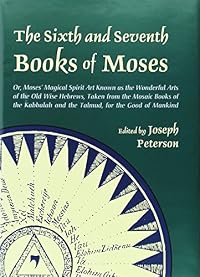
Owen Davies obviously loves his subject, and he obviously has done his research. The result is a big book with tiny type that discusses grimoires (books of magic spells) from the birth of writing to the twenty-first century. That's a lot of ground to cover, so Davies covers it rather swiftly. He introduces the books, the characters that created them, and the impact of the books on magic, superstition, and folklore. No magical book or grimoire you can think of is left un-discussed. From the Agrippa's Three or Four <i>Occult Books of Philosophy</i> and <i>Key of Solomon</i>, to Barret and Levi, Mathers and Waite, to pulp classics like the <i>Sixth and Seventh Book of Moses</i> and LaVey's <i>Satanic Bible</i>/ Even made-up classics like show more Lovecraft's <i>Necronomicon</i> make an appearance. There could be, and should be, dozens more illustrations (say, like Seligman's <i>The Mirror of Magic</i>). There are several tiny errors I found, that make me wonder about the book overall (for instance, Davies calls the founder of the Nation of Islam "W. P. Fard" (p. 239), when he was W. D. Fard). Good further reading bibliography and a good set of endnotes. Index and illustrations, both in the text and a set of plates. A decent book, if you like the subject and have a scholarly, bookish bent, probably a dense bore for dilettantes and dullards. show less
Despite its length, this is more of a broad rather than an in-depth history of books of magical knowledge, and as interesting as it is, it's a bit difficult to follow. Davies assumes a fair amount of background knowledge on the part of the reader (despite what seems to be an effort to market this book to the general reader) on a variety of topics, including magic books, the practice of magic, church history, and the history of print.
It's an interesting read, but I spent most of the book wishing for more detail. As it's written, it's hard to tell if the details aren't known, or if Davies didn't find them important enough to include. The scope of the book is ambitious enough that no one topic or period gets a lot of attention, but Davies show more doesn't take the time to be clear, either, when he's referring to a book with the same title in different ages, whether it's indeed the same book - there are hints that it is not, always, and these suggest that Davies knows more than he's sharing with the reader. It's hard not to find that off-putting. Anyone hoping based on the back cover copy for an in-depth discussion of magical books in late twentieth and early twenty-first century popular culture will be disappointed, as that's relegated to a few dismissive, incomplete, and possibly badly-researched paragraphs in an epilogue.
By far the most irritating thing about this book, though, is the failures in editing. There are multiple instances of misused words and other typographical errors throughout. One expects better from Oxford University Press. show less
It's an interesting read, but I spent most of the book wishing for more detail. As it's written, it's hard to tell if the details aren't known, or if Davies didn't find them important enough to include. The scope of the book is ambitious enough that no one topic or period gets a lot of attention, but Davies show more doesn't take the time to be clear, either, when he's referring to a book with the same title in different ages, whether it's indeed the same book - there are hints that it is not, always, and these suggest that Davies knows more than he's sharing with the reader. It's hard not to find that off-putting. Anyone hoping based on the back cover copy for an in-depth discussion of magical books in late twentieth and early twenty-first century popular culture will be disappointed, as that's relegated to a few dismissive, incomplete, and possibly badly-researched paragraphs in an epilogue.
By far the most irritating thing about this book, though, is the failures in editing. There are multiple instances of misused words and other typographical errors throughout. One expects better from Oxford University Press. show less
Members
- Recently Added By
Author Information

23+ Works 1,654 Members
Owen Davies is Reader in Social History at the University of Hertfordshire, UK.
Common Knowledge
- Canonical title
- Grimoires: A History of Magic Books
- Original publication date
- 2009-03-26
- People/Characters
- Hermes Trismegistus; King Solomon; Moses; Helinand of Froidmont; St, Cyprian of Antioch; Michael Scot (show all 65); Albertus Magnus; Christian Rosenkreutz; Cornelius Agrippa; Johannes Trithemius; Georg Faust; Giambattista della Porta; Johann Weis; Simon Forman; Thomas Tryon; Dorcas Hoar; Marie Vigoureux; Marie Bosse; La Voisin; Catherine Trianon; Johann Joseph Gassner; Cagliostro (Giuseppe Balsamo, Count Cagliostro); Giacomo Girolamo Casanova, Chevalier de Seingalt; Marc-Rene de Voyer d'Argenson; Laurent Bordelon; Henrik Kokborg; Ebenezer Sibly; Francis Barrett; Johann Zimmerman; Johann Boehme; Johannes Kelpius; Johann Gottfried Sehlee; Christopher Witt; Christopher Lehman; Conrad Beissel; Joseph Smith; Joseph-Norbert Duquet; Helena Petrovna Blavatsky; Eliphas Lévi; Alphonse Louis Constant; Jean Du Potet de Sennevoy; Beverly Randolph; Revd William Alexander Ayton; Samuel Liddell Mathers; Arthur Edward Waite; Fitzherbert Edward Stafford-Jerningham; Ernest Alfred Wallis Budge; Aleister Crowley; Jean Sempe; Gerard Encausse; William Delaurence; Charles W. Roback; Noble Drew Ali; Benjamin Rucker; Guido von List; Fritz Angerstein; Howard Phillips Lovecraft; Montague Summers; Gerald Gardner; Anton LaVey; Albertus Parvus Lucius; Francois Duthil; Rose Peres; Moyse-Joseph Agilar; Georg Conrad Horst
- Important places
- Toledo, Castile-La Mancha, Spain; Constantinople, Byzantine Empire; Paris, Île-de-France, France; Geneva, Geneva, Switzerland; Salamanca, Castile and León, Spain; Ephrata, Pennsylvania, USA
- First words
- The modern history of ancient and medieval magic is vast and often inaccessible to the non-expert, yet there is much to catch the imagination and challenge our understanding of religion and society in past eras.
- Last words
- (Click to show. Warning: May contain spoilers.)There is no sign of these books being closed for good.
Classifications
- Genres
- Nonfiction, Religion & Spirituality, History, General Nonfiction
- DDC/MDS
- 133.4409 — Philosophy and Psychology Parapsychology & occultism Specific topics in parapsychology and occultism Demonology and witchcraft Spell casting
- LCC
- PN56 .M23 .O93 — Language and Literature Literature (General) Literature (General) Theory. Philosophy. Esthetics
- BISAC
Statistics
- Members
- 532
- Popularity
- 55,849
- Reviews
- 11
- Rating
- (4.02)
- Languages
- English
- Media
- Paper, Ebook
- ISBNs
- 4
- ASINs
- 3