On This Page
Description
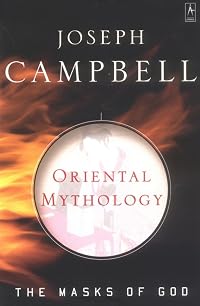
Explore the power of myth as it flowered in AsiaIn this second volume of The Masks of God — Joseph Campbell's major work of comparative mythology — the pre-emimenent mythologist looks at Asian mythology as it developed over the course of five thousand years into the distinctive religions of Egypt, Mesopotamia, India, China, and Japan.
The Masks of God is a four-volume study of world religion and myth that stands as one of Joseph Campbell's masterworks. On completing it, he show more wrote: Its main result for me has been the confirmation of a thought I have long and faithfully entertained: of the unity of the race of man, not only in its biology, but also in its spiritual history, which has everywhere unfolded in the manner of a single symphony, with its themes announced, developed, amplified and turned about, distorted, reasserted, and today, in a grand fortissimo of all sections sounding together, irrestibly advancing to some kind of mighty climax, out of which the next great movement will emerge.
This new digital edition, part of the Collected Works of Joseph Campbell series, includes over forty new illustrations.
(Comparative Mythology: Ancient Egypt, Hinduism, Buddhism, Jainism)
. show less
Tags
Recommendations













Member Reviews
Make no mistake, the Masks of God series by Joseph Campbell is something fierce.
The level of scholarship and devotion to the whole subject of mythology blows me away. Where the first book devoted itself to ancient mythos, the kind we can only infer from lacking sources, this Oriental Mythology tackles time-periods closer to home if not always particularly close.
The exceptions to this are Taoism and Buddhism. Both of these are treated in the perfect storytelling-way that the rest are treated. (And no worries, Christianity will get its day with equal time.)
This is Campbell, after all.
What we get here is Babylonian, Egyptian, Buddhist, Taoist, and a smattering of some others.
Did I enjoy the collective treatment and the positioning that show more showed us, in grand glory, how traditions and stories carry on from one culture to another? Hell, yeah. Did I appreciate the insight and the perspicacity of the author in laying it out in such an obvious and clear-as-day manner?
What do you think?
Yeah. I'm a fanboy. For good reason. Campbell has reshaped our society in more ways than one. Our whole way of looking at things has changed thanks to him. And no matter what your persuasion, a God Fearing Christian or any other faith, a clear eye is better than none.
I can and will thank the man for this. :)
Never go blindly. show less
The level of scholarship and devotion to the whole subject of mythology blows me away. Where the first book devoted itself to ancient mythos, the kind we can only infer from lacking sources, this Oriental Mythology tackles time-periods closer to home if not always particularly close.
The exceptions to this are Taoism and Buddhism. Both of these are treated in the perfect storytelling-way that the rest are treated. (And no worries, Christianity will get its day with equal time.)
This is Campbell, after all.
What we get here is Babylonian, Egyptian, Buddhist, Taoist, and a smattering of some others.
Did I enjoy the collective treatment and the positioning that show more showed us, in grand glory, how traditions and stories carry on from one culture to another? Hell, yeah. Did I appreciate the insight and the perspicacity of the author in laying it out in such an obvious and clear-as-day manner?
What do you think?
Yeah. I'm a fanboy. For good reason. Campbell has reshaped our society in more ways than one. Our whole way of looking at things has changed thanks to him. And no matter what your persuasion, a God Fearing Christian or any other faith, a clear eye is better than none.
I can and will thank the man for this. :)
Never go blindly. show less
From the beginning I liked Oriental Mythology quite a bit more than the first volume Primitive Mythology, even if like that first book, it could be rather dry and scholarly and somewhat rambling in its arguments. I think part of that is I felt I could trust his arguments more. So much of Primitive Mythology is based on archeological finds it made me continually wonder how many of his "facts" had been overtaken by new discoveries in the over 50 years that passed since the 1959 publication of that first volume. In this volume, however, covering the mythologies of Egypt, India, China and Japan he's on more solid ground, with written scripture forming the basis of his study rather than archeological finds or the fluid rituals of indigenous show more peoples.
I found the first part of this book comparing and contrasting Oriental (Hindu, Buddhist) and Occidental (Judeo-Christo-Muslim and Classical Greek) mythologies fascinating and illuminating. He sees the two cultures, though joined at the root, "branching off" into divergent and distinctive worldviews. What is key in oriental theology Campbell believes, is the "myth of eternal return" i.e. reincarnation until and unless you can break through the unending cycle to find the divinity within. He further sees a distinction between Hinduism ("let it go") and Far Eastern Buddhism ("let it come."). Western mythologies in contrast have a vision of creation/fall/restoration in a cosmic conflict where sides must be chosen. The role of the individual in the two different worldviews are also very different. Campbell states of the Western view:
Not life as a good soldier, but life as a developed, unique individual, is the ideal. And we shall search the Orient in vain for anything quite comparable. There the ideal, on the contrary, is the quenching, not the development, of ego.
I'm not sure I'd describe the Western tradition as so different in those terms. Certainly the Christian mystical and monastic tradition emphasizes self-sacrifice, renunciation of the world and quenching of the ego as well. Although Campbell also mentions the idea of another strain in Western mythology distinct from the monotheistic "People of the Book." The Greek idea of theology as poetry and play rather than dogmatic scripture, and the Greeks in the conflict between Man and God are on Man's side--as encapsulated in the myth of Prometheus. I have to admit, if I'm aligned with any mythological school as described in the book, it's this rebellious one I find most attractive, and it's an interesting way of looking at the various mythologies. I'm curious how he'll further develop those themes in the next volume, Occidental Mythology.
But most fascinating was Campbell's demonstrations of the connections between and elucidations of Asian religions, mythology and philosophy. I don't think I've yet squeezed all I can out of his survey of Indian, Chinese and Japanese history and culture. I'll need to reread this book someday after further reading on the subject. Parts were so dry I admit I did some judicious skimming, and wished to skim more. Yet it's rare that I read a book that both makes me understand better other ideas and books I've come across and leaves me hungry for more. In the course of reading this book I put together for myself a 14-page timeline of history and was busy each night after reading chapters of Oriental Mythology googling articles on Indian and Chinese history and Hinduism and Buddhism and was browsing the Religion and History section of my neighborhood bookstore recently looking for more to read on the subjects Campbell touched upon. The book made me want to reread Lao-Tzu and Confucius and delve into Sanskrit literature--hopefully after reading Oriental Mythology with more understanding. Right to the last sentence Campbell was offering up piercing insights. show less
I found the first part of this book comparing and contrasting Oriental (Hindu, Buddhist) and Occidental (Judeo-Christo-Muslim and Classical Greek) mythologies fascinating and illuminating. He sees the two cultures, though joined at the root, "branching off" into divergent and distinctive worldviews. What is key in oriental theology Campbell believes, is the "myth of eternal return" i.e. reincarnation until and unless you can break through the unending cycle to find the divinity within. He further sees a distinction between Hinduism ("let it go") and Far Eastern Buddhism ("let it come."). Western mythologies in contrast have a vision of creation/fall/restoration in a cosmic conflict where sides must be chosen. The role of the individual in the two different worldviews are also very different. Campbell states of the Western view:
Not life as a good soldier, but life as a developed, unique individual, is the ideal. And we shall search the Orient in vain for anything quite comparable. There the ideal, on the contrary, is the quenching, not the development, of ego.
I'm not sure I'd describe the Western tradition as so different in those terms. Certainly the Christian mystical and monastic tradition emphasizes self-sacrifice, renunciation of the world and quenching of the ego as well. Although Campbell also mentions the idea of another strain in Western mythology distinct from the monotheistic "People of the Book." The Greek idea of theology as poetry and play rather than dogmatic scripture, and the Greeks in the conflict between Man and God are on Man's side--as encapsulated in the myth of Prometheus. I have to admit, if I'm aligned with any mythological school as described in the book, it's this rebellious one I find most attractive, and it's an interesting way of looking at the various mythologies. I'm curious how he'll further develop those themes in the next volume, Occidental Mythology.
But most fascinating was Campbell's demonstrations of the connections between and elucidations of Asian religions, mythology and philosophy. I don't think I've yet squeezed all I can out of his survey of Indian, Chinese and Japanese history and culture. I'll need to reread this book someday after further reading on the subject. Parts were so dry I admit I did some judicious skimming, and wished to skim more. Yet it's rare that I read a book that both makes me understand better other ideas and books I've come across and leaves me hungry for more. In the course of reading this book I put together for myself a 14-page timeline of history and was busy each night after reading chapters of Oriental Mythology googling articles on Indian and Chinese history and Hinduism and Buddhism and was browsing the Religion and History section of my neighborhood bookstore recently looking for more to read on the subjects Campbell touched upon. The book made me want to reread Lao-Tzu and Confucius and delve into Sanskrit literature--hopefully after reading Oriental Mythology with more understanding. Right to the last sentence Campbell was offering up piercing insights. show less
Não sei se no fundo meus interesses mudaram ou alguma engrenagem girou, mas decidi largar este livro depois de empurrar uns meses com a barriga. Li o primeiro da série e, em meio a seus altos e baixos, terminei gostando e interessado a continuar; mas, quando algumas paginazinhas por dia deste me tomavam uma força e um esforço exagerado, e havendo a perspectiva de mais dois livros da série pela frente, não deu para continuar. Não sem aquela fagulha de interesse que move pela novidade. A prosa é muito técnica e as primeiras páginas repetem em excesso muito do livro anterior; apenas adicionam a mitologia egípcia e o texto das pirâmides, e de um jeito muito, muito denso. Faltou Índia, China e Japão. Mas num deu, não.
I love everything ever penned by Campbell-highly recommend! Like Bettelheim with European fairy tales, Campbell delves into the ways folktales used to act as cautionary illustrations to channel human behavior. This would be morality based on the way society actually functions, not on church teachings about how the world should be. Younger readers may not grasp how fabulous Campbell’s worldview first appeared because now it is so thoroughly believed, used, and imitated. But writers take note: His books are Number One on the syllabus for Hollywood Screenwriting 101. Everyone working in the arts or education—or anyone human—should read Campbell.
Excellent information, not crazy about the delivery.
Really not crazy about it.
I remember liking the Masks of God series a lot more when I was a teenager, but on a recent 2nd run-through I found it somewhat less satisfying. It made me feel unclean for liking Campbell in the first place, actually.
Why?
For one thing, Oriental Mythology is replete with massive amounts of information and anecdotes concerning various Eastern religions, but Campbell makes it quite clear where his personal judgments reside. This is where Comparative Mythology becomes something more like "Competitive Mythology". Apparently some religions are simply better than others. Some are more sophisticated. Some are more mature. (According to Campbell, these would be the show more religions of the West.) And the man gets very patronizing when he describes some of the quaint 'Oriental' myths that fail to measure up, so to speak.
The part I liked: as usual, I did enjoy some of the material taken directly from sacred texts. Good stuff, although where Campbell takes his interpretations is often a different matter.
Note: This is also the volume where I invented the Joseph Campbell Masks of God drinking game.
(You are strongly advised not to try it. I'm fairly sure it leads to fatal alcohol poisoning.)
Anyway, it's fairly simple. Every time Joseph Campbell mentions one of the following, you must take a drink: The Decline of the West by Oswald Spengler, Thomas Mann, or Nietzsche.*
One final thought: Joseph Campbell fervently fondled the words of great men (not women, never any women!) men like Nietzsche, Spengler, and company.. and he was NOT sorry. He was possibly their greatest fan. They are the glorious shining bricks in this pompous monolith of mythological dissection.
This series is the sort of thing that begs to be read aloud at your next DMV visit or on public transport of your choice. Make a fun game out of it. Who will beat you to death with their shoe first?
* For total obliteration, add James Joyce and Freud. show less
Really not crazy about it.
I remember liking the Masks of God series a lot more when I was a teenager, but on a recent 2nd run-through I found it somewhat less satisfying. It made me feel unclean for liking Campbell in the first place, actually.
Why?
For one thing, Oriental Mythology is replete with massive amounts of information and anecdotes concerning various Eastern religions, but Campbell makes it quite clear where his personal judgments reside. This is where Comparative Mythology becomes something more like "Competitive Mythology". Apparently some religions are simply better than others. Some are more sophisticated. Some are more mature. (According to Campbell, these would be the show more religions of the West.) And the man gets very patronizing when he describes some of the quaint 'Oriental' myths that fail to measure up, so to speak.
The part I liked: as usual, I did enjoy some of the material taken directly from sacred texts. Good stuff, although where Campbell takes his interpretations is often a different matter.
Note: This is also the volume where I invented the Joseph Campbell Masks of God drinking game.
(You are strongly advised not to try it. I'm fairly sure it leads to fatal alcohol poisoning.)
Anyway, it's fairly simple. Every time Joseph Campbell mentions one of the following, you must take a drink: The Decline of the West by Oswald Spengler, Thomas Mann, or Nietzsche.*
One final thought: Joseph Campbell fervently fondled the words of great men (not women, never any women!) men like Nietzsche, Spengler, and company.. and he was NOT sorry. He was possibly their greatest fan. They are the glorious shining bricks in this pompous monolith of mythological dissection.
This series is the sort of thing that begs to be read aloud at your next DMV visit or on public transport of your choice. Make a fun game out of it. Who will beat you to death with their shoe first?
* For total obliteration, add James Joyce and Freud. show less
the space given to india versus china, japan is outrageous; and why even include tibet, w the space given to it?
this is not to mention the exclusion of so many other literary mythic cultures of (jfc) "the orient" (korea, vietnam, burma, thailand, mongolia being the major ones)
do i even have to call this orientalist? given the fucking title? but it is orientalist, just to b clear
god the reductionism and stereotyping is HORRIBLE, and all follows the colonial logics laid out by the likes of mircea eliade, jung, and durkheim; ofc, campbell lacks the analytic insight of any competent structuralist
this is not to mention the exclusion of so many other literary mythic cultures of (jfc) "the orient" (korea, vietnam, burma, thailand, mongolia being the major ones)
do i even have to call this orientalist? given the fucking title? but it is orientalist, just to b clear
god the reductionism and stereotyping is HORRIBLE, and all follows the colonial logics laid out by the likes of mircea eliade, jung, and durkheim; ofc, campbell lacks the analytic insight of any competent structuralist
This was another great book by Joseph Campbell. Some parts left me slightly bored, but honestly, that's not a huge deal for me. I think Campbell really analyzed the Eastern mythologies well, although there were a few tinges of a European take on the myths. Despite the occasional European take, Campbell does his best to analyze the myths for what they are for their culture(s). (I may add to this review a little later, but I'm not too worried about it right now.)
Members
- Recently Added By
Lists

Mustich's 1000 Books to Read Before You Die: A Life Changing List
1,001 works; 20 members
Author Information

201+ Works 41,643 Members
Joseph Campbell was born in White Plains, New York on March 26, 1904. He received a B.A. in English literature in 1925 and an M.A. in Medieval literature in 1927 from Columbia University. He was awarded a Proudfit Traveling Fellowship to continue his studies at the University of Paris. After he had received and rejected an offer to teach at his show more high school alma mater, his Fellowship was renewed, and he traveled to Germany to resume his studies at the University of Munich. During the year he was housemaster of Canterbury School, he sold his first short story, Strictly Platonic, to Liberty magazine. In 1934, he accepted a position in the literature department at Sarah Lawrence College, a post he would retain until retiring in 1972. During his lifetime, he wrote more than 40 books including The Hero with a Thousand Faces, The Mythic Image, the four-volume The Masks of God, and The Power of Myth with Bill Moyers. During the 1940s and 1950s, he collaborated with Swami Nikhilananda on translations of the Upanishads and The Gospel of Sri Ramakrishna. He received several awards including National Institute of Arts and Letters Award for Contributions to Creative Literature and the 1985 National Arts Club Gold Medal of Honor in Literature. He died after a brief struggle with cancer on October 30, 1987. (Bowker Author Biography) show less
Some Editions
Awards and Honors
Notable Lists
Series

Work Relationships
Is contained in
Is an expanded version of
Common Knowledge
- Canonical title
- The Masks of God: Oriental Mythology
- Original publication date
- 1962
- People/Characters
- Buddha; Confucius; Enlil; Osiris; Ptah; Shiva (show all 7); Vishnu
- Important places
- India; Japan; China; the Fertile Cresent; Babylon; Ancient Egypt (show all 13); Ancient Greece; Indus Valley; Mesopotamia; Ancient Persia; Ancient Rome; Sumer; Ur
- First words
- The myth of eternal return, which is still basic to Oriental life, displays an order of fixed forms that appear and reappear through all time.
- Last words
- (Click to show. Warning: May contain spoilers.)The old doctrine of Egypt of the Secret of the Two Partners, the Mahayana of Voidness, Mutual Arising and the Flower Wreath, the Taoist of the complementarity of yang and yin, the Chinese Communist of interpermeation, and the Tantric lore of the presence within each being of all the gods and demons of all the storied heavens and hells: these, it would seem, variously turned and phrased, represent the one timeless doctrine of eternal life—the nectar of the fruit of the tree in the garden that Western man, or at least a notable number of his company, failed to eat.
- Blurbers
- Davis, Robert G.
- Original language
- English
Classifications
- Genres
- Anthropology, Religion & Spirituality, Nonfiction, General Nonfiction, History, Philosophy
- DDC/MDS
- 291.13 — Religion Other religions [Formerly: General Religious Topics] [formerly: Religious mythology, general classes of religion, interreligious relations and attitudes, social theology. Relocated to 201] Archetypal Mythology
- LCC
- BL311 .C27 — Philosophy, Psychology and Religion Religions. Mythology. Rationalism Religions. Mythology. Rationalism The myth. Comparative mythology
- BISAC
Statistics
- Members
- 1,982
- Popularity
- 10,680
- Reviews
- 16
- Rating
- (4.11)
- Languages
- 7 — Czech, English, German, Italian, Portuguese, Spanish, Turkish
- Media
- Paper, Audiobook, Ebook
- ISBNs
- 23
- ASINs
- 23