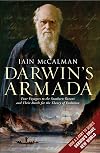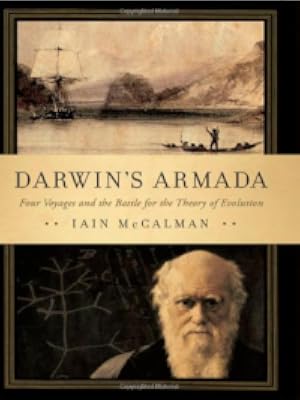
Darwin's Armada: Four Voyages and the Battle for the Theory of Evolution
by Iain McCalman
On This Page
Description
Cultural historian Iain McCalman tells the stories of Charles Darwin and his most vocal supporters and colleagues: Joseph Hooker, Thomas Huxley, and Alfred Wallace. Beginning with the somber morning of April 26, 1882--the day of Darwin's funeral--Darwin's Armada steps back in time and recounts the lives and scientific discoveries of each of these explorers. The four amateur naturalists voyaged separately from Britain to the southern hemisphere in search of adventure and scientific fame. From show more Darwin's inaugural trip on the Beagle in 1835 through Wallace's exploits in the Amazon and Malaysia in the 1840s and 1850s, each man independently made discoveries that led him to embrace Darwin's groundbreaking theory of evolution. This book reveals the untold story of Darwin's greatest supporters who, during his life, campaigned passionately in the war of ideas over evolution and who lived on to extend and advance the scope of his work.--From publisher description. show lessTags
Recommendations
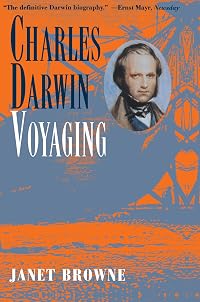
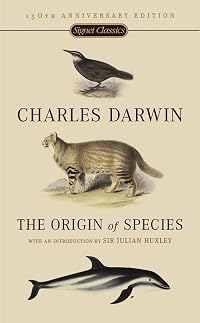
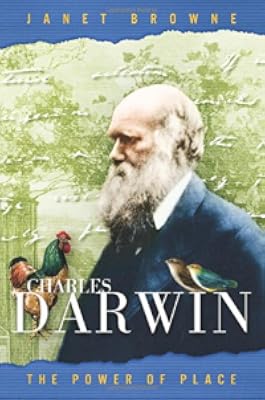
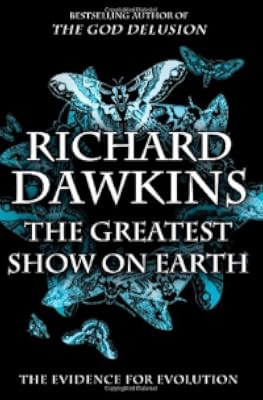
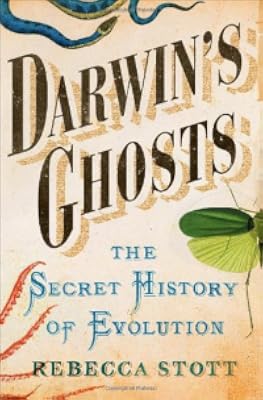
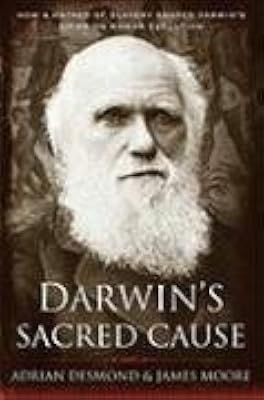

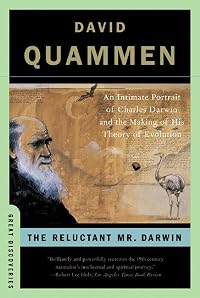





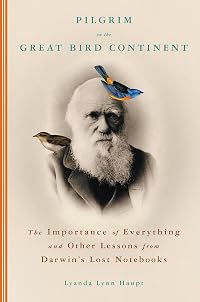
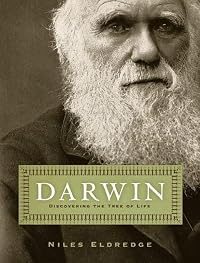


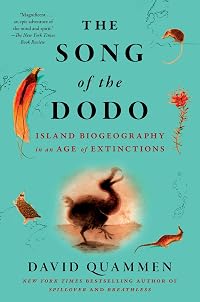

Member Recommendations
Member Reviews
McCalman's book is a gem.
Describes how the scientific understanding of four of the founders of evolutionary theory was influenced by their respective years of exploration and personal field work in the Southern Hemisphere.
These voyagers inclued Charles Darwin's circumnavitation of the globe (of course) from 1831-36, Joseph Hooker (the botanist who becam Darwin's close friend who accompanied the Ross expedition to Antarctica and the islands in the Southern Ocean) from 1839-43, Thomas Huxley who joined the Rattlesnake's expedition along the east coast of Australia from Sydney to Cape York and southeastern New Guinea from 1846-50, and Alfred Wallace from 1848-66 in the Amazon and SE Asia.
Darwin and Wallace independently developed the show more understanding of how variation, accompanied by excess reproduction and selective elimination led to change through time and the evolution of new species. Hooker and Huxley, together with Wallace had the understanding, energy and determination to publicize and defend the theory.
The last part of the book explores the publication, conflicts and defense of the theory from its publication in 1859 through to Darwin's death in 1882.
The narrative is brisk and compelling, and the science is well explained. Even though I am an evolutionary biologist, I learned a lot of history about Hooker, Huxley and Wallace that I did not know. There are few books on the history of science that one could call page-turners that are difficult to put down. This is one. show less
Describes how the scientific understanding of four of the founders of evolutionary theory was influenced by their respective years of exploration and personal field work in the Southern Hemisphere.
These voyagers inclued Charles Darwin's circumnavitation of the globe (of course) from 1831-36, Joseph Hooker (the botanist who becam Darwin's close friend who accompanied the Ross expedition to Antarctica and the islands in the Southern Ocean) from 1839-43, Thomas Huxley who joined the Rattlesnake's expedition along the east coast of Australia from Sydney to Cape York and southeastern New Guinea from 1846-50, and Alfred Wallace from 1848-66 in the Amazon and SE Asia.
Darwin and Wallace independently developed the show more understanding of how variation, accompanied by excess reproduction and selective elimination led to change through time and the evolution of new species. Hooker and Huxley, together with Wallace had the understanding, energy and determination to publicize and defend the theory.
The last part of the book explores the publication, conflicts and defense of the theory from its publication in 1859 through to Darwin's death in 1882.
The narrative is brisk and compelling, and the science is well explained. Even though I am an evolutionary biologist, I learned a lot of history about Hooker, Huxley and Wallace that I did not know. There are few books on the history of science that one could call page-turners that are difficult to put down. This is one. show less
Interesting, but a little on the long side. But in all fairness, I'm not sure what I would have cut. The book really fleshes out how Thomas Huxley, Joseph Hooker and Alfred Wallace advanced Darwin's ideas and helped him solidify his ideas for The Origin of the Species. Wallace was the most impressive of the lot. As a self-made, self-educated man, he independently came to many of the same conclusions as Darwin and added more material to the theory of evolution than did Huxley and Hooker, who had much more in the way of advantages in life. Watching how everything came together and how it was received were also highlights of the book.
Imagine adventures on the high seas where intrepid explorers endure rough seas, extreme cold, heat, bandits and disease. Imagine exploration of foreign lands and foreign people. Imagine an intense, protracted struggle to introduce a new area of science amidst fierce opposition from religious circles and the scientific establishment.
The science of evolution developed out of the struggles and insights of these brave explorers during their journeys. This book captures these adventures in individual stories that overlap into a complete rendering of the birth of the theory of evolution.
Darwin may of been given credit for the theory of evolution, but he had help from his friends. Joseph Hooker, Thomas Huxley and Alfred Wallace all set sail show more motivated by the desire to further understand the world they lived in and the mechanisms that shaped life. All came backed changed men with exciting insights and observations on native people, plants and wildlife. Wallace spent years in Brazil. Hooker made it to the South Pole. Darwin landed on the Galapagos Islands. Huxley found the love of his life during his time exploring the south seas.
I really enjoyed this book. It isn't so much about the fundamental details about evolution as it is about the adventure and discoveries that lead to the formation of the theory. The first 2/3 of the book is dedicated to the separate voyages of Darwin, Wallace, Huxley and Hooker. The last 1/3 of the book deals with the friendships developed between the men, and the fight that occurred to firmly establish the theory. While Darwin gets the credit, Wallace developed similar ideas during the same time. Huxley and Hooker also contributed to the science of evolution with their individual insights with plants and wildlife and their unwavering support of Darwin and his theory.
If you like an adventure story, a love story and a story of scientific revolution, then this book is for you.
Recommended. show less
The science of evolution developed out of the struggles and insights of these brave explorers during their journeys. This book captures these adventures in individual stories that overlap into a complete rendering of the birth of the theory of evolution.
Darwin may of been given credit for the theory of evolution, but he had help from his friends. Joseph Hooker, Thomas Huxley and Alfred Wallace all set sail show more motivated by the desire to further understand the world they lived in and the mechanisms that shaped life. All came backed changed men with exciting insights and observations on native people, plants and wildlife. Wallace spent years in Brazil. Hooker made it to the South Pole. Darwin landed on the Galapagos Islands. Huxley found the love of his life during his time exploring the south seas.
I really enjoyed this book. It isn't so much about the fundamental details about evolution as it is about the adventure and discoveries that lead to the formation of the theory. The first 2/3 of the book is dedicated to the separate voyages of Darwin, Wallace, Huxley and Hooker. The last 1/3 of the book deals with the friendships developed between the men, and the fight that occurred to firmly establish the theory. While Darwin gets the credit, Wallace developed similar ideas during the same time. Huxley and Hooker also contributed to the science of evolution with their individual insights with plants and wildlife and their unwavering support of Darwin and his theory.
If you like an adventure story, a love story and a story of scientific revolution, then this book is for you.
Recommended. show less
Loved this book. Nicely ties together the voyages of Darwin, hooker Huxley and Wallace and refutes those who try to accuse Darwin of having mistreated Wallace.
An excellent micro-history, well written, full of adventure in the best tradition of exploring land, sea, and mind.
recommended by Steve Rose. Not yet sure why
Ratings
Members
- Recently Added By
Published Reviews
ThingScore 75
This book's claim to novelty, and its main virtue, lies in McCalman's decision to juxtapose the periods in each of the protagonists' lives when they were travelling. Individually, Darwin, Hooker, Huxley and Wallace are already the best-studied anglophone naturalists of the nineteenth century. McCalman breaks no new ground in his research, relying on their published travel narratives and show more memoirs and on recent biographies, particularly those by Janet Browne, Jim Endersby, Adrian Desmond, James Moore and Ross Slotten. But by holding events in England at arm's length, McCalman forces us to notice the similarities of the men's intellectual and emotional experiences as well as of their physical privations. He thus sheds light on the depth of their mutual sympathies in later years. show less
added by jlelliott
Lists

Bibliography of How the Old World Ended by Jonathan Scott
308 works; 1 member
Author Information
14+ Works 794 Members
Iain McCalman is a fellow of the Royal Historical Society, a historian, a social scientist, and an explorer. He is the author of the award-winning Darwin's Armada, The Last Alchemist, and Radical Underworld. A professor of history at the University of Sydney, he has also been a historical consultant and narrator for documentaries on the BBC and show more has been interviewed by Salon and the World Science Festival. show less
Awards and Honors
Work Relationships
Common Knowledge
- Original publication date
- 2009-08
- People/Characters
- Charles Darwin [Charles Robert: 1809-1882]; Thomas Henry Huxley; Joseph Hooker; Alfred Russel Wallace
- Related movies
- Darwin's Brave New World (2009 | IMDb)
- Blurbers
- Rose, Steven
Classifications
Statistics
- Members
- 232
- Popularity
- 140,962
- Reviews
- 6
- Rating
- (3.98)
- Languages
- English
- Media
- Paper, Ebook
- ISBNs
- 11
- ASINs
- 6