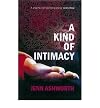
A Kind of Intimacy
by Jenn Ashworth
On This Page
Description
A darkly comic tale, 'A Kind of Intimacy' is an offbeat and ironic study of misunderstandings. It traces the dark possibilities of best intentions going awry, and gives an unsettling glimpse into a clumsy young woman who has too much in common with the rest of us to be written off as a monster.Tags
Recommendations














































Member Recommendations

Soupdragon Glaister's book has similar themes but I found it more convincing.

bluepiano As in A Kind of Intimacy, a woman tells of beginning a new life in a new house and, unbeknownst to herself, of her ensuing psychological deterioration.
Member Reviews
This is why I love book groups: they draw your attention to books you might otherwise never have discovered.
What's it about?
Jenn Ashworth's debut novel, 'A kind of Intimacy', stars Annie, a lonely, obese woman who narrates her increasingly awkward attempts to build a new life and get to know her new neighbours - without revealing too much about her past.
I found the blurb intriguing and the opening lines drew me in:
"After the van had been loaded and sent on its way I took off all my clothes and kicked the sofa I was about to abandon. Not just a little kick either. I really belted it."
Annie isn't just abandoning a sofa. Gradually, through her recollection of the past and her inadvertent admissions to her neighbours, she reveals a darkly show more disturbing history and, more frighteningly, a deeply deluded sense of her self and her interactions with the world. From her early attempts to seduce the milkman to her unjustifiable conviction that next-door neighbour Neil is preparing to leave his sexy young girlfriend, Lucy, for her, Annie reads the world around her as she wishes it was, twisting evidence in ways that are occasionally astonishing. (Noisy sex next door? It must be Neil's way of letting Lucy down gently.)
What's it like?
The gaps between Annie's narrative and the reality the reader can perceive initially create sympathy, especially as the other characters can be distinctly unsympathetic - Lucy is cruel about Annie's weight, neighbourhood watch member Sangita is a gossip - but as time draws on, Annie's misinterpretation takes a darker turn and her deliberate obtuseness becomes horrifying.
It might sound odd to say that I enjoyed this, and perhaps I mostly mean that I enjoy thinking over the whole conceit in retrospect. While reading, I wondered how far Annie really was self-aware and conscious of the narrative she was spinning; by the end of the novel it seemed unbelievable that she could really believe what she was saying. That isn't to say that I thought the book was flawed. Actually, the ending is so effective because all the preceding events help the reader to understand that Annie's insistent lack of awareness is not pathetic or sad but dangerous.
Unusually, I felt the praise on the back cover was entirely justified. Alison Flood from The Guardian notes that 'A kind of intimacy' has been compared to 'Notes on a Scandal' by Zoë Heller, which is entirely appropriate (and another book I absolutely loved). The blurb suggests that Annie has "too much in common with the rest of us to be written off as a monster" and I suspect this is what makes both books so powerful. It is easy to build small interactions into intensely significant ones if you are feeling particularly vulnerable for whatever reason. It is more difficult to be bothered to eat well if you're persistently cooking - or, eventually, microwaving - for one. These small truths make us feel that we can understand some of Annie's world, that she is not an Evil Monster, but an ordinary person gone badly awry.
Annie's narrative voice is very engaging and easy to read; despite being chronically short of time I finished the book within a few days because it was so easy to pick up and slip back into her world. The ending is dramatic, perhaps overly so for some readers, but I felt that it worked well with the preceding material and I liked that there was a definite closure to the novel.
Final thoughts
I really enjoyed Ashworth's debut novel and will be keeping an eye out for 'A Cold Light', her second novel, which has an almost equally intriguing premise. Reading this has also made me want to re-read 'Notes on a Scandal', though this will have to wait until I have made a respectable indentation in the 'borrowed' section of my TBR pile.
Some readers have complained that Annie's malaise is too obvious, seen too quickly, and removes doubt from the reader's mind. I disagree that it should be hidden; by introducing Annie's deluded perspective early on the reader isn't wondering whether or not she can be trusted, instead they are wondering with increasing urgency what she has done (does she have a daughter? If so, where is she?) and what she might do yet. This creates a great deal more tension than simply wondering whether or not Annie can be trusted.
Ashworth has been commended for her comic gifts and there is dark humour here, but it's more shake-your-head-in-mildly-amused-disbelief than ooh-that's-funny-but-a-bit-naughty-so-I-shouldn't-laugh-at-it-really. Amusing, but not laugh-out-loud funny. This isn't intended as a criticism, simply an observation that I would market his book based on its narrative strength and dark tone rather than its comic aspect. (Besides which, I always find this kind of "comedy" deeply uncomfortable as you are being encouraged to laugh at someone who is clearly Not Quite Right.)
In short, I highly recommended 'A kind of Intimacy' if you enjoy reading unreliable narrators, novels which focus on personal relationships and / or darkly comic stories. show less
What's it about?
Jenn Ashworth's debut novel, 'A kind of Intimacy', stars Annie, a lonely, obese woman who narrates her increasingly awkward attempts to build a new life and get to know her new neighbours - without revealing too much about her past.
I found the blurb intriguing and the opening lines drew me in:
"After the van had been loaded and sent on its way I took off all my clothes and kicked the sofa I was about to abandon. Not just a little kick either. I really belted it."
Annie isn't just abandoning a sofa. Gradually, through her recollection of the past and her inadvertent admissions to her neighbours, she reveals a darkly show more disturbing history and, more frighteningly, a deeply deluded sense of her self and her interactions with the world. From her early attempts to seduce the milkman to her unjustifiable conviction that next-door neighbour Neil is preparing to leave his sexy young girlfriend, Lucy, for her, Annie reads the world around her as she wishes it was, twisting evidence in ways that are occasionally astonishing. (Noisy sex next door? It must be Neil's way of letting Lucy down gently.)
What's it like?
The gaps between Annie's narrative and the reality the reader can perceive initially create sympathy, especially as the other characters can be distinctly unsympathetic - Lucy is cruel about Annie's weight, neighbourhood watch member Sangita is a gossip - but as time draws on, Annie's misinterpretation takes a darker turn and her deliberate obtuseness becomes horrifying.
It might sound odd to say that I enjoyed this, and perhaps I mostly mean that I enjoy thinking over the whole conceit in retrospect. While reading, I wondered how far Annie really was self-aware and conscious of the narrative she was spinning; by the end of the novel it seemed unbelievable that she could really believe what she was saying. That isn't to say that I thought the book was flawed. Actually, the ending is so effective because all the preceding events help the reader to understand that Annie's insistent lack of awareness is not pathetic or sad but dangerous.
Unusually, I felt the praise on the back cover was entirely justified. Alison Flood from The Guardian notes that 'A kind of intimacy' has been compared to 'Notes on a Scandal' by Zoë Heller, which is entirely appropriate (and another book I absolutely loved). The blurb suggests that Annie has "too much in common with the rest of us to be written off as a monster" and I suspect this is what makes both books so powerful. It is easy to build small interactions into intensely significant ones if you are feeling particularly vulnerable for whatever reason. It is more difficult to be bothered to eat well if you're persistently cooking - or, eventually, microwaving - for one. These small truths make us feel that we can understand some of Annie's world, that she is not an Evil Monster, but an ordinary person gone badly awry.
Annie's narrative voice is very engaging and easy to read; despite being chronically short of time I finished the book within a few days because it was so easy to pick up and slip back into her world. The ending is dramatic, perhaps overly so for some readers, but I felt that it worked well with the preceding material and I liked that there was a definite closure to the novel.
Final thoughts
I really enjoyed Ashworth's debut novel and will be keeping an eye out for 'A Cold Light', her second novel, which has an almost equally intriguing premise. Reading this has also made me want to re-read 'Notes on a Scandal', though this will have to wait until I have made a respectable indentation in the 'borrowed' section of my TBR pile.
Some readers have complained that Annie's malaise is too obvious, seen too quickly, and removes doubt from the reader's mind. I disagree that it should be hidden; by introducing Annie's deluded perspective early on the reader isn't wondering whether or not she can be trusted, instead they are wondering with increasing urgency what she has done (does she have a daughter? If so, where is she?) and what she might do yet. This creates a great deal more tension than simply wondering whether or not Annie can be trusted.
Ashworth has been commended for her comic gifts and there is dark humour here, but it's more shake-your-head-in-mildly-amused-disbelief than ooh-that's-funny-but-a-bit-naughty-so-I-shouldn't-laugh-at-it-really. Amusing, but not laugh-out-loud funny. This isn't intended as a criticism, simply an observation that I would market his book based on its narrative strength and dark tone rather than its comic aspect. (Besides which, I always find this kind of "comedy" deeply uncomfortable as you are being encouraged to laugh at someone who is clearly Not Quite Right.)
In short, I highly recommended 'A kind of Intimacy' if you enjoy reading unreliable narrators, novels which focus on personal relationships and / or darkly comic stories. show less
Ok, Imagine, for a moment, that you live on a nice quiet little middle-class street policed by the local volunteer neighborhood watch. All the lawns are tidy and well-kept. The neighbors know one other, and nothing much ever happens here. And then imagine that a madwoman moves in next door.
Now switch scenarios and imagine yourself as that madwoman, and that you’ve moved into that nice little neighborhood. You’ve not only moved there, but you want to belong, you want to mingle, you want to make friends................
I can compare A Kind of Intimacy's unreliable narrator, anti-heroine Annie Fairhurst to Stephen King’s Annie Wilkes from Misery. Need I say more?
Now switch scenarios and imagine yourself as that madwoman, and that you’ve moved into that nice little neighborhood. You’ve not only moved there, but you want to belong, you want to mingle, you want to make friends................
I can compare A Kind of Intimacy's unreliable narrator, anti-heroine Annie Fairhurst to Stephen King’s Annie Wilkes from Misery. Need I say more?
A Kind of Intimacy is a definite page turner. I couldn't wait to see what happened next. It was amazing to be inside of this woman's mind. She was so delusional but it felt honest. You could really tell that she believed in these things. This is a very well done portrait of an unstable mind.
Annie moves into a new house and immediately feels a 'connection' with her new neighbour Neil. Sadly she reads all kinds of things into the situation that are just not there. Her lies are lavish and her actions seem odd. As the story unfolds we discover more of her past, and the life of abuse she had led.
This story is painfully sad,yet not without its moments of black humour. The feeling for Annie is nothing other than a deep sadness at her suffering and struggle.
This story is painfully sad,yet not without its moments of black humour. The feeling for Annie is nothing other than a deep sadness at her suffering and struggle.
Ratings
Members
- Recently Added By
Lists

KayStJ's to-read list
1,616 works; 11 members
Author Information

17+ Works 673 Members
Awards and Honors
Awards
Distinctions
Common Knowledge
- Canonical title
- A Kind of Intimacy
- Original publication date
- 2009
- People/Characters
- Annie Fairhurst; Neil ; Lucy; Sangita Choudhry; Baravesh 'Barry' Choudhry; Raymond (show all 8); Will Fairhurst; Boris
- Important places
- Fleetwood, Lancashire, England, UK; Blackpool, Lancashire, England, UK; Lancashire, England, UK
- Epigraph
- In daily life, we never really understand each other, neither complete clairvoyance nor complete confessional exists. We know each other approximately, by external signs, and these serve well enough as a basis for society and... (show all) even for intimacy.
E.M. Forster, 'Aspects of the Novel'.
The past beats inside me like a second heart.
John Banville, 'The Sea'. - First words
- After the van had been loaded and sent on its way I took off all my clothes and kicked the sofa I was about to abandon.
- Last words
- (Click to show. Warning: May contain spoilers.)Yours in friendship,
Annie Fairhurst
(Your former neighbour) - Blurbers
- Diski, Jenny
Classifications
Statistics
- Members
- 207
- Popularity
- 155,560
- Reviews
- 4
- Rating
- (3.69)
- Languages
- English, French, Italian
- Media
- Paper, Audiobook, Ebook
- ISBNs
- 12
- ASINs
- 2