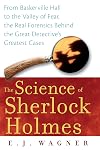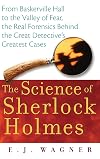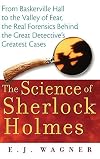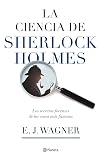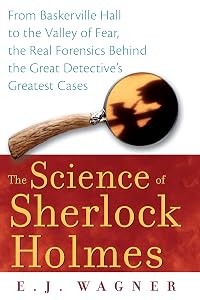
The Science of Sherlock Holmes
by E. J. Wagner
On This Page
Description
Praise for The Science of Sherlock Holmes ""Holmes is, first, a great detective, but he has also proven to be a great scientist, whether dabbling with poisons, tobacco ash, or tire marks. Wagner explores this fascinating aspect of his career by showing how his investigations were grounded in the cutting-edge science of his day, especially the emerging field of forensics.... Utterly compelling."" --Otto Penzler, member of the Baker Street Irregulars and proprietor of The Mysterious Bookshop show more ""E. J. Wagner demonstrates that without the work of Sherlock Holmes and his contemporaries, the CSI teams would be twiddling their collective thumbs. Her accounts of Victorian crimes make Watson's tales pale! Highly recommended for students of the Master Detective."" --Leslie S. Klinger, Editor, The New Annotated Sherlock Holmes ""In this thrilling book, E. J. Wagner has combined her considerable strengths in three disciplines to produce a work as compelling and blood-curdling as the best commercial fiction. This is CSI in foggy old London Town. Chilling, grim fun."" --John Westermann, author of Exit Wounds and Sweet Deal ""I am recommending this delightful work to all of my fellow forensic scientists.... Bravo, Ms. Wagner!"" --John Houde, author of Crime Lab: A Guide for Nonscientists ""A fabulously interesting read. The book traces the birth of the forensic sciences to the ingenuity of Sherlock Holmes. A wonderful blend of history, mystery, and whodunit."" --Andre Moenssens, Douglas Stripp Professor of Law Emeritus, University of Missouri at Kansas City, and coauthor of Scientific Evidence in Civil and Criminal Cases show lessTags
Recommendations















Member Reviews
For years now, I've wondered how much of the forensics science described in the Sherlock Holmes canon was factual. Given the currency of shows like CSI, it can be difficult to imagine that as early as the 1880s (when the Holmes stories were being penned) police were already utilizing trace evidence to solve crimes.
Turns out I'm not the only one wondering! The author, E.J. Wagner, combines his skills as a historian and his credentials as a Holmes fan to map the Sherlock Holmes stories against actual Victorian crimefighting techniques.
Devoting a chapter each to poisons, fingerprints, footprints, handwriting evidence, insect evidence, disguise, ballistics, dust/fiber analysis, blood evidence, how crime scenes were processed, and the show more science of autopsies, Wallace describes the methods that were actually being utilized at the time, gives examples of each in the Holmes canon, and then regales the reader with scores of real-life cases from the Victorian era in which the techniques were employed.
Though he's writing about science, Wagner's prose is breezy, his tone light, and his scientific descriptions highly accessible. Nor is a knowledge of the Holmes stories a prerequisite, as the author is diligent in ensuring that all quotes from the stories are accompanied by a sufficiently detailed description of context.
There's really something for everyone here. Historians will appreciate the opportunity to learn more about not-often-addressed aspects of the Victorian era. Fans of true & fictional crime will delight in the author's engrossing tales of notorious Victorian crimes (a combination of the usual "Victorian greatest hits of crime" - Lizzie Bordon, Jack the Ripper, Madame Lafarge, Dr. Crippen, etc. - enhanced by scores of lesser known but equally engrossing tales). And Sherlockians will relish the opportunity to learn more about how police methods influenced the Holmes tales ... and, even more fascinating, how the Holmes tales influenced police methods.
This is one book that deserves more attention than it has apparently gotten. Highly recommended! show less
Turns out I'm not the only one wondering! The author, E.J. Wagner, combines his skills as a historian and his credentials as a Holmes fan to map the Sherlock Holmes stories against actual Victorian crimefighting techniques.
Devoting a chapter each to poisons, fingerprints, footprints, handwriting evidence, insect evidence, disguise, ballistics, dust/fiber analysis, blood evidence, how crime scenes were processed, and the show more science of autopsies, Wallace describes the methods that were actually being utilized at the time, gives examples of each in the Holmes canon, and then regales the reader with scores of real-life cases from the Victorian era in which the techniques were employed.
Though he's writing about science, Wagner's prose is breezy, his tone light, and his scientific descriptions highly accessible. Nor is a knowledge of the Holmes stories a prerequisite, as the author is diligent in ensuring that all quotes from the stories are accompanied by a sufficiently detailed description of context.
There's really something for everyone here. Historians will appreciate the opportunity to learn more about not-often-addressed aspects of the Victorian era. Fans of true & fictional crime will delight in the author's engrossing tales of notorious Victorian crimes (a combination of the usual "Victorian greatest hits of crime" - Lizzie Bordon, Jack the Ripper, Madame Lafarge, Dr. Crippen, etc. - enhanced by scores of lesser known but equally engrossing tales). And Sherlockians will relish the opportunity to learn more about how police methods influenced the Holmes tales ... and, even more fascinating, how the Holmes tales influenced police methods.
This is one book that deserves more attention than it has apparently gotten. Highly recommended! show less
I love Sherlock Holmes. As I've mentioned on this blog before, my dog is even named Sherlock! I will pretty much read absolutely anything about the Great Detective, from canon to modernized fictional takes to non-fiction analysis. And I always have high hopes for every book on Holmes I read, that it can do justice to my favorite fictional character and the world Doyle created around him.
Luckily, The Science of Sherlock Holmes is a unique and well-written addition to the multitudes of Sherlock Holmes' books out there. Wagner takes a non-fiction approach to analysis of the canon, specifically through the lens of science and forensics.
Using both Holmes' cases and true crime from around the world, Wagner explores the history and development show more of forensic science throughout the ages. Everything from fingerprints to blood analysis is covered, and Wagner expertly weaves in Holmes' quotes and true crime tales to highlight and explain.
This is a book for fans of Sherlock Holmes, forensics, true crime, and just really interesting non-fiction reads. show less
Luckily, The Science of Sherlock Holmes is a unique and well-written addition to the multitudes of Sherlock Holmes' books out there. Wagner takes a non-fiction approach to analysis of the canon, specifically through the lens of science and forensics.
Using both Holmes' cases and true crime from around the world, Wagner explores the history and development show more of forensic science throughout the ages. Everything from fingerprints to blood analysis is covered, and Wagner expertly weaves in Holmes' quotes and true crime tales to highlight and explain.
This is a book for fans of Sherlock Holmes, forensics, true crime, and just really interesting non-fiction reads. show less
This book wasn't quite what I expected. I've read a few other volumes with "The science of..." in the title, and they've generally used some familiar work of fiction or pop culture as a jumping off point from which to discuss current scientific concepts. So I think I was expecting the author to bring up various details from Sherlock Holmes stories and then discuss what modern forensics would have to say about them, or something along those lines.
Instead, the book is much more focused on history, exploring what doctors and detectives of Arthur Conan Doyle's day knew or were learning about scientific ways to investigate crimes, with lots and lots of accounts of actual historical crimes, many of which would have been worthy of Holmes story show more themselves, and some of which, indeed, may have inspired Conan Doyle. It's interesting, if often somewhat macabre, stuff. More interesting, honestly, than the subject matter I was expecting would have been. I'd say it's well worth reading if you have an interest in history, medicine, and crime, even if you're not necessarily a huge devotee of Holmes. show less
Instead, the book is much more focused on history, exploring what doctors and detectives of Arthur Conan Doyle's day knew or were learning about scientific ways to investigate crimes, with lots and lots of accounts of actual historical crimes, many of which would have been worthy of Holmes story show more themselves, and some of which, indeed, may have inspired Conan Doyle. It's interesting, if often somewhat macabre, stuff. More interesting, honestly, than the subject matter I was expecting would have been. I'd say it's well worth reading if you have an interest in history, medicine, and crime, even if you're not necessarily a huge devotee of Holmes. show less
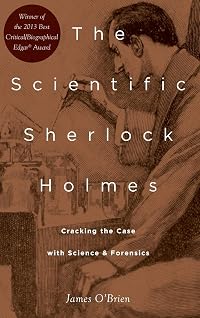
This book covers similar but different ground to The Scientific Sherlock Holmes: both books look at early developments in forensic science using the stories of Sherlock Holmes as an overarching framework. However, of the two, this one is better for a reader new to Holmes, because the quotes chosen are merely used as a springboard to discuss the history of forensic science, as opposed to analyzing Holmes's actual cases. Each chapter discusses an aspect of forensic science, such as trace analysis or fingerprints, and at the end the author includes some bonus miscellaneous facts under the section "Whatever Remains" -- facts that are interesting but couldn't really fit neatly within the body of the chapter. It's a good book to dip into, but show more also works well as a Sunday-afternoon read. Recommended if you like Holmes, Murdoch Mysteries or other mysteries set during the Victorian/Edwardian and later period. show less
Entertaining introduction to the history of forensic science and criminology. Loved the lengthly bibliography in the back so I could easily find more information on... whatever. Eugène François Vidocq is a badass.
A fascinating look into the development of forensic science in Victorian Times and how Sherlock Holmes embraced many of the newest methods in his investigations.
Hm, been awhile since I read this but I am bothered by my lack of reviews on Goodreads for all of the books that I have read. This book was easy to read but also a bit disappointing. I expected - more, somehow. Not having the book in front of me, I must go by memory but I remember that there wasn't enough detail about some of the topics and that others were fairly obvious. Still, it was basically an enjoyable book and I do like reading about new things and also about Sherlock Holmes. (Though if you look at what I've read, it's so far been lacking in a lot of Holmes books, but I do follow Holmes a bit on TV and the big screen.)
Members
- Recently Added By
Lists

Edgar Award
418 works; 15 members
Author Information

1+ Work 317 Members
E. J. Wagner is a crime historian, lecturer, teller of suspense stories for adults, and moderator of the annual Forensic Forum at Stony Brook University's Museum of Long Island Natural Sciences
Awards and Honors
Awards
Common Knowledge
- Canonical title
- The Science of Sherlock Holmes
- Original publication date
- 2006
- People/Characters
- Sherlock Holmes; John H. Watson
- Original language
- English
- Canonical DDC/MDS
- 363.25621
Classifications
- Genres
- Nonfiction, General Nonfiction, Science & Nature, History
- DDC/MDS
- 363.25621 — Society, government, & culture Social problems and social services Public Safety - Police, Crime Investigation Police services Criminal investigation & forensics Analysis of evidence Physical evidence Forensic sciences
- LCC
- HV8073 .W34 — Social sciences Social pathology. Social and public welfare. Criminology Social pathology. Social and public welfare. Criminal justice administration Police. Detectves. Constabulary Police duty. Methods of protection Investigation of crimes. Examination
- BISAC
Statistics
- Members
- 317
- Popularity
- 101,121
- Reviews
- 7
- Rating
- (4.04)
- Languages
- 5 — English, French, German, Italian, Spanish
- Media
- Paper, Ebook
- ISBNs
- 13
- ASINs
- 3