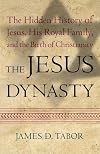
The Jesus Dynasty: The Hidden History of Jesus, His Royal Family, and the Birth of Christianity
by James D. Tabor
On This Page
Description
Based on a careful analysis of the earliest Christian documents and recent archaeological discoveries, The Jesus Dynasty offers a bold new interpretation of the life of Jesus and the origins of Christianity. Biblical scholar Tabor brings us closer than ever to the historical Jesus. He sheds new light on Jesus' relationship with John the Baptizer, the role played by his brother James, and how Paul's ministry transformed Jesus' message into what would become Christianity. Tabor has studied the show more earliest surviving documents of Christianity for more than thirty years. He reconstructs for us the movement that sought the spiritual, social, and political redemption of the Jews, a movement led by one family. This book offers an alternative version of Christian origins, one that takes us closer than ever to Jesus and his family and followers.--From publisher description. show lessTags
Recommendations























Member Reviews
Since the phenomenal success of "The DaVinci Code," with its provocative storyline about clues to a fantastic secret about Jesus Christ with clues buried in plain sight, others have rushed to tap into this interest. From the box office hits in the "National Treasure" series to other novels, people have tried to capture the blending of treasure hunt and history so prominent in Dan Brown's novel.
Particularly interesting have been the attempts of scholars to tie into these new-found (or at least newly profitable) historical interests. Numerous books about religious truths covered up over the centuries, but with clues in plain sight, have appeared in the last ten years -- several of them tied to the Knights Templar, the Renaissance, show more long-ignored stories about this historical Jesus, and other facets of Brown's novel. None has been more brazen in its theory, though, as James Tabor's "The Jesus Dynasty," which argues that the archeological and literary evidence suggests that Jesus of Nazareth was trying to establish an earthly Jewish kingdom.
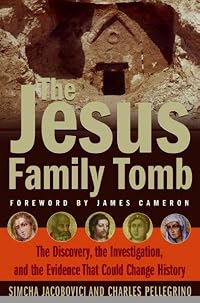
Tabor, a professor of religious studies, ties into the revelation of the so-called "Jesus' family tomb," which is an ancient tomb in Jerusalem recently discovered to have several ossuaries (stone boxes for storing the bones of the deceased) inscribed with names such as James, Mary, and most astoundingly, Jesus son of Joseph. Leaving aside the issue of how a Jesus' ossuary would affect a faith which professes an unburied, resurrected Jesus, Tabor addresses a key historical problem with associating this tomb with Jesus of Nazareth -- why would such a family burial site be in Jerusalem? The literary evidence shows that neither Jesus nor his family lived in Jerusalem, at least until after his crucifixion.
Contemporary family tombs were usually located in ancestral places; as such, the burial location of Jesus' family (assuming they were buried together in a family tomb) should be somewhere in Nazareth or perhaps Bethlehem. Tabor's solution is as elegant as it is provocative -- Jesus' family believed itself to be the restoration of the Jewish monarchy, led first by Jesus and then by his younger brothers, James and Simon; as such, they would choose to be buried in the royal city of Jerusalem.
The book is designed to support this thesis. Drawing heavily from the gospel narratives, Tabor culls various clues that suggest Jesus believed himself a new king, especially after the death of John the Baptist. Many of the clues Tabor points to have long been recognized by serious students of the New Testament texts, though Tabor relates them in new ways. Like many seekers of the historical Jesus, Tabor believes that the Gospel writers, in their attempt to bring meaning to the story of Jesus of Nazareth, mischaracterized many of the historical facts, even as they preserved them. The scholar's job is then to discern the real meaning of these facts and present them anew in their proper context.
The problem with this endeavor, though, is deciding which facts are historical facts and which are interpretations, a challenge highlighted over a century ago by Albert Schweitzer in his critique of "The Quest for the Historical Jesus." Tabor gives little insight into how he separates the proverbial wheat from the chaff in this book. Given that it is meant to be a popular history, this slighting of methodology is to be expected (unfortunately), but Tabor offers little justification for many of his decisions, including his odd reliance on the Gospel of John, frequently believed in such circles to be the least historical of the four canonical gospels.
Some of Tabor's insights are intriguing, offering new approaches to age-old interpretation problems, such as his presentation of the differing genealogies of Jesus in Matthew and Luke, and his inclusion of some of Jesus' biological brothers in the twelve named disciples. And Tabor is to be commended for his bold stance that Jesus' apocalyptic worldview and consistent references to the throne of David might not be metaphorical. Still, for all of the fun that the book is to read -- and it is fun, particularly for someone versed in this material, to see Tabor push his argument into uncharted territory -- it is also immensely frustrating, because Tabor seems to cherry-pick his facts to suit his argument, virtually ignoring a wealth of other data that likely contradicts it. These reservations exist even before one considers the sharp criticisms that have faced the archaeology behind the "Jesus' family tomb" since this book's publication, leading most to believe it's a fraud.
It would be wrong to label Tabor's book a fraud, even for its disappointments and shortcomings. There is real scholarship behind it and in it, despite its rather over-the-top thesis. It merits consideration by those intrigued by the latest quest for the historical Jesus, alongside other recent books and articles. But others would do well to leave it alone. show less
Particularly interesting have been the attempts of scholars to tie into these new-found (or at least newly profitable) historical interests. Numerous books about religious truths covered up over the centuries, but with clues in plain sight, have appeared in the last ten years -- several of them tied to the Knights Templar, the Renaissance, show more long-ignored stories about this historical Jesus, and other facets of Brown's novel. None has been more brazen in its theory, though, as James Tabor's "The Jesus Dynasty," which argues that the archeological and literary evidence suggests that Jesus of Nazareth was trying to establish an earthly Jewish kingdom.
Tabor, a professor of religious studies, ties into the revelation of the so-called "Jesus' family tomb," which is an ancient tomb in Jerusalem recently discovered to have several ossuaries (stone boxes for storing the bones of the deceased) inscribed with names such as James, Mary, and most astoundingly, Jesus son of Joseph. Leaving aside the issue of how a Jesus' ossuary would affect a faith which professes an unburied, resurrected Jesus, Tabor addresses a key historical problem with associating this tomb with Jesus of Nazareth -- why would such a family burial site be in Jerusalem? The literary evidence shows that neither Jesus nor his family lived in Jerusalem, at least until after his crucifixion.
Contemporary family tombs were usually located in ancestral places; as such, the burial location of Jesus' family (assuming they were buried together in a family tomb) should be somewhere in Nazareth or perhaps Bethlehem. Tabor's solution is as elegant as it is provocative -- Jesus' family believed itself to be the restoration of the Jewish monarchy, led first by Jesus and then by his younger brothers, James and Simon; as such, they would choose to be buried in the royal city of Jerusalem.
The book is designed to support this thesis. Drawing heavily from the gospel narratives, Tabor culls various clues that suggest Jesus believed himself a new king, especially after the death of John the Baptist. Many of the clues Tabor points to have long been recognized by serious students of the New Testament texts, though Tabor relates them in new ways. Like many seekers of the historical Jesus, Tabor believes that the Gospel writers, in their attempt to bring meaning to the story of Jesus of Nazareth, mischaracterized many of the historical facts, even as they preserved them. The scholar's job is then to discern the real meaning of these facts and present them anew in their proper context.
The problem with this endeavor, though, is deciding which facts are historical facts and which are interpretations, a challenge highlighted over a century ago by Albert Schweitzer in his critique of "The Quest for the Historical Jesus." Tabor gives little insight into how he separates the proverbial wheat from the chaff in this book. Given that it is meant to be a popular history, this slighting of methodology is to be expected (unfortunately), but Tabor offers little justification for many of his decisions, including his odd reliance on the Gospel of John, frequently believed in such circles to be the least historical of the four canonical gospels.
Some of Tabor's insights are intriguing, offering new approaches to age-old interpretation problems, such as his presentation of the differing genealogies of Jesus in Matthew and Luke, and his inclusion of some of Jesus' biological brothers in the twelve named disciples. And Tabor is to be commended for his bold stance that Jesus' apocalyptic worldview and consistent references to the throne of David might not be metaphorical. Still, for all of the fun that the book is to read -- and it is fun, particularly for someone versed in this material, to see Tabor push his argument into uncharted territory -- it is also immensely frustrating, because Tabor seems to cherry-pick his facts to suit his argument, virtually ignoring a wealth of other data that likely contradicts it. These reservations exist even before one considers the sharp criticisms that have faced the archaeology behind the "Jesus' family tomb" since this book's publication, leading most to believe it's a fraud.
It would be wrong to label Tabor's book a fraud, even for its disappointments and shortcomings. There is real scholarship behind it and in it, despite its rather over-the-top thesis. It merits consideration by those intrigued by the latest quest for the historical Jesus, alongside other recent books and articles. But others would do well to leave it alone. show less
So much about the gospels is difficult to reconcile. So much of the gospels make little sense. Was Jesus a radical opposing Roman rule? A leader of Judaism's counter-culture? God's emissary on earth? If Joseph wasn't really the father, why the emphasis on a genealogy connecting Joseph with David?
Tabor, I think, is on to something. For those of us who have trouble believing in the supernatural, Tabor's approach is the only one that makes sense. There are surprises galore - including some that are write in front of us as we read the gospels. A worthwhile read, and this reader has become a convert to this secular approach and in doing so comes to admire Jesus even more than before.
Or might he have been the leader of an effort to restore show more Israel's royal dynasty to power and reclaim the Davidian throne as leader of the Kingdom of God - a real kingdom made up of God's chosen people, the Jews?
Tabor makes a compelling case for the latter. And the more I read the gospels, the more I'm convinced that his argument is the one that seems to reconcile what otherwise would be irreconcilable. show less
Tabor, I think, is on to something. For those of us who have trouble believing in the supernatural, Tabor's approach is the only one that makes sense. There are surprises galore - including some that are write in front of us as we read the gospels. A worthwhile read, and this reader has become a convert to this secular approach and in doing so comes to admire Jesus even more than before.
Or might he have been the leader of an effort to restore show more Israel's royal dynasty to power and reclaim the Davidian throne as leader of the Kingdom of God - a real kingdom made up of God's chosen people, the Jews?
Tabor makes a compelling case for the latter. And the more I read the gospels, the more I'm convinced that his argument is the one that seems to reconcile what otherwise would be irreconcilable. show less
While I was skeptical about the title, the book was a good read with logical reasoning.
As an atheist, I found this interpretation of Jesus to be fascinating. If you are open to looking at his life and death from an angle different from that preached in Christian churches, it's worth a read.
Run a Google search for "the historical Jesus" and you end up with more than 650,000 results. But the search for a historical Jesus itself isn't anything new. In fact, not only did it start in the 18th Century, but Nobel Peace Prize winner Albert Schweitzer published his classic work, The Quest of the Historical Jesus, in 1906.
If anything, popular interest in Christianity's origins has grown over the last several years with the success and attendant news coverage of Dan Brown's The Da Vinci Code. The title of James D. Tabor's nonfiction work, The Jesus Dynasty, would make it seem yet another entry in the market based on the premise that Jesus married Mary Magdalene and produced offspring. Tabor's work, however, is a serious exploration show more of the so-called historical Jesus and the origins and development of what we now call Christianity.
The Jesus Dynasty does contains some assertions that will attract attention and even be considered heresy. For example, Tabor not only postulates that Jesus was fathered by a man but also that his mother, Mary, was married more than once. But these are not the main points of the book, merely factors Tabor uses to develop his theme.
Tabor points to history, the Christian canon, works that were excluded from the Bible and archaeological evidence to advance a theory that is, at bottom, quite simple and not wholly unique. According to Tabor, Jesus was a follower of John the Baptist and together they founded a Messianic movement. This was not the type of messiah as Jesus is viewed today. Rather, John (who Tabor calls John the Baptizer) and Jesus were messiahs in the sense that John, representing the priestly line descended from Aaron, and Jesus, representing the royal line descended from David, were destined to bring to Judaism "God's kingdom on Earth." Tabor argues that prior to his death, Jesus entrusted control of the movement to his brother, James, and that for decades thereafter James and other brothers of Jesus led the movement. That is the dynasty – the leadership of this movement were all descendants of Mary.
Similarly, Tabor, the chair of the Department of Religious Studies at the University of North Carolina at Charlotte, asserts that Jesus was not establishing a new religion. Instead, Jesus was a Jew whose Messianic Movement was an apocalyptic one in which the kingdom of God would be realized on earth if Israel repented and fully embraced the Torah and the prophets. This kingdom would be one in which the earth would be filled with the knowledge of God. Thus, Jesus' message was attempting to teach the moral, spiritual and ethical principles that would enable the realization of that kingdom.
How, then, did the "Jesus Dynasty" and its principles become what is now known as Christianity? Tabor says those ideas came from Saint Paul. Although Jesus designated his brother as his successor, Paul managed to gain popular control and converted John the Baptizer into a follower rather than a leader and Jesus from a man to the son of God. Tabor points out how the gospels and other literature of the time reflect this change and how his theories are far more consistent with 1st Century ideas and thought than what is accepted today.
Tabor makes a well-reasoned and credible, although not always compelling, case. If anything, he suffers the same hindrances as others seeking the historical Jesus. There is certainly no definitive information and, thus, conclusions must be based on personal analysis of particular parts of the puzzle. Plainly, others can – and do – reach different conclusions looking at the identical evidence or by emphasizing other evidence. And this is where The Jesus Dynasty tends to suffer. Tabor tends to make definitive statements when, in fact, he is expressing his opinion.
Balance of review at http://prairieprogressive.com/2006/10/06/book-review-the-jesus-dynasty-2006/ show less
If anything, popular interest in Christianity's origins has grown over the last several years with the success and attendant news coverage of Dan Brown's The Da Vinci Code. The title of James D. Tabor's nonfiction work, The Jesus Dynasty, would make it seem yet another entry in the market based on the premise that Jesus married Mary Magdalene and produced offspring. Tabor's work, however, is a serious exploration show more of the so-called historical Jesus and the origins and development of what we now call Christianity.
The Jesus Dynasty does contains some assertions that will attract attention and even be considered heresy. For example, Tabor not only postulates that Jesus was fathered by a man but also that his mother, Mary, was married more than once. But these are not the main points of the book, merely factors Tabor uses to develop his theme.
Tabor points to history, the Christian canon, works that were excluded from the Bible and archaeological evidence to advance a theory that is, at bottom, quite simple and not wholly unique. According to Tabor, Jesus was a follower of John the Baptist and together they founded a Messianic movement. This was not the type of messiah as Jesus is viewed today. Rather, John (who Tabor calls John the Baptizer) and Jesus were messiahs in the sense that John, representing the priestly line descended from Aaron, and Jesus, representing the royal line descended from David, were destined to bring to Judaism "God's kingdom on Earth." Tabor argues that prior to his death, Jesus entrusted control of the movement to his brother, James, and that for decades thereafter James and other brothers of Jesus led the movement. That is the dynasty – the leadership of this movement were all descendants of Mary.
Similarly, Tabor, the chair of the Department of Religious Studies at the University of North Carolina at Charlotte, asserts that Jesus was not establishing a new religion. Instead, Jesus was a Jew whose Messianic Movement was an apocalyptic one in which the kingdom of God would be realized on earth if Israel repented and fully embraced the Torah and the prophets. This kingdom would be one in which the earth would be filled with the knowledge of God. Thus, Jesus' message was attempting to teach the moral, spiritual and ethical principles that would enable the realization of that kingdom.
How, then, did the "Jesus Dynasty" and its principles become what is now known as Christianity? Tabor says those ideas came from Saint Paul. Although Jesus designated his brother as his successor, Paul managed to gain popular control and converted John the Baptizer into a follower rather than a leader and Jesus from a man to the son of God. Tabor points out how the gospels and other literature of the time reflect this change and how his theories are far more consistent with 1st Century ideas and thought than what is accepted today.
Tabor makes a well-reasoned and credible, although not always compelling, case. If anything, he suffers the same hindrances as others seeking the historical Jesus. There is certainly no definitive information and, thus, conclusions must be based on personal analysis of particular parts of the puzzle. Plainly, others can – and do – reach different conclusions looking at the identical evidence or by emphasizing other evidence. And this is where The Jesus Dynasty tends to suffer. Tabor tends to make definitive statements when, in fact, he is expressing his opinion.
Balance of review at http://prairieprogressive.com/2006/10/06/book-review-the-jesus-dynasty-2006/ show less
Large paperback, good condition. A new theory about the mission of Jesus. Professor Tabor argues that far from setting himself up as a world messiah, Jesus was driven by a different agenda––to establish himself and his family as the rightful rulers of Israel.
did not like
Members
- Recently Added By
Author Information

19+ Works 1,052 Members
James D. Tabor is chair of the Department of Religious Studies at the University of North Carolina, Charlotte. He is the author of several books, among them Paul and Jesus and The Jesus Dynasty. Visit him at www.jamestabor.com. Simcha Jocobovici is a filmmaker (The Lost Tomb of Jesus), author (The Jesus Family Tomb), and adjunct professor in the show more Department of Religion at Huntington University. He is the host of the television series The Naked Archaeologist and winner of three Emmy Awards. Visit him at www.apltd.ca, and www.simchajtv.com. show less
Work Relationships
Inspired
Common Knowledge
- Canonical title*
- La véritable histoire de Jésus. Une enquête scientifique et historique sur l'homme et sa lignée
- Original title
- The Jesus Dynasty : the Hidden Hstory of Jesus, His Royal Family, and the Birth of Christianity
- Original publication date
- 2006
- People/Characters
- Jesus Christ
*Some information comes from Common Knowledge in other languages. Click "Edit" for more information.
Classifications
Statistics
- Members
- 568
- Popularity
- 52,217
- Reviews
- 11
- Rating
- (3.95)
- Languages
- 8 — Dutch, English, French, German, Italian, Portuguese, Spanish, Swedish
- Media
- Paper, Audiobook, Ebook
- ISBNs
- 23
- ASINs
- 10