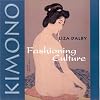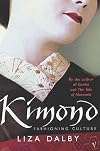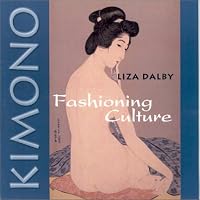
Kimono: Fashioning Culture
by Liza Dalby
On This Page
Description
The colorful and stylized kimono - the national garment of Japan - expresses not only Japanese aesthetic sensibilities but the soul of Japan as well. Largely discarded by men a century ago in the name of modernity and efficiency, kimono is still worn by many women on formal occasions and by some women, such as geisha, in their daily work. Elegantly anachronistic, kimono still retains a powerful hold on the Japanese heart and mind. In this beautifully written and lavishly illustrated book, show more Liza Dalby, author of the highly acclaimed Geisha, traces the history of kimono - its uses, aesthetics, and social meanings - to explore Japanese culture. Drawing on a variety of period texts (such as seventeenth-century kimono pattern books), Dalby creates vivid pictures of kimono and those who wore them through the centuries. She discusses the development of the kimono robe from its Chinese origins two thousand years ago to its assimilation as the national dress of Japan. Of particular note are the elaborate twelfth-century robes that reveal a uniquely Japanese sensibility mirrored in the literature and painting of the Heian period; the consumerist mentality and profusion of design occurring at the beginning of the Tokugawa era; the redefinition of kimono in the nineteenth century as Japanese had to deal seriously with the dress of the outlandish West; the interpretations and uses of kimono today; and the precise rules of kimono dressing and what they signify in terms of gender, age, class, and occasion. Dalby concludes with personal reflections on the subject of geisha and kimono. An engaging mix of fashion history and social anthropology, this lively book demonstrates in a new way how clothing fashions can illuminate our understanding of culture. show lessTags
Recommendations



























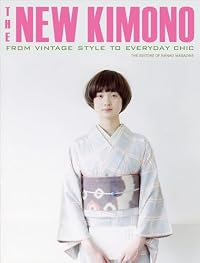




Member Recommendations


The Social Life of Kimono: Japanese Fashion Past and Present (Dress, Body, Culture) by Sheila Cliffe
tzippurah While Dalby delves into kimono in relation to geisha, Cliffe provides a look at kimono culture today (2017). Both are well researched academic books of interest to the lay person.
Member Reviews
As a collector of Japanese textiles, particularly obi and haori (a form of kimono), I consider this book to be an absolute necessity. Liza Dalby, an anthropologist, discerns Japanese culture through its clothing. She describes here the uses of style, fabric, color and pattern to differentiate status, season, age, etc. There is a rigidity to the kimono style which, while confining, also forces both the creator and the wearer to find avenues of individuality.
An astonishingly detailed study of the Japanese kimono and its complex role in Japanese culture. The only subject area this book lacks is the nuts and bolts of kitsuke (how to put on kimono), although it does give a lot of supplementary information that's essential to kitsuke, e.g. on which occasions each type of kimono should be worn. In any case, Dalby's work is the best available in English on the subject, and it thoroughly deserves a full Five Stars.
I was at a museum in Japan that had some antique kimono, and I thought, you know, I would really like to read a book about the history and cultural meaning of kimono.
This book could not have been more exactly what I wanted if I had specially commissioned it from the author. Totally fascinating.
Maybe I'll actually try to read all of [book: The Tale of Genji] now that I know what all the seasonal color combinations mean.
Haha, just kidding. No one actually reads the whole Tale of Genji!
This book could not have been more exactly what I wanted if I had specially commissioned it from the author. Totally fascinating.
Maybe I'll actually try to read all of [book: The Tale of Genji] now that I know what all the seasonal color combinations mean.
Haha, just kidding. No one actually reads the whole Tale of Genji!
In probably one of the best English-language surveys of the history of the kimono, Liza Dalby is meticulous at describing the evolution of the clothing form throughout the centuries in Japan: not just the change in the physical form of the clothing, though, but also in its cultural status and symbolism. It's now a little out-of-date and could do with updating, but as an introduction to the subject in English, it's the best one you're going to find.
The colorful and stylized kimono--the national garment of Japan--expresses not only Japanese aesthetic sensibilities but the soul of Japan as well. This book traces the history of kimono--its uses, aesthetics, and social meanings--to explore Japanese culture.
An engaging mix of fashion history and social anthropology, this lively and scholarly book demonstrates in a new way how clothing can illuminate our understanding of culture.
An engaging mix of fashion history and social anthropology, this lively and scholarly book demonstrates in a new way how clothing can illuminate our understanding of culture.
I was lucky enough to get this book signed by the author. It's half-fashion analysis, half-historical analysis of wafuku in Japan. Highly recommended.
Members
- Recently Added By
Author Information

9+ Works 3,267 Members
All Editions
Awards and Honors
Common Knowledge
- Canonical title
- Kimono: Fashioning Culture
- Dedication
- For John Stevenson, twice godfather to this book
- First words
- The kimono proclaims itself the national costume of Japan and is duly recognized as such throughout the world.
- Last words
- (Click to show. Warning: May contain spoilers.)Their history, fate, and current status have much in common with the kimono they wear.
Classifications
- Genres
- Nonfiction, Art & Design, History
- DDC/MDS
- 391.00952 — Society, Government, and Culture Customs, etiquette & folklore Costume and personal appearance Standard subdivisions History, geographic treatment, biography Asia Japan
- LCC
- GT1560 .D35 — Geography, Anthropology and Recreation Manners and customs (General) Manners and customs (General) Costume. Dress. Fashion
- BISAC
Statistics
- Members
- 353
- Popularity
- 89,021
- Reviews
- 7
- Rating
- (4.31)
- Languages
- English
- Media
- Paper
- ISBNs
- 4