
Liza Dalby
Author of The Tale of Murasaki
About the Author
Image credit: Photo by Albie Sharp
Works by Liza Dalby
Associated Works
Tomo: Friendship through Fiction: An Anthology of Japan Teen Stories (2012) — Contributor — 41 copies
The Life of a Geisha — Foreword — 1 copy
Tagged
Common Knowledge
- Canonical name
- Dalby, Liza
- Legal name
- Dalby, Liza Crihfield
- Birthdate
- 1950-06-04
- Gender
- female
- Education
- Swarthmore College
Stanford University (PhD, 1978) - Occupations
- anthropologist
lecturer (university) - Awards and honors
- Fulbright Fellowship
- Nationality
- USA
- Places of residence
- Berkeley, California, USA
Kyoto, Japan - Associated Place (for map)
- USA
Members
Reviews
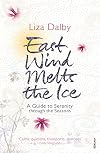
This is a book of very short essays, inspired by the divisions of the seasons in an old Chinese almanac, which is still referred to in Japan. The almanac divides the year into 4/5 day periods, each with a name which reflects some aspect of the changing natural world. Today, for example, falls into the period Jan 3-Feb 4: "streams and marshes are frozen solid". I've been reading it in little nibbles - the essays are just the right length for those little spaces in the day, like when you're show more cleaning your teeth or waiting for the coffee to brew.
Liza Dalby, who spent many years living in and studying Japan, wrote each essay during the days of one almanac period, over the course of several years. She wrote them originally in Japanese, and translated and interpreted her original thoughts into English for this book. The subject matter ranges widely, covering her years in Japan, her current family life, and other thoughts which occur to her.
This does make the book a bit of a mish-mash, and it's clear that the publishers had no idea what to do with it. They have decided to market it as a sort of Eastern mysticism/self-help book - it's subtitled "A Guide To Serenity Through The Seasons", and one of the critic's blurbs claims that the book "calms, quietens, transports". I think this might put off most of the people who would actually enjoy the book.
I found some of the essays fascinating, especially those about Japan and Japanese culture. But there are some periods of the almanac which clearly failed to inspire her, and we end up with a handful of banal, unconnected episodes, for example about times she has seen quails near her home in Northern California.
Mind you, I suppose banality is a matter of taste. I am not very interested in gardening, but someone who was might have enjoyed those essays. And I will be keeping this book, because of the enjoyable little insights into Japanese culture.
Recommended for: anyone with a strong interest in at least two of the following: Japan, translation (between languages and cultures), gardening, and the flora and fauna of Northern California. show less
Liza Dalby, who spent many years living in and studying Japan, wrote each essay during the days of one almanac period, over the course of several years. She wrote them originally in Japanese, and translated and interpreted her original thoughts into English for this book. The subject matter ranges widely, covering her years in Japan, her current family life, and other thoughts which occur to her.
This does make the book a bit of a mish-mash, and it's clear that the publishers had no idea what to do with it. They have decided to market it as a sort of Eastern mysticism/self-help book - it's subtitled "A Guide To Serenity Through The Seasons", and one of the critic's blurbs claims that the book "calms, quietens, transports". I think this might put off most of the people who would actually enjoy the book.
I found some of the essays fascinating, especially those about Japan and Japanese culture. But there are some periods of the almanac which clearly failed to inspire her, and we end up with a handful of banal, unconnected episodes, for example about times she has seen quails near her home in Northern California.
Mind you, I suppose banality is a matter of taste. I am not very interested in gardening, but someone who was might have enjoyed those essays. And I will be keeping this book, because of the enjoyable little insights into Japanese culture.
Recommended for: anyone with a strong interest in at least two of the following: Japan, translation (between languages and cultures), gardening, and the flora and fauna of Northern California. show less
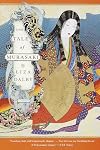
I picked this book up only because it was historical fiction and I did enjoy "Memoirs of a Geisha"; however, this is much different and at first I was rather disappointed. I didn't particularly like the first person narrative and what I thought of as the "weird little phrases" of poetry interspersed, but I kept reading. I was soon pulled in and could not put it down. Not that I especially liked the character of Muraski, but I so enjoyed the visit to 11th century Japan.
I agree with those that show more remarked on the lack of background regarding the politics and religion that shape this novel, but I didn't find it overwhelming. Instead, it spurred my interest to investigate further.
It is hard to judge the qualities of characters that are living in a world so far from our own. The exchanges of "waka" seem bizarre at first, but I actually found myself looking at my own surroundings (especially nature) in a new light. Although the author, I felt, was too detailed, too wordy (especially in the long descriptions of colors and kimonos), we could all learn something about saying so much in so few words.
How enthralling to briefly inhabit a world without time;
how much my time has changed. show less
I agree with those that show more remarked on the lack of background regarding the politics and religion that shape this novel, but I didn't find it overwhelming. Instead, it spurred my interest to investigate further.
It is hard to judge the qualities of characters that are living in a world so far from our own. The exchanges of "waka" seem bizarre at first, but I actually found myself looking at my own surroundings (especially nature) in a new light. Although the author, I felt, was too detailed, too wordy (especially in the long descriptions of colors and kimonos), we could all learn something about saying so much in so few words.
How enthralling to briefly inhabit a world without time;
how much my time has changed. show less
This is one of these fictionalized autobiographies that take facts from a person's life, and fills in the gaps with whatever the author can come up with. Generally, I enjoyed the story, and the poetry, but I did find the rape scene to be unneccessary. I don't know if Murasaki ever hinted at that in her diary, but if she didn't, then I am disappointed that Ms. Dalby inserted it in here because I felt that it added nothing to the story. I did find the descriptions to be an excellent part of show more the book, it was easy to imagine what people wore or the settings. If anything, this book gives you a nice view of 11th century life in the upper echelons of Japanese society, and a peek into Imperial life in this era when Murasaki becomes part of court. I also liked how the character of Murasaki's husband was presented here, little is known about him and I think the author gave a nice, balanced view of his character. I wish though, that there had been more about Katako and her life in here. show less
This is a fictionalized biography of Lady Murasaki Shikibu, the author of the world's first novel, [The Tale of Genji]. While Dalby is obviously very knowledgeable about Heian Japan and Murasaki's writings, I found this book oddly flat and a bit tedious. Perhaps it's because I have read quite a bit of literature from the period and have been fascinated with Heian Japan, that I find a modern historical novel somewhat lacking. It's probably a very good gateway into the courtly world of show more Murasaki and 11th century Japan for anyone not very familiar with the customs or the literature. However, given the choice, I would definitely recommend reading The Tale of Genji and experiencing the beautifully ephemeral otherness of that world over The Tale of Murasaki. show less
Lists
Awards


You May Also Like


Associated Authors
Statistics
- Works
- 9
- Also by
- 2
- Members
- 3,267
- Popularity
- #7,829
- Rating
- 3.9
- Reviews
- 55
- ISBNs
- 80
- Languages
- 11
- Favorited
- 10