

Mineko Iwasaki
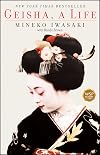
Author of Geisha: A Life
About the Author
Mineko Iwasaki, now fifty-two years old, is the mother of two daughters. She lives with her husband in a suburb of Kyoto, Japan.
Works by Mineko Iwasaki
Gueixa, Uma Vida 1 copy
Adevărata viaţă de gheişă 1 copy
Tagged
Common Knowledge
- Other names
- Tanaka, Masaka
- Birthdate
- 1949-11-02
- Gender
- female
- Occupations
- geisha
art dealer - Relationships
- Satō, Jin'ichirō (husband)
- Nationality
- Japan
- Places of residence
- Kyoto, Japan
- Associated Place (for map)
- Kyoto, Japan
Members
Reviews
I’m still not a big fan of biographies or memoirs, but when I found out that a rebuttal had been published by one of the geisha who had been interviewed for Arthur Golden’s novel Memoirs of a Geisha (one of my favs, even for its faults) I HAD to go and read it. Memoirs may take readers behind the (heavily fictionalised and romanticised) veil of the world of the geisha of Gion, but Mineko Iwasaki’s story gets to the heart of the matter. Adopted at a very young age to become the heir to show more the Iwasaki okiya, Mineko enters the rarified world of the geisha as a means of pursuing her passion for dancing and to help her family. Her story may not have the same narrative resonance as Golden’s novel, but her honest examination of the world she grew up in is captivating nonetheless. Iwasaki paints the world of Gion in vivid detail, describing the colourful personalities of the other geiko, dance instructors and mentors, and patrons while also balancing the inherent drama with a pared down exploration of the business and practical aspects of growing up in the okiya that rings true. Golden may have captured the magic of the world of the geisha (albeit through an Orientalist lens), but Iwasaki carefully sets the word straight with no less interesting a story. show less
Interesting in more ways than the author intended. Pathology on a plate. I don't know if she is the world's worst liar, or she really believed what she wrote and didn't spot herself saying the exact opposite a few pages later.
1. Her mother was rich, but her parents sold their girl children to fund themselves.
2. Her mother was sickly and weak at the start, but went on to have 11 children.
3. Mineko worked night and day, never took time off, and wanted time for herself, but then she hated show more not working every minute and added extra events to her schedule each day.
4. She worked non-stop for years without time off, but then had several vacations she took every year.
5. She had no friends, and the other Geisha of her age hated her, and played nasty tricks on her but she would always say she did this and that with her friends (never identified). She was not allowed out of the quarter or to socialize with servants or untouchables - so who were these friends ?
6. She didn't care about her customers, she only cared about dancing, yet she had customers who were special lifelong friends, and said it was unprofessional not to take care of all the customers.
6. She earned money for her house with her engagements, but she never paid any attention to the amounts (only to the rank based on amount earned), She gave away the envelopes full of cash without looking in them, yet she frets that there was not enough money coming into the house.
7. Keeping the house running was important to those who lived and worked there, and to all the craftspeople who depended on it, but she had no qualms about the craftspeople, and history when she shuts hers down (passed on from her adopted mother - the house owner).
The whole book was like that.
Her family and personal stories also didn't ring true. She supposedly was from an aristocratic family. Her father's family had no money, but her mother was rich. It strikes me the same as those who always say they have kings and queens as their ancestors. No one ever claims porters or ditch diggers as their forbearers, though they are by far more numerous than aristocrats and royalty.
She claimed that she decided and conducted her life at 3 as though she were an adult. She made the decision to go to the Geisha house, not that her father sold her. Though her other sisters were sold, and very bitter their whole lives. She tells all these stories with exact details of who said what and what happened when she is very young (under 10).
Some of her Geisha lore contradicts other sources. I have seen 2 other documentaries and they talk about Maiko as being apprentice Geisha in training, not just 'Dancing' Geisha as Mineko contends. She says Gion is different than other pleasure quarters in the country, perhaps that explains it, but it should be clearer.
She presents so much information about sex and de-flowering virgins of various workers who aren't Geisha, often with the same word for something else that Geisha do, that it really isn't clear what is accurate and what isn't.
Certainly before prostitution was outlawed (1957-59), the teahouses were also often associated with brothels and the Geisha was used as a come on to bring customers into the houses. They were all in the same area and competed against each other for customers. Girls were sold to houses and had no choice in what they did or didn't do.
Many think that one time Geisha were like the high class courtesans that would be kept by one rich man after another. They would never be prolific with men, because that would drive their cachet and value down. How long ago that died out, is not clear.
Still it was a strangely compelling read, despite the above problems and Mineko's selfishness and self-absorption. show less
1. Her mother was rich, but her parents sold their girl children to fund themselves.
2. Her mother was sickly and weak at the start, but went on to have 11 children.
3. Mineko worked night and day, never took time off, and wanted time for herself, but then she hated show more not working every minute and added extra events to her schedule each day.
4. She worked non-stop for years without time off, but then had several vacations she took every year.
5. She had no friends, and the other Geisha of her age hated her, and played nasty tricks on her but she would always say she did this and that with her friends (never identified). She was not allowed out of the quarter or to socialize with servants or untouchables - so who were these friends ?
6. She didn't care about her customers, she only cared about dancing, yet she had customers who were special lifelong friends, and said it was unprofessional not to take care of all the customers.
6. She earned money for her house with her engagements, but she never paid any attention to the amounts (only to the rank based on amount earned), She gave away the envelopes full of cash without looking in them, yet she frets that there was not enough money coming into the house.
7. Keeping the house running was important to those who lived and worked there, and to all the craftspeople who depended on it, but she had no qualms about the craftspeople, and history when she shuts hers down (passed on from her adopted mother - the house owner).
The whole book was like that.
Her family and personal stories also didn't ring true. She supposedly was from an aristocratic family. Her father's family had no money, but her mother was rich. It strikes me the same as those who always say they have kings and queens as their ancestors. No one ever claims porters or ditch diggers as their forbearers, though they are by far more numerous than aristocrats and royalty.
She claimed that she decided and conducted her life at 3 as though she were an adult. She made the decision to go to the Geisha house, not that her father sold her. Though her other sisters were sold, and very bitter their whole lives. She tells all these stories with exact details of who said what and what happened when she is very young (under 10).
Some of her Geisha lore contradicts other sources. I have seen 2 other documentaries and they talk about Maiko as being apprentice Geisha in training, not just 'Dancing' Geisha as Mineko contends. She says Gion is different than other pleasure quarters in the country, perhaps that explains it, but it should be clearer.
She presents so much information about sex and de-flowering virgins of various workers who aren't Geisha, often with the same word for something else that Geisha do, that it really isn't clear what is accurate and what isn't.
Certainly before prostitution was outlawed (1957-59), the teahouses were also often associated with brothels and the Geisha was used as a come on to bring customers into the houses. They were all in the same area and competed against each other for customers. Girls were sold to houses and had no choice in what they did or didn't do.
Many think that one time Geisha were like the high class courtesans that would be kept by one rich man after another. They would never be prolific with men, because that would drive their cachet and value down. How long ago that died out, is not clear.
Still it was a strangely compelling read, despite the above problems and Mineko's selfishness and self-absorption. show less
First off, unlike most of the other reviewers, I've actually never read Memoirs of a Geisha. I picked this up because I've always been curious about geishas and I have a love of memoirs.
I found Mineko's writing immediately engaging -- I think her skill as a geisha really comes out in the way she writes. Her words are precise, but captivating and she really captures the emotional tone of a scene.
Mineko's life is fascinating and otherworldly. She presents snippets of her life, leaving the show more reader to fill in details: a scene from her infancy, a scene from her toddlerhood, vignettes along the way to her being whisked into the secluded world of geisha-hood.
The book toes the line between a description of specifically Mineko's life and exposition of the life of a geisha. Unfortunately, by compromising in to the middle ground, it does an adequate job to both sides, but is stellar on neither. I learned a lot of the terminology, economy and practical matters that go into being a geisha; however, while Mineko states several times that she has a passion about the lack of education that geishas get, this passion is not demonstrated at all in the book and the emotions that the geishas have are obscured. Similarly, Mineko's decision to retire as a geisha and become an art dealer happens over the course of a mere handful of pages and seems to have no basis in the rest of the book.
Mineko also is very clearly a spoiled girl and woman, who is very used to being catered to. While she occasionally shows insight to that, there are also huge portions of the novel where she seems to have no insight, which left me wondering whether the injustices that she complains of were true, or figments of her unrealistic expectations. show less
I found Mineko's writing immediately engaging -- I think her skill as a geisha really comes out in the way she writes. Her words are precise, but captivating and she really captures the emotional tone of a scene.
Mineko's life is fascinating and otherworldly. She presents snippets of her life, leaving the show more reader to fill in details: a scene from her infancy, a scene from her toddlerhood, vignettes along the way to her being whisked into the secluded world of geisha-hood.
The book toes the line between a description of specifically Mineko's life and exposition of the life of a geisha. Unfortunately, by compromising in to the middle ground, it does an adequate job to both sides, but is stellar on neither. I learned a lot of the terminology, economy and practical matters that go into being a geisha; however, while Mineko states several times that she has a passion about the lack of education that geishas get, this passion is not demonstrated at all in the book and the emotions that the geishas have are obscured. Similarly, Mineko's decision to retire as a geisha and become an art dealer happens over the course of a mere handful of pages and seems to have no basis in the rest of the book.
Mineko also is very clearly a spoiled girl and woman, who is very used to being catered to. While she occasionally shows insight to that, there are also huge portions of the novel where she seems to have no insight, which left me wondering whether the injustices that she complains of were true, or figments of her unrealistic expectations. show less
I was not expecting to enjoy this book as much as I did--figured it would be a bubblegum one-off capitalising on the popularity of "Memoirs Of A Geisha" (one of the few books I can't bring myself to continue reading). Instead I found the engaging autobiography of a famous geisha in postwar Kyoto. I use "engaging" here in the sense that it's hard to stop reading, and not to describe the author. In fact, one is left with the impression that she's a rather unpleasant person--a spoiled, catty, show more nasty bitch, to be exact. Conscious or not (my intuition points to the latter), this honesty is one of the book's greatest strengths, as it humanises Iwasaki, making her more than a fairytale princess in an exotic world, and I found myself identifying with her even as her behavior galled me. The world is still plenty exotic though; the powers that be have made the smart choice to leave much of the Japanese vocabulary intact, with appropriate descriptions in English included as necessary. This goes a long way toward grounding readers in "Geisha's" setting, and is to be commended. However, I can't unconditionally recommend this book for one reason: its co-author/translator/editor Rande Brown, whom I would not let within ten feet of anything I've written based on her performance in this book. For although her translation/edit/whatever is fluid, she consistently mistakes "it's" and "its" and "then" and "than." Not once or twice, in error. Consistently. Throughout the book. It's shocking for any writer to be ignorant of these simple grammatical distinctions, to say nothing of a professional translator. My final verdict is to read this book for its wonderful window into Japan, Kyoto, and genteel Gion culture, but to be prepared to grit your teeth as you do. show less
Lists
Awards

You May Also Like


Associated Authors
Statistics
- Works
- 5
- Members
- 2,550
- Popularity
- #10,069
- Rating
- 3.7
- Reviews
- 53
- ISBNs
- 46
- Languages
- 10
- Favorited
- 2