
Lesley Downer
Author of Geisha: The Secret History of a Vanishing World
About the Author
Lesley Downer is an award-winning author of many books on Japan. She divides her time between London and Tokyo. (Bowker Author Biography)
Image credit: Lesley Downer at the romantic novel of the year award 2009 where she was nominated for the shortlist
Series
Works by Lesley Downer
Associated Works
Tagged
Common Knowledge
- Canonical name
- Downer, Lesley
- Legal name
- Downer, Lesley
- Birthdate
- 1949-09-05
- Gender
- female
- Education
- University of London (MA - Asian Studies)
University of Oxford - Occupations
- expert on Japanese culture and history
author
lecturer
historical consultant - Relationships
- Miller, Arthur I (husband)
- Nationality
- UK
- Birthplace
- London, Middlesex, England, UK
- Places of residence
- Japan
England, UK - Associated Place (for map)
- England, UK
Members
Reviews
An excellent potted history of Japan from its mythological roots, through the Jōmon and Yayoi eras, the creation of the imperial family, civil war, geopolitical relations, the rise of the Shōgun and the restoration of the monarchy right up to the year of the book's publication. Lesley Downer has drawn on her experiences of living in Japan and her deep interest in the country and its culture to write a book that is informative and entertaining. She keeps things pacey and condenses the show more complexity just enough, without sacrificing factual accuracy. It's a book I'm sure I'll dip into each time I want to refresh my memory of a particular era, and a book that added to my existing knowledge. I was especially impressed by Downer's foregrounding of the women who have played their part in Japan's history. show less
If an author is going to do a good job with historical fiction, they need to immerse themselves in the past that forms the basis to their story. They need to understand the politics, the social mores, the zeitgeist of the time. They might not tell us every little detail, but if their characters are to be more than modern people acting out scenes against the backdrop of an earlier era, if they are to truly convince us as people who lived in a different world to us, the author needs to have show more that well of context to draw from.
From the prologue which introduces our heroine and the political times she is living in right through the drama-filled main plot, it's clear that Downer has put in some serious legwork in understanding the period she writes within. The characters feel true. The enhancements Downer makes to whatever limited fact must be recorded about the characters in the official record feel natural. Downer also captures the atmosphere of the time, including little details about fashion, aromas, architecture, that help immerse the reader in the tale. There was a sense of woodblock prints being brought to life, and I was there with the characters on every page.
The book is a romance, but it's also an adventure story and a political thriller. Atsu is a feisty young woman who doesn't always follow convention. Downer's prose is punchy where it needs to be, capturing the urgency and excitement of espionage and threatened invasion. She understands drama and tension. I was utterly gripped by the action scenes at the start of the book where the Barbarians were approaching and Atsu's home town was plunged into chaos. Equally, Downer knows how to nuance her writing so that the reader gets the sense of torpor that comes with a months-long journey from Kyushu to Edo.
Atsu's story is fascinating in what it reveals about Japan's feudal society. To a greater extent, by the mid-19th century, Britain had left behind its feudalism, becoming a modern industrial nation no longer dependent on political alliances forged through strategic marriage to maintain power. Japan was still that nation in the years when Commodore Perry's black ships brought Western influence to the country. Atsu is a pawn in a game of strategy, a means by which the Satsuma clan can infiltrate the nation's powerhouse. For all that she is independently minded, Atsu knows that she has no control over her destiny beyond making the best of her situation. Blood counts for less than reliability in maintaining a dynasty, and adoption of strong characters who could further the ambitions of a clan was normal. That's how Atsu comes to pass from her birth family to her uncle and then on to a high ranking Edo prince, before finally attaining the goal her uncle has set for her - marriage to the Shogun.
Once she becomes Queen, Atsu's work is cut out to influence the Shogun in matters of state and deflect him away from the influence of his mother. Downer fills the story with insights into how the Tokugawa court operated, and the role women played at the court. There is plenty of intrigue, and femininity is used as a tool to exercise power. It's a variation on the theme of 'behind every successful man, there stands a woman', but within the context of the shogunate there is a validity to it. The women's court is a powerhouse in its own right. The women there are educated in matters of state and aware that there is an influence that they can exercise over those who hold the conventional power. True, they are the possessions of men and are exercising influence in order to increase the power of those men, because that will mean their own position is more secure, but within that context the women are as intelligent and strategic as the men who possess them.
The battle for influence over the Shogun between Atsu and her mother in law goes back and forth like a baseline rally in tennis. Just as Atsu seems to make progress with the Shogun, his mother pulls some manipulative trick. There was a little too much back and forth for my liking. I'd rather a 400 page novel that maintains its crispness to one that tries to spin out the suspense to fill more pages. That was the only thing I would change about the book. There's only so much jeopardy a story can sustain.
Eventually the Shogun makes his choice and things take the path that history records. The treaty with America is signed, opening Japan up to foreign trade. A power vacuum forms at the heart of the court, which is filled by lords loyal to the emperor, paving the way for the restoration. Atsu resolves herself to a life spent fighting the new Regent. It seems as though life has other plans for her, as though, after all the adventure and political scheming, romance will win the day. Atsu stays true to her Shogun, though. Romance of a deeper kind.
Downer's tale is an embroidering of history, an imagining of what might have gone on behind the palace doors, in the secrecy of the Shogun's court, but it's a rippingly told yarn, steeped in fact, and every bit as good as Philippa Gregory's Tudor romances.
The Shogun's Queen is published in November. The first in a series of books called The Shogun Quartet, it acts as a prequel to the other books already published. On the strength of this outing, I'll be taking a look. show less
From the prologue which introduces our heroine and the political times she is living in right through the drama-filled main plot, it's clear that Downer has put in some serious legwork in understanding the period she writes within. The characters feel true. The enhancements Downer makes to whatever limited fact must be recorded about the characters in the official record feel natural. Downer also captures the atmosphere of the time, including little details about fashion, aromas, architecture, that help immerse the reader in the tale. There was a sense of woodblock prints being brought to life, and I was there with the characters on every page.
The book is a romance, but it's also an adventure story and a political thriller. Atsu is a feisty young woman who doesn't always follow convention. Downer's prose is punchy where it needs to be, capturing the urgency and excitement of espionage and threatened invasion. She understands drama and tension. I was utterly gripped by the action scenes at the start of the book where the Barbarians were approaching and Atsu's home town was plunged into chaos. Equally, Downer knows how to nuance her writing so that the reader gets the sense of torpor that comes with a months-long journey from Kyushu to Edo.
Atsu's story is fascinating in what it reveals about Japan's feudal society. To a greater extent, by the mid-19th century, Britain had left behind its feudalism, becoming a modern industrial nation no longer dependent on political alliances forged through strategic marriage to maintain power. Japan was still that nation in the years when Commodore Perry's black ships brought Western influence to the country. Atsu is a pawn in a game of strategy, a means by which the Satsuma clan can infiltrate the nation's powerhouse. For all that she is independently minded, Atsu knows that she has no control over her destiny beyond making the best of her situation. Blood counts for less than reliability in maintaining a dynasty, and adoption of strong characters who could further the ambitions of a clan was normal. That's how Atsu comes to pass from her birth family to her uncle and then on to a high ranking Edo prince, before finally attaining the goal her uncle has set for her - marriage to the Shogun.
Once she becomes Queen, Atsu's work is cut out to influence the Shogun in matters of state and deflect him away from the influence of his mother. Downer fills the story with insights into how the Tokugawa court operated, and the role women played at the court. There is plenty of intrigue, and femininity is used as a tool to exercise power. It's a variation on the theme of 'behind every successful man, there stands a woman', but within the context of the shogunate there is a validity to it. The women's court is a powerhouse in its own right. The women there are educated in matters of state and aware that there is an influence that they can exercise over those who hold the conventional power. True, they are the possessions of men and are exercising influence in order to increase the power of those men, because that will mean their own position is more secure, but within that context the women are as intelligent and strategic as the men who possess them.
The battle for influence over the Shogun between Atsu and her mother in law goes back and forth like a baseline rally in tennis. Just as Atsu seems to make progress with the Shogun, his mother pulls some manipulative trick. There was a little too much back and forth for my liking. I'd rather a 400 page novel that maintains its crispness to one that tries to spin out the suspense to fill more pages. That was the only thing I would change about the book. There's only so much jeopardy a story can sustain.
Eventually the Shogun makes his choice and things take the path that history records. The treaty with America is signed, opening Japan up to foreign trade. A power vacuum forms at the heart of the court, which is filled by lords loyal to the emperor, paving the way for the restoration. Atsu resolves herself to a life spent fighting the new Regent. It seems as though life has other plans for her, as though, after all the adventure and political scheming, romance will win the day. Atsu stays true to her Shogun, though. Romance of a deeper kind.
Downer's tale is an embroidering of history, an imagining of what might have gone on behind the palace doors, in the secrecy of the Shogun's court, but it's a rippingly told yarn, steeped in fact, and every bit as good as Philippa Gregory's Tudor romances.
The Shogun's Queen is published in November. The first in a series of books called The Shogun Quartet, it acts as a prequel to the other books already published. On the strength of this outing, I'll be taking a look. show less
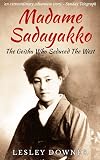
Lesley Downer has brought Sada Kawakami to life through the pages of this book. Known as Yakko during her geisha career and Sadayakko during her acting career, Sada had been largely forgotten after her death. When she was remembered, it was in disparaging terms. But Sadayakko was a ground breaking woman. She was the first Japanese woman to work as an actress. She established a training academy for other women who wanted to act. With her husband Otojiro she changed the nature of drama in show more Japan and introduced aspects of Japanese culture to the West. She performed across America, in Paris, Vienna, Berlin and London. She inspired Puccini when he was adapting the play Madame Butterfly for his opera. Sadayakko knew Sarah Bernhardt and Ellen Terry, and worked with Isadora Duncan. But in Japan, to be an actress was seen as something shameful, and at the end of the Meiji era to step out from behind your husband was anathema. Downer's research into contemporary accounts of Sadayakko's career and her conversations with Sadayakko's family provides the basis for an engaging and entertaining biography. Sadayakko knew key figures in Japanese society following the Meiji Restoration, and their inclusion in this biography provides a more human angle to Japanese political history. As a young geisha, her first danna was Prime Minister and later Prince Ito. Her first love Momosuke married into the Fukuzawa family and had become an important businessman by the time Sadayakko re-encountered him. Sadayakko certainly had a rich and varied life. I was immersed in this biography, and didn't really want it to end. The only reason it doesn't get 5 stars is because Downer describes many photographs throughout the book, but not one is reproduced other than the cover photograph. I don't know whether that's only true of the Kindle version, but I wish the photos had been included. show less
Geisha: The Remarkable Truth Behind the Fiction: The Secret History of a Vanishing World by Lesley Downer

Researched at the end of the 1990s, inspired by Lisa Dalby's anthropological study Geisha and Arthiur Golden's novel Memoirs of a Geisha, Lesley Downer's study of the flower and willow world of Japan combines a brief history of Japan and the story of the emergence of geisha culture in the 18th century with interviews with people who work in geisha districts across Japan and Downer's reflections on the time she spent immersed in one of the Kyoto flower towns.
Downer discusses the role geisha show more have played at key political moments across Japanese history and the role they continue to play in a society very different to what she refers to as the Anglo-Saxon West. It is a subjective take, including her opinions on what it was like as a westerner to live alongside and try to gain access to what is a very closed social group.
I enjoyed her candour and her sensitivity towards the women she interviewed. She presents a different view of what the life of a geisha is; different to the romanticised ideal that young Japanese women have of the work and different to the misconceptions prevalent in the west.
First published more than 25 years ago, when the number of women working as geisha was the lowest it had ever been, I was left wondering whether things have stabilised or declined further. show less
Downer discusses the role geisha show more have played at key political moments across Japanese history and the role they continue to play in a society very different to what she refers to as the Anglo-Saxon West. It is a subjective take, including her opinions on what it was like as a westerner to live alongside and try to gain access to what is a very closed social group.
I enjoyed her candour and her sensitivity towards the women she interviewed. She presents a different view of what the life of a geisha is; different to the romanticised ideal that young Japanese women have of the work and different to the misconceptions prevalent in the west.
First published more than 25 years ago, when the number of women working as geisha was the lowest it had ever been, I was left wondering whether things have stabilised or declined further. show less
Lists
Awards


You May Also Like


Associated Authors
Statistics
- Works
- 24
- Also by
- 6
- Members
- 1,761
- Popularity
- #14,615
- Rating
- 3.7
- Reviews
- 48
- ISBNs
- 146
- Languages
- 14
- Favorited
- 1
