How Oliver Olson Changed the World
by Claudia Mills
On This Page
Description
Afraid he will always be an outsider like ex-planet Pluto, nine-year-old Oliver finally shows his extremely overprotective parents that he is capable of doing great things without their help while his class is studying the solar system.Tags
Recommendations





Member Reviews
This book was delightful and oddly relatable. As a kid, I often struggled with similar experiences as Oliver when dealing with over-assertive parents who tend to worry a little too much. Eventually, after repeatedly talking to my parents about it, they understood the problem. So as I kept reading this book, I just wanted Oliver to confront his parents so badly! This book reminded me of how difficult it can be for a child to speak their minds to an adult that they're supposed to respect and obey. Children hardly ever want to make their parents unhappy, so it's common for kids to conceal their disagreements, especially if parents don't provide space for their children to disagree. Kids disagreeing with their parents is perfectly natural, show more but parents may forget to consider that it's just as important to listen to your kids as much as they listen to the adults. This book was a wonderful reminder that relationships between children and adults can always be mutually educational. show less
I love that this is a chapter book, but still simple to where children can read on their own. The title and cover of the book triggered me wondering how this young boy would change an entire world. I thought maybe this book would turn out to be like a biography, but this was not so. It told the story of a boy who does a science project that his parents try to take over. Having strict and controlling parents I related very much to Oliver. My mom would pester others' with questions about where, when, who etc every time I had an event, even for school projects. Sleepovers as a child were also more difficult to get my parents to agree to because they were overprotective like Oliver's parents. Oliver loved being creative and when the thought show more of the Pluto sign and scientist idea came to mind he thought he was smart. He had thought of a law for the senator also, that parents were not allowed to help with homework and when the senator read this idea he feared his parents becoming upset. His parents were surprisingly supportive and proud and asked if they overstep and give to much help. When I was a kid I also had to tell my mom when she was doing it for me and to let me do my own projects. My mother just wanted to see me exceed and be proud of my work, but she quickly learned that if she let me be creative and think for myself I could achieve the same greatness on my own. This book although fun it also has information about solar system facts. For example, the people involved like Neil Armstrong, Alan Shepard, and John F. Kennedy. Even the composer of music was discussed for planets. Facts about planet order, description, and telescopes were also throughout the book as well as the lesson in the book. This would be a great book for a teacher in ELA to pair while a science teacher is on the solar system unit. Many students could then even do projects associated with the book such as diorama or letter to a senator. show less
Okay, I cannot put this off any longer. I am really torn on this book. You see, I want to like it. I really do. I should like it. It's all about being independent, about parents letting their kids try new things without hovering, something I am majorly in favor of. It takes a strong whack at parents who do their kids' homework, something else that drives me nuts (you've seen them, o long-suffering librarians, dragging a bored child through the library "we need such and such a book and it has to have this and this because it's worth so many points"). I am no more in favor of smother mothers or helicopter parents than any other intelligent person. Everybody else likes it. Fuse #8 likes it.
But I am all about teh honesty here, and it just show more didn't work for me. So, first things first; the plot. Oliver has majorly over-protective parents. They never let him do anything even remotely dangerous -- or independent and even do his homework for him, right down to the last detail. Oliver hates it. He wants to be like all the other kids in his class, he wants to do his solar system diorama on his own, he doesn't want to use his mom's idea for a change-the-world suggestion for the upcoming contest, and he really, really wants to go to the school sleepover. It takes some help from an unexpected friend and some tough love for Oliver to start breaking free and growing up.
So, why didn't I like this? It just doesn't feel realistic to me. Oliver's parents' overprotectiveness is explained because "he had been sickly as a little boy". That just felt...cliched. The ending felt too pat - Oliver's friend sending in his neglected suggestion and his unexpected victory just didn't feel real to me. And I can't decide if Oliver's mother is an overly exaggerated irritating twit, or she's so well-written that she's supposed to be an irritating twit, especially in the part at the end where's she's fussing over Oliver and finally agrees to let him go. Finally, I'd really like to think kids like Oliver whose parents do every little thing for them really do want to be responsible; but I've just seen too many of them perfectly content to let their parents do all the talking, research, homework, and thinking for every moment of their lives. Or maybe they've just given up.
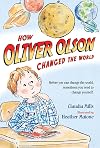
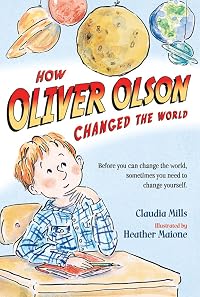
I'm not sure how I feel about the cover and interior illustrations. On the one hand, they really seem to fit the book. On the other hand, they just don't grab the casual browser and the cover feels a little...childish? I don't know. The boy on the cover doesn't look 9 to me, but I'm awful at judging ages.
Why should I like this, asides from the aforementioned reasons at the beginning? The characters are well-drawn and I especially enjoyed the spunky, independent Crystal. There's plenty of nonfiction nuggets woven into the story, and Oliver is a good picture of the kid who doesn't think there's anything special about him but wishes there was.
Verdict: What I'm really unsure about, and what I'd really like to test, is will kids like this book? Will the cover attract them or turn them off? Will they sympathize with the character and maybe think about doing more things on their own? I'd love to hear from anyone who's managed to kid-test this - did they love it? Hate it? No strong feelings either way?
ISBN: 978-0374334871; Published March 2009 by Farrar Straus and Giroux; Borrowed from the library show less
But I am all about teh honesty here, and it just show more didn't work for me. So, first things first; the plot. Oliver has majorly over-protective parents. They never let him do anything even remotely dangerous -- or independent and even do his homework for him, right down to the last detail. Oliver hates it. He wants to be like all the other kids in his class, he wants to do his solar system diorama on his own, he doesn't want to use his mom's idea for a change-the-world suggestion for the upcoming contest, and he really, really wants to go to the school sleepover. It takes some help from an unexpected friend and some tough love for Oliver to start breaking free and growing up.
So, why didn't I like this? It just doesn't feel realistic to me. Oliver's parents' overprotectiveness is explained because "he had been sickly as a little boy". That just felt...cliched. The ending felt too pat - Oliver's friend sending in his neglected suggestion and his unexpected victory just didn't feel real to me. And I can't decide if Oliver's mother is an overly exaggerated irritating twit, or she's so well-written that she's supposed to be an irritating twit, especially in the part at the end where's she's fussing over Oliver and finally agrees to let him go. Finally, I'd really like to think kids like Oliver whose parents do every little thing for them really do want to be responsible; but I've just seen too many of them perfectly content to let their parents do all the talking, research, homework, and thinking for every moment of their lives. Or maybe they've just given up.
I'm not sure how I feel about the cover and interior illustrations. On the one hand, they really seem to fit the book. On the other hand, they just don't grab the casual browser and the cover feels a little...childish? I don't know. The boy on the cover doesn't look 9 to me, but I'm awful at judging ages.
Why should I like this, asides from the aforementioned reasons at the beginning? The characters are well-drawn and I especially enjoyed the spunky, independent Crystal. There's plenty of nonfiction nuggets woven into the story, and Oliver is a good picture of the kid who doesn't think there's anything special about him but wishes there was.
Verdict: What I'm really unsure about, and what I'd really like to test, is will kids like this book? Will the cover attract them or turn them off? Will they sympathize with the character and maybe think about doing more things on their own? I'd love to hear from anyone who's managed to kid-test this - did they love it? Hate it? No strong feelings either way?
ISBN: 978-0374334871; Published March 2009 by Farrar Straus and Giroux; Borrowed from the library show less
I wasn’t sure what to expect before I started reading this book. I honestly thought it was going to be a boring story about what Oliver discovered. I soon found out that I was wrong. I could tell from the first page that it was going to be a great book, and I was right. I loved it! I didn’t want to put the book down. I was sad that this was a shorter book, because I wanted to keep reading about Oliver.
It was cool that a science lesson was incorporated into the plot of the book. It was actually based on a real lesson that would be taught to 3rd graders. The teacher, Mrs. O’Neill, even included an interdisciplinary connection into the lesson. The interdisciplinary connection she used was music. She played them a song about Jupiter show more and asked them to imagine it’s rotation while the music was playing. It was interesting that the author decided to have the teacher include this into her lesson. This is what a lot of teachers are doing now with their lessons. However, she should have included an activity with the interdisciplinary connection to make it complete.
His parents really made me angry. I hated that they wouldn’t just let him work on his own school stuff. They took over every project he had for school, then they got mad when he tried to leave even though he wasn’t included in the plans. I get that they were worried about him because he was sick as a toddler, but he is perfectly fine now. They are overbearing and not letting him live his life. In fact, the way that his mother excessively cleaned his food and only let him eat certain thing, would hurt his immune system and his health. Over cleaning food doesn’t allow his body to build up its immune system to be able to defend off a bigger sickness. Only allowing him to eat certain foods doesn’t provide him the nutrients he needs to be able to grow, strengthen his bones and stay healthy.
It was really clever that the change he wanted to make was to prevent parents from doing school projects for their children. The best way for children to learn is not by succeeding, but by failing. I didn’t expect that to be the way that Oliver “changed the world.” Even though his parents were annoying and in my opinion horrible, the senator reading out Oliver’s letter and actually thinking about what they were doing helped them realize they were holding him back and not allowing him to be his own person and live his life. He’s not sick anymore, but he was being treated like he was and that prevented him from enjoying life like he should be able too. show less
It was cool that a science lesson was incorporated into the plot of the book. It was actually based on a real lesson that would be taught to 3rd graders. The teacher, Mrs. O’Neill, even included an interdisciplinary connection into the lesson. The interdisciplinary connection she used was music. She played them a song about Jupiter show more and asked them to imagine it’s rotation while the music was playing. It was interesting that the author decided to have the teacher include this into her lesson. This is what a lot of teachers are doing now with their lessons. However, she should have included an activity with the interdisciplinary connection to make it complete.
His parents really made me angry. I hated that they wouldn’t just let him work on his own school stuff. They took over every project he had for school, then they got mad when he tried to leave even though he wasn’t included in the plans. I get that they were worried about him because he was sick as a toddler, but he is perfectly fine now. They are overbearing and not letting him live his life. In fact, the way that his mother excessively cleaned his food and only let him eat certain thing, would hurt his immune system and his health. Over cleaning food doesn’t allow his body to build up its immune system to be able to defend off a bigger sickness. Only allowing him to eat certain foods doesn’t provide him the nutrients he needs to be able to grow, strengthen his bones and stay healthy.
It was really clever that the change he wanted to make was to prevent parents from doing school projects for their children. The best way for children to learn is not by succeeding, but by failing. I didn’t expect that to be the way that Oliver “changed the world.” Even though his parents were annoying and in my opinion horrible, the senator reading out Oliver’s letter and actually thinking about what they were doing helped them realize they were holding him back and not allowing him to be his own person and live his life. He’s not sick anymore, but he was being treated like he was and that prevented him from enjoying life like he should be able too. show less
I read these early chapter books fairly quickly and find most of them forgettable, often not recalling later that I ever read them! This however had not just humor but substance: Oliver finds a way to break his parents' overprotective bonds without hurting their feelings and finally be able to participate in activities like the other kids. His hovering parents are definitely annoying and when Oliver gives in to passive inaction, you want to shake him. He's finally moved to taking a stand when his teacher questions why do something just because it's always been done that way.
Oliver Olson is a child who feels the pressure of being under his parents' thumb. With some help from the most talkative girl in school, he makes a stand - for himself, and for Pluto.
I liked how realistic the setting in this book was. The teacher, Mrs. O' Neil, does a great impression how classroom management. Her dialogue with the children helps teach science through this book. It was a short, easy read. I really liked how Claudia Mills ended some of the chapter repetitively by using the comparison of Pluto and Oliver. Many children are confused when they are taught in science class that Pluto is no longer a planet, therefore, this book could be beneficial to have in your classroom library. I also liked Oliver's little problem of standing up for himself. It's not often that parents realize how smothering they can be.
Members
- Recently Added By
Author Information

70 Works 4,470 Members
Claudia Mills is an American author of children's books. She is also an associate professor of philosophy at the University of Colorado Boulder. She has written several children's series including: Mason Dixon Series, Gus and Granpa Series, West Creek Middle School Seres, and Dinah Series. (Bowker Author Biography)
All Editions
Awards and Honors
Awards
Distinctions
Classifications
Statistics
- Members
- 496
- Popularity
- 60,784
- Reviews
- 36
- Rating
- (3.91)
- Languages
- Chinese, English
- Media
- Paper, Audiobook, Ebook
- ISBNs
- 11
- ASINs
- 4