When I Say No, I Feel Guilty
by Manuel J. Smith
On This Page
Description
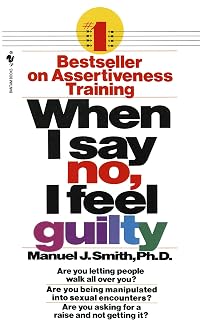
The best-seller that helps you say: "I just said 'no' and I don't feel guilty!"nbsp;nbsp;Are you letting your kids get away with murder?nbsp;nbsp;Are you allowing your mother-in-law to impose her will on you?nbsp;nbsp;Are you embarrassed by praise or crushed by criticism?nbsp;nbsp;Are you having trouble coping with people?nbsp;nbsp;Learn the answers in When I Say No, I Feel Guilty,nbsp;nbsp;the best-seller with revolutionary new techniques for getting your own way.Tags
Recommendations


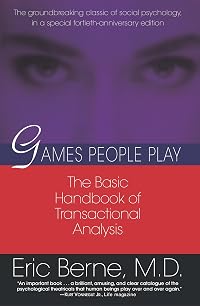


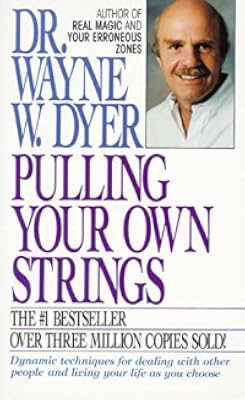

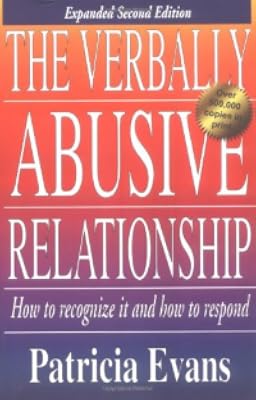
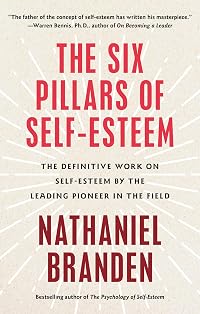

















Member Reviews
I grew up being a people-pleaser and letting people walk all over me, and while I still am to a certain extent, I definitely needed help with assertiveness and speaking up for myself, and standing my ground. Too often, I still let people wear me down and talk me out of things that I secretly wish I had said no or persisted on. Or I just didn't know how to respond to someone who was being pushy.
This book is great in explaining why we lack assertiveness, and the author gives plenty of real-life examples and dialogues in putting assertiveness into action. So many people have poor conflict resolution skills, and I love that this book teaches you how to stand your ground effectively.
Recommended for anyone who is looking to become more show more assertive in everyday life! show less
This book is great in explaining why we lack assertiveness, and the author gives plenty of real-life examples and dialogues in putting assertiveness into action. So many people have poor conflict resolution skills, and I love that this book teaches you how to stand your ground effectively.
Recommended for anyone who is looking to become more show more assertive in everyday life! show less
I studied this work about 20 years ago and incorporated it's concepts into my life and dealings with people. It has been an enormous help. I have returned to my study notes on this book many times such was the density of this work and usefulness. Other works covering the same broad areas which are more technical and obtuse are at best less useful then this wonderful work on how to better communicate with family, friends, coworkers etc without feeling that your being manipulated in the least. If anything, I would think that some people would need to consciously restrain themself from being too assertively aggressive using these techniques. I didn't, as I'm a good egg by nature. I have steered a few people onto this path in the show more intervening years and recently got a copy of this work as presented for children for my girlfriend. It takes some study and practise over a few months and your best to work on each skill at a time and to work on your note taking as this is a dense work compared to most self help books. You will be rewarded with if not already present, a great sense of confidence in your ability to cope with most anybody in just about any social situation. I worked in security for 11 years dealing with drunk and sometimes violent people and this was a huge aid to me.
Pat Hill, Dublin, Ireland. show less
Pat Hill, Dublin, Ireland. show less
The book I most often take off my shelf and show to clients. Even if all you learn from it is the "Broken record" technique and accept that his "Assertiveness Bill of Rights" applies to you, it can change your life for the better.
A classic. I read this when I was 22 and it gave me the practical tools I needed to speak up for myself in business and in life.
Een aantal 'assertieve' technieken, d.w.z. ronduit zeggen wat we willen, die ons moeten leren nee te zeggen in het leven. Het is moeilijk ons niet te laten manipuleren door de eigen omgeving. Wij moeten voor onze eigen rechten durven opkomen en kunnen dit zeker aanleren. Als technieken worden genoemd: de kapotte grammofoonplaat (volhouden en herhalen), misten (instemmen met de kritiek), negatieve zelfbevestiging en -navraag. Het boek staat vol dialogen die de diverse technieken moeten verhelderen. Het lijkt daarom w.s. gemakkelijker dan de uitvoering ervan in werkelijkheid is. Maar toch: zelf je zin krijgen, zonder de ander te kwetsen is een kunst, die aan te leren valt.
Oct 18, 2007Dutch
Een aantal 'assertieve' technieken, dat wil zeggen ronduit zeggen wat we willen, die ons moeten leren nee te zeggen in het leven. Het is moeilijk ons niet te laten manipuleren door de eigen omgeving. Wij moeten voor onze eigen rechten durven opkomen en kunnen dit zeker aanleren. Als technieken worden genoemd: de kapotte grammofoonplaat (volhouden en herhalen), misten (instemmen met de kritiek), negatieve zelfbevestiging en -navraag. Het boek staat vol dialogen die de diverse technieken moeten verhelderen. Het lijkt daarom waarschijnlijk gemakkelijker dan de uitvoering ervan in werkelijkheid is. Maar toch: zelf je zin krijgen, zonder de ander te kwetsen, is een kunst die aan te leren valt.
(Biblion recensie, Redactie)
(Biblion recensie, Redactie)
Aug 19, 2008Dutch
Members
- Recently Added By
Author Information

10 Works 738 Members
Awards and Honors
Distinctions
Work Relationships
Common Knowledge
- Canonical title*
- Als ik nee zeg, voel ik me schuldig
- Original title
- When I say no, I feel guilty
- Original publication date
- 1975
- Dedication*
- Aan de mensheid, de enige diersoort waaraan mij werkelijk iets gelegen is, en aan de volgende leden daarvan: Dennis, Evelyn, fred, Gladys, hal, Ian. irv, Jenny, Jo-Ann, Joe, Mannie, Phil, Sue, en De Turk.
- First words*
- De problemen waar anderen ons voor stellen: zijn conflicten onvermijdelijk?
- Last words*
- (Click to show. Warning: May contain spoilers.)Ik ben mijn eigen rechter. U bent uw eigen rechte. U beslist. Als U dat wilt.
- Original language*
- Engels
*Some information comes from Common Knowledge in other languages. Click "Edit" for more information.
Classifications
Statistics
- Members
- 676
- Popularity
- 42,643
- Reviews
- 8
- Rating
- (4.02)
- Languages
- 5 — Dutch, English, German, Spanish, Swedish
- Media
- Paper, Audiobook, Ebook
- ISBNs
- 34
- ASINs
- 13