
Carl R. Rogers (1902–1987)
Author of On Becoming a Person: A Therapist's View of Psychotherapy
About the Author
Image credit: Natalie Rogers
Works by Carl R. Rogers
On Becoming an Effective Teacher: Person-centered teaching, psychology, philosophy, and dialogues with Carl R. Rogers and Harold Lyon (2013) 11 copies
The Therapeutic Relationship and Its Impact: A Study of Psychotherapy with Schizophrenics (1976) 7 copies
Psychotherapy Classics: Landmark Articles in the History of Psychotherapy and Counseling (2013) 6 copies
Psychotherapy and Personality Change: Co-Ordinated Research Studies in the Client-Centered Approach (1954) 6 copies
Counseling with Returned Servicemen 4 copies
Eine Theorie der Psychotherapie, der Persönlichkeit und der zwischenmenschlichen Beziehungen (1991) 4 copies
Para uma teoria da criatividade 2 copies
Sobre o poder pessoal 2 copies
The basic encounter group 1 copy
PS400 - Tornar-se Pessoa 1 copy
Les groupes de rencontre 1 copy
Associated Works
Innovations in Client-Centered Therapy (Wiley Series on Personality Processes) (1974) — Introduction — 4 copies
Tagged
Common Knowledge
- Legal name
- Rogers, Carl Ransom
- Birthdate
- 1902-01-08
- Date of death
- 1987-02-04
- Gender
- male
- Education
- University of Wisconsin-Madison (BA ∙ History)
Columbia University, Teachers College (MA ∙ Psychology ∙ 1928)
Columbia University, Teachers College (PhD ∙ Psychology ∙ 1931)
Union Theological Seminary - Occupations
- psychologist
- Organizations
- Society for the Prevention of Cruelty to Children
University of Chicago
University of Wisconsin - Relationships
- Rogers, Natalie (daughter)
- Nationality
- USA
- Birthplace
- Oak Park, Illinois, USA
- Places of residence
- Chicago, Illinois, USA
- Place of death
- San Diego, California, USA
- Associated Place (for map)
- Illinois, USA
Members
Reviews

This work, I feel, answers the criticism that the person-centred approach is too focused on the individual. Whilst, obviously, the group is composed of individuals, Rogers emphasises the relational aspects of change engendered by the encounter group experience, at the personal, interpersonal and community/organisation levels. The book is written from his American, white, middle-class cultural perspective, but he clearly acknowledges this and I, as a British, white, (reluctantly acknowledged) show more middle-class (with working-class roots!) perspective don't believe that this invalidates the principles. It just means that application and focus will vary in different cultural contexts, leaving the elements of freedom of expression and increasing openness to direct experiencing intact.
I've yet to read a book by Carl Rogers that isn't fascinating. show less
I've yet to read a book by Carl Rogers that isn't fascinating. show less

I'd read bits and pieces of this book over the last 12 months in order to get references for essays. Having those snippets of Rogers' thoughts was useful, but I felt a duty to read from cover-to-cover the foundational work of the person-centred approach if I was serious in training to be a counsellor. So, during the summer break, that's what I've done and found it definitely worthwhile.
It took me a while to get through, not because I found it difficult or boring, but because it was show more thought-provoking and challenging. Many times I've had to put the book down to work through a chain of thought, to reflect upon my own values and ways of being. If I had some of the bricks of the edifice of a person-centred way of being (forgive the in-reference), I think this provides the mortar. Now all I need to do is build something! show less
It took me a while to get through, not because I found it difficult or boring, but because it was show more thought-provoking and challenging. Many times I've had to put the book down to work through a chain of thought, to reflect upon my own values and ways of being. If I had some of the bricks of the edifice of a person-centred way of being (forgive the in-reference), I think this provides the mortar. Now all I need to do is build something! show less
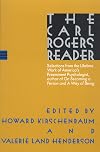
I'm inspired by the very human approach Rogers advocates for psychological therapy, education, and society. He would rather have people come together as equals in a co-learning process of growth, than engage in the defeating practice of a hierarchical relationship in which "truth" is transmitted from superior to inferior. This book brings together a variety of essays, book excerpts, and lectures which help survey his work and thought.
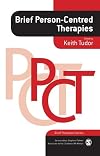
Interesting perspectives on how to be effective with person-centred counselling in brief and time-limited settings.
Being a novice counsellor, my initial stance in relation to brief counselling was an unaccepting one as it did not fit my conception of the person-centred approach, being one that gives autonomy and power to the client. Therefore, the duration of counselling should, insofar as reasonably possible, be determined by the client and not imposed by the counsellor or (much worse!) an show more organisation or agency. However, one of my placements is in an NHS, time-limited clinic and I now have experience of the therapeutic change a client can achieve in a relatively short time (notwithstanding that some would have preferred to extend the number of sessions). I found of great help Isabel Gibbard's insightful comparison of the limited resources available within the health care to that faced by the human race on a global scale, the world's resources being finite and cannot be exploited as if they are limitless. Also, Keith Tudor's pointed reminder that life itself is time-limited.
So, with a new-found preparedness towards acceptance of time-limited therapy, I found much to inform my practice in this book. Much of it relates to experiential therapies, and piques my interest in reading more about Gendlin's Focusing-Oriented Therapy. There's a couple of chapters on Traumatic Incident Reduction (TIR), which I found very interesting from a training perspective, but somehow still too directive for me (at this stage) to comfortably use with clients.
Much of the book is in the form of practitioners relating how they apply brief therapy in specific settings, such as primary care, a Young Offenders' Institution, student counselling, employee assistance programmes, etc. Being able to see how brief therapy works in real-life settings was, I found, very helpful.
So, not an integrated approach to brief person-centred counselling, but an examination of how some of the tribes making up the PC nation work in a time-limited setting. show less
Being a novice counsellor, my initial stance in relation to brief counselling was an unaccepting one as it did not fit my conception of the person-centred approach, being one that gives autonomy and power to the client. Therefore, the duration of counselling should, insofar as reasonably possible, be determined by the client and not imposed by the counsellor or (much worse!) an show more organisation or agency. However, one of my placements is in an NHS, time-limited clinic and I now have experience of the therapeutic change a client can achieve in a relatively short time (notwithstanding that some would have preferred to extend the number of sessions). I found of great help Isabel Gibbard's insightful comparison of the limited resources available within the health care to that faced by the human race on a global scale, the world's resources being finite and cannot be exploited as if they are limitless. Also, Keith Tudor's pointed reminder that life itself is time-limited.
So, with a new-found preparedness towards acceptance of time-limited therapy, I found much to inform my practice in this book. Much of it relates to experiential therapies, and piques my interest in reading more about Gendlin's Focusing-Oriented Therapy. There's a couple of chapters on Traumatic Incident Reduction (TIR), which I found very interesting from a training perspective, but somehow still too directive for me (at this stage) to comfortably use with clients.
Much of the book is in the form of practitioners relating how they apply brief therapy in specific settings, such as primary care, a Young Offenders' Institution, student counselling, employee assistance programmes, etc. Being able to see how brief therapy works in real-life settings was, I found, very helpful.
So, not an integrated approach to brief person-centred counselling, but an examination of how some of the tribes making up the PC nation work in a time-limited setting. show less
Lists
You May Also Like


Associated Authors
Statistics
- Works
- 58
- Also by
- 4
- Members
- 3,844
- Popularity
- #6,591
- Rating
- 4.0
- Reviews
- 30
- ISBNs
- 214
- Languages
- 14
- Favorited
- 7