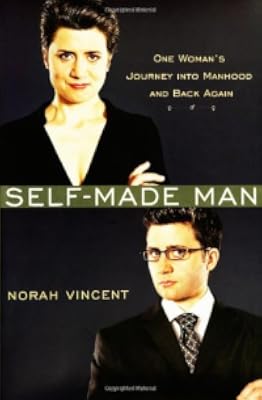
Self-Made Man: One Woman's Journey into Manhood and Back Again
by Norah Vincent
On This Page
Description
For more than a year and a half Vincent ventured into the world as Ned, with an ever-present five o'clock shadow and a crew cut--a perfect disguise that enabled her to observe the world of men as an insider. With her buddies on the bowling league she enjoyed the rough and rewarding embrace of male camaraderie; a stint in a high-octane sales job taught her the gut-wrenching pressures endured by men who would do anything to succeed; she frequented sex clubs, dated women hungry for love but show more bitter about men, and infiltrated all-male communities including a men's therapy group and even a monastery. She ended her journey astounded--and exhausted--by the rigid codes and rituals of masculinity.--From publisher description. show lessTags
Recommendations
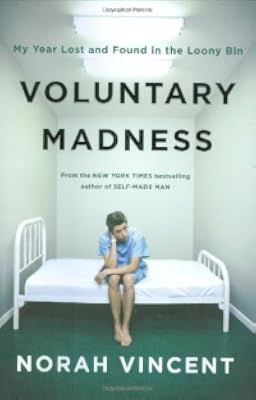
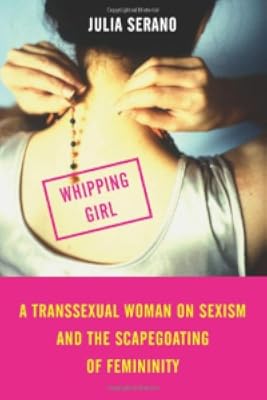
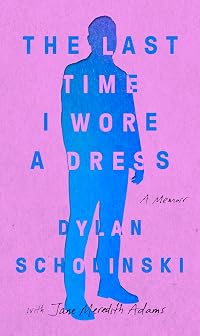
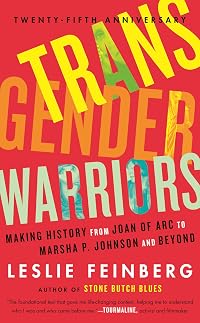
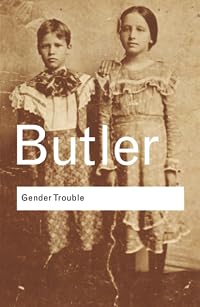
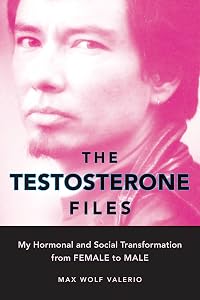
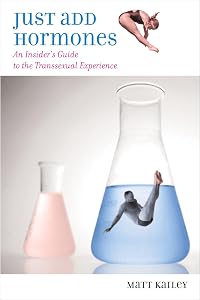
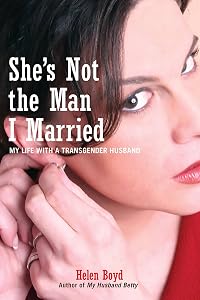
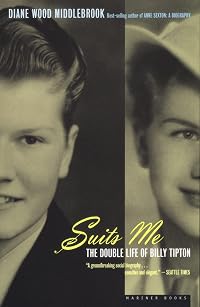
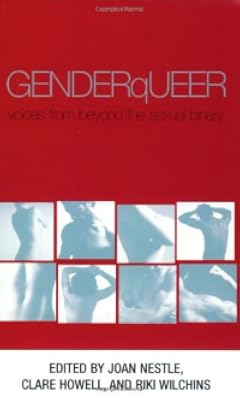

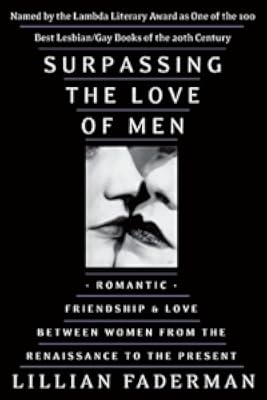
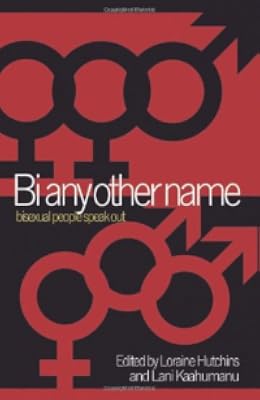






Member Recommendations
espertus A classic book on a white man's experiences disguising himself as a black man in the American South in 1959.
30
Member Reviews
I strolled past Self-Made Man on the bargain table at Border's for more than a month, wondering whether it would be intriguing or simply the vitriol of an angry woman. I am glad -- no, grateful -- that I finally picked it up. Norah Vincent, who is neither a transvestite nor transgendered, wants to know what's like to be man. With the help of a voice coach, a make-up artist, and a muscle-building work-out routine, she spends 18 months living as her alter-ego Ned. The results of her experience are a far better guide to the opposite sex than trite drivel like Men Are from Mars, Women Are from Venus.
Each chapter explores a facet of her male life: joining a men's bowling league, working, strip clubs, dating, living in a monastery and show more joining a men's support group. She enters each of these venues expecting to find a privileged world where men wield power, ridicule homosexuals and make racist jokes. Instead, the truth turns out to be much more complex. Of her dating experience, she writes:
"Women were very hard to please. They wanted me to be in control, big and strong both in spirit and in body, but also tender and vulnerable at the same time, subservient to their whims and bunny-soft...As much as these women wanted an in-control man, they wanted a man who was vulnerable to them, a man who would...open his doors, someone expressive, intuitive, attuned. This I was in spades, and I always got points for it, but feeling the pressure to be that other world-bestriding colossus at the same time made me feel very sympathetic toward heterosexual men...A man is expected to be modern, to treat women as equals in every respect, [but] he is often still expected to be traditional at the same time, to treat a lady like a lady, to lead the way and pick up the check."
Perhaps these things are common sense, but it was the first time I heard them articulated in such a clear-headed way. Part of what makes the book so fascinating is that the writer is a lesbian who is often called "butch" or "masculine." But, as a man, she is often perceived as "fag" by both male and female audiences. This is probably why she excels at considering each chapter from both a male and female perspective, and although some chapters are less insightful than others, the book made me reflect carefully on what I expect from the men in my life. I recommend this book to people of both sexes, both single and in relationships. Everyone could learn something from it. show less
Each chapter explores a facet of her male life: joining a men's bowling league, working, strip clubs, dating, living in a monastery and show more joining a men's support group. She enters each of these venues expecting to find a privileged world where men wield power, ridicule homosexuals and make racist jokes. Instead, the truth turns out to be much more complex. Of her dating experience, she writes:
"Women were very hard to please. They wanted me to be in control, big and strong both in spirit and in body, but also tender and vulnerable at the same time, subservient to their whims and bunny-soft...As much as these women wanted an in-control man, they wanted a man who was vulnerable to them, a man who would...open his doors, someone expressive, intuitive, attuned. This I was in spades, and I always got points for it, but feeling the pressure to be that other world-bestriding colossus at the same time made me feel very sympathetic toward heterosexual men...A man is expected to be modern, to treat women as equals in every respect, [but] he is often still expected to be traditional at the same time, to treat a lady like a lady, to lead the way and pick up the check."
Perhaps these things are common sense, but it was the first time I heard them articulated in such a clear-headed way. Part of what makes the book so fascinating is that the writer is a lesbian who is often called "butch" or "masculine." But, as a man, she is often perceived as "fag" by both male and female audiences. This is probably why she excels at considering each chapter from both a male and female perspective, and although some chapters are less insightful than others, the book made me reflect carefully on what I expect from the men in my life. I recommend this book to people of both sexes, both single and in relationships. Everyone could learn something from it. show less
Like many of the other reviewers, I found this very shallow. I have read similar books in which a man tried to live as a woman, and was curious as to whether the other direction works better. It doesn't. At least not in this case.
I came to even question the author's basic social competency. For example, how much insight should it take to get that if a group of women are sitting in a bar interacting with each other that a stranger butting in and trying to flirt with one of them is going to get rejected? She reports that it took a long time for any of them to show more than a profile. This is body language 101. They were there as a group to enjoy their group, not to get hitched up to a guy. But she interprets it as personal rejection. The show more whole dating chapter showed mostly that she doesn't have any experience of male-female relationships from either side.
The different venues she chose for exploring masculine life were generally not everyday life for the men involved. A few hours once a week doesn't do it. Especially not if there are class differences as well as the gender one to be overcome. Spending time in a monastary was just a very peculiar idea. show less
I came to even question the author's basic social competency. For example, how much insight should it take to get that if a group of women are sitting in a bar interacting with each other that a stranger butting in and trying to flirt with one of them is going to get rejected? She reports that it took a long time for any of them to show more than a profile. This is body language 101. They were there as a group to enjoy their group, not to get hitched up to a guy. But she interprets it as personal rejection. The show more whole dating chapter showed mostly that she doesn't have any experience of male-female relationships from either side.
The different venues she chose for exploring masculine life were generally not everyday life for the men involved. A few hours once a week doesn't do it. Especially not if there are class differences as well as the gender one to be overcome. Spending time in a monastary was just a very peculiar idea. show less
Fascinating study of men's lives by a woman pretending to be a man. We probably all wonder what the opposite sex really thinks, what they talk about when they are alone together, but never have a chance to find out. Norah Vincent actually finds out.
She makes it clear that this is just one woman's observations, and only of particular groups of men, but it's fascinating and eye-opening, scary and depressing at times, but also saddening for the unreported restrictions society imposes on men and men impose on each other. I'm a feminist and I know plenty about the injustices on women's lives, but this has given me more sympathy for the different difficulties in men's lives.
"I passed in a man’s world not because my mask was so real, but show more because the world of men was a masked ball." show less
She makes it clear that this is just one woman's observations, and only of particular groups of men, but it's fascinating and eye-opening, scary and depressing at times, but also saddening for the unreported restrictions society imposes on men and men impose on each other. I'm a feminist and I know plenty about the injustices on women's lives, but this has given me more sympathy for the different difficulties in men's lives.
"I passed in a man’s world not because my mask was so real, but show more because the world of men was a masked ball." show less
Author Norah Vincent does something pretty daring and potentially dangerous: she pretends to be a man to see how the other half lives. She joins a men's bowling league, hangs out at seedy strip clubs, works at a mostly male company, lives at a monastery, and infiltrates an Iron John men's group. I can't agree with her revealing herself to some of the men she befriended; there's just something emotionally unethical about lowering the boom like that. But as a woman reading this book, I found some of her insights about men revealing and sad. I was also surprised she suffered a bit of a breakdown afterwards, but considering the mental and emotional stress of passing as a man, it makes sense. An intriguing and different take on gender show more differences. show less
This is a fascinating book, but I was shocked by how depressing it is (in fact, the author ended up checking herself into a mental hospital by the end of the book).
Norah Vincent spent a year or so as Ned Vincent - she disguised herself as a man, and explored how differently she was treated as a man, and tried to explore the male psyche as much as she could. She makes some really fascinating observations, although clearly these are just one person's observations, and Norah's past and personality play a huge role in her perceptions.
In some ways, I think gender ends up being a straw man in the book. As much as her insights about gender are fascinating, I think that Norah/Ned is often reacting just as strongly to other factors that are show more independent of gender. For instance, in the first chapter, she joins a bowling league and spends a bunch of time with white trash blue collar guys. She is surprised at their intelligence and sensitivity, and as an intellectual writer, finds her own supposed superiority knocked down a few notches. It seems to me that she is responding to their culture as much as to their gender. Something similar happens when Ned gets a job as a door-to-door salesman - the job is so life-sucking and depressing that the employers have to keep everyone really pumped up all the time, and they use sex to do it. I (a female) actually worked for a PIRG for a few days, which is also basically door-to-door salesmanship, and my experience there very closely mirrored Ned's experience - that kind of work requires a certain culture. I would have been far more interested in Ned's treatment in a boardroom than as a salesman.
Having said that, Norah's/Ned's insights into gender are fascinating. She essentially concludes that the two genders come from such totally different starting places that getting them to understand each other is nearly impossible. She compares genders to religious sects - there's just no way to get them to connect meaningfully.
Norah's/Ned's personal crisis at the end of the book is ultimately about identity: she says that conforming to any gender role is basically a denial of your own identity, and her year pretending to be someone else was really devastating to her.
This is an interesting read, with lots of food for thought, and has certainly changed my perception of men. show less
Norah Vincent spent a year or so as Ned Vincent - she disguised herself as a man, and explored how differently she was treated as a man, and tried to explore the male psyche as much as she could. She makes some really fascinating observations, although clearly these are just one person's observations, and Norah's past and personality play a huge role in her perceptions.
In some ways, I think gender ends up being a straw man in the book. As much as her insights about gender are fascinating, I think that Norah/Ned is often reacting just as strongly to other factors that are show more independent of gender. For instance, in the first chapter, she joins a bowling league and spends a bunch of time with white trash blue collar guys. She is surprised at their intelligence and sensitivity, and as an intellectual writer, finds her own supposed superiority knocked down a few notches. It seems to me that she is responding to their culture as much as to their gender. Something similar happens when Ned gets a job as a door-to-door salesman - the job is so life-sucking and depressing that the employers have to keep everyone really pumped up all the time, and they use sex to do it. I (a female) actually worked for a PIRG for a few days, which is also basically door-to-door salesmanship, and my experience there very closely mirrored Ned's experience - that kind of work requires a certain culture. I would have been far more interested in Ned's treatment in a boardroom than as a salesman.
Having said that, Norah's/Ned's insights into gender are fascinating. She essentially concludes that the two genders come from such totally different starting places that getting them to understand each other is nearly impossible. She compares genders to religious sects - there's just no way to get them to connect meaningfully.
Norah's/Ned's personal crisis at the end of the book is ultimately about identity: she says that conforming to any gender role is basically a denial of your own identity, and her year pretending to be someone else was really devastating to her.
This is an interesting read, with lots of food for thought, and has certainly changed my perception of men. show less
Reading Self-Made Man was an unexpected pleasure, although perhaps not always for the reasons I expected. As a rule, Vincent's approach and writing style is superbly balanced between sensation and analysis, accessibility and intelligence. As the book unfolds, Vincent plunges into the world of male sociability. She creates her own male persona, Ned, joins a bowling league, goes to strip clubs, dates and has sex with women, explores the world of work while in character, and even briefly infiltrates an all-male religious society.
What impressed me about Vincent was her deep capacity for empathy, a trait that was reflected in the incisiveness with which she pulled apart her experiences and the emotions they triggered. I was especially moved, show more perhaps surprisingly, not by her insights into the male mind - which I found a bit simplistic and, in particular, overly concerned with sex - but by the insights she gained into the mind of heterosexual women (Vincent herself is gay). The rather ugly, somewhat taboo side of female sexual power is revealed when Vincent starts dating, and it disrupts many of her easy assumptions about male privilege:
"Dating women as a man was a lesson in female power, and it made me, of all things, into a momentary misogynist, which, I suppose was the best indicator that my experiment had worked. I saw my own sex from the other side, and I disliked women irrationally for a while because of it. I disliked their superiority, their accusatory smiles, their entitlement to choose or dash me with a fingertip, an execution so lazy, so effortless, it made the defeats and even the successes unbearably humiliating. Typical male power feels by comparison like a blunt instrument, its salvos and field strategies laughably remedial next to the damage a woman can do with a single cutting word: no."
I was especially startled by a further revelation, in a passage a little further on, of the widesprea prejudice that only women are desirable, so that even heterosexual women must surely be looking for a man who, inside, resembles a woman. Vincent writes: "I was most surprised to find nestled inside the confines of female heterosexuality a deep love and genuine attraction for real men. Not for women in men’s bodies, as the prejudicial me had thought." Passages like these abound in the book, surprising to me because they reveal, in my view, just how anti-male modern society really is. Vincent also repeatedly takes the tools of feminist criticism, applies them to men, and is startled to find that they face many similar problems, from emotional repression to physical objectification.
The only disappointment for me, and the reason why I can't quite bring myself to give this book five stars, is the ending. Norah Vincent learns so many valuable lessons and shows such deep empathy for the plight of both men and women throughout the book, and yet her final response to this adventure/experiment felt to me like she had turned her back on all that she struggled so hard to learn in this course of its unfolding. That was kind of depressing - that someone could come so far, gain so much insight, and then decide that really, it was all just an intellectual exercise after all. show less
What impressed me about Vincent was her deep capacity for empathy, a trait that was reflected in the incisiveness with which she pulled apart her experiences and the emotions they triggered. I was especially moved, show more perhaps surprisingly, not by her insights into the male mind - which I found a bit simplistic and, in particular, overly concerned with sex - but by the insights she gained into the mind of heterosexual women (Vincent herself is gay). The rather ugly, somewhat taboo side of female sexual power is revealed when Vincent starts dating, and it disrupts many of her easy assumptions about male privilege:
"Dating women as a man was a lesson in female power, and it made me, of all things, into a momentary misogynist, which, I suppose was the best indicator that my experiment had worked. I saw my own sex from the other side, and I disliked women irrationally for a while because of it. I disliked their superiority, their accusatory smiles, their entitlement to choose or dash me with a fingertip, an execution so lazy, so effortless, it made the defeats and even the successes unbearably humiliating. Typical male power feels by comparison like a blunt instrument, its salvos and field strategies laughably remedial next to the damage a woman can do with a single cutting word: no."
I was especially startled by a further revelation, in a passage a little further on, of the widesprea prejudice that only women are desirable, so that even heterosexual women must surely be looking for a man who, inside, resembles a woman. Vincent writes: "I was most surprised to find nestled inside the confines of female heterosexuality a deep love and genuine attraction for real men. Not for women in men’s bodies, as the prejudicial me had thought." Passages like these abound in the book, surprising to me because they reveal, in my view, just how anti-male modern society really is. Vincent also repeatedly takes the tools of feminist criticism, applies them to men, and is startled to find that they face many similar problems, from emotional repression to physical objectification.
The only disappointment for me, and the reason why I can't quite bring myself to give this book five stars, is the ending. Norah Vincent learns so many valuable lessons and shows such deep empathy for the plight of both men and women throughout the book, and yet her final response to this adventure/experiment felt to me like she had turned her back on all that she struggled so hard to learn in this course of its unfolding. That was kind of depressing - that someone could come so far, gain so much insight, and then decide that really, it was all just an intellectual exercise after all. show less
I first heard about Self-Made Man: One Woman’s Year Disguised as a Man by Norah Vincent via the xckd blag, and finding the concept intriguing I had to pick up a copy when I saw it available at CyberRead.
Norah Vincent decides to live as a man for more than a year. As Ned, she partakes in various male experiences like bonding with a bowling team, visiting strip clubs, going on dates, joining a men’s group, taking a sales job in a Glengarry Glen Ross-esque environment, and even joins a monastery for several weeks.
The book is a well-written and extremely engrossing account of her search for what it means to be a man. Though I don’t think Vincent could in any way truly become a man, I do think certain gender differences became more show more acutely visible to her, precisely because she isn’t male. A man couldn’t write Self-Made Man any more than a woman could write a book called Self-Made Woman.
Something that struck me about the book is how very brave Vincent was to do some of the things she did. She put herself in a wide variety of situations where she was completely out of her depth and which could have turned ugly fast had she been unlucky. Not only did she have the guts to get into those situations, and the skill to navigate them successfully, she also has the ability of eloquently describing how she felt at the time.
After reading Self-Made Man I realised just how tough life can be when you’re male, and was left with a profound sense of empathy towards men. If you are at all interested in how men and women think and interact with each other I suggest reading Self-Made Man, hopefully you’ll enjoy it as much as I did. I just wish Norah Vincent had more/better pictures of Ned available on her website. After reading so much about him I would have appreciated seeing him properly. show less
Norah Vincent decides to live as a man for more than a year. As Ned, she partakes in various male experiences like bonding with a bowling team, visiting strip clubs, going on dates, joining a men’s group, taking a sales job in a Glengarry Glen Ross-esque environment, and even joins a monastery for several weeks.
The book is a well-written and extremely engrossing account of her search for what it means to be a man. Though I don’t think Vincent could in any way truly become a man, I do think certain gender differences became more show more acutely visible to her, precisely because she isn’t male. A man couldn’t write Self-Made Man any more than a woman could write a book called Self-Made Woman.
Something that struck me about the book is how very brave Vincent was to do some of the things she did. She put herself in a wide variety of situations where she was completely out of her depth and which could have turned ugly fast had she been unlucky. Not only did she have the guts to get into those situations, and the skill to navigate them successfully, she also has the ability of eloquently describing how she felt at the time.
After reading Self-Made Man I realised just how tough life can be when you’re male, and was left with a profound sense of empathy towards men. If you are at all interested in how men and women think and interact with each other I suggest reading Self-Made Man, hopefully you’ll enjoy it as much as I did. I just wish Norah Vincent had more/better pictures of Ned available on her website. After reading so much about him I would have appreciated seeing him properly. show less
Members
- Recently Added By
Lists

Non-Fiction Worth Reading
1,025 works; 264 members

My Year Spent Doing Something Stupid so I Could Write This Book
34 works; 6 members

Books featuring monks and/or nuns
166 works; 33 members

Five star books
1,767 works; 110 members

Club Read's Recommended Nonfiction Written by Women
618 works; 30 members
Author Information

5+ Works 2,353 Members
Awards and Honors
Common Knowledge
- Canonical title
- Self-Made Man: One Woman's Journey into Manhood and Back Again
- Alternate titles
- Self-Made Man: My Year Disguised as a Man
- Original publication date
- 2006
- Epigraph
- But this my masculine usurped attire . . .
Conceal me what I am, and be my aid
For such disguise as haply shall become
The form of my intent . . .
Disguise, I see, thou art a wickedness
Wherein the pregnant ene... (show all)my does much.
— Twelfth Night
Were it not better,
Because that I am more than common tall,
That I did suit me all points like a man?
Lie there what hidden woman's fear there will,
We'll have a swashing and a martial outside,
As many other m... (show all)annish cowards have
That do outface it with their semblances.'
— As You Like It - Dedication
- To my beloved wife, Lisa McNulty,
who saves my life on a daily basis. - First words
- Seven years ago, I had my first tutorial in becoming a man.
- Last words
- (Click to show. Warning: May contain spoilers.)I, meanwhile, am staying right where I am: fortunate, proud, free and glad in every way to be a woman.
Classifications
- Genres
- Sexuality and Gender Studies, Sociology, General Nonfiction, Biography & Memoir, Nonfiction, LGBTQ+
- DDC/MDS
- 305.31092 — Society, government, & culture Social sciences, sociology & anthropology Social group - Age, Gender, Ethnicity People by gender or sex Men History, geographic treatment, biography
- LCC
- HQ1075 .V546 — Social sciences The family. Marriage, Women and Sexuality The Family. Marriage. Women Sex role
- BISAC
Statistics
- Members
- 1,549
- Popularity
- 14,839
- Reviews
- 64
- Rating
- (3.44)
- Languages
- 9 — Danish, Dutch, English, French, German, Italian, Portuguese, Spanish, Swedish
- Media
- Paper, Audiobook, Ebook
- ISBNs
- 22
- UPCs
- 1
- ASINs
- 6