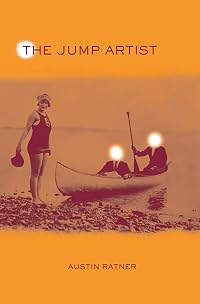
The Jump Artist
by Austin Ratner
On This Page
Description
Evocative psychological fiction based on the true story of renowned photographer Philippe Halsman, a man Adolph Hitler knew by name, who Sigmund Freud wrote about in 1931, and who put Marilyn Monroe on the cover of Life magazine. Surviving an episode that presages the horrors of WWII, Halsman transforms himself from a victim of rampant anti-Semitism into a purveyor of the marvelous.Tags
Recommendations























Member Reviews
Received my copy from the Penguin Books UK Proof Readers circle.
This is a fictionalised account of a little known event in history - Halsman is accused of patricide after the death of his father whilst the pair are walking in the Alps. He is found guilty, spends several years in jail, but is finally pardoned on condition that he leaves Austria, never to return.
He recovers from Tuberculosis whilst in France, trains as an engineer, but ends up taking photographs. His talent increases, and he starts to become well known for portrait photographs (doing the covers of Vogue etc). Finally, WWII starts, and he and his family escape France for America, where he finally achieves fame as a photographer of the famous.
This is not a dry, non-fiction show more biography. Especially in the first section of the book there are jumps in narrative time, sometimes in the same chapter, once in a while the same paragraph. Slightly disconcerting, it however makes the story telling quite fluid.
I didnt feel emotionally connected to Halsman very much throughout the book. I dont know whether that was on purpose or not by the author. Halsman did come across as rather emotionally restrained, feeling the need to punish himself if he felt his emotions were too out of control. There were times where he comes across as OCD and almost autistic in not being able to react the correct way towards others (and especially girls).
The title refers to a series of portraits (including Monroe) where he takes their photos whilst they are jumping. show less
This is a fictionalised account of a little known event in history - Halsman is accused of patricide after the death of his father whilst the pair are walking in the Alps. He is found guilty, spends several years in jail, but is finally pardoned on condition that he leaves Austria, never to return.
He recovers from Tuberculosis whilst in France, trains as an engineer, but ends up taking photographs. His talent increases, and he starts to become well known for portrait photographs (doing the covers of Vogue etc). Finally, WWII starts, and he and his family escape France for America, where he finally achieves fame as a photographer of the famous.
This is not a dry, non-fiction show more biography. Especially in the first section of the book there are jumps in narrative time, sometimes in the same chapter, once in a while the same paragraph. Slightly disconcerting, it however makes the story telling quite fluid.
I didnt feel emotionally connected to Halsman very much throughout the book. I dont know whether that was on purpose or not by the author. Halsman did come across as rather emotionally restrained, feeling the need to punish himself if he felt his emotions were too out of control. There were times where he comes across as OCD and almost autistic in not being able to react the correct way towards others (and especially girls).
The title refers to a series of portraits (including Monroe) where he takes their photos whilst they are jumping. show less
I loved this book! Its an interesting perspective of the interbellum, with very engaging characters. horrible things happen, and the characters deal with it horribly under the influence of fascism. It shows how good people can be destroyed by something early on and the struggle to become whole again.
The historical part of this book was very interesting and enlightening, as were the deatails of Halsman's survivor guilt. However, there were too many tedious, unimportant details that I did not appreciate plodding through. This is a frightening book to read at this time.
This is a highly fictionalized account of the life of Philippe Halsman. As a young man, Halsman was falsely accused of murdering his father while on a hiking trip in the Austrian Alps. The fact he was Jewish may have been a factor in his arrest. After two traumatic years in prison, his family managed to secure him a pardon. He worked hard to reinvent himself as a photographer in France in the late 1930's. When the war encroached on Paris, he managed to flee to America with his family. After years of adjustment he would eventually establish himself as a leading photographer for Life magazine capturing many of the most notable faces of the twentieth century. The writing is often pedantic, dark, and hard to follow due to a train of thought show more style. The constant infusion of foreign phrases, mostly German, while adding atmosphere, also slow down the flow. It's almost as hard to get through this book as it was for Halsman to achieve his fame. show less
I had known of Philippe Halsman as a photographer but knew nothing of his personal life until I read The Jump Artist, a novel based on research into his life. Still, the book does not claim to be a biography, and the author has fleshed out the basic facts with his interpretation of Halsman's thoughts and deeds.
Halsman was accused of murdering his father while they were hiking together in the Tyrolean Alps, and spent time in prison. He was Jewish and lived in a very dangerous time and place during the rise of Hitler, the victim of anti-Semitism, quite obvious in his trials. Philippe had a conflicted relationship with his father, as many young men do. After the murder of his father, he became depressed and self-destructive and he pushed show more away all the people who loved him. The book is well-written, with some beautiful language. There are interesting quotes at the beginning of each chapter and foreign language phrases that are not always translated. For me, some of the sentences didn't make sense until I read further. A bit of the writing was almost stream-of-consciousness, especially that involving sea life.
As to how he became a photographer, I appreciated the quote “at the gallery they asked me how I became a photographer and I said it happened as a girl sometimes becomes a prostitute – doing it first for herself, then for friends, and finally for money.” The book was not dumbed down to make it a happy, light read. Even though this is a short novel, it is a serious book. There is a retrospective of Halsman, including some of his fabulous portraits, at http://www.npg.si.edu/exh/halsman/. show less
Halsman was accused of murdering his father while they were hiking together in the Tyrolean Alps, and spent time in prison. He was Jewish and lived in a very dangerous time and place during the rise of Hitler, the victim of anti-Semitism, quite obvious in his trials. Philippe had a conflicted relationship with his father, as many young men do. After the murder of his father, he became depressed and self-destructive and he pushed show more away all the people who loved him. The book is well-written, with some beautiful language. There are interesting quotes at the beginning of each chapter and foreign language phrases that are not always translated. For me, some of the sentences didn't make sense until I read further. A bit of the writing was almost stream-of-consciousness, especially that involving sea life.
As to how he became a photographer, I appreciated the quote “at the gallery they asked me how I became a photographer and I said it happened as a girl sometimes becomes a prostitute – doing it first for herself, then for friends, and finally for money.” The book was not dumbed down to make it a happy, light read. Even though this is a short novel, it is a serious book. There is a retrospective of Halsman, including some of his fabulous portraits, at http://www.npg.si.edu/exh/halsman/. show less
The Jump Artist, Austin Ratner
This is the story of Phillip Halsmann, a Latvian Jew who, in 1929, was condemned falsely for the murder of his father while on a hiking trip in the Tyrolean Alps, in Western Austria. Convicted by a Kangaroo Court of liars and anti-Semites, not once, but twice, when they presented false evidence and hid pertinent facts, he was finally pardoned and released after two years in prison, at the behest of several influential, famous personages, Jews who had some influence and knew, like the Dreyfus Affair, the Halsmann Affair was another example of injustice spawned by ignorance and hatred of the Jews. It was a harbinger of the horrors to soon come, however, as Germany would soon attempt to conquer Europe and show more create an Aryan Nation under the leadership of Adolf Hitler.
Before prison, Phillip was a student studying to be an engineer. He was falling in love and his life was before him. After his staged trials and his treatment in prison, he was often angry and unable to love properly. Although he tried to return to school to study engineering, he soon left. He abandoned his girlfriend Ruth who had loved and stood by him. He began to sink into a depression. He would admire strange women and imagine them naked. Filled with guilt, he pleasured himself, repenting by visiting various images of The Pieta.
Soon, Phillip was allowing those who hated him to define him with all sorts of heinous descriptions. Eventually, in an effort to ignore his Latvian heritage and become more French, he changed his name to Phillipe Halsman. Soon, he found love again. Quickly, though, he learned that he would always be a Latvian Jew under Hitler’s regime.
When he and his family finally escaped to America, he truly began to define himself and regain his self respect. Although he became a successful photographer, rather than the lawyer or doctor his father had hoped he would become, his family was proud of what he had achieved. Soon, he also earned the respect of many famous people who sought his services like, Marilyn Monroe, Andre Gide, Albert Einstein and others. However, his early career was defined by photos of barely dressed females he found in his travels. He wanted to photograph beautiful women whom he posed in various stages of undress. He was able to capture them in their best possible vantage point. Somehow his keen eye knew how to adjust light and position to capture the person’s true self. He was helped by his mother and sister who had remained devoted and loyal to him throughout his ordeal, and they had weathered the changes he made in his life alongside him, helping him as they were able.
This book is an intuitive description of the degradation and disintegration of what once was a normal man, full of hope, devoted to his family, with a bright future ahead of him. Because of the false conviction of the terrible crime of patricide, the corrupt system almost destroyed him. If nothing else, this book should be a lesson to all those who are so quick to judge the current President of the United States without allowing him the right to defend himself bolstered by a press that constantly maligns him, often falsely. show less
This is the story of Phillip Halsmann, a Latvian Jew who, in 1929, was condemned falsely for the murder of his father while on a hiking trip in the Tyrolean Alps, in Western Austria. Convicted by a Kangaroo Court of liars and anti-Semites, not once, but twice, when they presented false evidence and hid pertinent facts, he was finally pardoned and released after two years in prison, at the behest of several influential, famous personages, Jews who had some influence and knew, like the Dreyfus Affair, the Halsmann Affair was another example of injustice spawned by ignorance and hatred of the Jews. It was a harbinger of the horrors to soon come, however, as Germany would soon attempt to conquer Europe and show more create an Aryan Nation under the leadership of Adolf Hitler.
Before prison, Phillip was a student studying to be an engineer. He was falling in love and his life was before him. After his staged trials and his treatment in prison, he was often angry and unable to love properly. Although he tried to return to school to study engineering, he soon left. He abandoned his girlfriend Ruth who had loved and stood by him. He began to sink into a depression. He would admire strange women and imagine them naked. Filled with guilt, he pleasured himself, repenting by visiting various images of The Pieta.
Soon, Phillip was allowing those who hated him to define him with all sorts of heinous descriptions. Eventually, in an effort to ignore his Latvian heritage and become more French, he changed his name to Phillipe Halsman. Soon, he found love again. Quickly, though, he learned that he would always be a Latvian Jew under Hitler’s regime.
When he and his family finally escaped to America, he truly began to define himself and regain his self respect. Although he became a successful photographer, rather than the lawyer or doctor his father had hoped he would become, his family was proud of what he had achieved. Soon, he also earned the respect of many famous people who sought his services like, Marilyn Monroe, Andre Gide, Albert Einstein and others. However, his early career was defined by photos of barely dressed females he found in his travels. He wanted to photograph beautiful women whom he posed in various stages of undress. He was able to capture them in their best possible vantage point. Somehow his keen eye knew how to adjust light and position to capture the person’s true self. He was helped by his mother and sister who had remained devoted and loyal to him throughout his ordeal, and they had weathered the changes he made in his life alongside him, helping him as they were able.
This book is an intuitive description of the degradation and disintegration of what once was a normal man, full of hope, devoted to his family, with a bright future ahead of him. Because of the false conviction of the terrible crime of patricide, the corrupt system almost destroyed him. If nothing else, this book should be a lesson to all those who are so quick to judge the current President of the United States without allowing him the right to defend himself bolstered by a press that constantly maligns him, often falsely. show less
Ratings
Members
- Recently Added By
Published Reviews
ThingScore 100
“Ratner knows how to use rhythms and metaphors to evoke a sensory, psychologically grounded reality that writers with vastly more experience than him would envy.... [a] subtle, moving novel.”
added by blpbooks
“A story of tremendous resonance.” (Listed as one of the most promising debuts.)
added by blpbooks
“Transcend[s] the bounds of historical fiction.”
added by blpbooks
Lists

Books by Jewish Authors
68 works; 5 members
Author Information

5 Works 98 Members
Awards and Honors
Awards
Common Knowledge
- Publisher's editor
- Goldman, Erika
- Blurbers
- Baxter, Charles
Classifications
Statistics
- Members
- 64
- Popularity
- 479,978
- Reviews
- 6
- Rating
- (3.82)
- Languages
- English
- Media
- Paper, Ebook
- ISBNs
- 5
- ASINs
- 2