On This Page
Description
"Allingham has that rare gift in a novelist, the creation of characters so rich and so real that they stay with the reader forever." -Sara Paretsky World War II is limping to a close and private detective Albert Campion has just returned from years abroad on a secret mission. Relaxing in his bath before rushing back to the country, and to the arms of his wife, Amanda, Campion is disturbed when his servant, Lugg, and a lady of unmistakably aristocratic bearing appear in his flat carrying the show more corpse of a woman. The reluctant Campion is forced to put his powers of detection to work as he is drawn deeper into the case, and into the eccentric Caradocs household, dealing with murder, treason, grand larceny, and the mysterious disappearance of some very valuable art. "Margery Allingham deserves to be rediscovered." -P.D. James "Margery Allingham was one of the greatest mid-20th-century practitioners of the detective novel." -Alexander McCall Smith. show lessTags
Recommendations





















Member Reviews
This seems to be the Year of Allingham for me. Once I got started, after two or three failed attempts, I found that I quite like her spiky sense of humor and her (mostly) lack of romance.
Here we find Campion on his first home leave since WW 2 called him to service. As he’s taking a relaxing bath he hears voices and footsteps in his empty apartment. He soon discovers that Lugg and a couple of women have put a dead woman’s body in his bed.
Naturally he is disconcerted.
The plot has almost too many threads, but they all untangle at the end. It’s a very clever, well-told tale.
Highly recommended.
Here we find Campion on his first home leave since WW 2 called him to service. As he’s taking a relaxing bath he hears voices and footsteps in his empty apartment. He soon discovers that Lugg and a couple of women have put a dead woman’s body in his bed.
Naturally he is disconcerted.
The plot has almost too many threads, but they all untangle at the end. It’s a very clever, well-told tale.
Highly recommended.
I'm not sure why this entry in Allingham's Campion series isn't a little bit better known. After almost ten years and a couple of novels that try to pull the series in new directions - sometimes feeling as if Campion himself is only included as a necessary marketing measure - Allingham manages to fuse her darker, wartime sensibility with both a plot and a set of characters who are more recognizably of a classic caliber. In fact, one might even be tempted to accuse Allingham of stepping backward if it didn't work so well: Albert Campion is distinctly Albert Campion, but older, more hesitant, and with less of a spring in his step; he and Chief Inspector Oates are growing old together and a little more tired of the "game" they play as show more talented amateur and established professional. It's probably unforgivable that Lugg appears basically unchanged, there mostly to provide light entertainment, but nobody really minds. Campion's wife, Amanda, is kept at bay until the final page - and that's intentional. This is a book about the old order going grey.
I wouldn't be surprised if this is the last time we see a "traditional" Campion. It's obvious that Allingham sees the war as a turning point, and the time of Bright Young Things has now passed. Campion spends the entire novel trying to abandon the responsibility thrust upon him and get home on his leave, but it becomes clear by the end that (athough he does get back to Amanda) there's no escape. Something has changed, and there's no turning back. show less
I wouldn't be surprised if this is the last time we see a "traditional" Campion. It's obvious that Allingham sees the war as a turning point, and the time of Bright Young Things has now passed. Campion spends the entire novel trying to abandon the responsibility thrust upon him and get home on his leave, but it becomes clear by the end that (athough he does get back to Amanda) there's no escape. Something has changed, and there's no turning back. show less
This next entry in the Campion series was somewhat darker than its predecessors. Campion has been overseas on undercover work and returns to London towards the end of the war. Instead of the warm welcome, he finds a Lugg and a lady smuggling a corpse into his bedroom. The corpse was, in life, a hanger on in the circle of Johnny Carados, and all the clues point to him having murdered her, in his bed, a few days before he;s due to be married to someone else. The body count racks up and there are complications in the shape of stolen goods. Campion comes into this almost in the middle and finds it hard to adjust to the conditions in post blitz London as well accept the facts of the case. Oates, having been on it since the beginning. There's show more a lot going on in here. Campion seems to be less the gad fly man about town, the events of the past few years seem to have sobered him. That's not a bad thing. show less
Pearls Before Swine by Margery Allingham is the 12th book in the Albert Campion series and was first published in 1945.. Albert Campion has been on the continent involved in undercover war work and now has returned to England for some well deserved leave. He is therefore flabbergasted when he steps from his bath only to find the corpse of a woman on his bed. Apparently Lugg and the dowager Marchioness of Carados, not knowing that he was home, thought this was a good place to stash the body that she found in her about-ti-be-married son’s bed.
Thus kicks off this 12th mystery and we find Campion, who only wants to enjoy his leave, caught up in a twisty, complex mystery that will see him chloroformed, kidnapped, involved in a hunt for show more art thieves and encounter more near murders before he assists the police in finding the true culprit behind all these nasty deeds. Although there were too many characters to keep track of, Pearls Before Swine gives the reader an interesting look at war-time London.
As this series advances we find Campion changing. Originally when introduced he was a 20 something bright young thing, now he is a war-weary 40 year old who yearns for the company of his loved ones amid peace and quiet. Still sharp and well able to out-think most people, especially the criminals, he has the ability to see beneath people’s outer veneer. Although he doesn’t relish the hunt he does truly seem to want to help people. Pearls Before Swine was a little too complex to make for an easy read but it definitely adds to the overall series. show less
Thus kicks off this 12th mystery and we find Campion, who only wants to enjoy his leave, caught up in a twisty, complex mystery that will see him chloroformed, kidnapped, involved in a hunt for show more art thieves and encounter more near murders before he assists the police in finding the true culprit behind all these nasty deeds. Although there were too many characters to keep track of, Pearls Before Swine gives the reader an interesting look at war-time London.
As this series advances we find Campion changing. Originally when introduced he was a 20 something bright young thing, now he is a war-weary 40 year old who yearns for the company of his loved ones amid peace and quiet. Still sharp and well able to out-think most people, especially the criminals, he has the ability to see beneath people’s outer veneer. Although he doesn’t relish the hunt he does truly seem to want to help people. Pearls Before Swine was a little too complex to make for an easy read but it definitely adds to the overall series. show less
2025 UPDATE:
The only part of this mystery that I could remember was that Campion comes home on war leave but is diverted away from reuniting with his family by a murder mystery. The actual mystery part had completely gone. It's quite a subdued story. Although Campion is in centre position, he acts as an observer so doesn't make much impact. The main focus is whether or not his friend Johnny is a bad guy, and there is a LOT of class snobbery afoot, which I think tells more about Allingham's personal attitudes than ones prevalent during WWII. It SHOULD be a very interesting story, but the issue is that the dozen characters ensnared the plot are new to the reader. It might all mean something to Campion who knows them personally, but it is show more totally meaningless to us so the stakes are much lower. Some of them only appear in two scenes so it is hard to build much of a picture of who is being manipulated or who might be the manipulator. Still a reasonable read.
ORIGINAL REVIEW:
This was quite an exciting Campion novel because I didn't know anything about the story going in. Set towards the end of WWII, Campion is home on leave for the first time in three years. Before he can jump on a train to start his well-earned rest however, a corpse in dumped in his bed and a taxi kidnaps him, and so he becomes embroiled in what starts as a suspicious suicide and quickly expands into an enemy plot to steal swathes of Britain's art and antiques.
Having read a lot of the series now (this is book 12) I was a little tired of Allingham's archetypes and tropes. As usual we have a socialite crowd of aristocracy and artistes circling some God-figure in their midst and all totally out of touch with reality and the law. Campion ping-pongs between protecting his friends and helping the police, but I can never really understand how these people could be his friends and why he doesn't just yell 'tell the police the truth' at them. Also he is exhausted and gets very little sleep or food throughout the story, which I realised is often the case. Poor guy.
The whodunnit was actually not glaringly obvious for once, although I feel that wasn't a terribly interesting reveal.The story ends with Campion finally getting home to his wife and son, who he has presumably never actually met, and that is really quite sad. Maybe this was not the most intriguing tale, but it was readably interesting and the late-war setting, with a hero who has been away from home a long time, worked well. Going forward into the post-war era, I would prefer it if the books moved further away from the upper classes, but kept Campion in the spotlight. We shall see. show less
The only part of this mystery that I could remember was that Campion comes home on war leave but is diverted away from reuniting with his family by a murder mystery. The actual mystery part had completely gone. It's quite a subdued story. Although Campion is in centre position, he acts as an observer so doesn't make much impact. The main focus is whether or not his friend Johnny is a bad guy, and there is a LOT of class snobbery afoot, which I think tells more about Allingham's personal attitudes than ones prevalent during WWII. It SHOULD be a very interesting story, but the issue is that the dozen characters ensnared the plot are new to the reader. It might all mean something to Campion who knows them personally, but it is show more totally meaningless to us so the stakes are much lower. Some of them only appear in two scenes so it is hard to build much of a picture of who is being manipulated or who might be the manipulator. Still a reasonable read.
ORIGINAL REVIEW:
This was quite an exciting Campion novel because I didn't know anything about the story going in. Set towards the end of WWII, Campion is home on leave for the first time in three years. Before he can jump on a train to start his well-earned rest however, a corpse in dumped in his bed and a taxi kidnaps him, and so he becomes embroiled in what starts as a suspicious suicide and quickly expands into an enemy plot to steal swathes of Britain's art and antiques.
Having read a lot of the series now (this is book 12) I was a little tired of Allingham's archetypes and tropes. As usual we have a socialite crowd of aristocracy and artistes circling some God-figure in their midst and all totally out of touch with reality and the law. Campion ping-pongs between protecting his friends and helping the police, but I can never really understand how these people could be his friends and why he doesn't just yell 'tell the police the truth' at them. Also he is exhausted and gets very little sleep or food throughout the story, which I realised is often the case. Poor guy.
The whodunnit was actually not glaringly obvious for once, although I feel that wasn't a terribly interesting reveal.
A complex plot, (a bit too complex and odd for me) but nonetheless well paced and a strong enough story to keep a reader engaged. The nineteen forties is a distant world now; nobody lives, thinks or talks that way now.
Summary: Back from war, Campion finds a corpse in his bed, brought to his flat by an aristocratic lady protecting her son.
He’s been away on a secret mission even he didn’t fully understand. He stops off at his flat for a bath before catching a train to the country to be reunited with Amanda, now his wife. Then he hears voices and activity in his flat. One is his servant Lugg. The other is an aristocratic lady by the sound of her voice. They are in his bedroom. When he emerges, he finds a woman in his bed. Dead.
He doesn’t want to know. He just wants to catch his train. But its too late. The lady is Lady Carados, mother of his friend Johnny Carados, a war hero. The dead girl was found in Johnny’s bed, just before he is to arrive show more home and marry. Inconvenient. Lugg is the Air Warden in Carados Square and has access to the ambulance. Lady Carados, a force of nature, had enlisted him to get the body out of the way. They hadn’t expected Campion to turn up.
What was made to look like a suicide was murder. And as he investigates, her death emerges as part of a bigger plot. There have been other deaths. Not only that, they are part of an art theft ring with ties back to the Nazis. Although he is a war hero, Chief Inspector Oates has traced the threads back to Johnny Carados. This is despite all the efforts of Lady Carados and Johnny’s friends to shield him. Even Campion refuses to believe it.
Like many of Allingham’s mystery, this one has lots of twists and turns, including the discovery of a rare wine vintage, and the near death of a wine expert from an analgesic given him by Johnny. Then there is a bit of charm in the form of Lugg’s pet pig and good humor in the form of a country woman who has unwittingly provided her lodgings for the stolen art. Meanwhile, Campion just wants to get back to Amanda… show less
He’s been away on a secret mission even he didn’t fully understand. He stops off at his flat for a bath before catching a train to the country to be reunited with Amanda, now his wife. Then he hears voices and activity in his flat. One is his servant Lugg. The other is an aristocratic lady by the sound of her voice. They are in his bedroom. When he emerges, he finds a woman in his bed. Dead.
He doesn’t want to know. He just wants to catch his train. But its too late. The lady is Lady Carados, mother of his friend Johnny Carados, a war hero. The dead girl was found in Johnny’s bed, just before he is to arrive show more home and marry. Inconvenient. Lugg is the Air Warden in Carados Square and has access to the ambulance. Lady Carados, a force of nature, had enlisted him to get the body out of the way. They hadn’t expected Campion to turn up.
What was made to look like a suicide was murder. And as he investigates, her death emerges as part of a bigger plot. There have been other deaths. Not only that, they are part of an art theft ring with ties back to the Nazis. Although he is a war hero, Chief Inspector Oates has traced the threads back to Johnny Carados. This is despite all the efforts of Lady Carados and Johnny’s friends to shield him. Even Campion refuses to believe it.
Like many of Allingham’s mystery, this one has lots of twists and turns, including the discovery of a rare wine vintage, and the near death of a wine expert from an analgesic given him by Johnny. Then there is a bit of charm in the form of Lugg’s pet pig and good humor in the form of a country woman who has unwittingly provided her lodgings for the stolen art. Meanwhile, Campion just wants to get back to Amanda… show less
Members
- Recently Added By
Lists

Books mentioned in Julian Symons’ Bloody Murder
438 works; 6 members

Books Read in 2023
5,638 works; 147 members
Author Information

131+ Works 20,368 Members
Margery Allingham, one of England's leading mystery writers, was born on May 20, 1904, in Ealing, a western suburb of London, but grew up in a remote village in Essex. Both of her parents were writers, and Margery carried on that tradition when she sold her first short story as an eight-year-old. At the Regent Street Polytechnic, she continued show more writing and studied drama and speech. While there, she wrote a verse play, Dido and Aeneas, in which she had a starring role during performances in London. At age 19, Allington published her first novel, Blackkerchief Dick. She wrote another novel, The White Cottage Mystery, before creating her most famous character, Albert Campion, in The Black Dudley Murder (published in England as The Crime at Black Dudley) in 1929. Allington went on to create twenty-eight more Campion mysteries, including several collections. She wrote more than 10 other novels, some under the pseudonym Maxwell March, as well as four novellas and sixty-four short stories. During World War II, Allingham served as First Aid Commandant for her district, organized the billeting and care of evacuees from London, and allowed her house to be turned into a temporary military base for eight officers and two hundred men of the Cameronians. The war greatly deepened Allingham's passion for her country, as evidenced in her later works. Allingham died of cancer on June 30, 1966. (Bowker Author Biography) show less
Some Editions
Series

Belongs to Publisher Series
Doubleday Crime Club (1945.01)
Work Relationships
Common Knowledge
- Canonical title
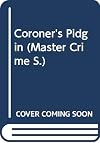
- Coroner's Pidgin
- Original title
- Coroner's Pidgin
- Alternate titles
- Pearls Before Swine
- Original publication date
- 1945-03
- People/Characters
- Albert Campion; Johnny Carados; Lady Carados; Magersfontein Lugg; Stanislaus Oates
- Important places
- London, England, UK
- Important events
- World War II
- Dedication
- This book is for Nora Seabrook
- First words
- The man and the woman carried the body cautiously up the stairs.
- Last words
- (Click to show. Warning: May contain spoilers.)'Hello,' said Amanda, 'meet my war work.'
- Original language
- English
- Disambiguation notice
- Original title in country of origin "Coroner's Pidgin", US-only title "Pearls Before Swine".
Classifications
Statistics
- Members
- 810
- Popularity
- 34,237
- Reviews
- 21
- Rating
- (3.68)
- Languages
- 6 — Czech, Danish, English, German, Italian, Japanese
- Media
- Paper, Audiobook, Ebook
- ISBNs
- 25
- ASINs
- 43